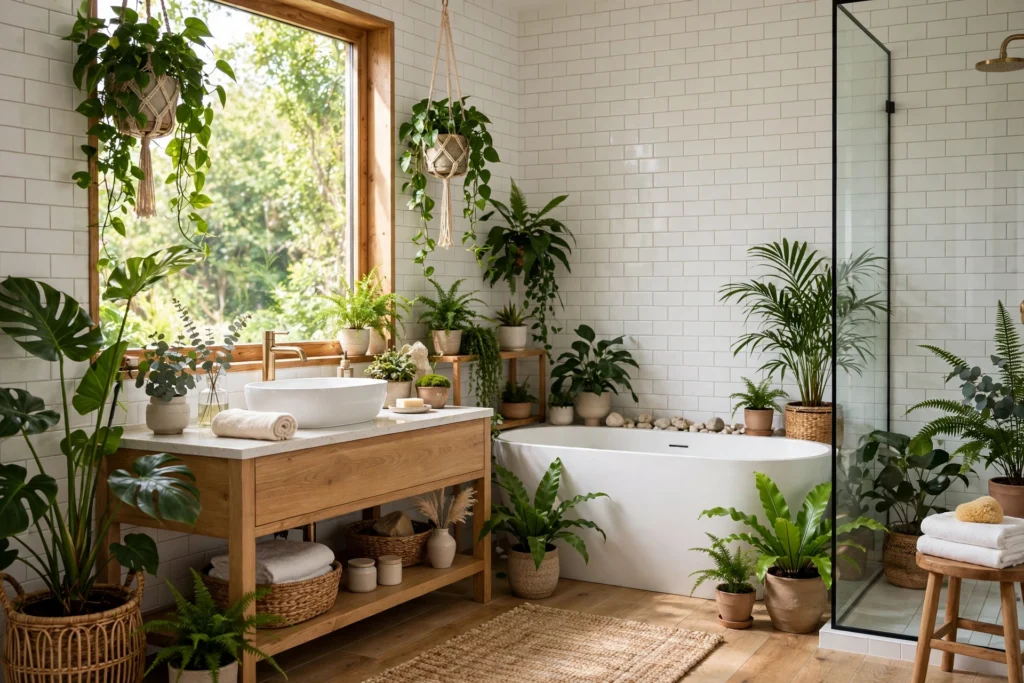

Bathrooms and plants are a natural match. The steam from your shower mimics the tropical humidity many houseplants crave, and a touch of green softens all that tile and porcelain in a way no decor object can. The right bathroom plant ideas turn even the smallest bath into a fresh, spa-like retreat — no renovation required.
Not every plant loves the bathroom, though. Low light, temperature swings, and chemical cleaners can stress the wrong species. These 15 bathroom plant ideas focus on plants that actually thrive in bath conditions, with styling tips to make them look intentional. Living room plant decor ideas for lush greenery.
1. Pothos Trailing from High Shelves
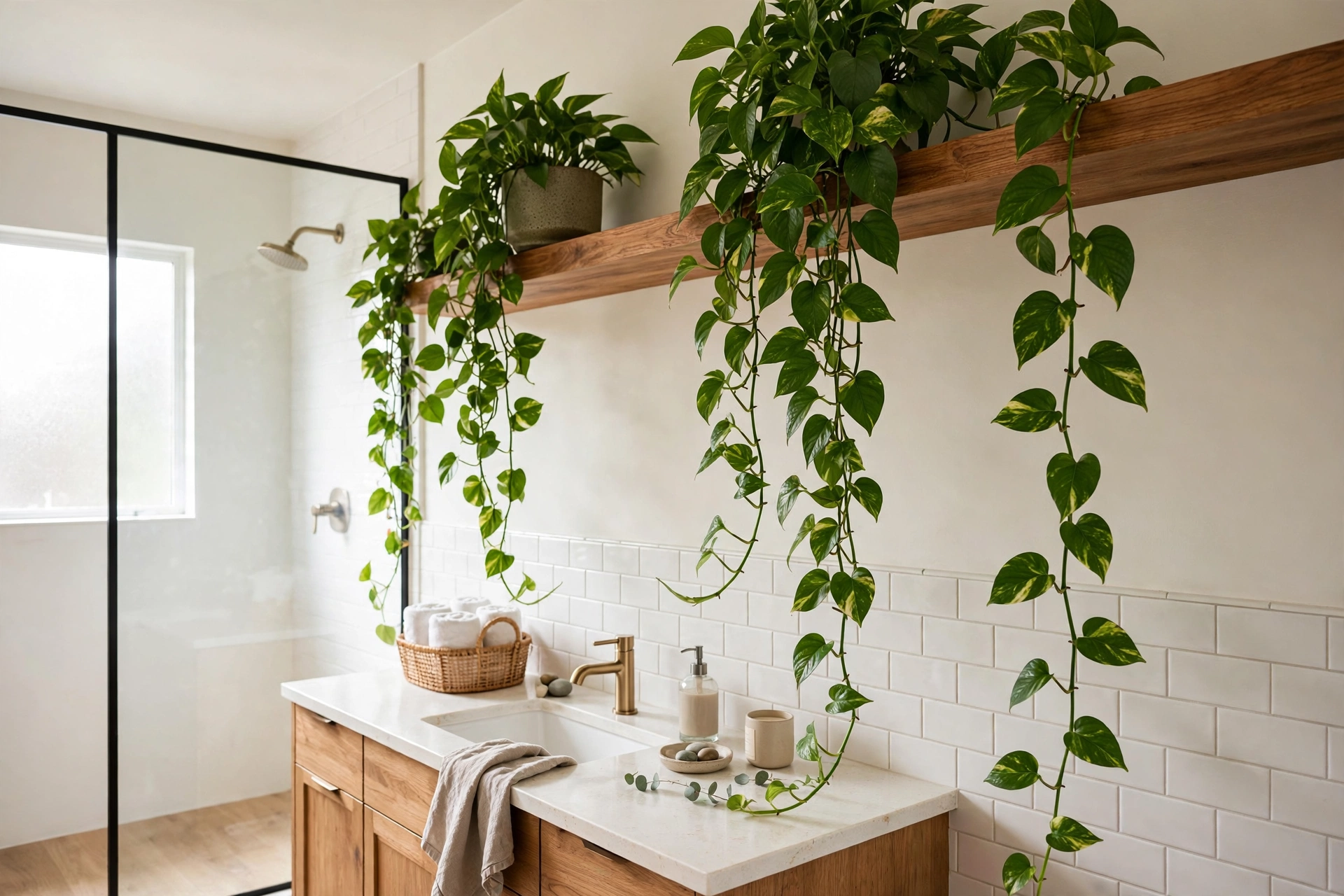
Pothos is the undisputed champion of bathroom plants. It tolerates low light, irregular watering, and high humidity, and its trailing vines look gorgeous cascading from a high shelf or hanging planter. Golden, marble queen, and neon varieties each bring different variegation, so you can match the plant to your palette. Water only when the top two inches of soil feel dry, and trim long vines to encourage bushier growth — the cuttings root easily in water for free new plants. Spruce’s guide to shower plants that thrive in humidity also ranks pothos among the easiest wins for bath greenery. Keep it out of reach of curious pets, since pothos leaves are mildly toxic if chewed.
2. Snake Plants for Low-Light Corners
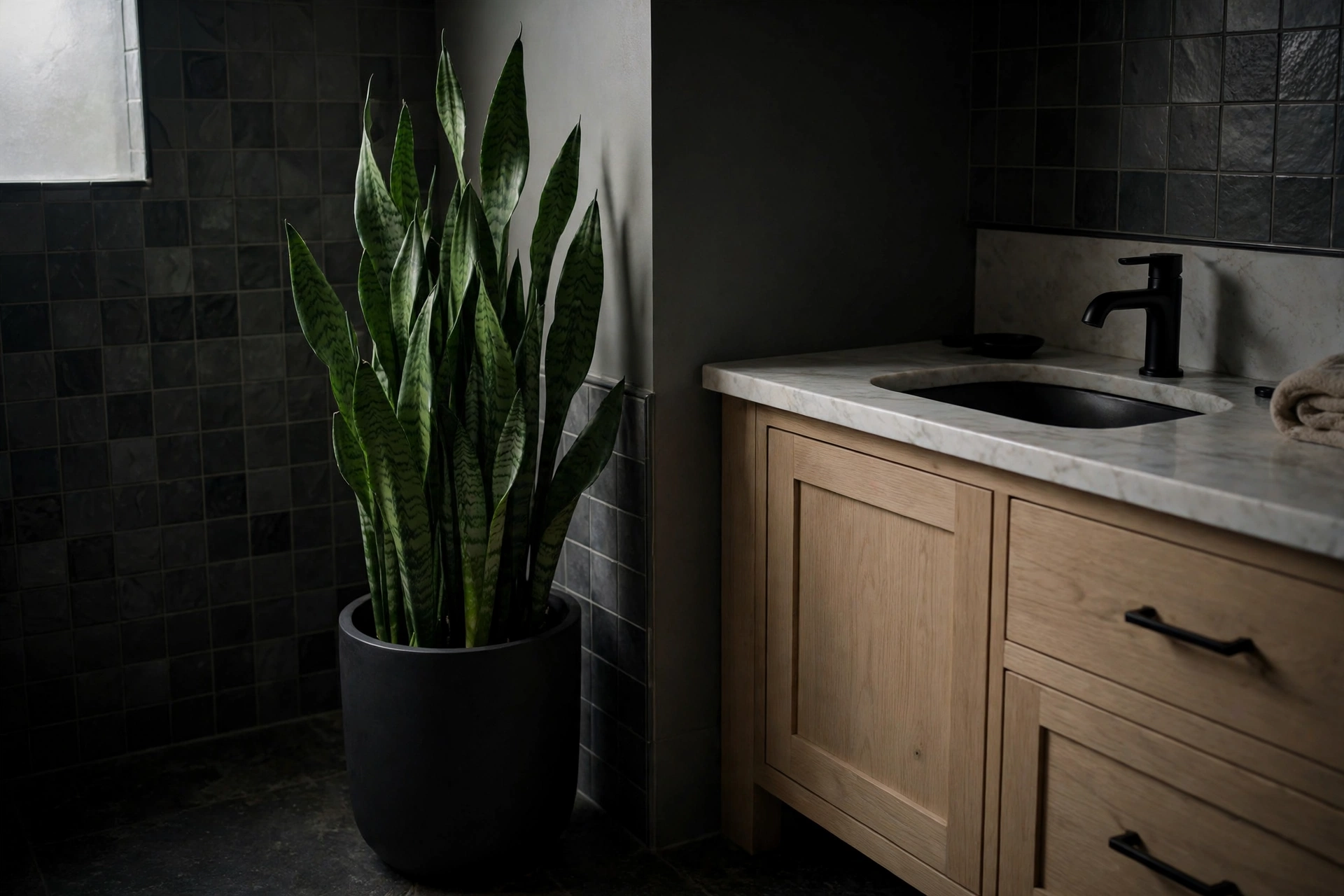
Snake plants are nearly indestructible, which makes them perfect for windowless bathrooms and forgetful waterers. Their upright, sculptural leaves add architectural interest to empty corners, and they tolerate the lowest light levels of any common houseplant. Water sparingly — every two to three weeks is plenty, and overwatering is the only reliable way to kill one. Choose a tall variety like Laurentii for floor placement beside the vanity, or a compact bird’s nest type for countertops. Snake plants also release oxygen at night, a fun bonus for en-suite bathrooms. Pair the pot with your bathroom’s metal finishes — matte black or brass planters tie the plant into the room’s design instead of looking like an afterthought.
3. Ferns That Love Bathroom Humidity
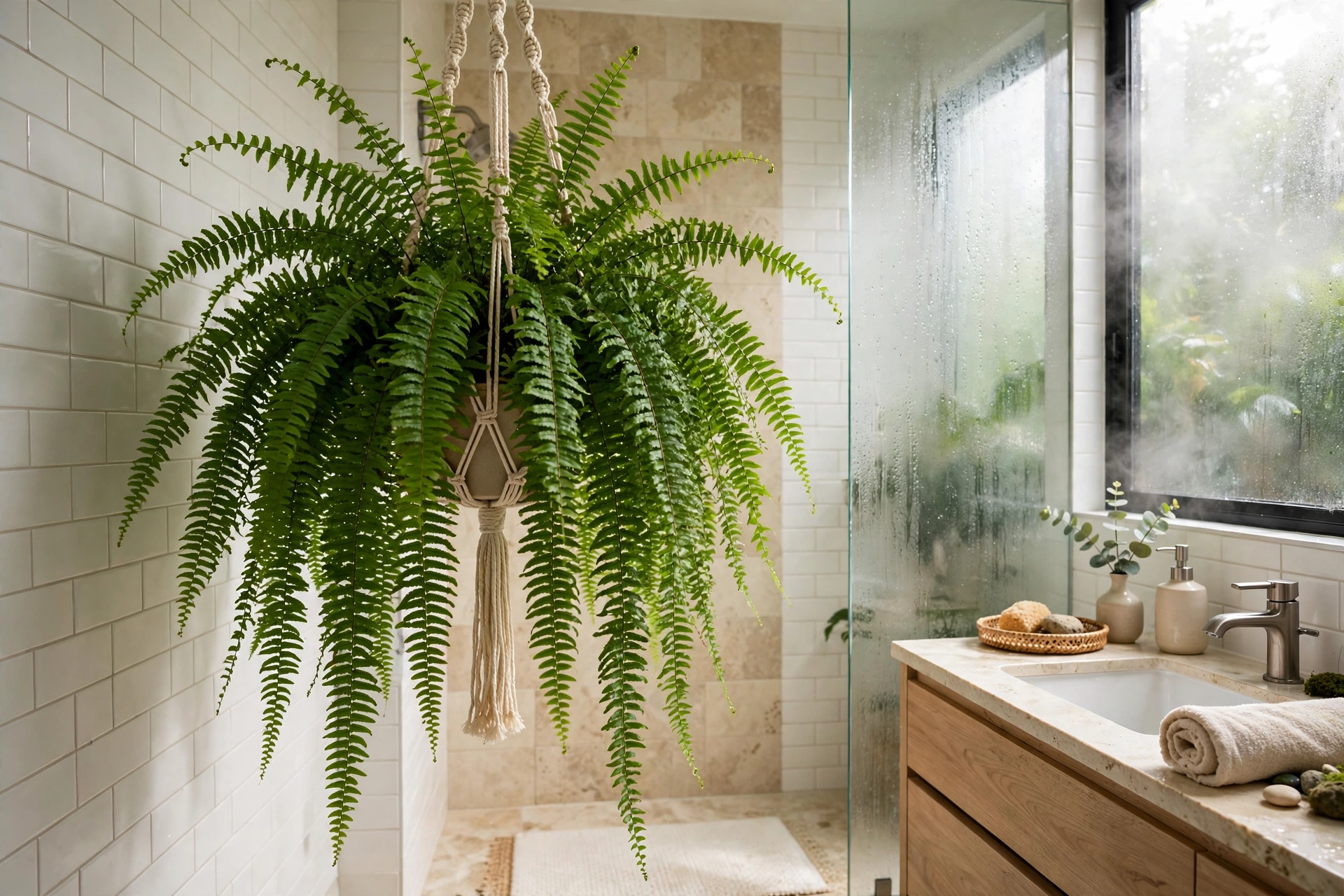
Ferns evolved for steamy forest floors, so bathroom humidity feels like home to them. Boston ferns, bird’s nest ferns, and maidenhair ferns all flourish with regular misting and indirect light, unfurling lush fronds that soften hard bathroom lines. Keep soil consistently moist but not soggy, and place ferns where they get bright indirect light — a frosted window or a spot a few feet from the shower works well. Because spa bathroom design ideas for a relaxing retreat at home share the same love of natural moisture. Maidenhair ferns are the divas of the group and need daily attention; bird’s nest ferns are far more forgiving for beginners.
4. Peace Lilies for Elegant Blooms
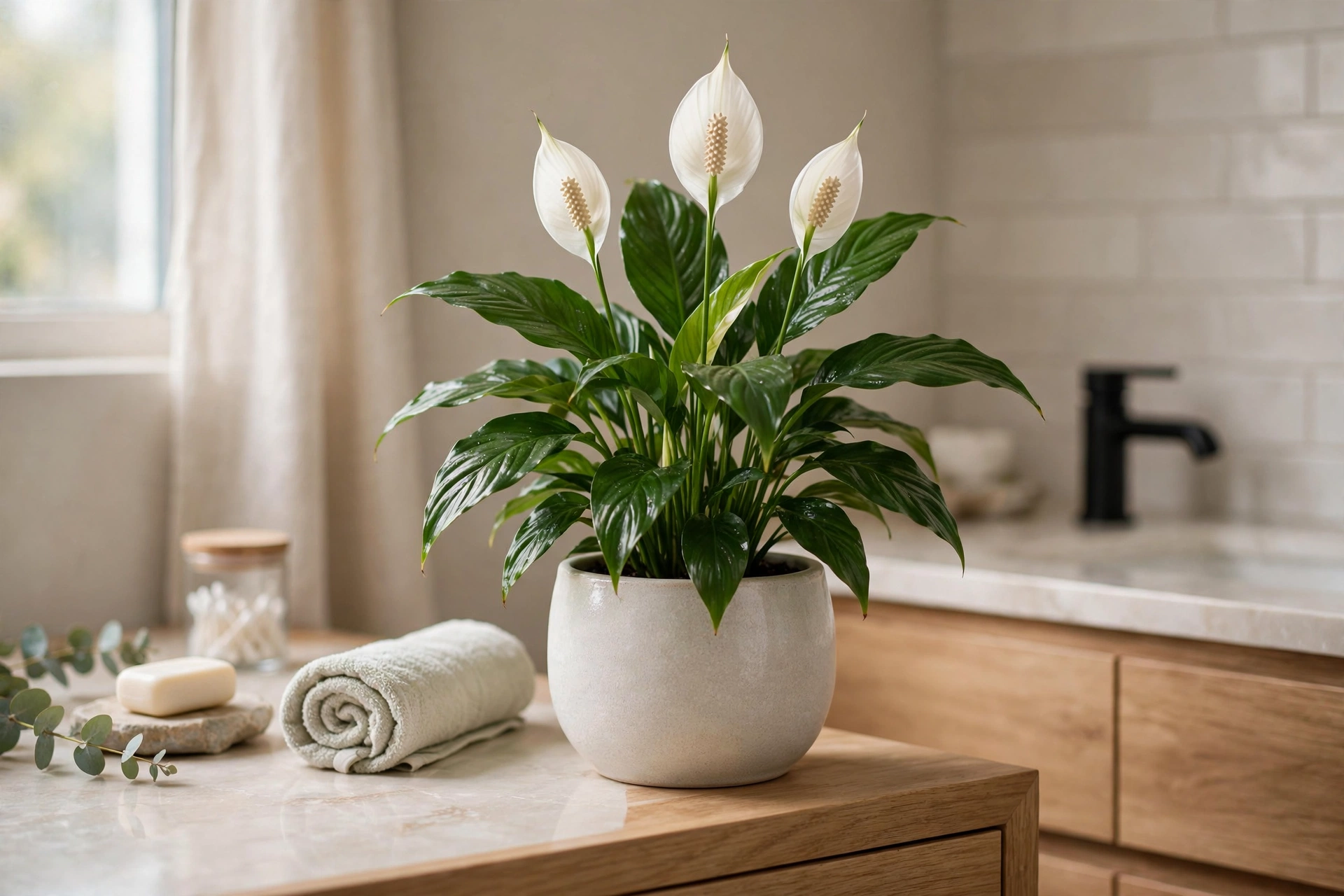
Peace lilies bring something most bathroom plants cannot: elegant white flowers. Their glossy dark leaves and sculptural blooms look stunning against white tile, and they thrive in the low light and high humidity of bathrooms. They even tell you when they are thirsty — the leaves droop dramatically, then perk right back up after watering. Keep them in medium to low indirect light and water weekly, letting the top inch of soil dry between waterings. Peace lilies are toxic to pets, so place them on high shelves or vanities away from cats and dogs. Wipe the broad leaves monthly with a damp cloth to keep them glossy and photosynthesizing efficiently.
5. Air Plants with No Soil Needed
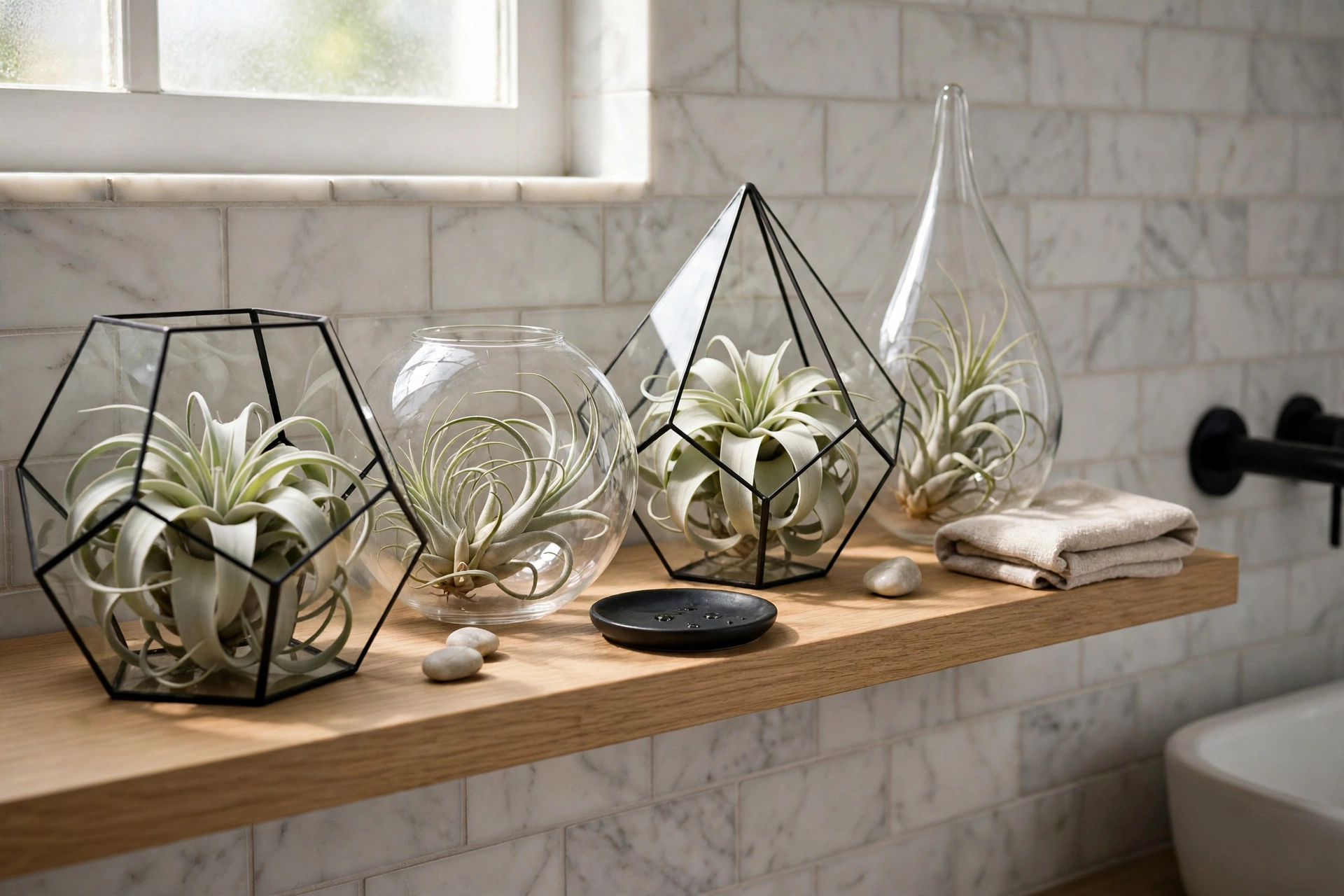
Air plants (tillandsia) are the ultimate low-commitment bathroom plant — they need no soil at all. They absorb moisture through their leaves, so the humidity from your shower does half the watering work. Display them in glass terrariums, mounted on driftwood, or nestled in seashells for a sculptural, modern look. Mist them two to three times a week, or give them a 20-minute soak weekly in drier bathrooms, then let them dry upside down so water does not pool in the crown. Because they are so light and small, air plants work in bathrooms with zero counter space — hang them from the ceiling or the shower rod. Group three to five together for visual impact instead of scattering singles.
6. Spider Plants for Easy Care
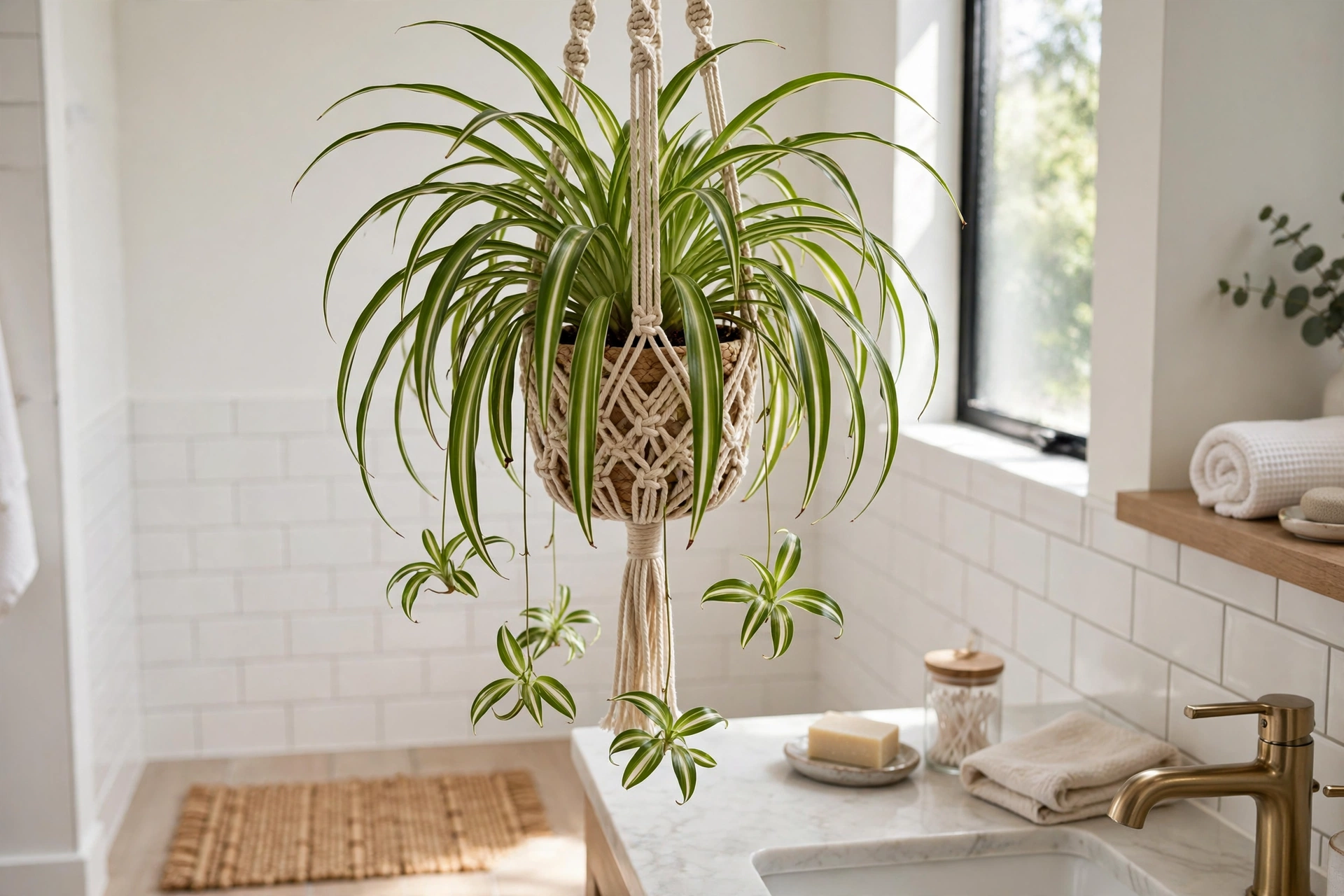
Spider plants have been bathroom staples since the 1970s for good reason: they are tough, fast-growing, and endlessly cheerful. Their arching striped leaves look great in hanging baskets where the plantlets — little baby spiders — dangle below like a living mobile. They tolerate low light and bounce back from missed waterings, though brown leaf tips signal too much fluoride in tap water or too-dry air. Bright indirect light keeps the variegation crisp; in very low light the stripes fade but the plant survives. Spider plants are non-toxic to pets, making them one of the safest bathroom choices for animal households. Propagate the babies in water or soil to fill every bathroom in the house.
7. Lucky Bamboo in Glass Vases
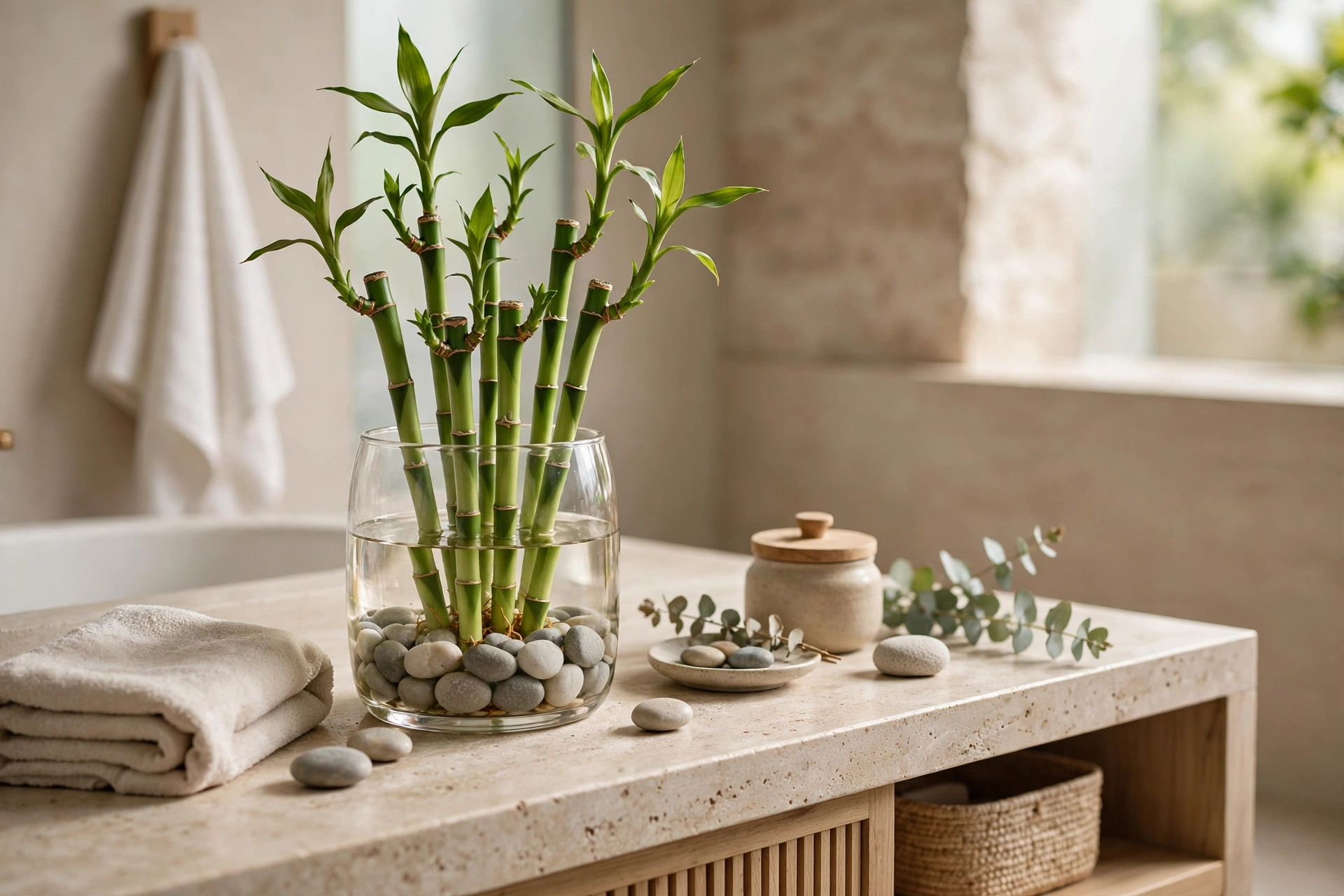
Lucky bamboo is less a plant and more a living sculpture — and it is made for bathrooms. It grows in water alone, so a clear glass vase filled with pebbles and water becomes both planter and decor. It prefers filtered, indirect light rather than direct sun, which suits most bathroom windows perfectly. Change the water every one to two weeks and use filtered water if yours is heavily chlorinated, since lucky bamboo is sensitive to chemicals. The stalks can be trained into spirals and lattices for extra artistry, or kept straight and simple for a zen look. Add it to a vanity tray with a candle for an instant spa vignette that costs almost nothing.
8. Orchids for Spa-Like Luxury
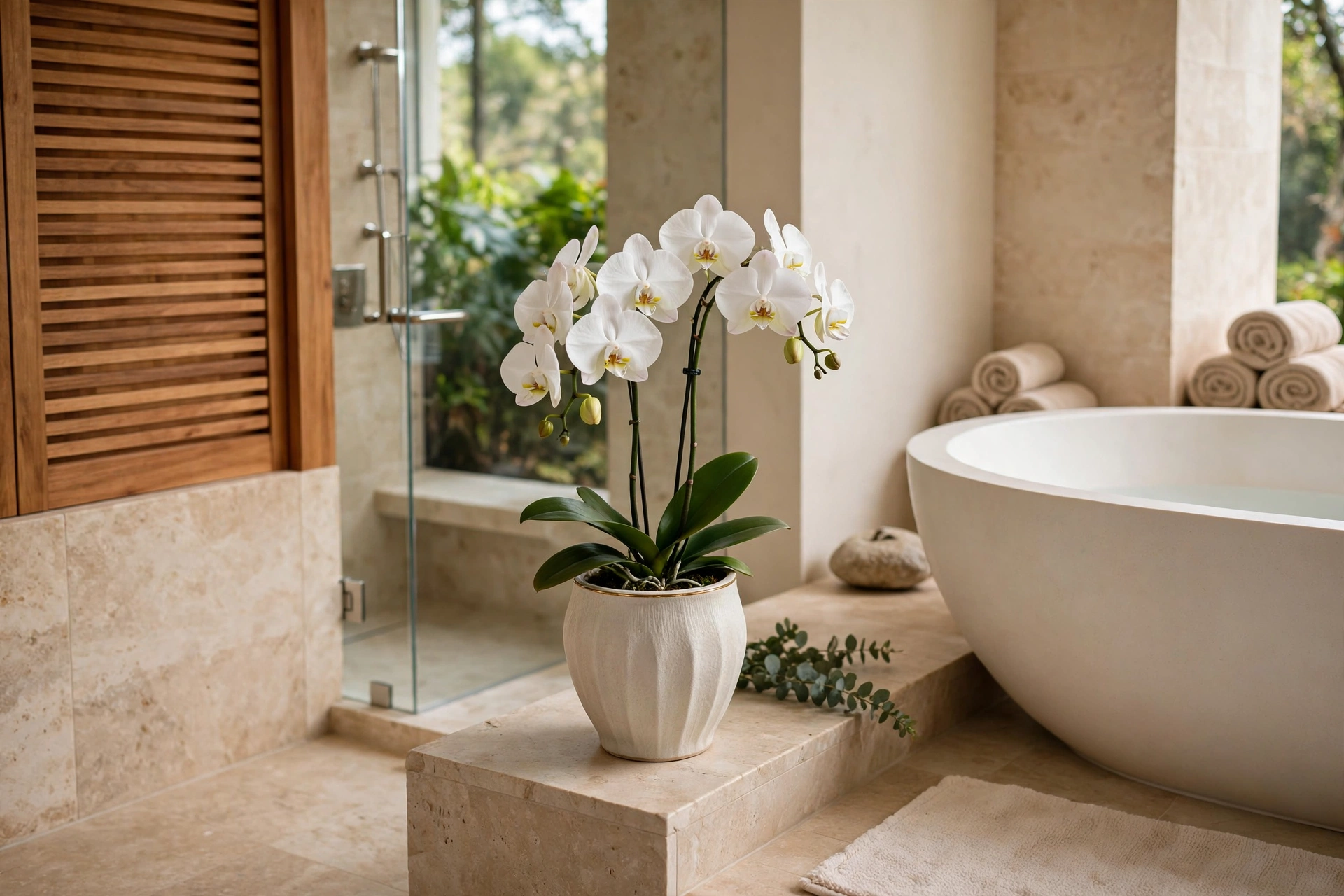
Nothing says spa bathroom like a blooming orchid. Moth orchids (phalaenopsis) thrive in bathroom humidity and bright indirect light, and their blooms last two to three months — far longer than cut flowers. Place them near a frosted window where they get light without direct sun, and water by soaking the bark mix weekly, then draining completely. Never let the roots sit in standing water, which causes rot. After blooms fade, keep watering and a new flower spike usually emerges within months. One orchid on the vanity or tub edge is enough — their sculptural presence carries the whole room. Choose white blooms for classic spa calm or fuchsia for a bolder statement.
9. Eucalyptus for Fragrance and Style
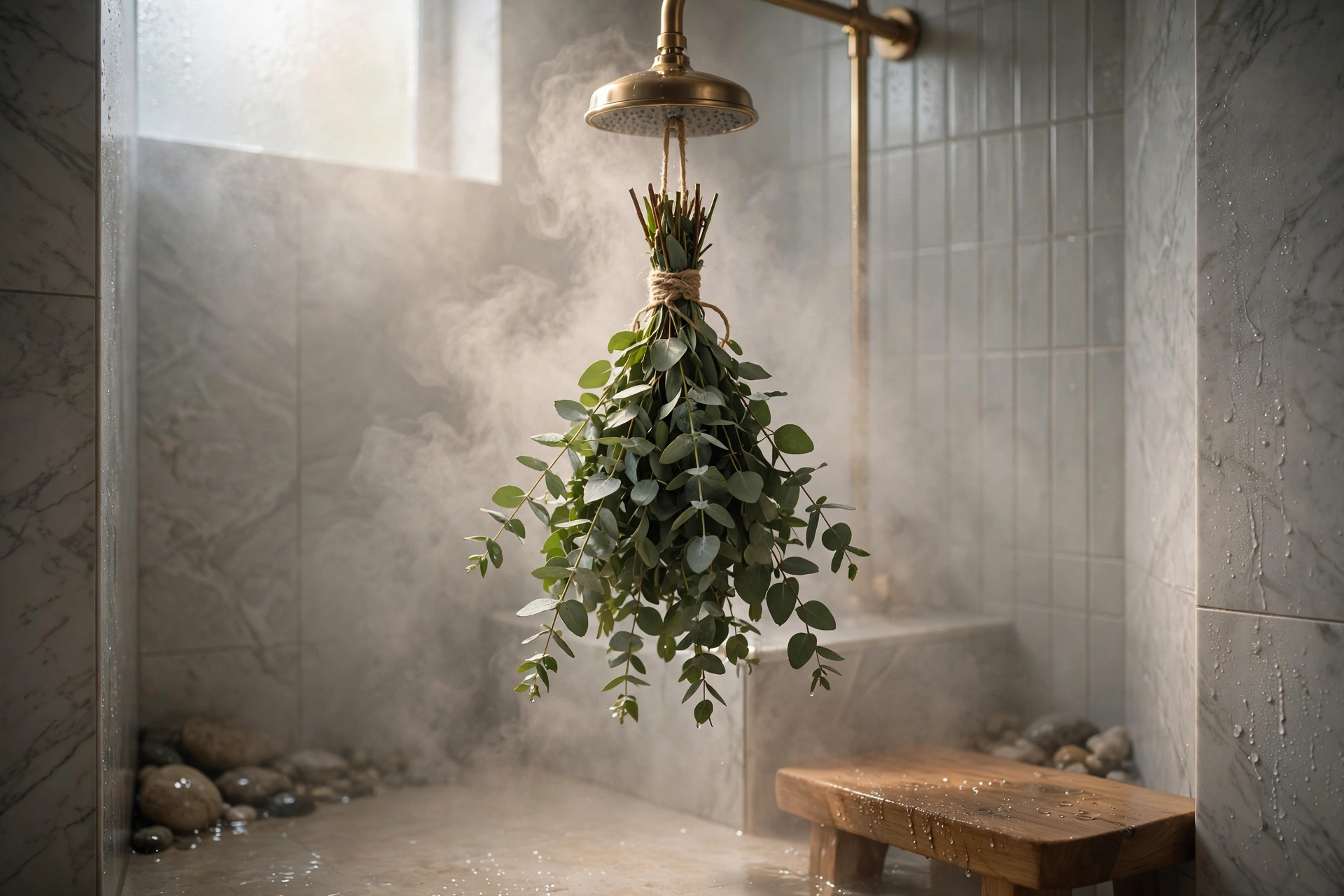
Eucalyptus does double duty: it looks stunning and perfumes the whole bathroom. Hang a fresh bundle from the showerhead — the steam releases its essential oils, turning every shower into an aromatherapy session. A bundle lasts two to three weeks before drying out, and dried eucalyptus still looks beautiful in a vase for months. Silver dollar and baby blue varieties have the prettiest round leaves for decor. If you prefer a living plant, potted eucalyptus needs bright light and good ventilation, so it suits bathrooms with real windows and exhaust fans. Either way, the silvery-green foliage and clean scent instantly elevate a basic bath into a retreat.
10. Hanging Plants Above the Tub
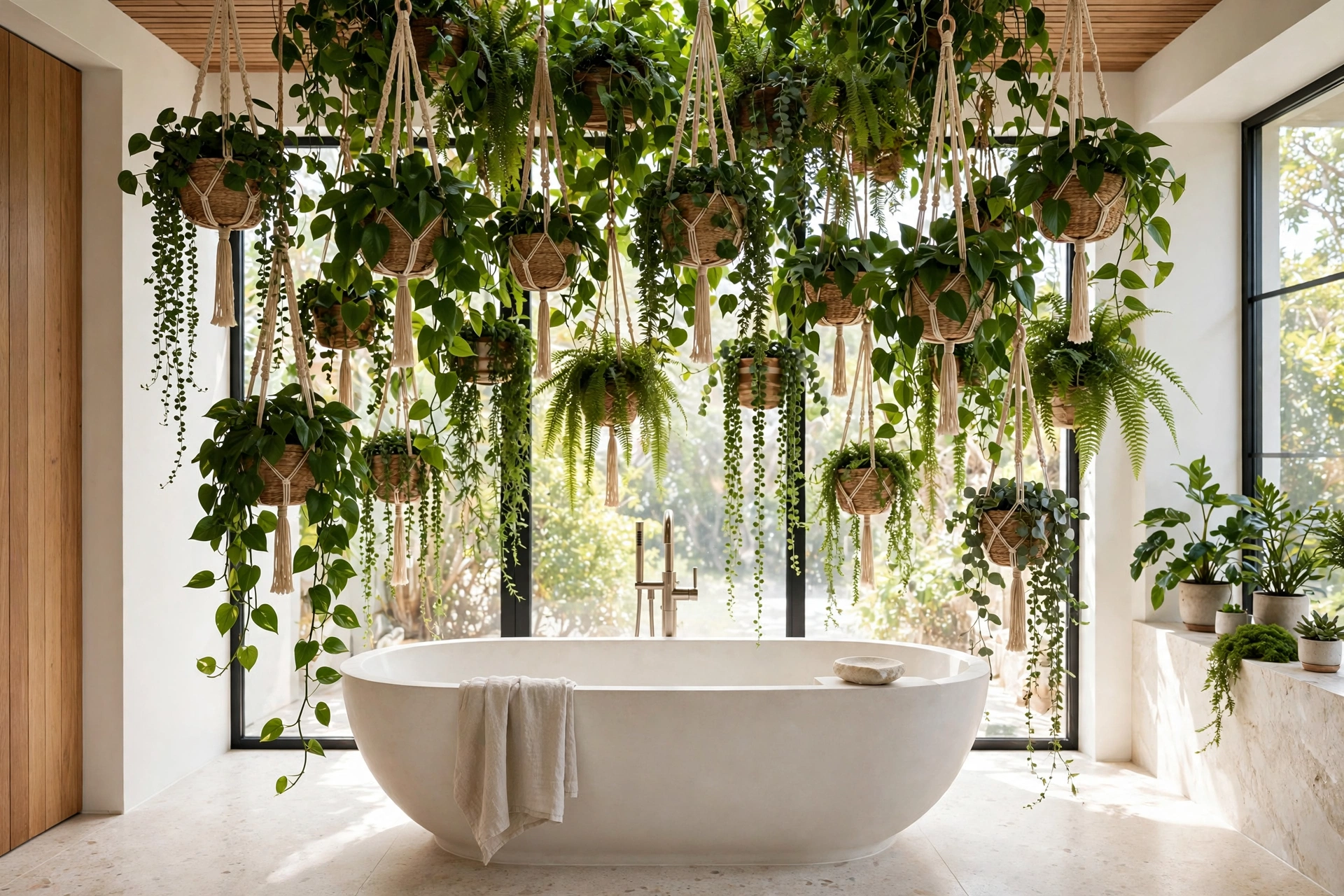
The space above the bathtub is prime real estate for trailing plants. A ceiling hook or a wall-mounted bracket holds a hanging basket of pothos, philodendron, or string of pearls, creating a living canopy over your soak. The humidity from baths keeps them happy, and the height draws the eye upward, making small bathrooms feel larger. Make sure the planter has a drainage tray or a watertight cachepot so drips never land on bathers. Spruce’s roundup of low-light hanging plants is a great reference for trailing varieties that tolerate dimmer baths. Keep vines trimmed so they frame the tub rather than invading your personal space.
11. Small Succulents on the Windowsill
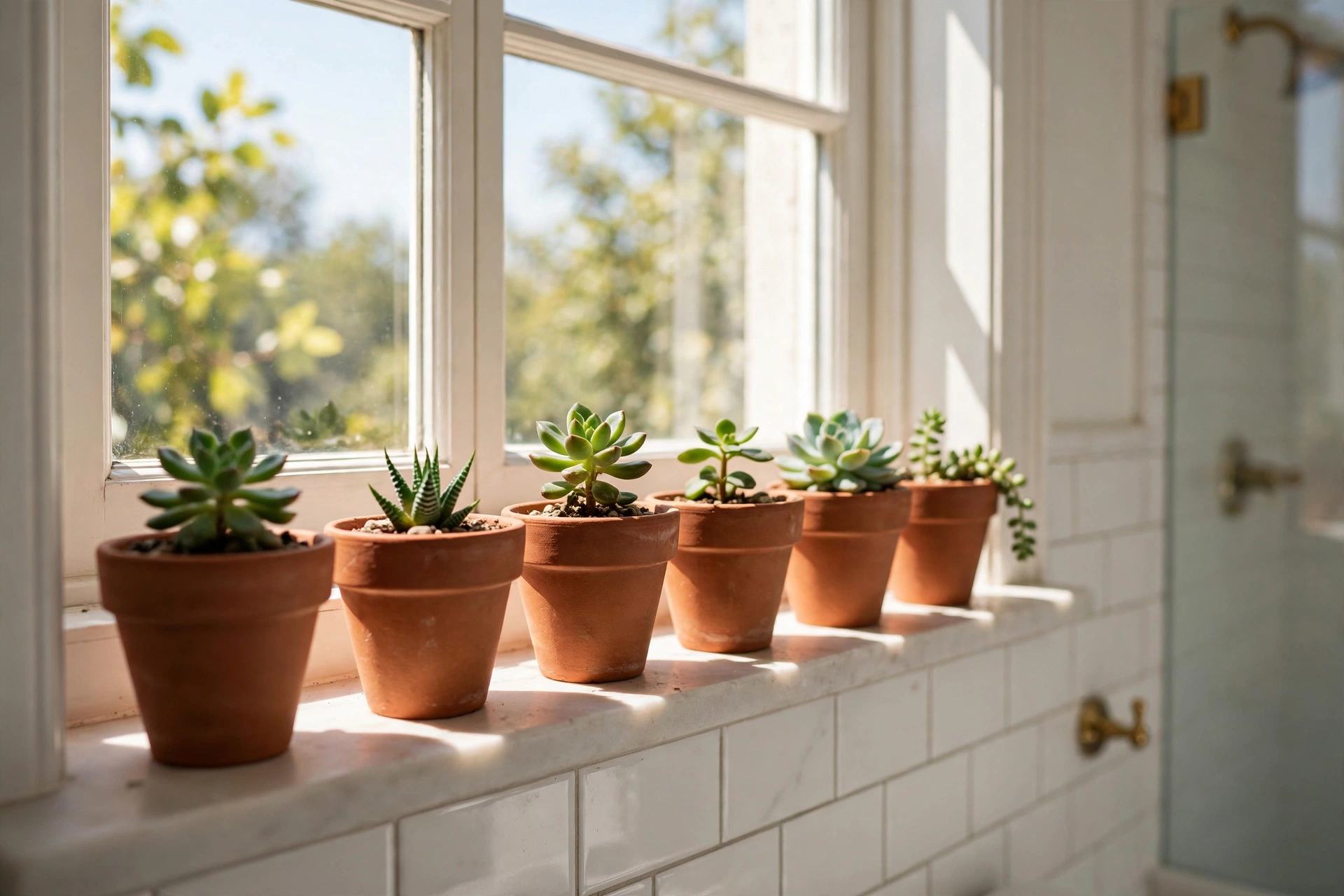
Succulents break the low-light rule — they need bright light — but a sunny bathroom windowsill is one of their happiest homes. Echeveria, haworthia, and jade plants thrive with direct sun and infrequent watering, and their sculptural rosettes add modern geometry to the bath. Plant them in small terracotta or ceramic pots with drainage holes and gritty, fast-draining soil. Water deeply but rarely — every two to three weeks — and always let the soil dry completely between waterings. A row of three small succulents in matching pots looks far more designed than a single random cactus. Rotate the pots monthly so all sides get sun and the plants grow evenly instead of leaning.
12. A Living Wall of Greenery
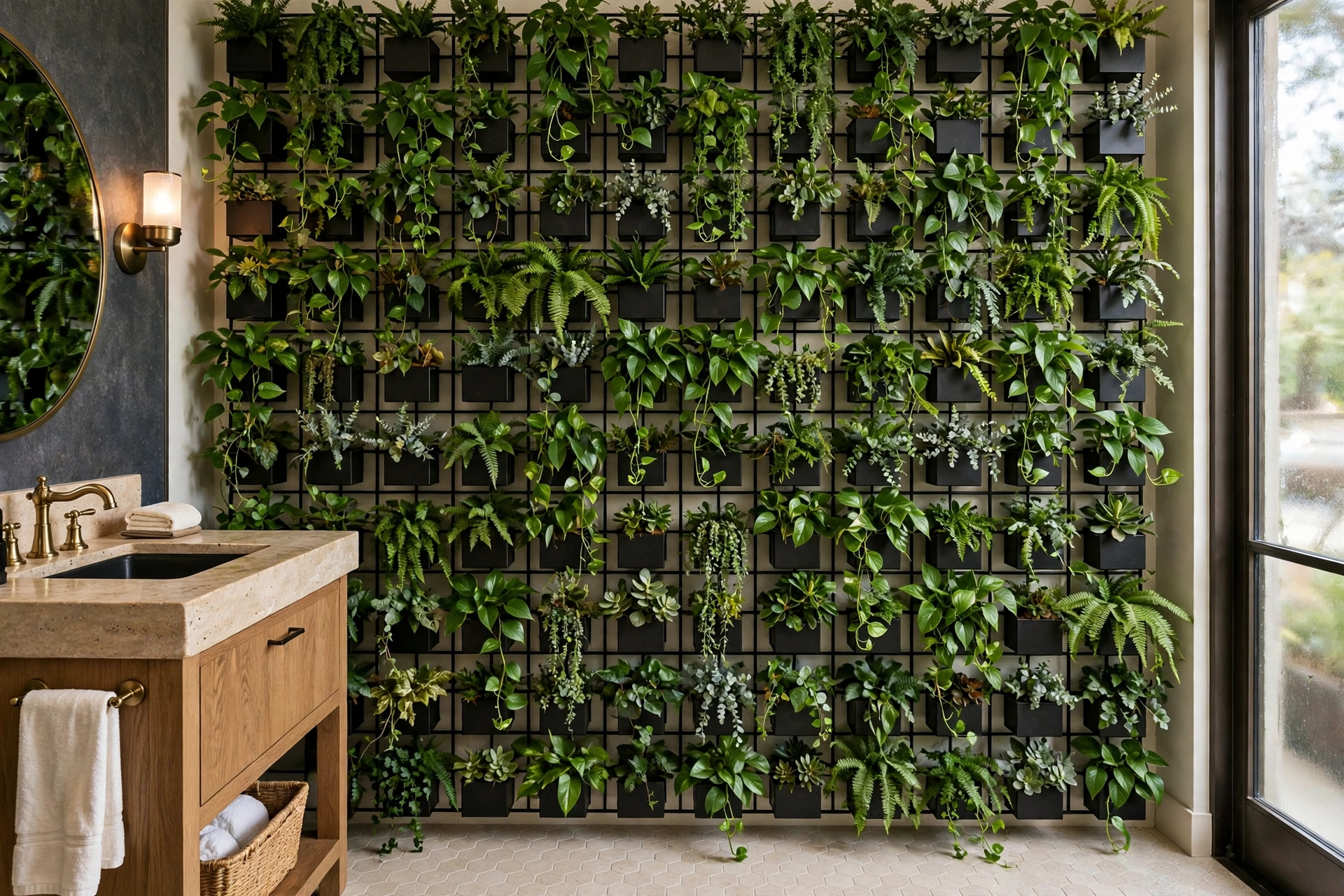
For maximum impact, dedicate one bathroom wall to plants. A living wall — mounted planters, a pegboard of small pots, or a grid of hanging planters — turns greenery into architecture. Choose a wall that gets some light, even indirect, and stick to humidity lovers like ferns, pothos, and philodendrons that forgive the arrangement’s quirks. Watering is the main challenge: self-watering planters or a simple drip tray system keeps maintenance manageable. Start small with a three-by-three grid of pothos and ferns before committing to a full wall. A living wall above the toilet or beside the vanity becomes the bathroom’s focal point, making even a basic bath feel like a boutique hotel.
13. ZZ Plants for Dark Bathrooms
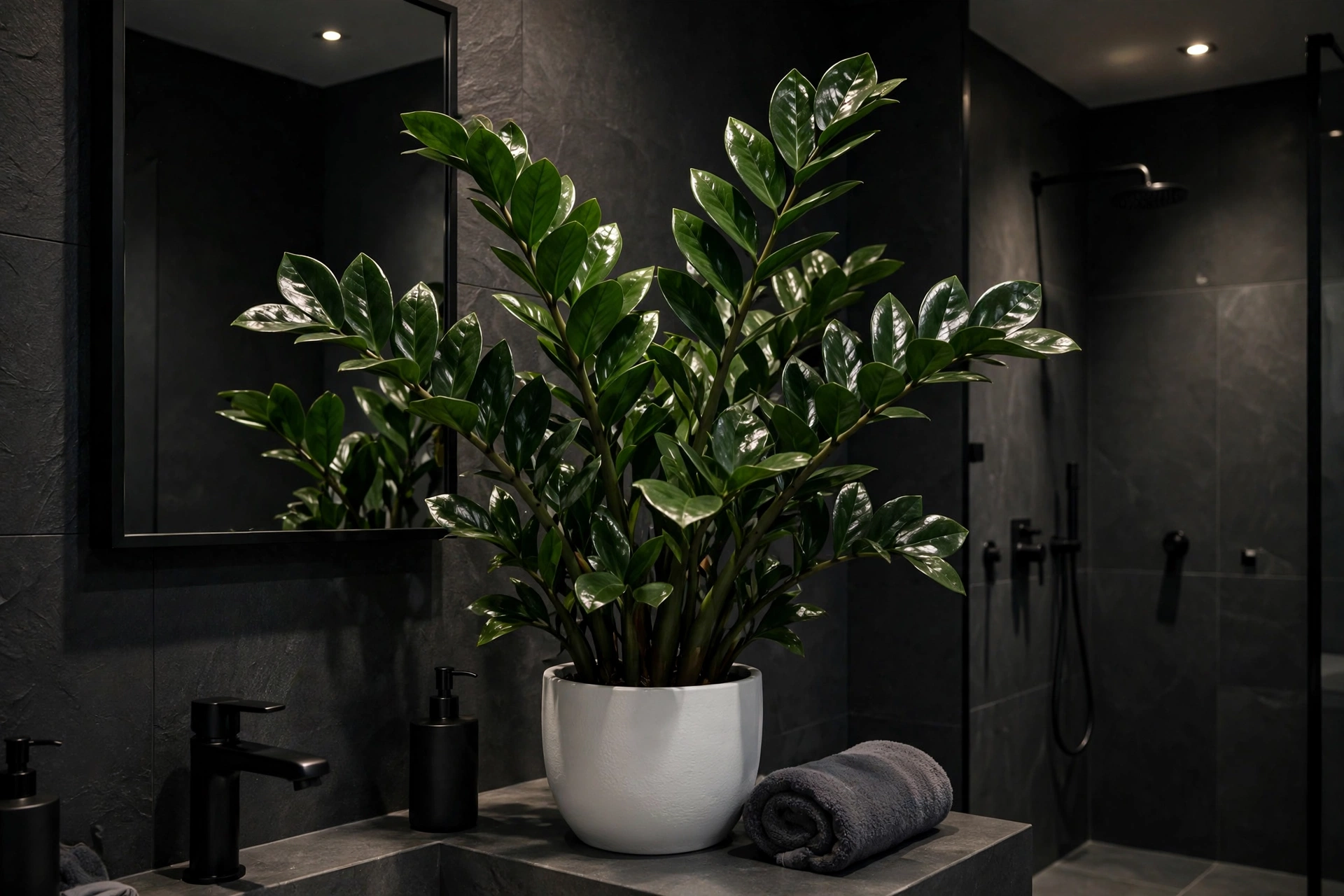
If your bathroom has no window at all, the ZZ plant is your answer. Its glossy, dark-green leaves tolerate near-darkness, drought, and neglect — it stores water in thick rhizomes underground, so missing a month of watering barely phases it. The upright, architectural growth habit suits modern bathrooms, and it slowly reaches two to three feet tall. Water only when the soil is completely dry, and wipe the leaves occasionally to keep their shine. Like pothos and peace lilies, ZZ plants are toxic to pets, so keep them on the floor only in pet-free homes. Pair with a simple white or concrete planter to let the dramatic foliage be the star.
14. Plant Stands and Tiered Displays
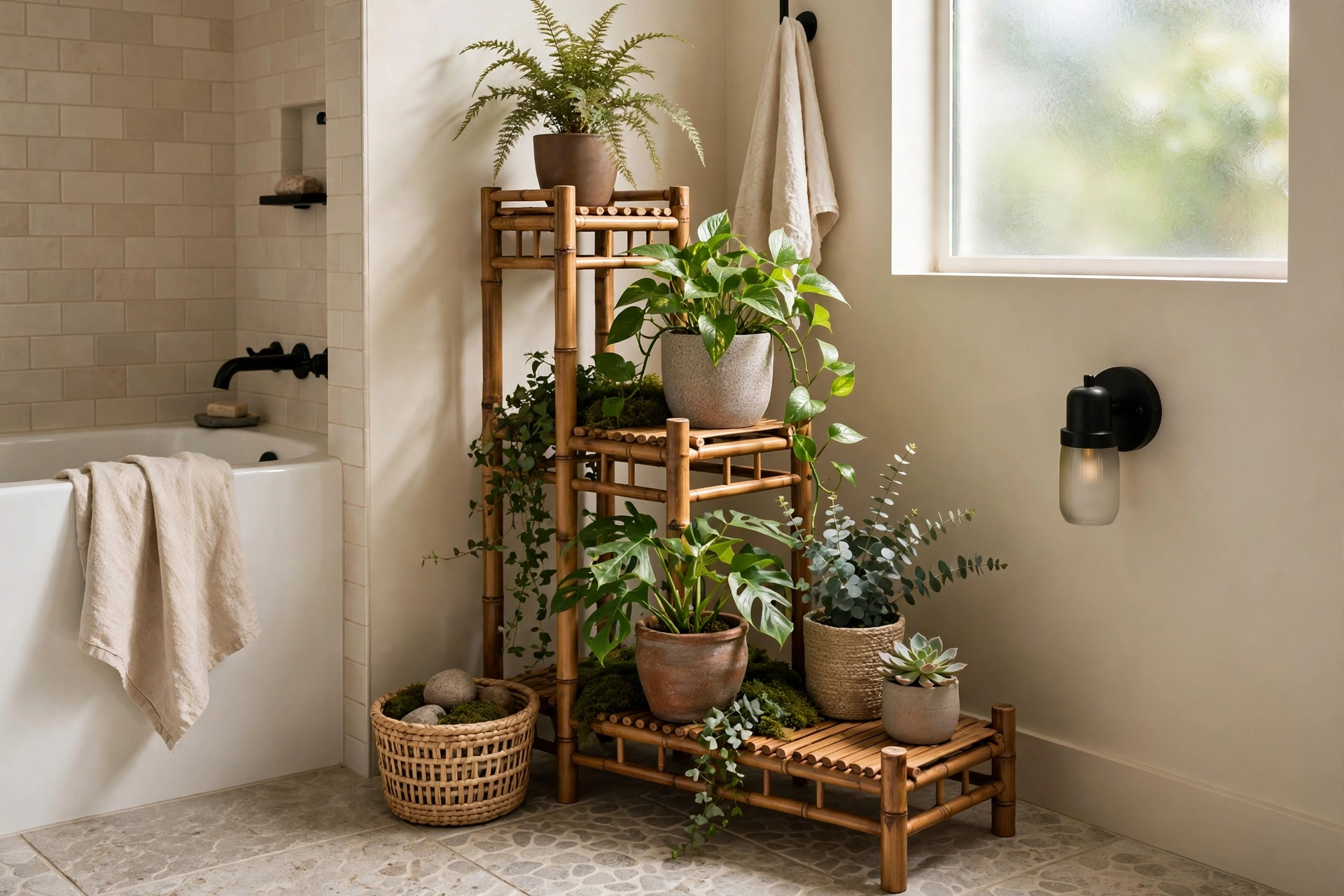
How you display plants matters as much as which plants you choose. A tiered plant stand turns an empty bathroom corner into a lush, layered garden, letting trailing plants cascade over upright ones. Bamboo and teak stands handle bathroom humidity better than raw pine, which can warp. Vary heights and leaf shapes — a tall snake plant, a mid-level fern, and a trailing pothos — for a display that looks professionally styled. Bathroom shelving ideas for storage and style pair perfectly with small potted plants mixed among folded towels. Keep displays away from direct shower spray, and always use saucers to protect wood stands from water damage.
15. Faux Plants When Real Won’t Work
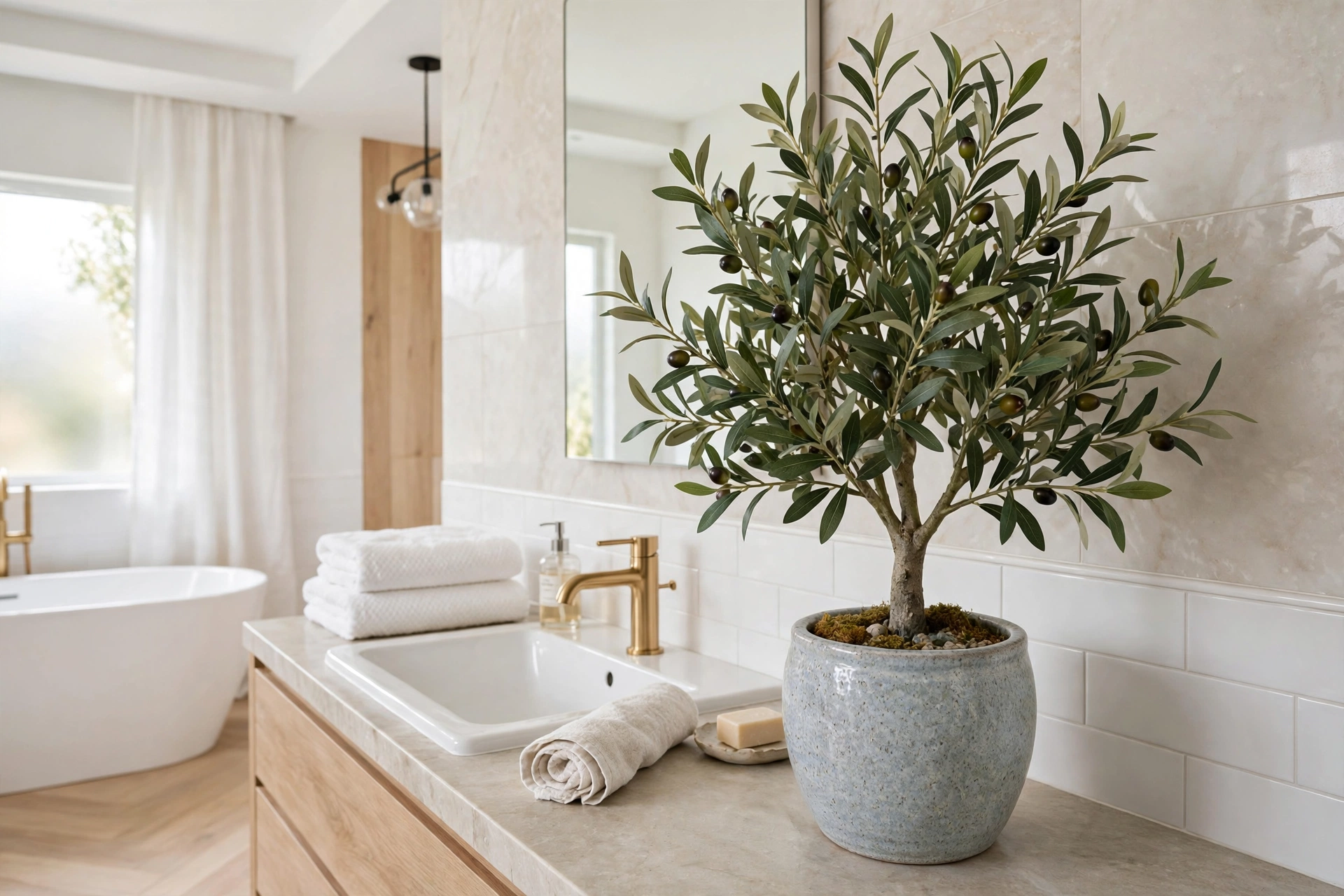
Sometimes a bathroom truly cannot support live plants — no light, no ventilation, or a schedule that guarantees neglect. Modern faux plants have come a long way: high-quality silk and plastic ferns, eucalyptus stems, and pothos garlands look convincingly real at a glance. The key is placement — put faux plants where guests will not touch them, like high shelves or above cabinets, and mix in one real plant lower down for authenticity. Dust faux plants monthly, since dust is what gives them away. Spend more on fewer, better pieces rather than filling the room with obviously plastic greenery. A single gorgeous faux olive tree in a beautiful pot beats five cheap plastic ferns every time.
Frequently Asked Questions
What plants do best in a bathroom with no window?
Snake plants, ZZ plants, pothos, and cast iron plants tolerate very low light and bathroom humidity. They will grow slowly in near-darkness but survive for months or years. Rotate them into a brighter room for a week every month or two to recharge, and consider a small grow light on a timer if you want them to actually thrive rather than merely survive. Faux plants are also a legitimate option for truly lightless baths.
How often should I water bathroom plants?
Less often than you think — bathroom humidity slows evaporation, so soil stays moist longer. Check the top two inches of soil before watering; most bathroom plants want it dry to the touch first. Pothos and ferns like slightly more water, while snake plants and ZZ plants prefer to dry out completely. Always use pots with drainage holes, since standing water causes root rot faster than underwatering ever will.
Are bathroom plants safe around pets?
Many popular bathroom plants — pothos, peace lilies, ZZ plants, philodendrons — are toxic to cats and dogs if chewed. Safe choices include spider plants, Boston ferns, parlor palms, and orchids. When in doubt, place plants on high shelves or in hanging planters out of reach, and check the ASPCA’s plant database before bringing a new species home. Hanging planters solve most pet problems elegantly.
Will plants survive the temperature swings in a bathroom?
Most tropical houseplants handle the warm steam of showers just fine — it mimics their native habitat. The danger is cold drafts from windows in winter and the drying blast of heat lamps or radiators. Keep plants away from direct heat sources and drafty windows, and avoid placing delicate species right beside an exterior door. Stable, warm, humid conditions are what bathroom plants want most.
Do bathroom plants really improve air quality?
Plants do filter some airborne compounds and release oxygen, but you would need a jungle — dozens of plants — to measurably change a room’s air. The real benefits are psychological: studies consistently show that greenery reduces stress and improves mood, which is exactly what you want in a bathroom. Think of bathroom plants as wellness decor backed by science, not as air purifiers. An exhaust fan still does the heavy lifting for actual air quality.
Keep Exploring
A bathroom with plants simply feels better — fresher, calmer, more alive. Whether you start with one indestructible pothos on a high shelf or go all in with a living wall, these bathroom plant ideas prove that greenery belongs in the bath. Match the plant to your light, water less than you think, and let the humidity do the rest.
Once your plants are thriving, build the retreat around them. Add soft lighting, a plush rug, and natural textures like wood and stone, and your bathroom becomes the spa-like escape you have been wanting. Green is the easiest luxury there is — and in the bathroom, it practically grows itself.