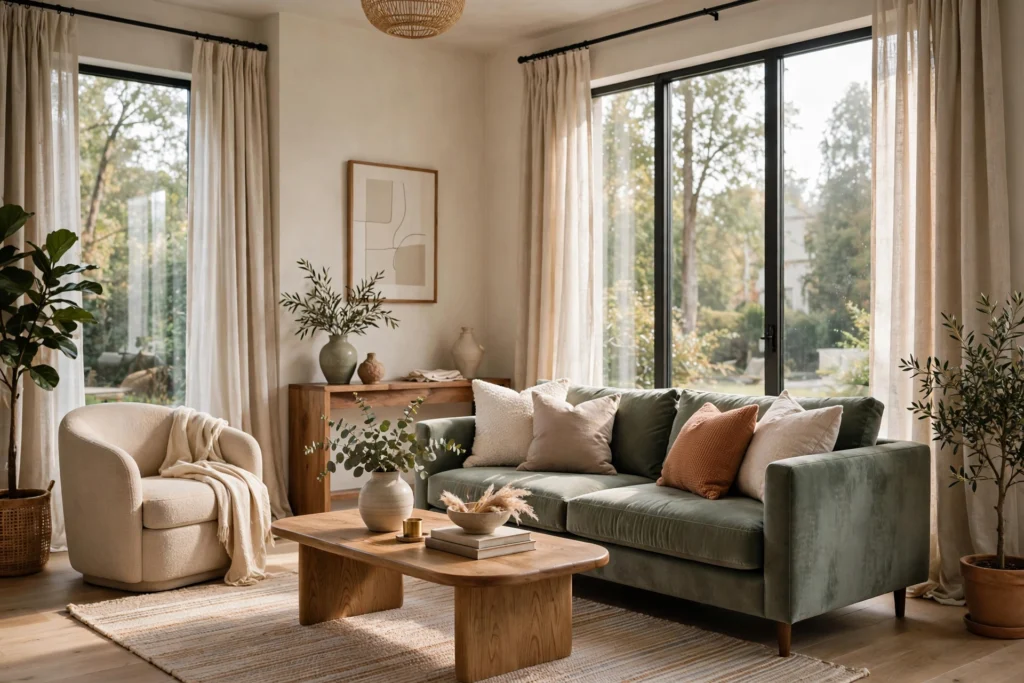

Curtains are the finishing layer that turns a living room from furnished to finished. They soften hard window edges, control light, add color and texture, and can even make ceilings look taller and rooms feel larger. These living room curtain ideas cover every style — from breezy linen sheers to dramatic velvet — plus the hanging tricks designers swear by.
Whether your living room has one modest window or a full wall of glass, the right curtains frame the view and complete the room. If you love coordinating window treatments across the house, our bedroom curtain ideas for privacy, light, and style use the same principles in a more restful palette.
1. Hang Curtains High and Wide
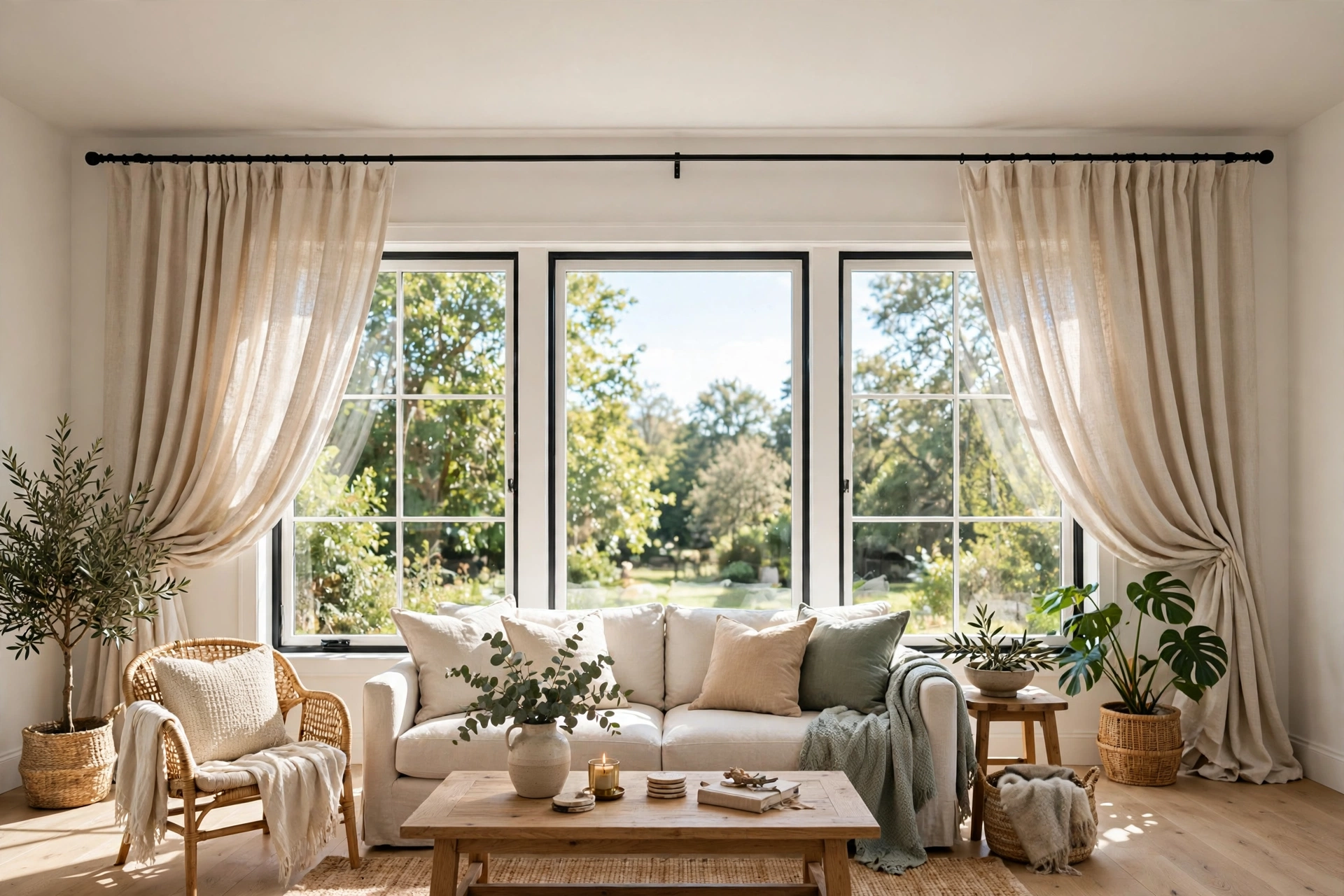
The single most transformative curtain trick costs nothing: mount the rod 4 to 6 inches above the window frame and extend it 8 to 12 inches beyond each side. Hanging high draws the eye upward and makes ceilings feel taller, while the extra width lets panels stack fully off the glass so they never block light when open. This also makes windows look significantly larger than they are. Use a sturdy rod with brackets anchored into studs or drywall anchors, since the leverage of wide-mounted rods demands solid support. It is the fastest way to make builder-grade windows look custom.
2. Choose Floor-Length Panels
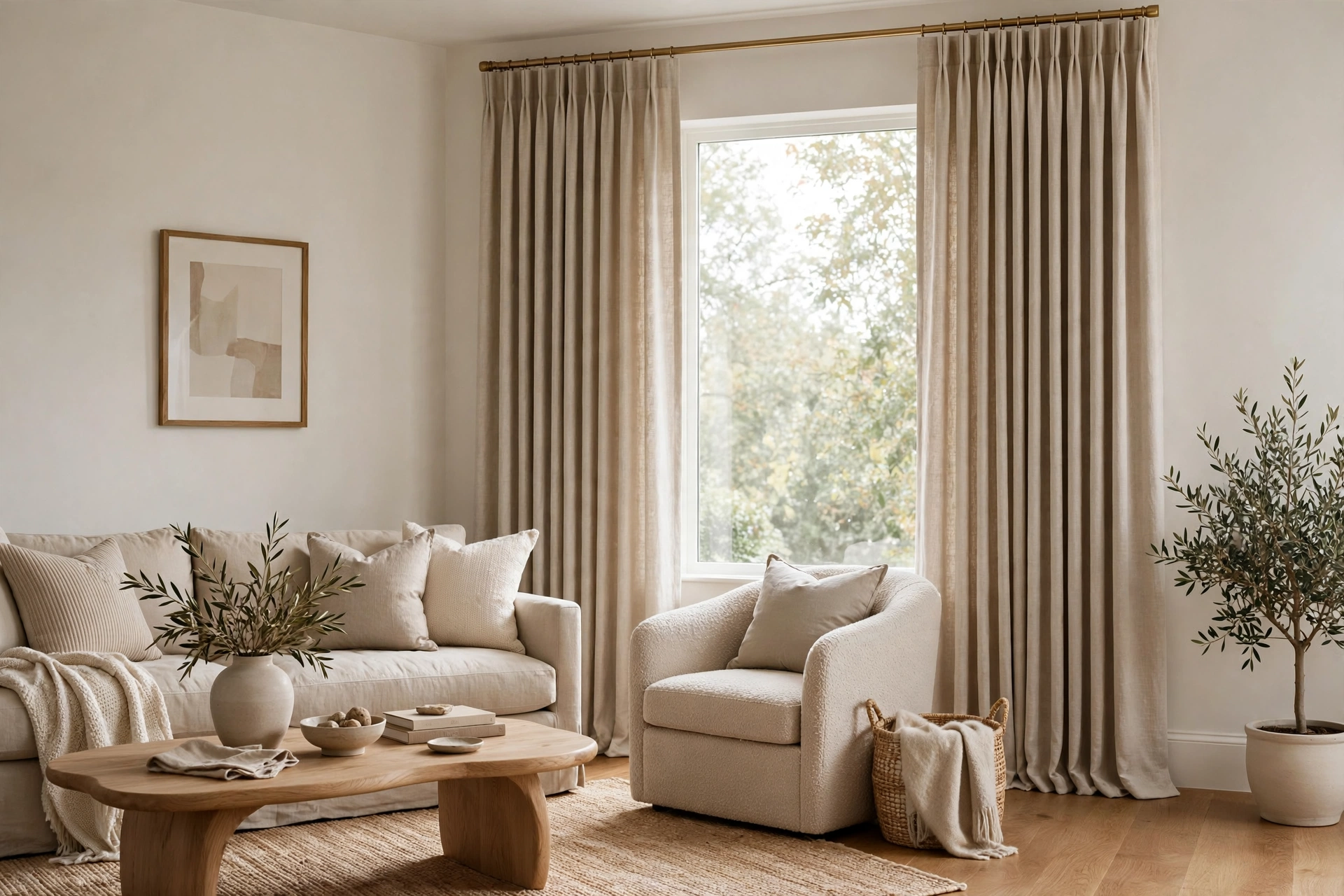
Floor-length curtains — panels that just kiss the floor or hover half an inch above it — give the living room a tailored, intentional finish. This length elongates the walls and avoids the awkward, unfinished look of too-short panels. Measure from the rod to the floor in three places, since floors are rarely perfectly level, and buy the length that clears the lowest point. For a crisp modern look, keep the hem just off the floor; for softer traditional rooms, allow a slight break where the fabric touches. Either way, full length is what separates designer-looking windows from an afterthought.
3. Layer Sheers Under Heavier Drapes
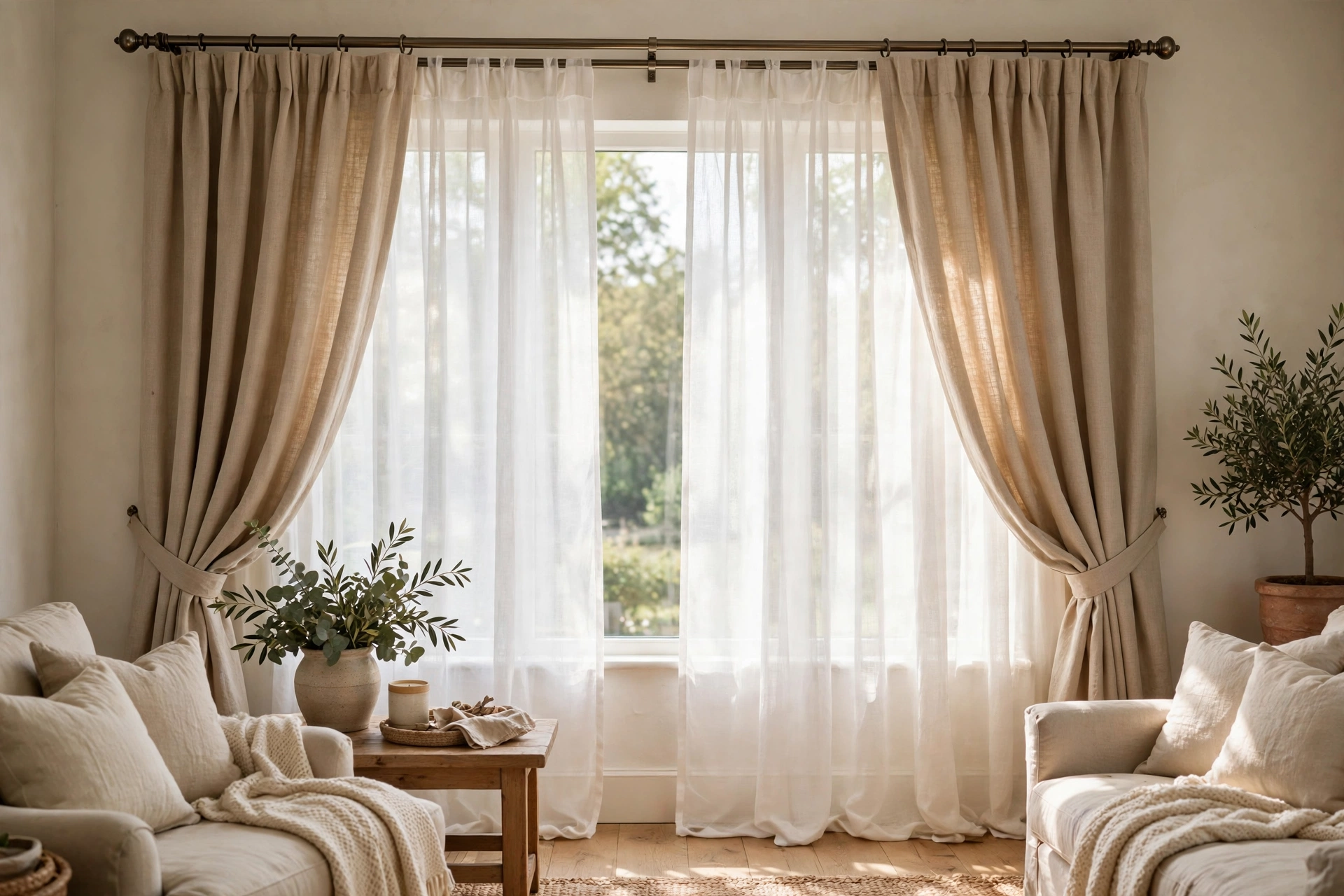
Layering sheer panels beneath heavier drapes gives you the best of both worlds: privacy and softness by day, full coverage at night. Install a double rod or a ceiling track with two channels — sheers on the inner layer, drapes on the outer. During the day, close only the sheers to filter harsh sun into a gentle glow while keeping the room bright. In the evening, draw the drapes for coziness and privacy. The layered look also adds depth and luxury, making even budget-friendly panels look rich. Apartment Therapy’s curtain styling guide highlights layering as a favorite designer move for flexible light control.
4. Try Linen for Relaxed Texture
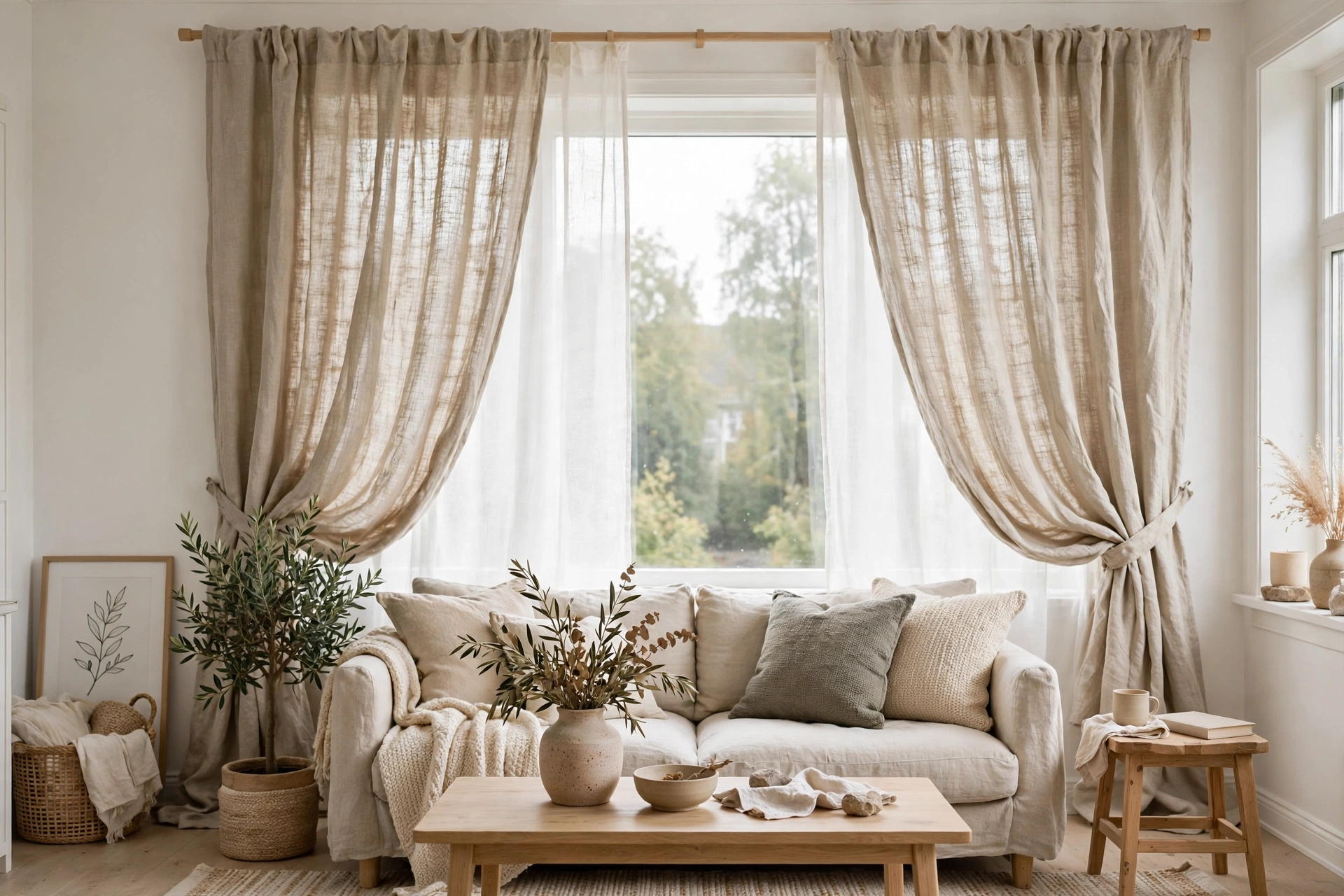
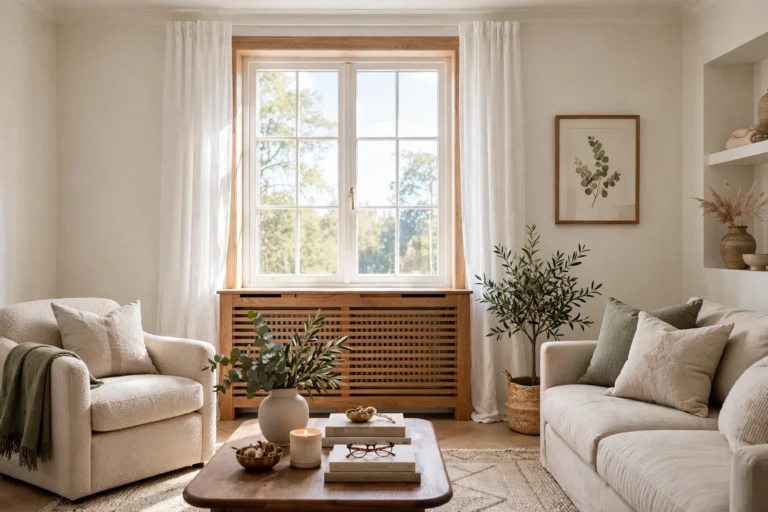
Linen curtains bring an effortless, organic texture that suits modern, coastal, Scandinavian, and farmhouse living rooms alike. The natural slubs and gentle wrinkles keep the look relaxed rather than stiff, and linen filters light into a soft, diffused glow. Choose a medium-weight linen for the best drape — very lightweight linen can look limp, while heavy linen hangs beautifully. Expect some natural wrinkling; it is part of the charm, and a quick steam now and then keeps panels fresh. Linen’s neutral tones also make it easy to coordinate with existing upholstery and rugs.
5. Go Bold With Pattern
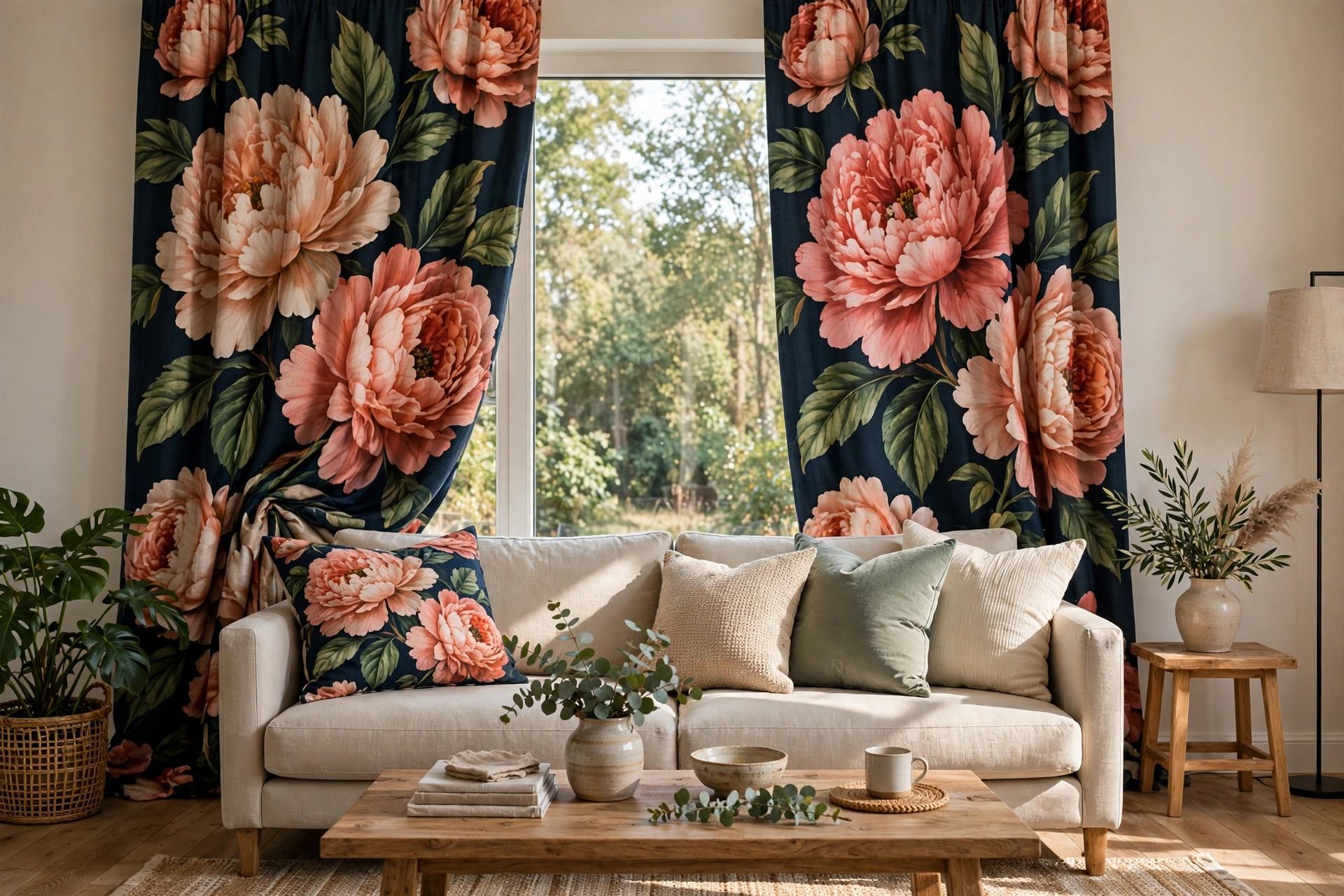
Patterned curtains are the fastest way to inject personality into a neutral living room. Large-scale florals, geometric prints, or classic stripes turn the window wall into a feature. The key is scale: big patterns suit spacious rooms and tall windows, while smaller prints work better in compact spaces. Pull one or two colors from the pattern into throw pillows or a rug to make the choice feel deliberate. If you are pattern-shy, try a subtle tone-on-tone print that reads as texture from a distance. Bold curtains are also easy to change later, making them a low-commitment way to experiment.
6. Choose Velvet for Cozy Luxury
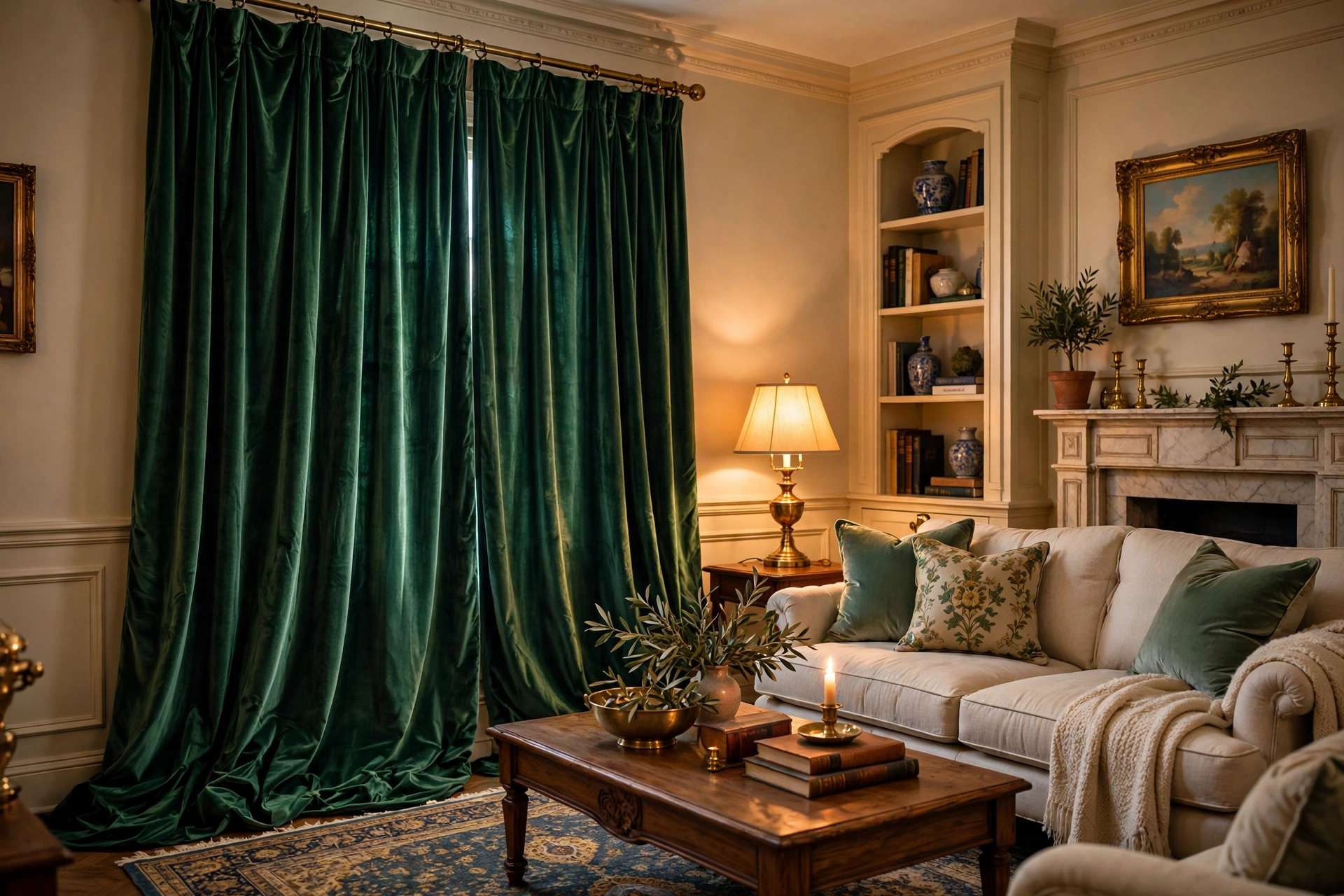
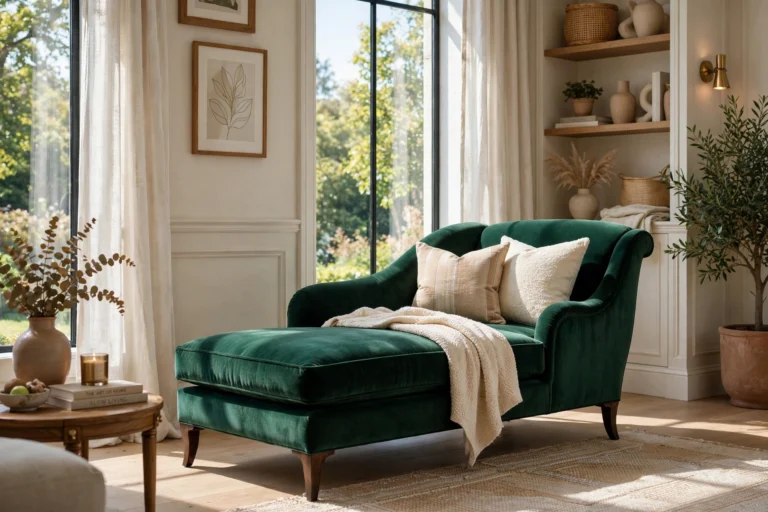
Velvet drapes add instant richness — the fabric catches light with a soft sheen and brings serious coziness to living rooms, especially in fall and winter. Cotton velvet drapes beautifully and feels less formal than silk velvet, making it versatile across traditional and modern rooms. Deep tones like emerald, navy, rust, and charcoal maximize the luxurious effect. Velvet also insulates surprisingly well, helping with drafts around windows. Keep panels brushed and steamed, since velvet shows creases, and choose a lining to protect the fabric from sun fading on south-facing windows.
7. Match Curtains to the Wall Color
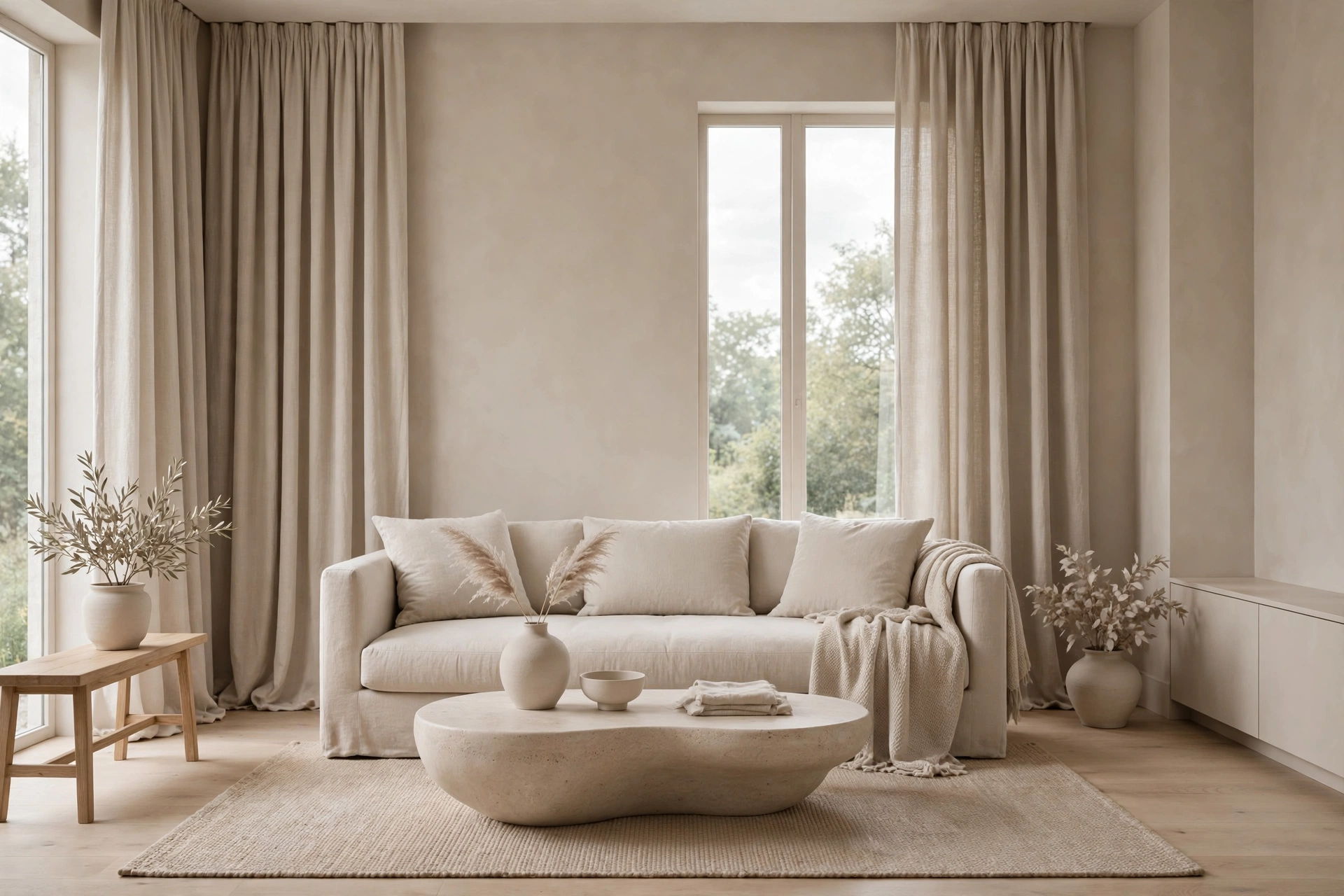
For a serene, seamless look, choose curtains in the same color family as your walls — or even the exact shade. Monochromatic window treatments recede visually, which makes small living rooms feel larger and lets furniture and art take center stage. The texture of the fabric still adds interest: a linen drape against a painted wall in the same tone reads as subtle luxury. This approach works beautifully in white, cream, greige, and soft gray rooms. If exact matching feels flat, go one shade deeper or lighter than the wall for gentle definition.
8. Add Blackout for Media and Sleep
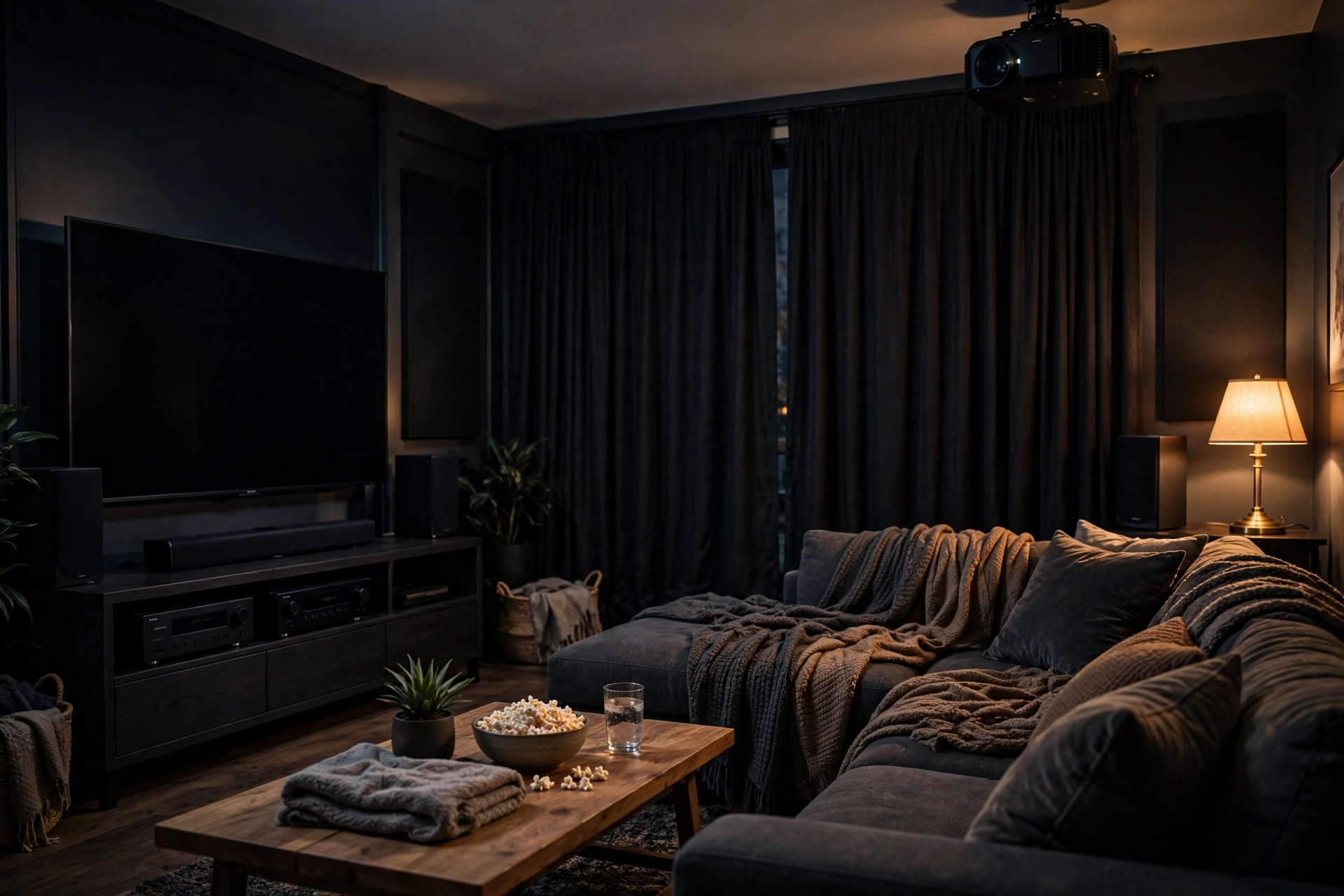
If your living room doubles as a movie room or faces a bright street, blackout curtains are a game-changer. Modern blackout fabrics come in far more than hotel beige — you can find them in linen looks, velvets, and soft colors that darken the room completely when drawn. Look for panels with a white or light-colored backing so the street view stays tidy. For maximum darkness, mount the rod wide and high and choose panels generous enough to overlap in the middle. Pair blackout drapes with sheers on a double rod so the room still gets soft daylight when movie time is over.
9. Use a Double Rod for Flexibility
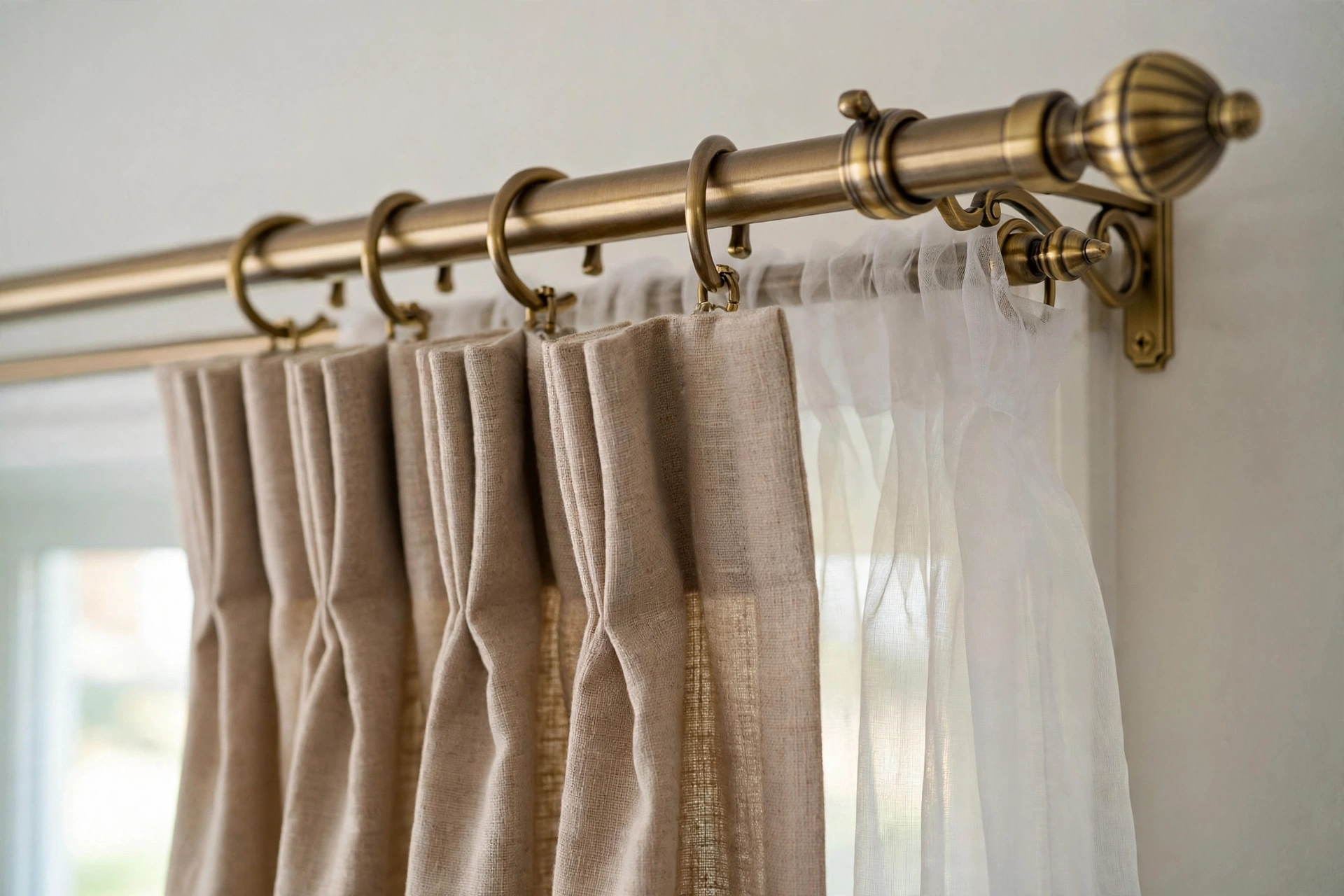
A double curtain rod — two parallel rods on one set of brackets — is the hardware behind the most versatile window treatments. Run sheers on the back rod and decorative drapes on the front for the classic layered look, or pair a valance with full-length panels. Double rods also let you mix opacities seasonally: light linen in summer, heavy velvet in winter, swapped in minutes. Choose a rod set with sturdy center support for wide windows, and coordinate the finish with other metals in the room — brass, matte black, or brushed nickel — for a cohesive, considered detail.
10. Try Café Curtains for Casual Charm
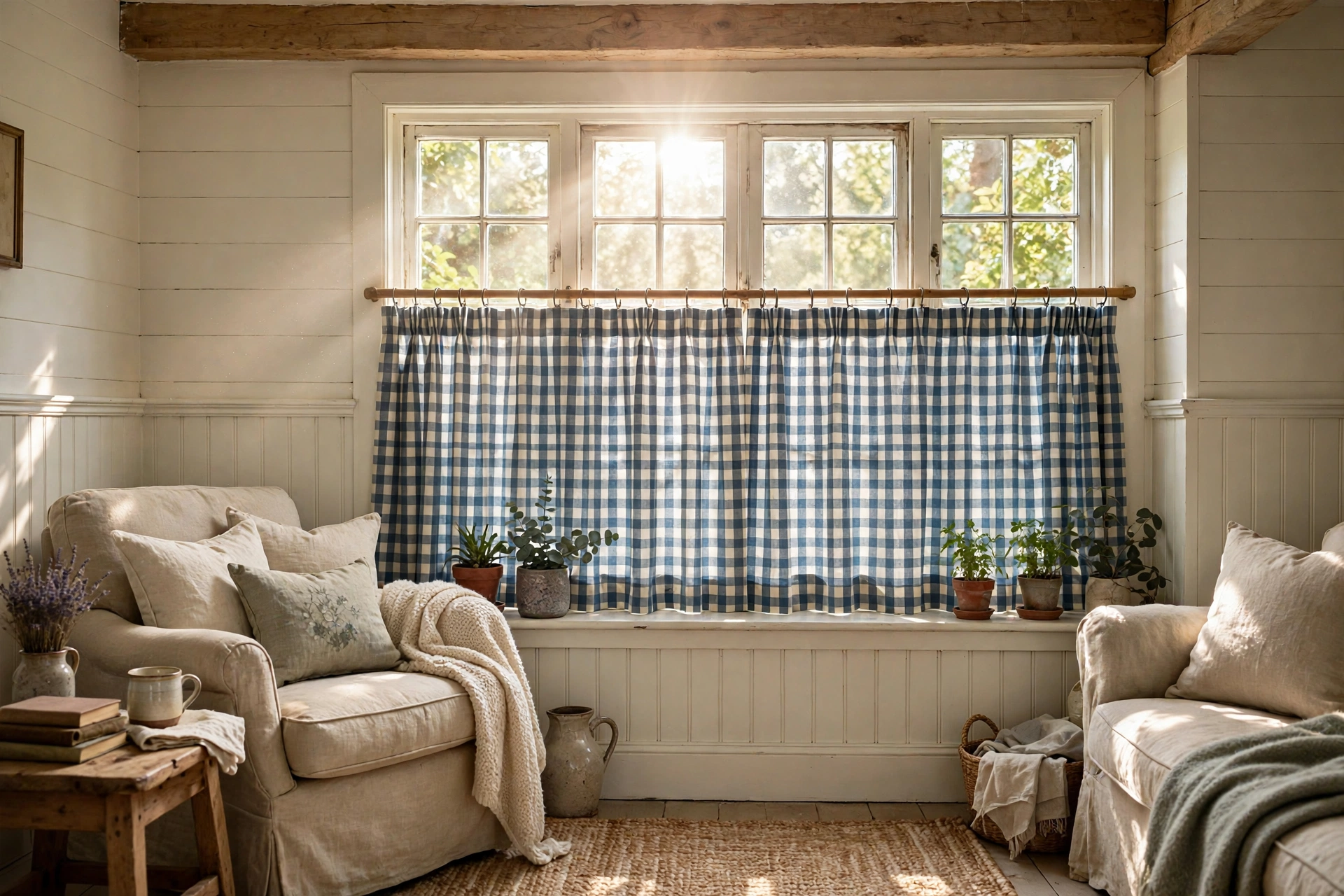
Café curtains, which cover only the lower half of the window, bring cottage charm and are perfect where you want privacy without losing the view or the light. They suit kitchen-adjacent living spaces, breakfast nooks, and street-facing windows where the sightline you want to block is at eye level. A tension rod inside the frame makes them renter-friendly and endlessly adjustable. Choose a cheerful pattern — gingham, ticking stripe, or a small floral — and keep the top edge at or just below the window’s midpoint. Pair with a simple valance up top for a complete, storybook look.
11. Choose Roman Shades for Clean Lines
When you love the look of fabric but want a tailored, minimal profile, Roman shades are the answer. They stack into neat horizontal folds when raised and fall smooth when lowered, giving you the softness of curtains without the volume. Flat-fold Romans read modern; relaxed Romans with a gentle curve at the bottom feel softer and more traditional. Mount them inside the frame for a crisp architectural look, or outside to make the window appear larger. Similar principles guide our kitchen curtain ideas for charming window treatments, where clean-lined shades keep smaller windows feeling open and bright.
12. Use Tie-Backs for an Elegant Drape
Tie-backs shape your curtains into graceful curves, framing the window like a stage and letting in maximum light. Classic fabric tie-backs in a matching or contrasting color look traditional; metal holdbacks, rope with tassels, or leather straps lean more eclectic and modern. Position tie-backs about two-thirds of the way down the panel for the most flattering drape — too high looks pinched, too low looks sloppy. This styling trick costs little but adds a finished, intentional feel, and it is perfect for formal living rooms or any space where you want the windows to feel dressed even with the curtains open.
13. Let Panels Puddle for Formal Drama
Allowing extra-long panels to pool two to four inches on the floor — the “puddle” — creates a romantic, high-drama look suited to formal living rooms and tall windows. The excess fabric softens the base of the window and reads unmistakably luxurious. This works best with sumptuous fabrics like velvet, silk, or heavy linen that fold into beautiful pools. Reserve puddling for low-traffic windows, since the fabric on the floor collects dust and pet hair and can be a tripping consideration. In the right room, though, nothing says designer like a deliberate, generous puddle.
14. Choose Hardware That Earns Its Place
Curtain rods, finials, brackets, and rings are jewelry for your windows — choose them with the same care as the fabric. A slim matte-black rod suits modern rooms; warm brass or wood adds richness to traditional and eclectic spaces. Decorative finials — glass orbs, carved wood, simple end caps — should echo other details in the room rather than introducing a random new motif. Do not skimp on brackets: one every 4 to 5 feet prevents sagging on wide spans. Good hardware elevates even budget panels, while flimsy rods undermine the most beautiful fabric.
15. Use Curtains as Room Dividers
In open-plan living spaces or studio apartments, a ceiling-mounted curtain track with full-length panels creates a soft, flexible room divider. Draw the panels to carve out a reading nook, hide a workspace, or add privacy to a sleeping area — then slide them open to restore the open feel. Choose a fabric with some weight so the divider hangs straight and feels substantial rather than flimsy. This is far cheaper and more adaptable than a built wall, and it adds textile softness that hard dividers cannot. It is one of the smartest small-space tricks in the book.
Frequently Asked Questions
How long should living room curtains be?
Floor-length is the safest, most polished choice: panels should just touch the floor or hover about half an inch above it. Hanging the rod 4 to 6 inches above the frame and letting panels fall to the floor makes ceilings look taller and windows look larger. Avoid the awkward “high-water” length that stops several inches above the floor — it reads as a measuring mistake. For formal rooms, add 2 to 4 extra inches for an elegant puddle; for homes with pets or heavy foot traffic, keep hems just off the floor.
Should living room curtains touch the floor?
Lightly touching or hovering just above the floor is ideal for most living rooms — it looks tailored and stays cleaner than a full puddle. The Spruce’s bay window treatment guide notes that elegant floor-length curtains visually extend a room’s height and frame windows beautifully. A slight break, where the fabric kisses the floor, suits traditional and transitional rooms. Reserve true puddling for formal spaces with low foot traffic, since pooled fabric collects dust and needs regular attention.
What color curtains go with a gray living room?
Almost anything works with gray, which is why it is so popular. Warm it up with curtains in cream, beige, mustard, or rust; cool it down with navy, charcoal, or icy blue. For a serene monochromatic look, choose curtains a shade lighter or darker than your gray walls. Patterned curtains that include your gray plus an accent color tie the whole room together. When in doubt, white or ivory linen curtains brighten a gray living room without competing with it.
Are curtains or blinds better for a living room?
Curtains win on softness, style, and drama — they add texture, color, and height that blinds cannot match. Blinds win on precise light control and a minimal profile. The best solution is often both: blinds or shades for function layered under curtains for beauty. If you must choose one, pick curtains for formal or cozy living rooms where ambiance matters, and blinds or shades for ultra-modern minimal spaces. Layering the two gives you the most flexibility for light, privacy, and style.
How do I make cheap curtains look expensive?
Hang them high and wide, choose floor-length panels, and use twice the fabric width for full, generous folds — fullness is what makes curtains look luxurious. Upgrade the hardware to a substantial rod with attractive finials, since flimsy rods betray budget panels instantly. Steam or iron out packaging creases, and consider adding trim or a contrasting leading edge for a custom look. For a cohesive foundation underfoot, see our living room rug ideas for warmth and style — a good rug plus well-hung curtains transforms a room for very little money.
Keep Exploring
The right curtains do quiet, powerful work: they frame your windows, tune the light, soften the acoustics, and pull the whole room together. Whether you choose breezy linen, dramatic velvet, or a bold pattern that makes you smile, hang them high, let them fall to the floor, and watch your living room feel instantly more finished.
Keep the transformation going with more Living Room Decor inspiration — from rugs and lighting to layout ideas — and enjoy windows that are finally dressed as beautifully as the rest of your home.





[…] silks for formal rooms used on holidays. If you are dressing the rest of the room too, these living room curtain ideas that frame your windows beautifully use the same professional hanging […]
[…] curtains outside it — the combination looks rich and layered, like a well-dressed indoor window. Living room curtain ideas that frame your windows beautifully use the same layering logic indoors. Outdoors, the shades do the hard work of blocking low western […]