
Sage green living room ideas start with one simple truth: this soft, gray-green shade brings the calm of nature indoors without drama. Whether you paint full walls, add a sage sofa, or layer in accessories, it creates a serene backdrop with warm woods, creamy whites, and brass. Coastal living room design ideas for a breezy retreat — the same layering principles apply.
The key is balance: use sage on large surfaces, then ground it with natural textures like jute, linen, and rattan so the room feels earthy, not cold. Keep lighting warm (2700K) so the undertones read soft. Here are fifteen ideas, from full-wall color to botanical accents, to find your level of sage.
1. Paint All Four Walls in a Soft Sage
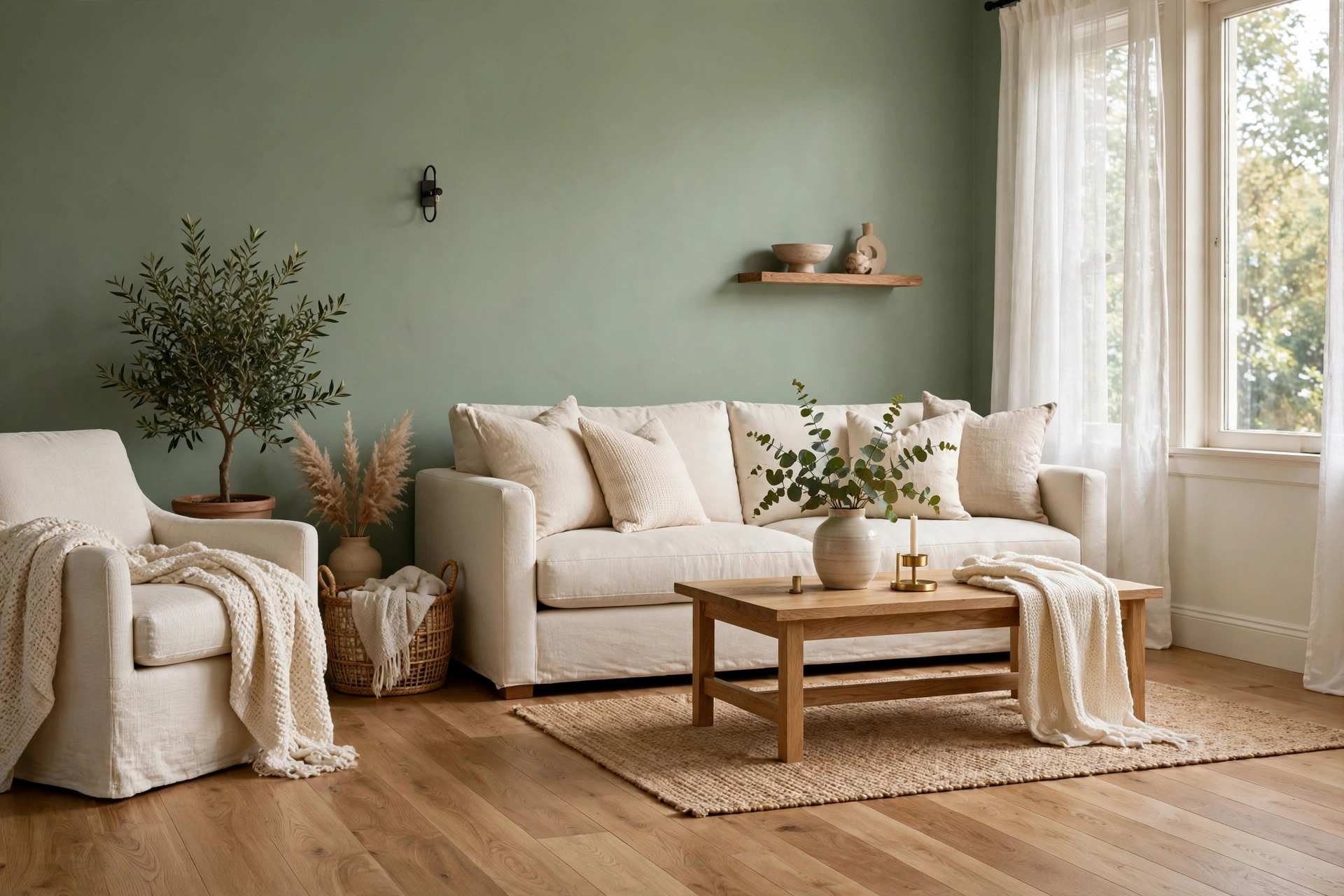
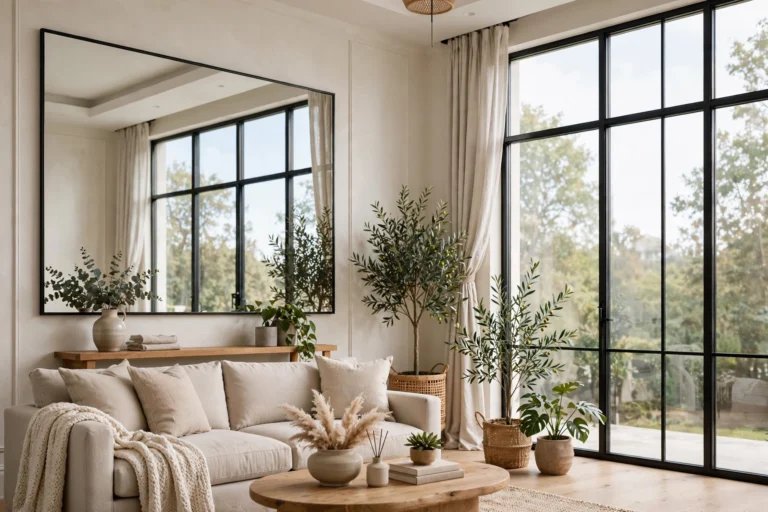
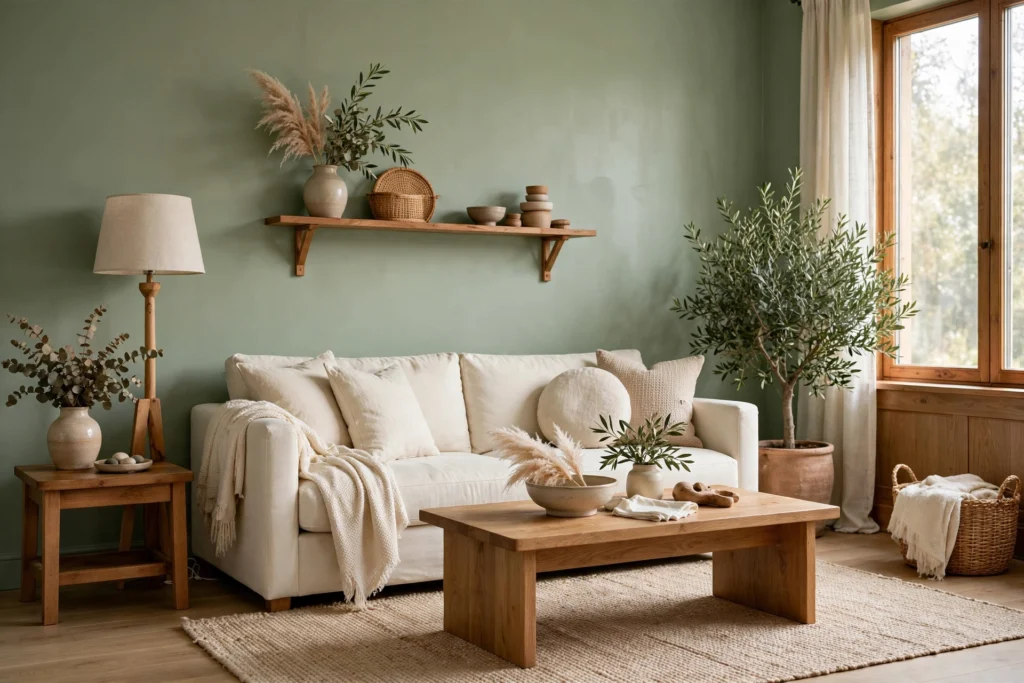
A full-room sage paint job is the boldest way to embrace the color, and it works because the shade is muted enough to act like a neutral. Choose a mid-tone sage with warm gray undertones — cooler versions can feel chalky under daylight — and paint walls, and even window trim, in one finish for a cocooning envelope effect. Keep the ceiling bright white to lift the space, and layer in cream upholstery and oak floors so the room stays airy. Add a large mirror opposite the window to bounce light around and keep the envelope feeling open.
2. Create a Sage Accent Wall Behind the Sofa
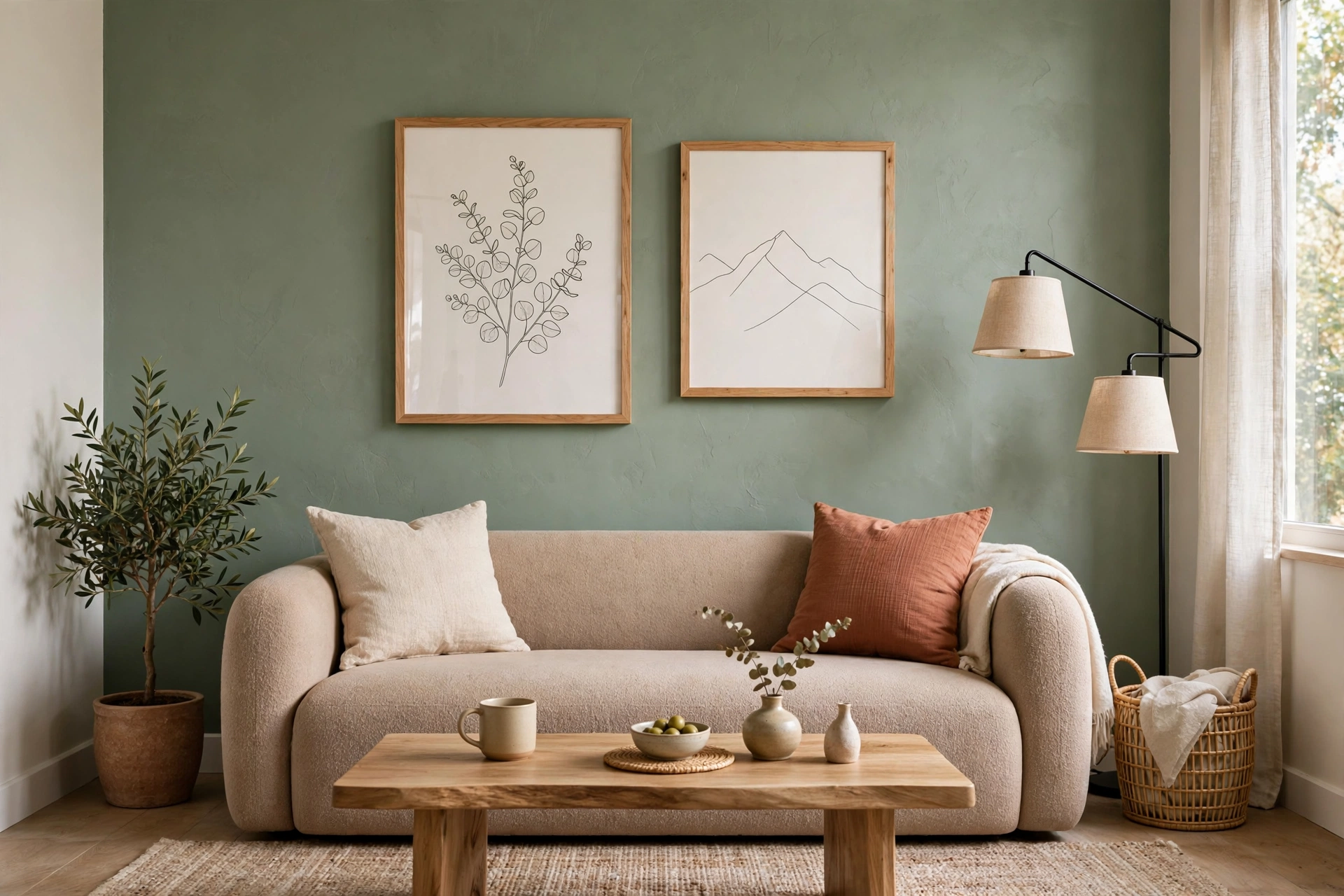
If four walls feel like too much commitment, a single accent wall gives you the color hit without overwhelming the room. Paint the wall behind your sofa or fireplace in a deeper sage than you’d use elsewhere — depth reads as confidence on one wall — and keep the remaining walls warm white. Frame the accent wall with simple art in natural-wood frames, and echo the green in two or three cushions on the sofa. This trick is ideal for open-plan spaces where a full color change would feel disconnected from the rest of the home. Sample it beside trim and flooring first.
3. Choose a Sage Green Sofa as the Anchor
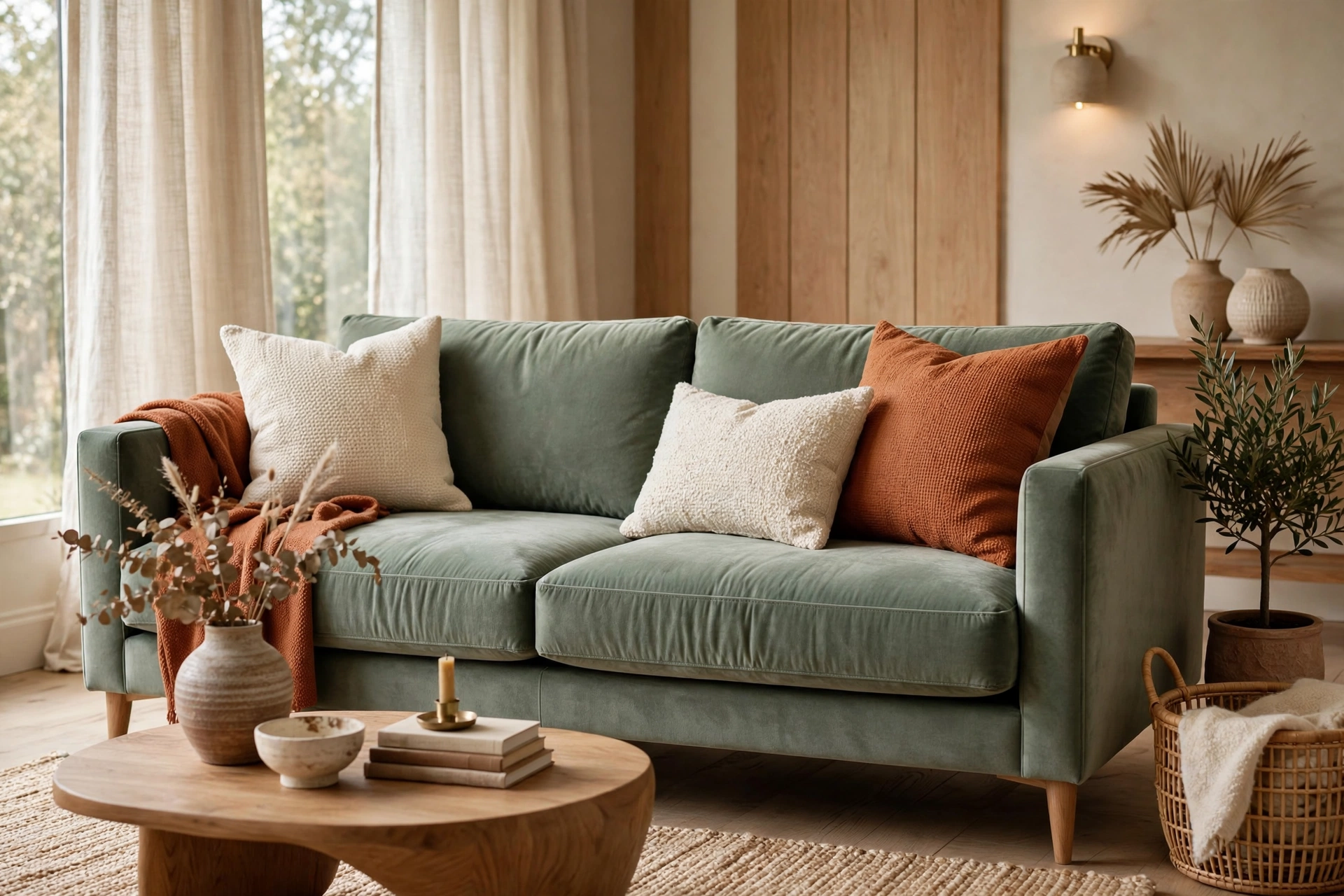
A sage sofa makes the color the room’s centerpiece while walls stay neutral. Velvet reads luxe and deepens the color beautifully, while a washed-linen sage slipcover feels relaxed and family-proof. Keep surrounding walls in warm white or pale greige so the sofa truly pops, and ground it with a natural jute rug underneath. Add throw pillows in cream, oatmeal, plus one pattern. The anchor-piece approach suits renters too — you get the color without touching a paintbrush. Order fabric swatches and check them in your room’s light first. A deep-seated sage sectional invites lounging in larger family rooms.
4. Add Sage Accent Chairs in Pairs
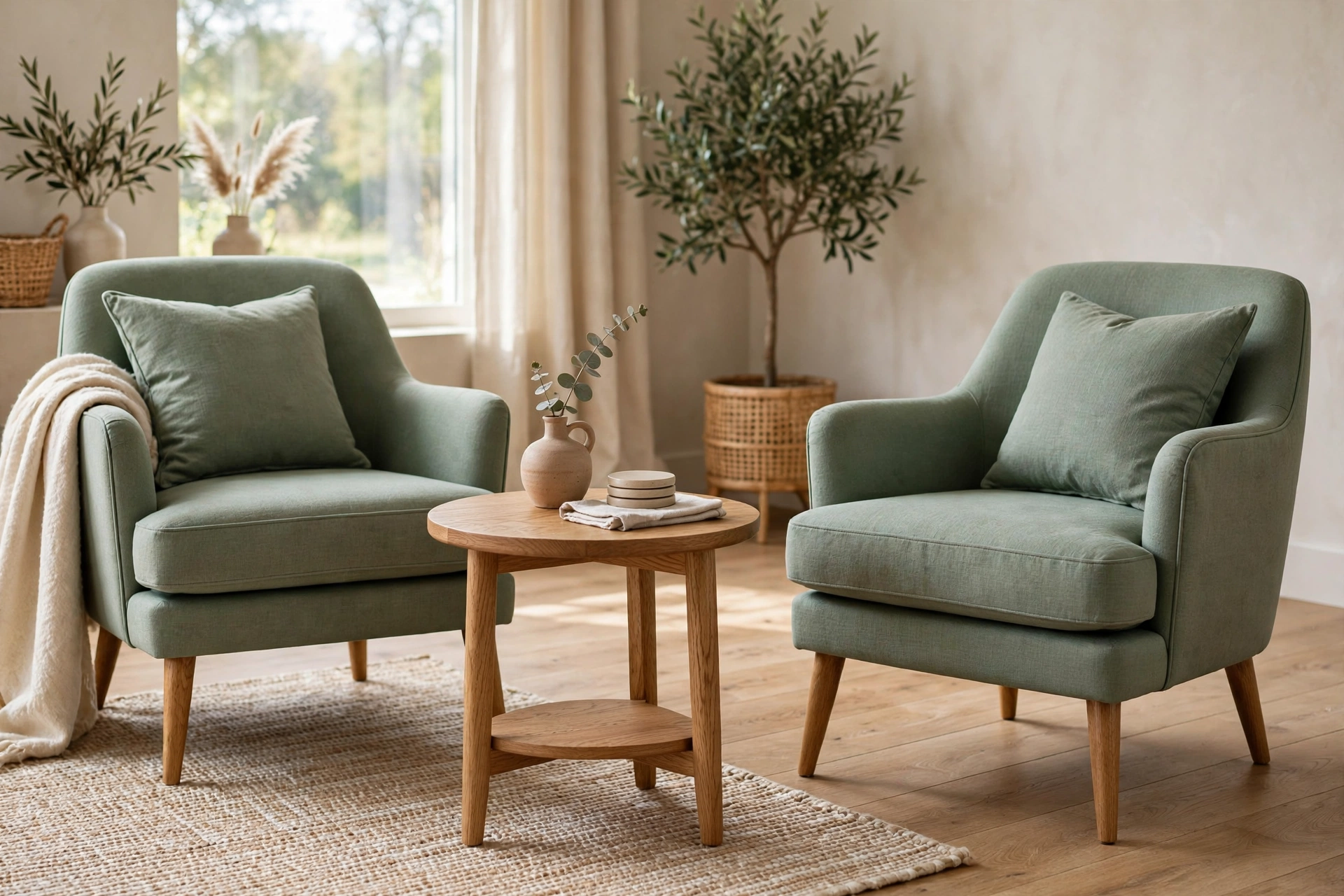
Two sage accent chairs do more than one — symmetry instantly makes a living room feel styled. Place a pair of sage occasional chairs opposite the sofa or flanking a window to build conversation areas and repeat the color around the room. Bouclé or woven-texture fabrics add tactile interest that keeps the green from feeling flat. Pull in a small round side table in oak between the chairs for drinks, and drape a cream throw over one arm. Pairs also work beautifully in corners that need purpose, turning dead space into a reading spot. Washable covers are a plus in hardworking rooms.
5. Hang Sage Curtains for Soft Color
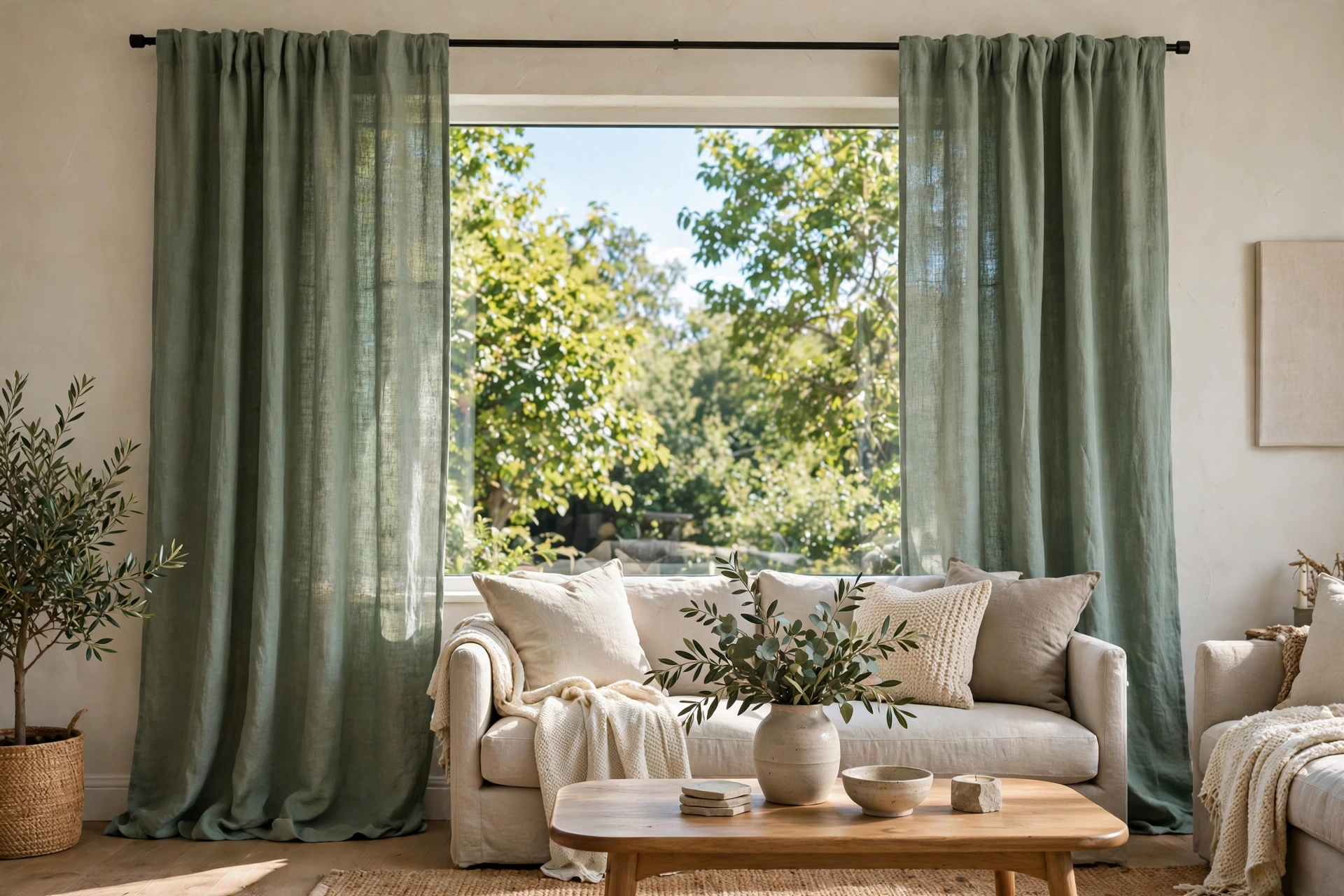
Curtains are the low-commitment route to sage walls — they frame the window and tint the whole room. Choose a linen or linen-look fabric in a mid sage, hung on a matte black or brass rod mounted 4–6 inches above the frame so ceilings look taller. Let panels puddle slightly or kiss the floor for a relaxed finish, and double up with a sheer white inner layer so daylight still floods in. When the curtains are drawn, the room feels wrapped in green; when open, the color becomes a soft frame around the view. Wash linen panels before hemming to allow for shrinkage.
6. Style Sage Built-In Bookshelves
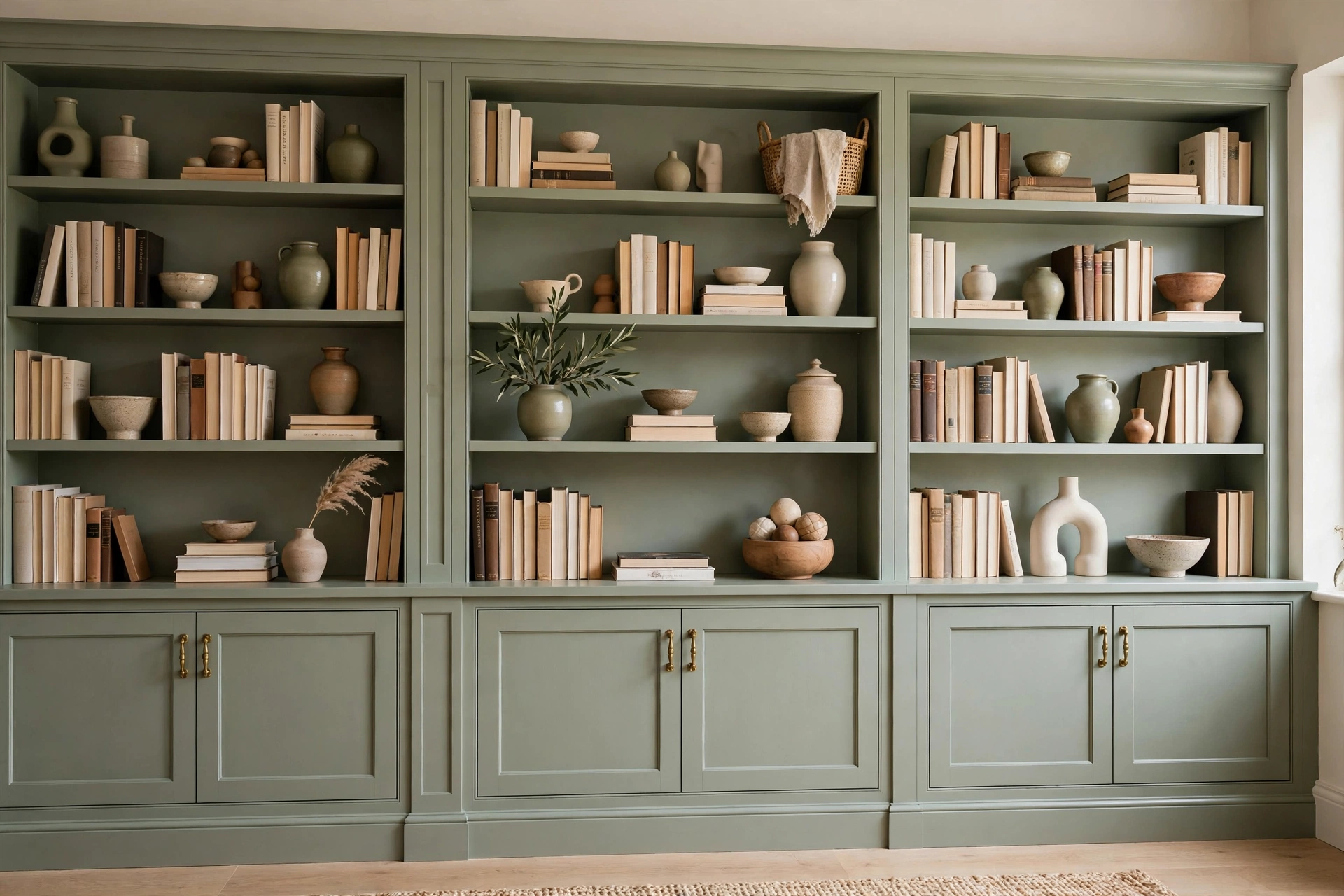
Painted built-ins in sage turn storage into the room’s star feature. The color gives bookshelves an intentional, library-like feel that plain white shelving never achieves. Style them in thirds: books grouped by height, then negative space with ceramics, small plants, and framed art leaning against the back. Leave the back panel the same sage rather than contrasting — tonal layering looks more expensive. Add picture lights or small LED spots along the top shelf so the green glows warmly in the evening and the shelves read as a feature wall. Mix closed storage below with open display above.
7. Pair Sage Walls with Warm Wood Tones
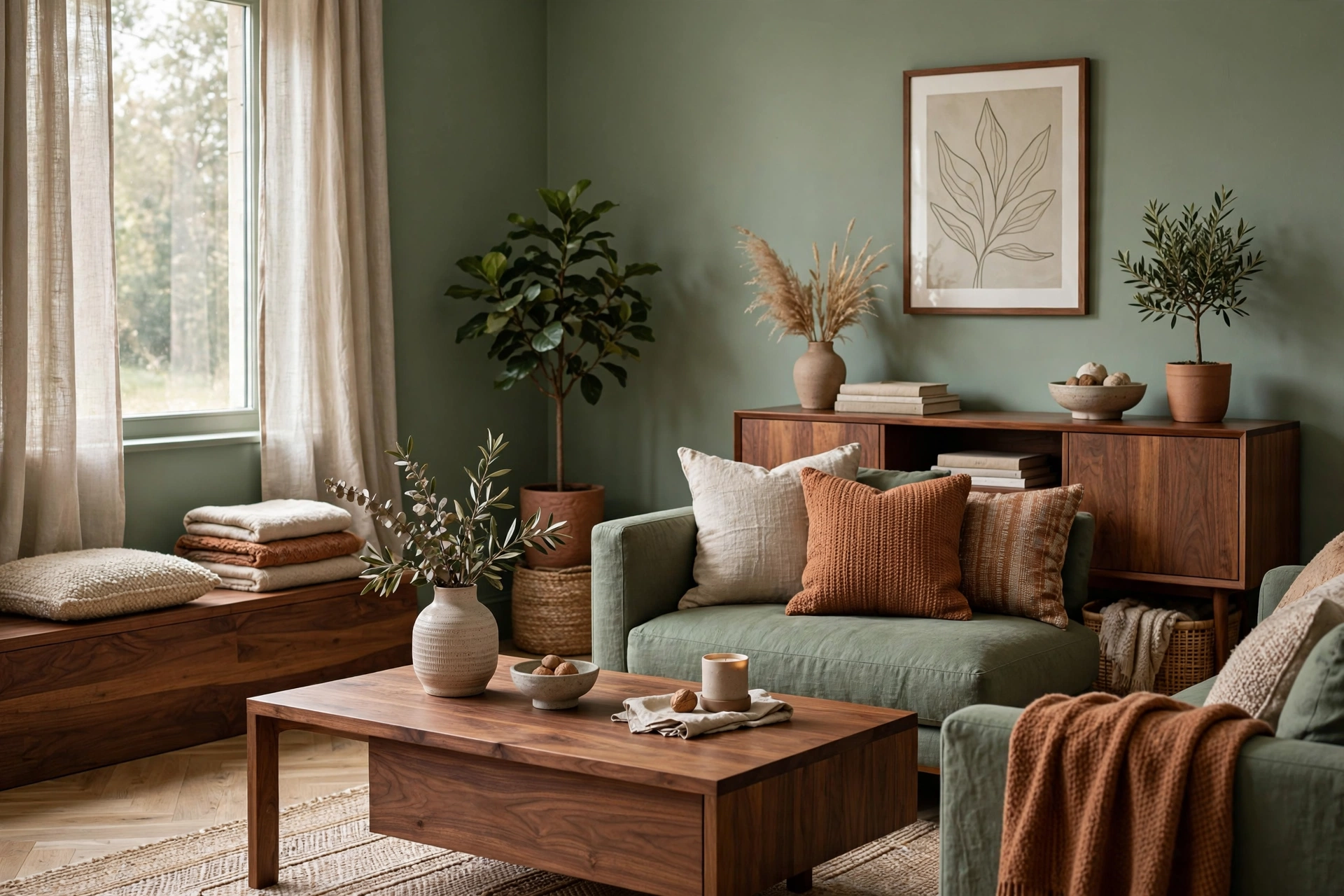
Sage and wood are nature’s own pairing, so lean into oak, walnut, and rattan. Against sage walls, medium-toned woods like white oak or warm walnut pop without fighting the green, while pale pine can look washed out. Choose a walnut coffee table, oak media console, or rattan armchair to layer warmth into the scheme. Exposed ceiling beams in a honey stain are especially striking with sage. Keep wood finishes consistent — two tones maximum — so the natural-calm palette stays cohesive rather than rustic-chaotic. Repeat the wood tone in three spots for a layered look.
8. Add Brass and Gold Accents for Warmth
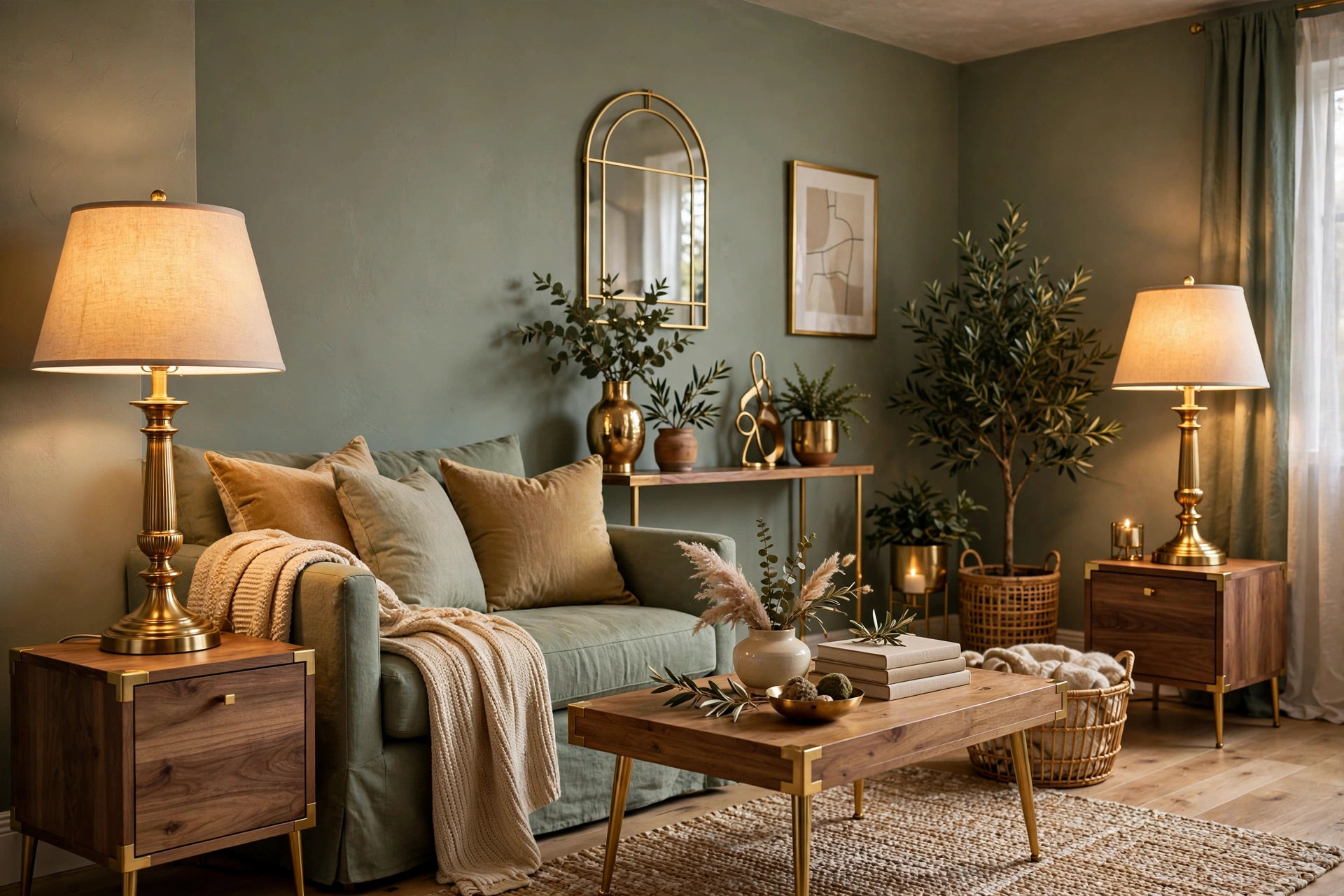
Sage’s cool-green undertone loves warm metal, and brushed brass is the perfect partner. Swap in brass table lamps, a brass-framed mirror, or brushed-gold curtain hardware, and the green suddenly feels richer and more intentional. You don’t need much — three to five brass moments across the room is the sweet spot. Pair them with warm-white bulbs so the metal glows rather than glares. For cohesion, carry the same brass finish from lighting to small accessories like picture frames or a tray on the coffee table. Unlacquered brass gains patina; lacquered keeps its shine.
9. Layer Cream and White for Fresh Contrast
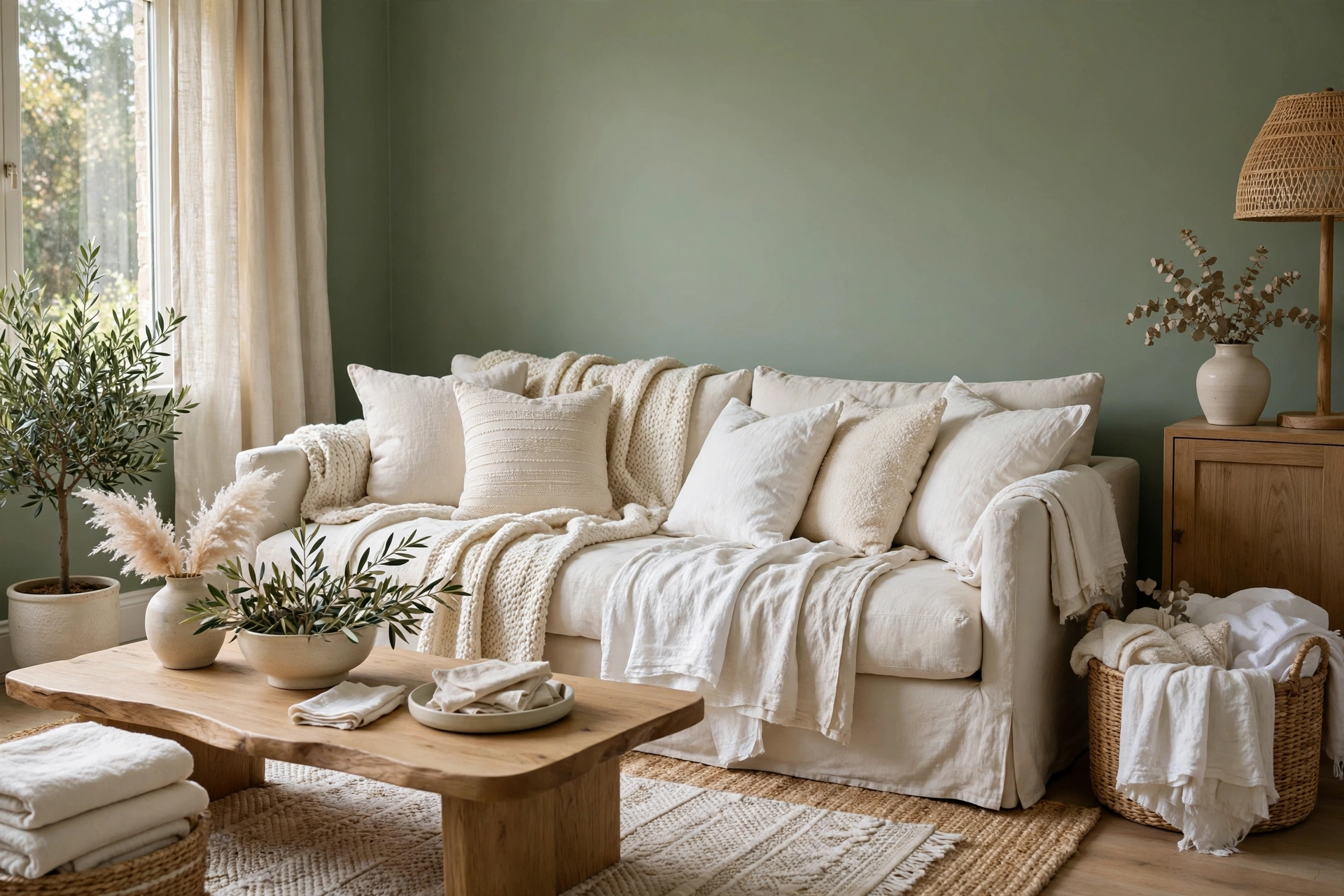
Cream and white keep sage from going murky — they provide the fresh contrast that makes the green feel deliberate. Layer an ivory rug over wood floors, choose a white or cream sofa if the walls carry the color, and add off-white lampshades to brighten corners. The trick is warmth: pure brilliant white can clash with sage’s softness, so stick to warm whites like ivory, linen, and oatmeal. This pairing also lets you go seasonal — swap sage cushions for cream in summer and bring the green back with throws in winter. A subtly patterned cream rug hides wear in busy rooms.
10. Bring in Botanical Touches with Real Plants
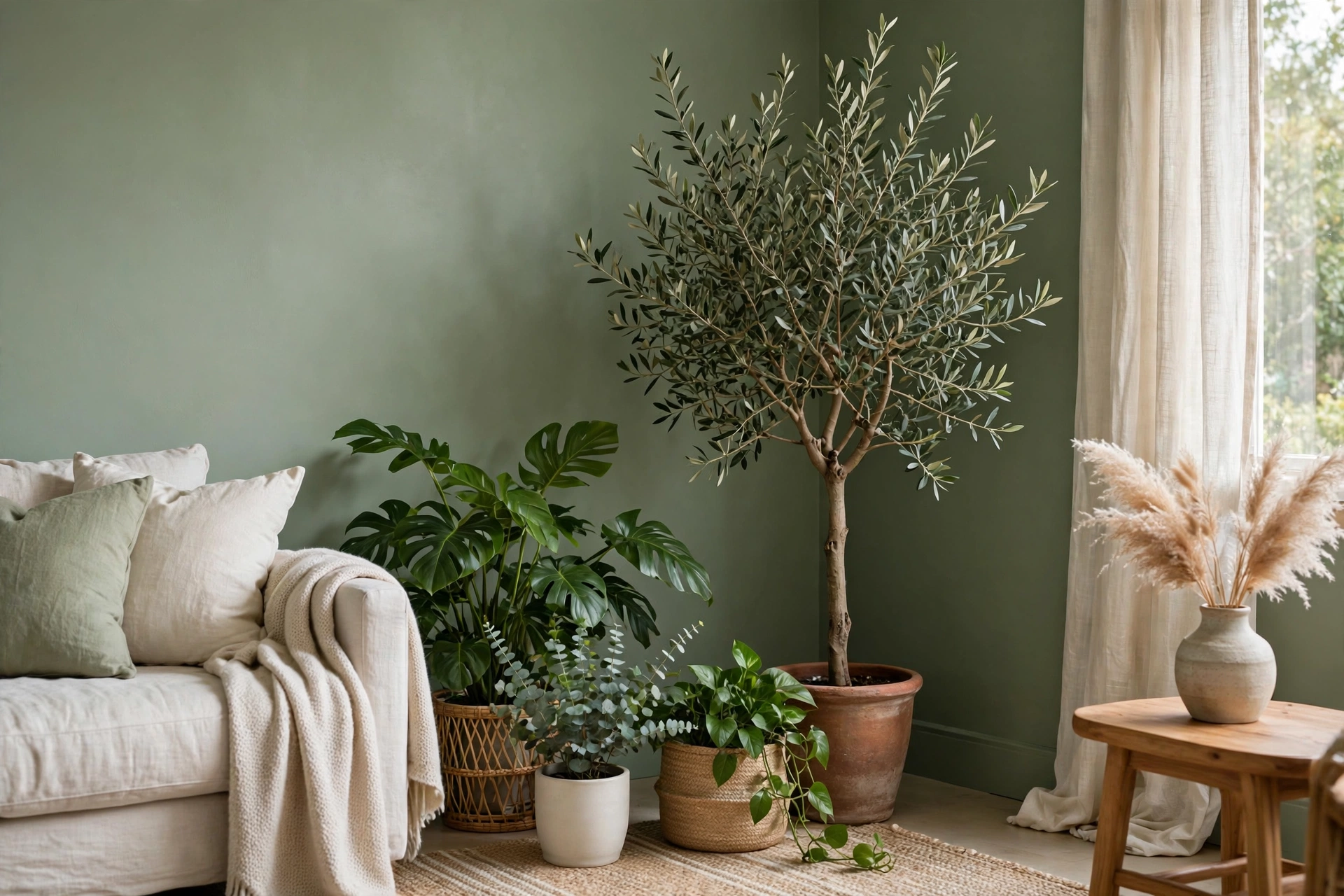
Sage is literally a plant-inspired color, so real greenery completes the story. A tall olive tree or fiddle-leaf fig in a corner echoes the wall color while adding life and movement, and trailing pothos on shelves softens built-ins. Choose terracotta or cream pots — terracotta’s earthiness flatters sage perfectly — and group plants in odd numbers for a natural, unstudied look. If you’re not a plant person, one large statement plant beats five struggling small ones. Faux stems in a tall vase work as a zero-maintenance alternative. Match each plant’s light needs to your window’s direction.
11. Play with Texture: Bouclé, Linen, and Jute
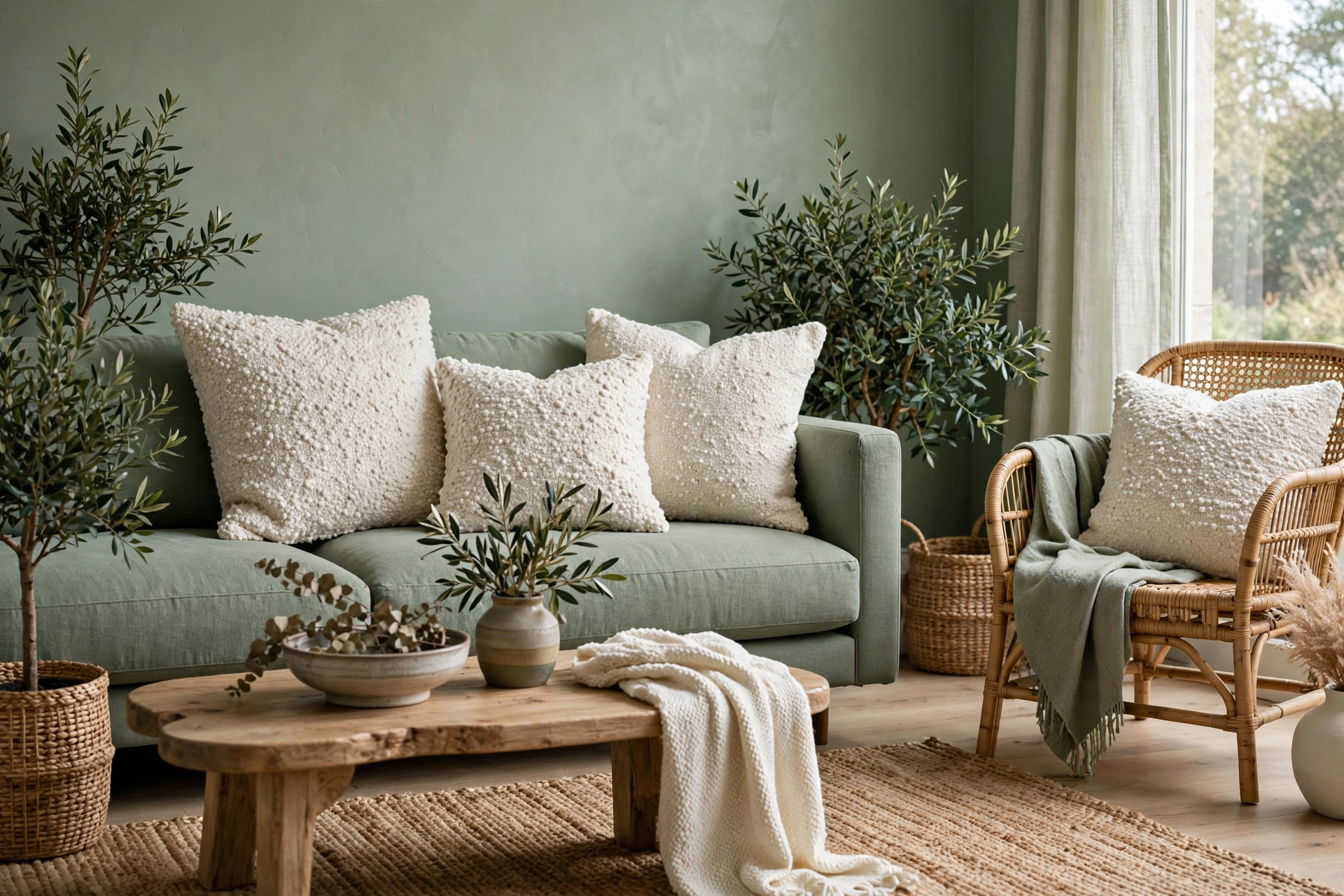
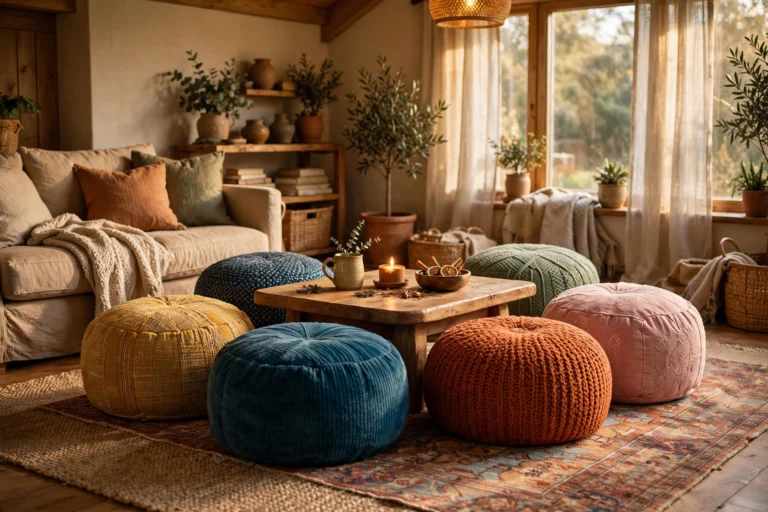
Because sage is a quiet color, texture does the heavy lifting. Layer nubby bouclé cushions, washed-linen throws, a chunky jute rug, and a woven rattan basket in one room and the green gains depth without a single new color. Mix at least three textures — smooth, nubby, and woven — for variety. This matters most in all-neutral sage rooms, where texture replaces pattern as the interest driver. A ribbed ceramic lamp base or a carved wood side table adds one more tactile layer to the mix. Keep to three neutrals so textures take center stage.
12. Go Farmhouse with Sage and Shiplap
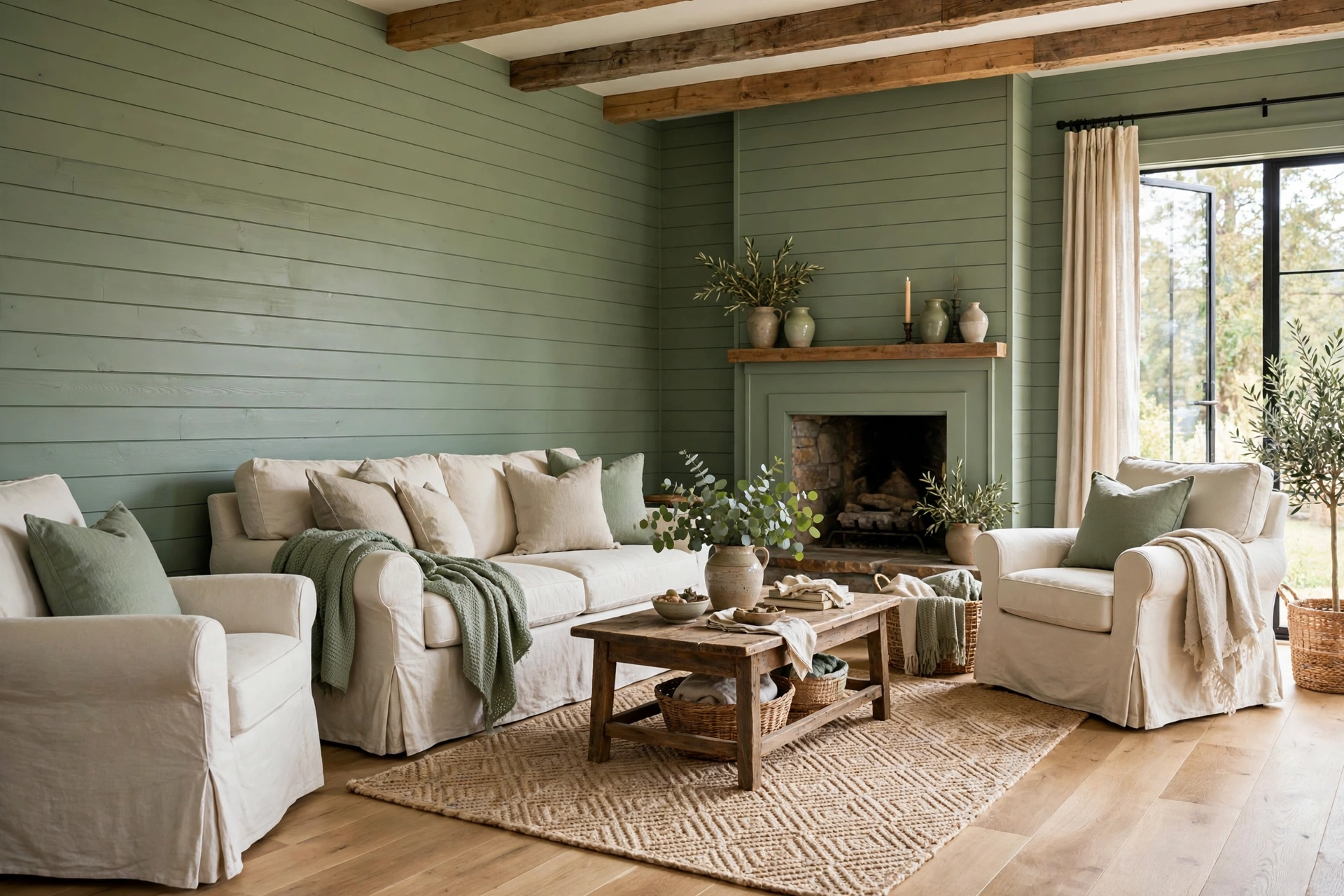
Sage plus shiplap is farmhouse’s softer side — the color tames the rustic look and keeps it feeling current. Paint shiplap walls in a warm sage, then layer in slipcovered seating, a distressed-wood coffee table, and galvanized or matte-black lighting for the farmhouse edge. Keep the styling edited rather than themed: one vintage-style sign is plenty. A natural-fiber rug and cotton throws add softness against the hard lines of the shiplap. Sand shiplap lightly first so the paint adheres evenly. Farmhouse living room design ideas full of rustic charm.
13. Try a Modern Sage Living Room
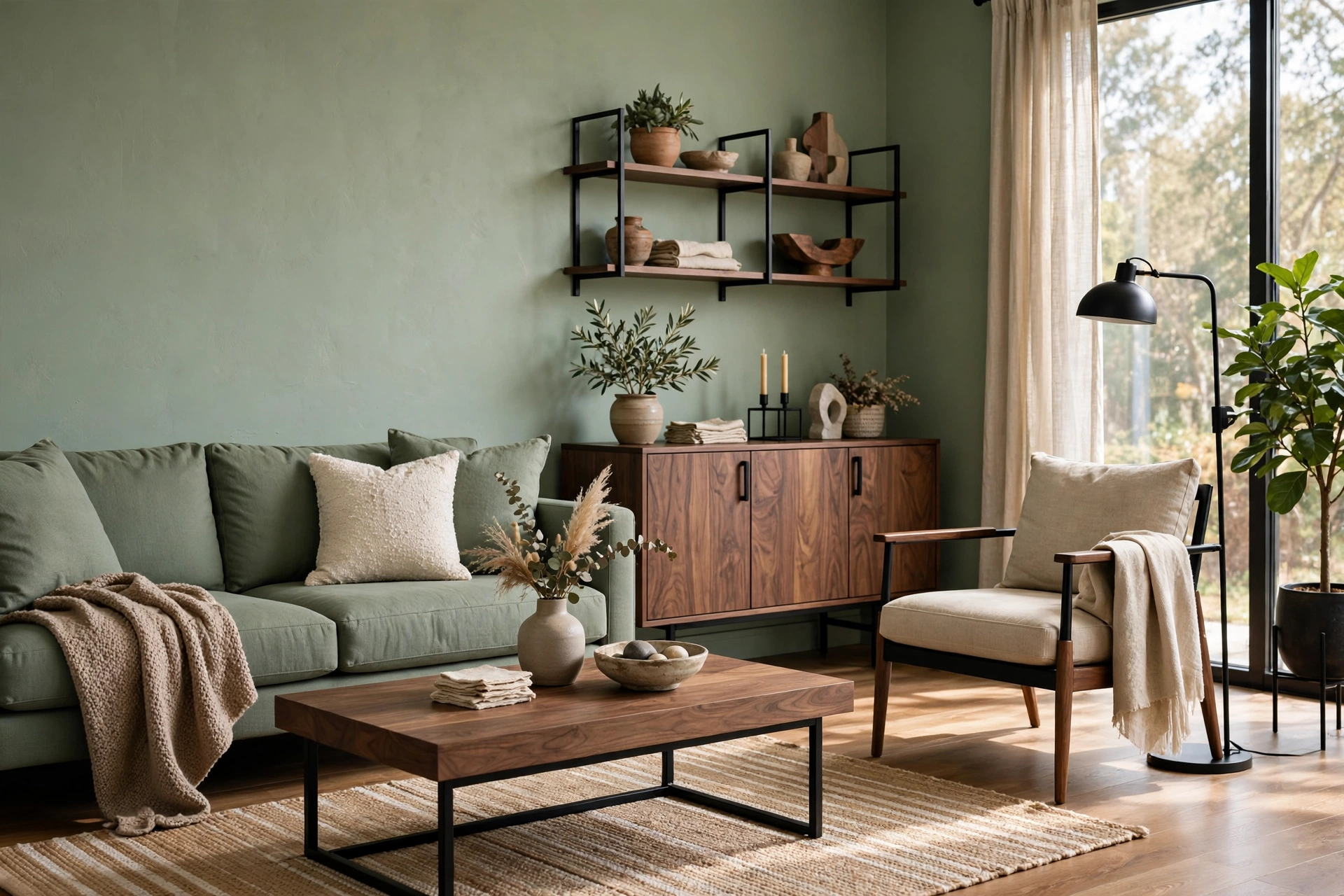
In modern spaces, sage works as the warm contrast to clean lines. Pair sage walls or a sage sofa with low-profile furniture in black metal and walnut, and keep styling minimal — one sculptural floor lamp, one oversized art piece, no clutter. Matte sage lacquer on a media wall or sideboard gives a contemporary edge the color doesn’t usually get. Keep the palette tight: sage, warm white, walnut, and black, with one brass moment maximum. The result reads calm and current rather than country, proving sage isn’t just a traditional color. Hide cords and clutter in closed storage.
14. Style a Japandi Sage Living Room
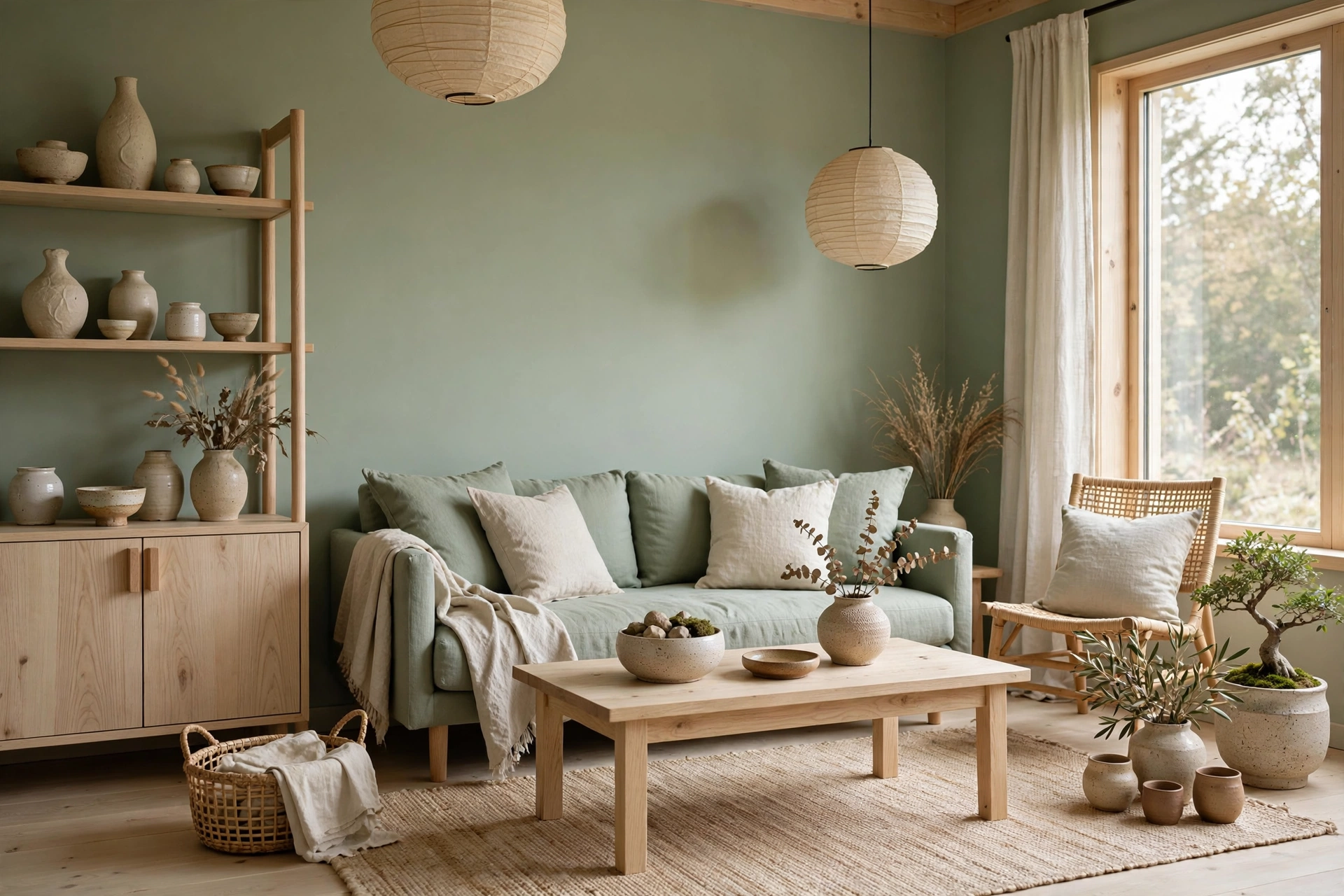
Japandi and sage were made for each other — both prize calm, natural materials, and restraint. Combine sage walls with pale oak furniture, low-profile seating, and handmade ceramics in cream and stone. Keep surfaces mostly clear; one low bookshelf, one floor cushion, one paper lantern light. The wabi-sabi spirit means natural imperfections are welcome, so choose hand-thrown pottery and unfinished wood edges. Leave breathing room between pieces rather than filling every corner — the calm comes from the space around things as much as the things themselves. A tatami-toned rug completes the grounded feel. Pick one hero material, like pale oak, to anchor the room.
15. Make Sage Work in a Small Living Room
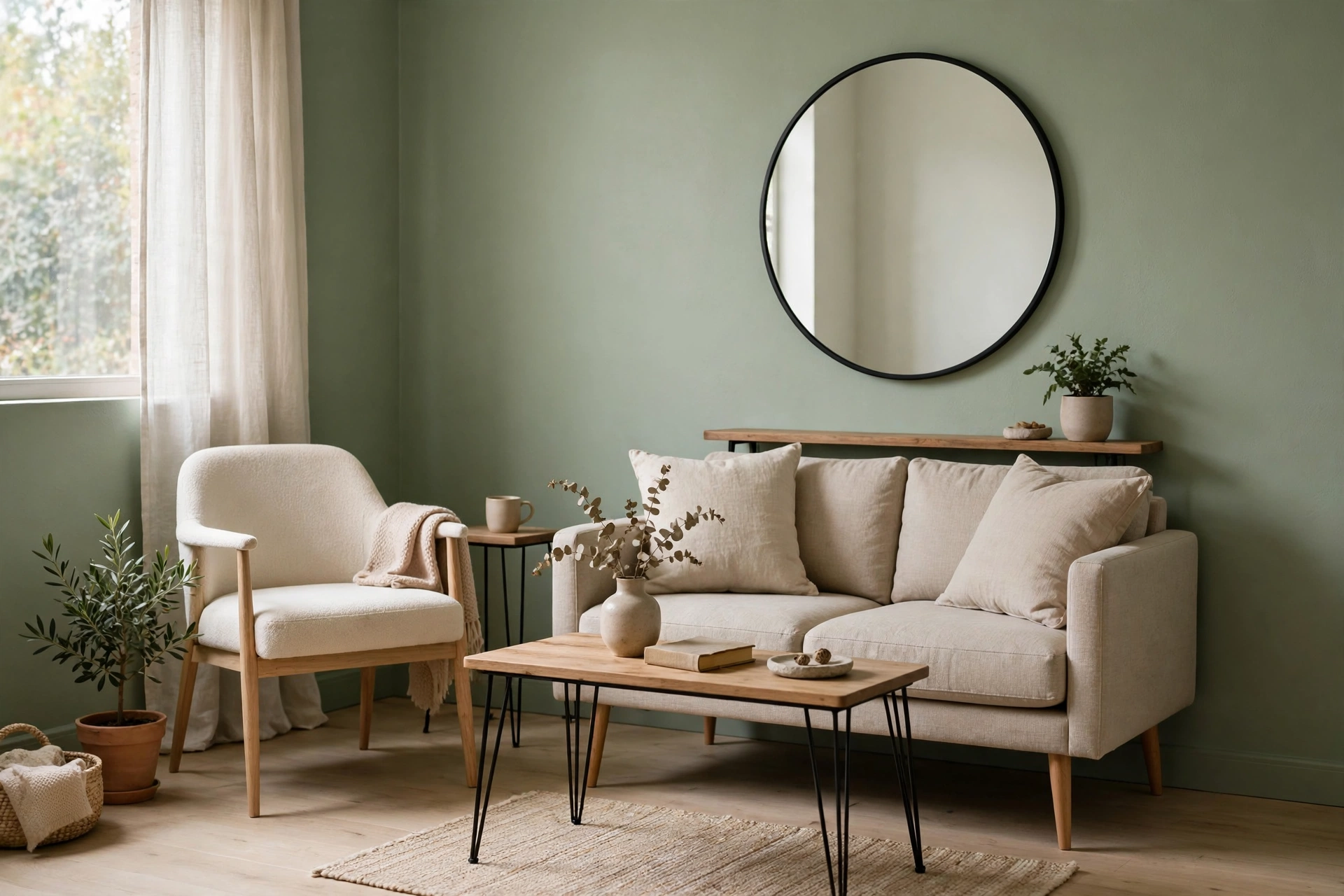
Sage suits small rooms because mid-tone greens recede like neutrals instead of closing walls in. Paint walls and trim the same light sage — matching edges make the room feel larger. Choose leggy furniture so flooring shows through, and hang a mirror opposite the window to double the light. Mount curtains high and wide to stretch the window visually. A light sage ceiling erases the line where wall meets ceiling. Keep the palette tight: sage, warm white, and one wood tone. Skip heavy dark curtains — sheer white panels keep the window bright — and choose one oversized plant over several small ones.
Frequently Asked Questions
What colors go best with sage green in a living room?
Warm woods like oak and walnut, creamy whites, and brushed brass are sage’s reliable partners — they balance the color’s cool undertone with warmth. For contrast, try rust, terracotta, or ochre for an earthy feel, or black in small doses for modern definition. Avoid cool grays and icy blues, which can make the room feel flat and chilly instead of calm.
Is sage green a good color for living room walls?
Yes — sage sits between green and gray, so it reads as a calm neutral. Warmer tones suit darker rooms. Always paint large swatches and observe them across the day, since sage shifts noticeably between morning and evening light. Carry the same shade onto trim for a cocooning effect, or pair sage walls with a bright white ceiling for a lighter feel.
Does a sage green living room work in a small space?
Absolutely. Mid-tone sage recedes like a neutral, so it won’t cramp a small living room. Painting walls and trim the same light sage blurs boundaries and can make the room feel larger. Keep furniture leggy, use sheer curtains for light, and limit the palette to sage, warm white, and one wood tone. A large mirror opposite the window amplifies both light and space.
Should the sofa or the walls be sage green?
Either works. Sage walls set the mood and let you keep furniture neutral. A sage sofa keeps walls flexible and makes the color the star — ideal for renters or anyone paint-shy. If you choose both, vary the tones: deeper sage on the sofa against lighter sage walls feels layered rather than matchy. Start with one and add the other later.
How do I keep a sage green living room from looking dated?
Keep styling current: pair sage with modern lines, brass accents, and natural textures rather than country motifs alone. Vary the depth — from pale to deep sage — so accessories look layered, not over-matched. Refresh seasonally by swapping textiles instead of repainting, and use 2700K lighting so the undertones read soft. Sage green living room guide.
Keep Exploring
Sage green rewards slow layering — start with one element, live with it for a week, then add the next texture or color. Green living room roundup shows designers combining green with wood, brass, and warm neutrals at home. Save the looks you love before you shop.
Japandi living room design ideas for a calm welcoming space pair low-profile furniture and natural textures with sage beautifully. Prefer a cozier feel? The farmhouse living room design ideas full of rustic charm show wood-heavy warmth that complements sage walls.