
Planters are the fastest way to make an outdoor space feel designed: they add height where patios are flat, color where decking is gray, and life where hardscaping dominates. But great container plantings are not accidents — they follow recipes for plant combinations, observe rules about scale and drainage, and choose materials that age gracefully. These outdoor planter ideas cover the container craft from classic terracotta to modern concrete, plus the thriller-filler-spiller styling formula professionals use and the practical details (drainage, soil, watering) that keep plantings lush instead of limp.
Start with the golden rule of scale: one large planter always beats three small ones. Small pots dry out in hours on a hot patio and look fussy; a single 18–24-inch container makes a confident statement and gives roots room to thrive. For entryways and porches, think in pairs or trios of varying heights. And if you are styling the front of the house, coordinate planters with the bigger picture in our front porch decorating ideas for curb appeal so containers, door color, and lighting work as one composition.
1. The Thriller-Filler-Spiller Formula
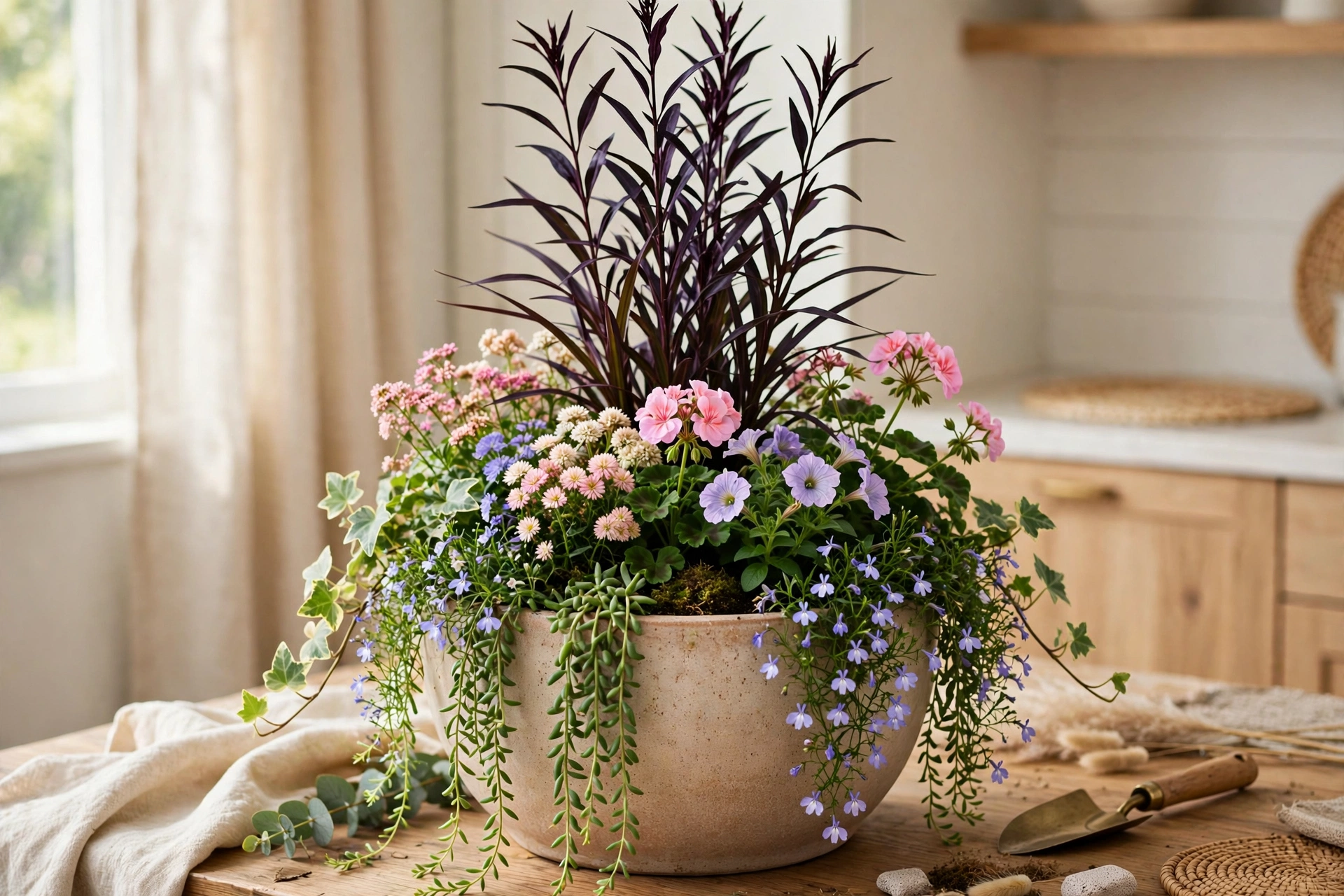
Professional container designers build nearly every pot on one recipe: a thriller (one tall, dramatic focal plant in the center), fillers (3–5 mounding plants around it for body), and spillers (2–3 trailing plants at the edge to cascade over the rim). A classic combo: purple fountain grass as thriller, white petunias and blue lobelia as fillers, sweet potato vine as spiller — instant designer pot.
Match the recipe to your light: thrillers like canna lilies and cordyline demand full sun, while caladiums and ferns star in shade. In a 16-inch pot, use 1 thriller, 3–4 fillers, and 2–3 spillers; scale up proportionally for larger containers. Plant the thriller first, slightly off-center for a natural look, then ring fillers around it and tuck spillers at the very edge, angled outward. The container gardening guide covers the horticultural basics behind successful combinations. Fertilize every two weeks in summer — containers leach nutrients fast.
2. Terracotta Cluster
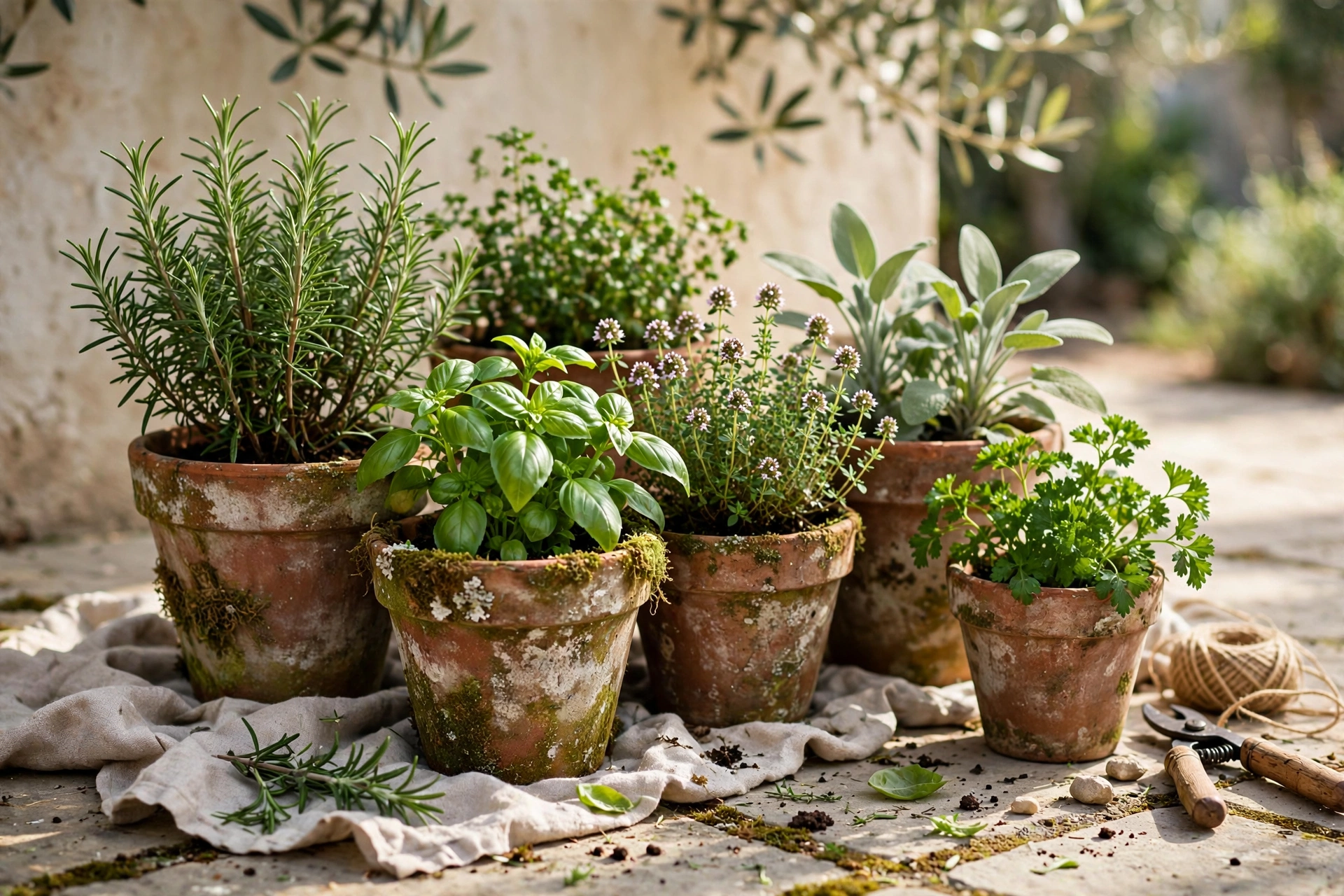
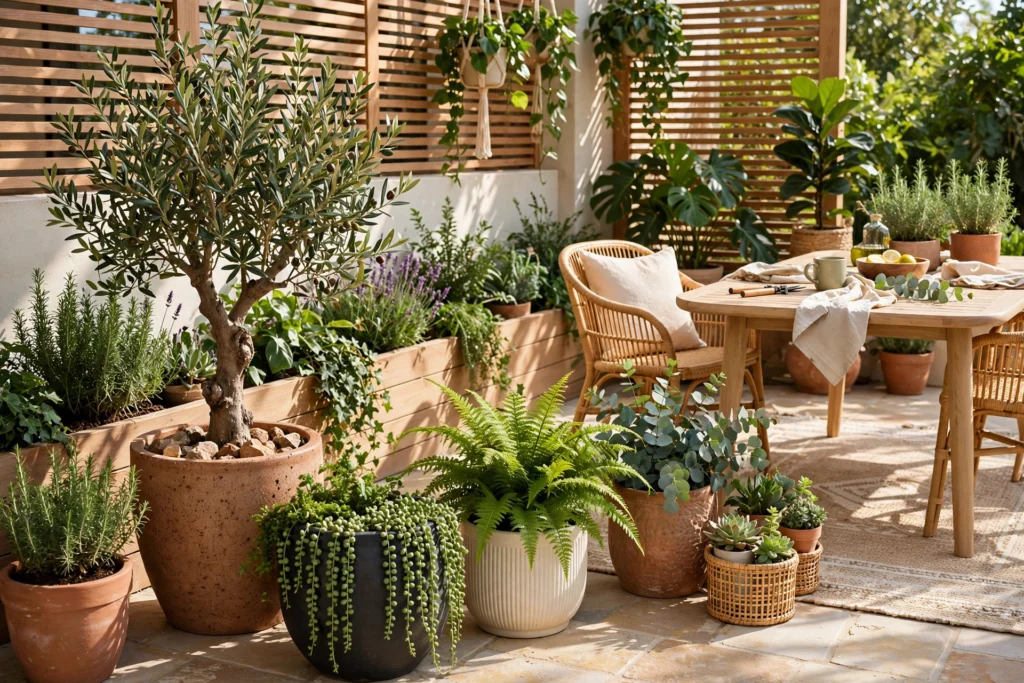
Nothing says garden like weathered terracotta. Group 3–5 terracotta pots of graduated sizes (10, 14, and 18 inches is a pleasing progression) in a loose cluster, planting each with a single variety — lavender in one, rosemary in another, geraniums in the third — for a collected, Mediterranean feel. The porous clay breathes, keeping roots cool, and develops a beautiful aged patina within a season.
Terracotta dries fast, so in hot climates either choose drought-tolerant plants or line the interior with a plastic pot to slow evaporation. Elevate pots on terracotta feet for drainage and to prevent the classic patio ring stain. In freezing climates, bring terracotta indoors for winter — absorbed water expands and cracks the clay. Seal the interior with a waterproofing sealer if you want to slow both drying and aging; leave it raw for the fastest patina. A cluster by the back door, planted with herbs, is both beautiful and useful.
3. DIY Cedar Box Planters
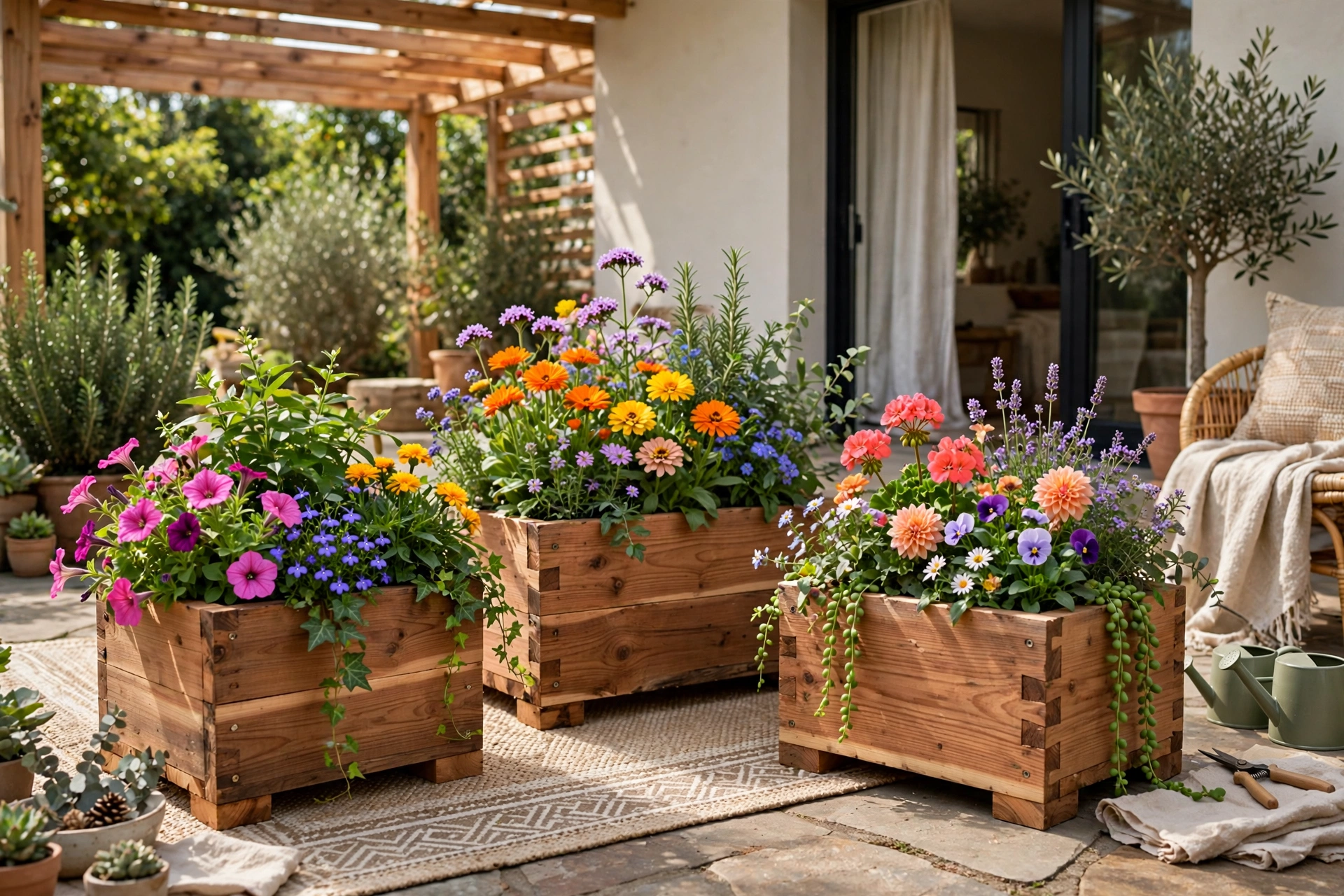
Cedar planter boxes are the weekend project that looks custom-built: naturally rot-resistant, straight-grained, and warm-toned. Build 24×12×12-inch boxes from 1×6 cedar fence pickets — four sides, a slatted bottom for drainage, and 2×2 corner posts for rigidity — assembled with exterior screws in under two hours per box. Line the interior with landscape fabric to hold soil while letting water escape.
Cedar weathers to silver-gray in 1–2 years; apply an exterior oil stain if you want to keep the warm tone. Drill ½-inch drainage holes every 6 inches in the bottom slats — boxes without drainage become root-rot coffins. Size boxes to your railing or wall: 36-inch boxes suit 6-foot railings, while square 18-inch cubes anchor patio corners. Fill the bottom third with empty plastic bottles or foam packing peanuts in deep boxes to save soil and weight. Stain or paint the exterior to match your trim for a built-in look.
4. Modern Concrete Planters
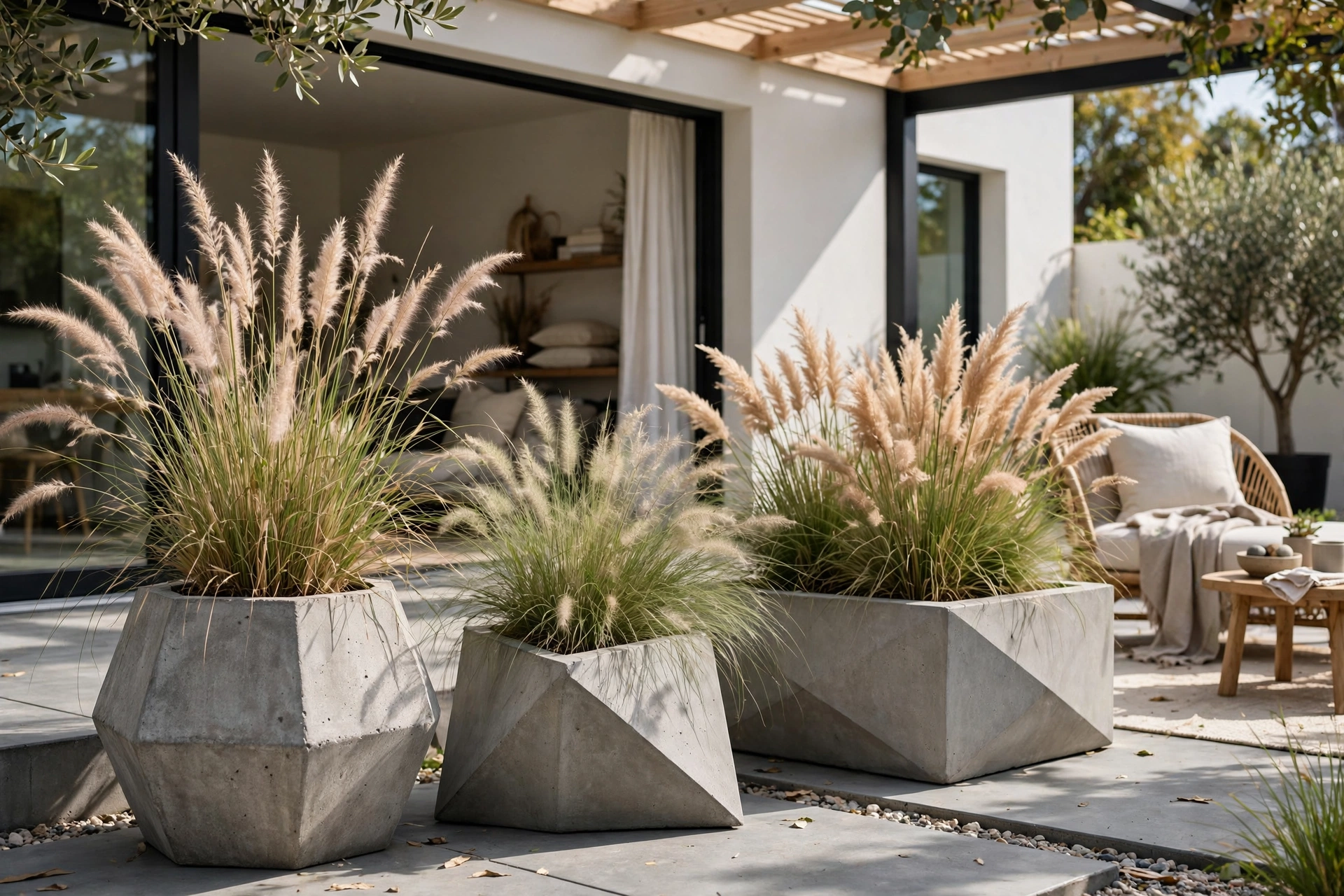
Cast concrete planters bring gallery-grade minimalism outdoors: crisp geometric forms in soft gray that make green foliage pop. Buy them (fiber-reinforced concrete is lighter than solid cast) or DIY with a silicone mold and quick-set concrete mix for truly custom sizes. A 20-inch cube in concrete anchors a modern patio like sculpture.
Concrete is heavy — a 20-inch planter with soil can exceed 150 pounds, so place it before filling and use a plant dolly if it must move. Seal the interior with a concrete sealer to prevent lime leaching (which raises soil pH) and efflorescence streaks on the exterior. Ensure drainage holes; if your mold lacks them, drill with a masonry bit after curing. In freeze-thaw climates, choose high-strength, air-entrained concrete or bring planters under cover — cheap cast stone cracks. Pair concrete with architectural plants: agave, snake plant, olive, or ornamental grasses.
5. Galvanized Metal Tubs and Buckets
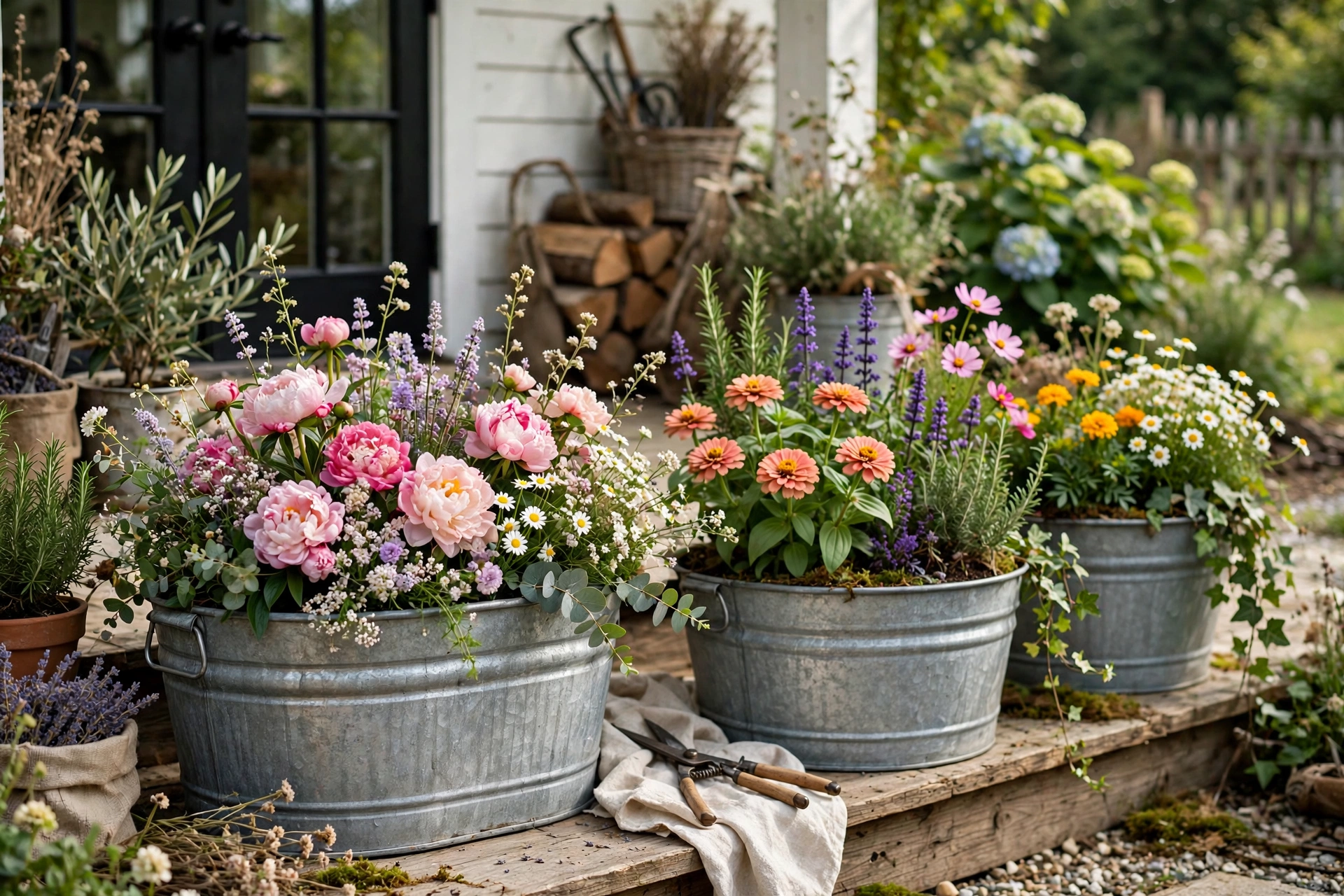
Galvanized steel tubs, stock tanks, and vintage-style buckets bring farmhouse-industrial charm for very little money. A 15-gallon round tub planted with a thriller-filler-spiller combo makes a statement herb garden; a row of small galvanized buckets along a step plants succulents with rustic polish. The zinc coating resists rust for years.
Metal heats up in full sun — line the interior with bubble wrap or a coco liner as insulation, and favor heat-tolerant plants or afternoon-shade positions. Drill drainage holes with a metal bit (several ⅜-inch holes), since most tubs come sealed. In wet climates, elevate tubs on bricks so the base does not sit in water and rust from below. The reflective silver finish brightens shady corners beautifully. For a cohesive look, repeat the galvanized finish in 2–3 containers rather than scattering singletons.
6. Railing Planters
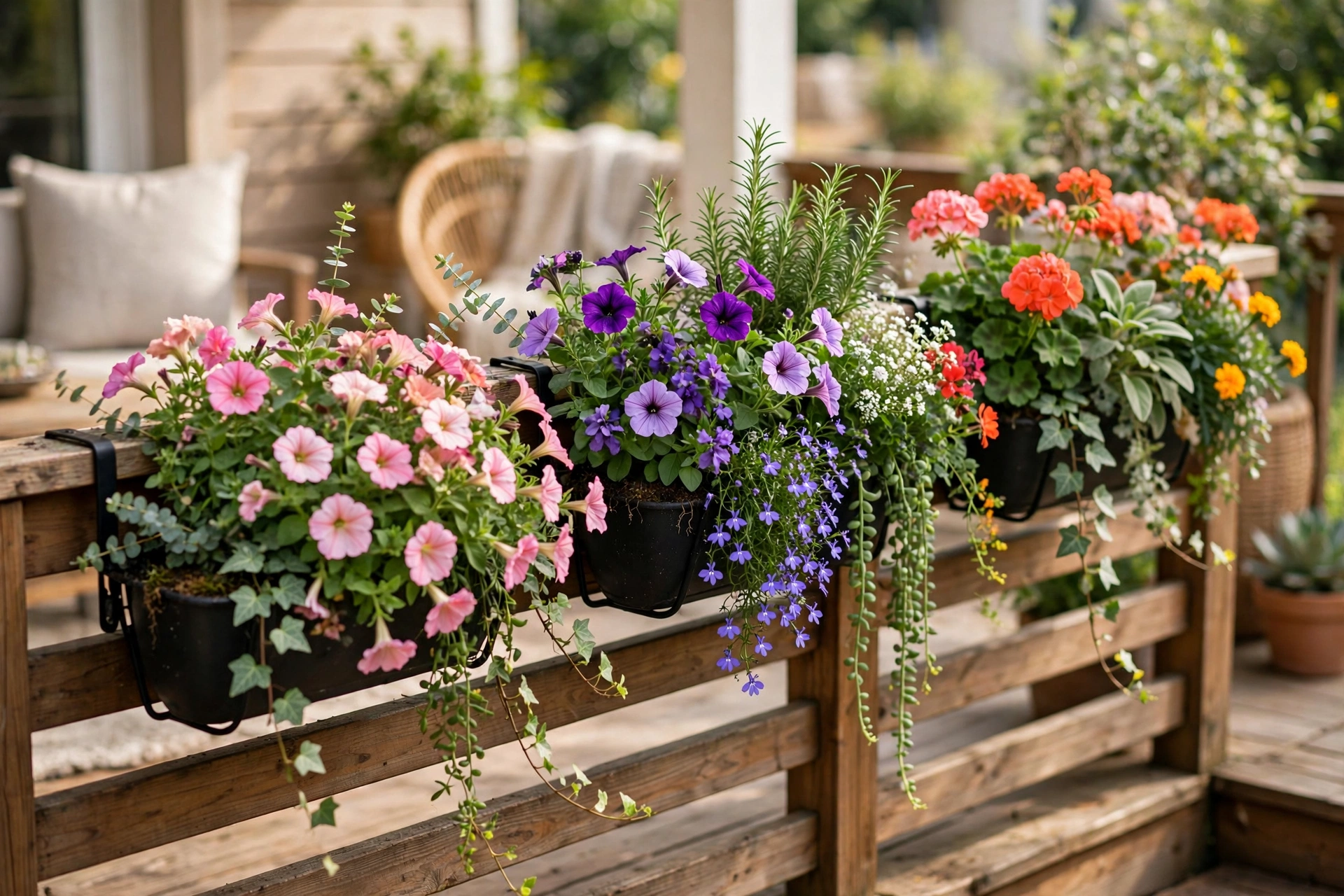
Railings are wasted growing space. Saddle-style railing planters hook over deck and balcony rails, instantly adding a flower border at eye level without touching floor space. Choose models with adjustable brackets for your rail width (measure — 2×4, 2×6, and metal rails all differ) and a coco or plastic liner to hold soil.
Plant railing boxes with compact, trailing varieties: cascading petunias, bacopa, trailing verbena, or herbs like thyme and oregano that tolerate the shallow 6–8-inch soil depth. Water daily in summer — shallow planters dry brutally fast — or fit a simple drip line on a timer for the whole rail run. Secure planters against wind with the manufacturer’s locking screws; a gust-launched planter is dangerous on upper balconies. Alternate flower boxes with plain green trailing plants for rhythm along long rails. This is the highest-impact move for balcony gardens.
7. Flanking Urns at the Entry
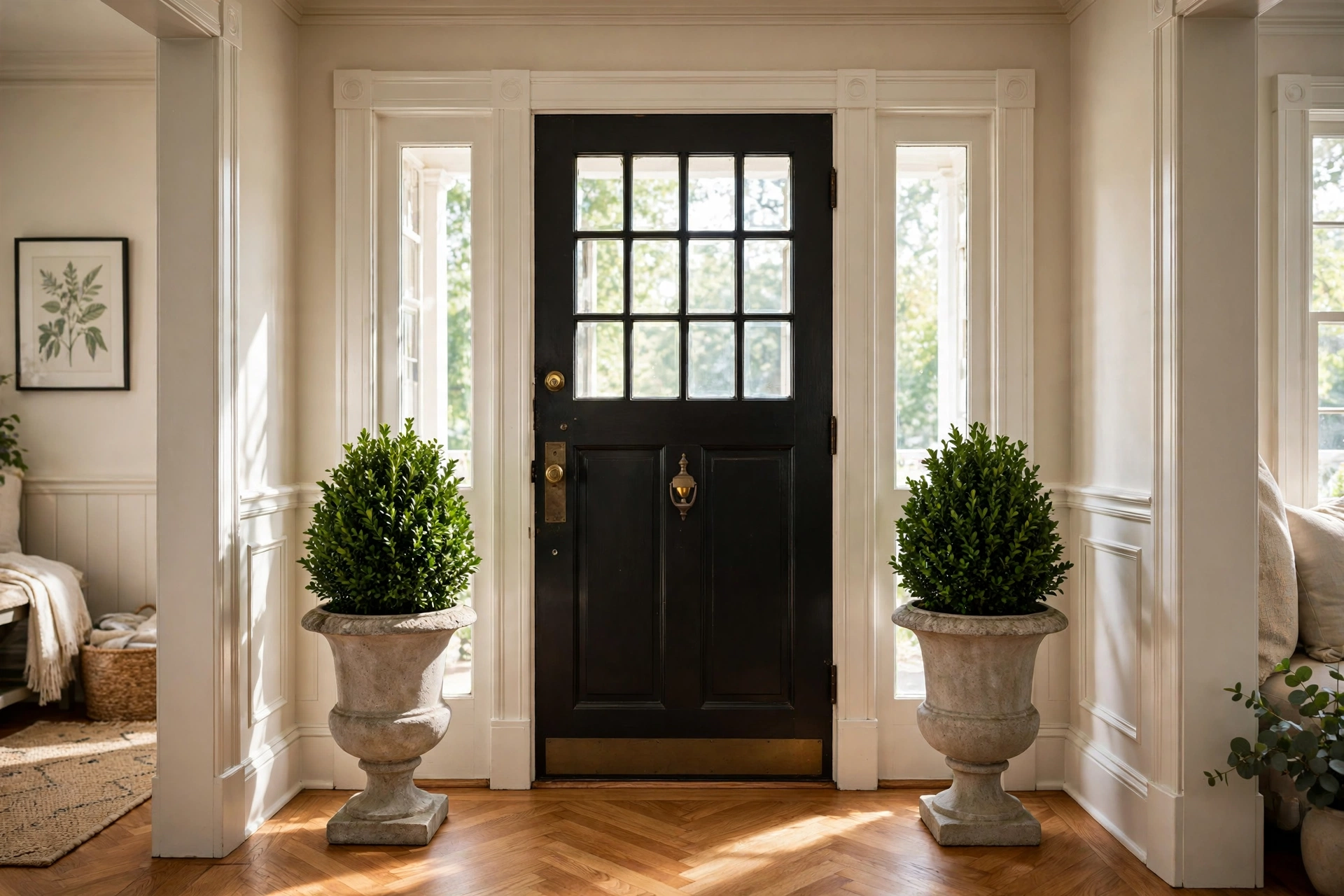
Two matching urns flanking the front door is the oldest curb-appeal trick in the book, and it works because symmetry reads as intentional. Choose urns 24–30 inches tall (roughly one-third the door’s height looks right) in a material that echoes the house — cast stone for traditional, glazed ceramic for transitional, matte black fiberglass for modern.
Plant each urn identically: a small evergreen (boxwood, dwarf Alberta spruce, or juniper) for year-round structure, underplanted with seasonal color you swap twice a year — pansies and ivy in cool months, lantana and sweet potato vine in summer. Elevate urns on low plinths if the stoop is deep, bringing them to eye-catching height. Water evergreens through winter; desiccation kills more container evergreens than cold does. For the full entry composition, see our outdoor wall decor ideas for patios and backyards to coordinate planters with lanterns and wall accents.
8. Tiered Plant Stand Display
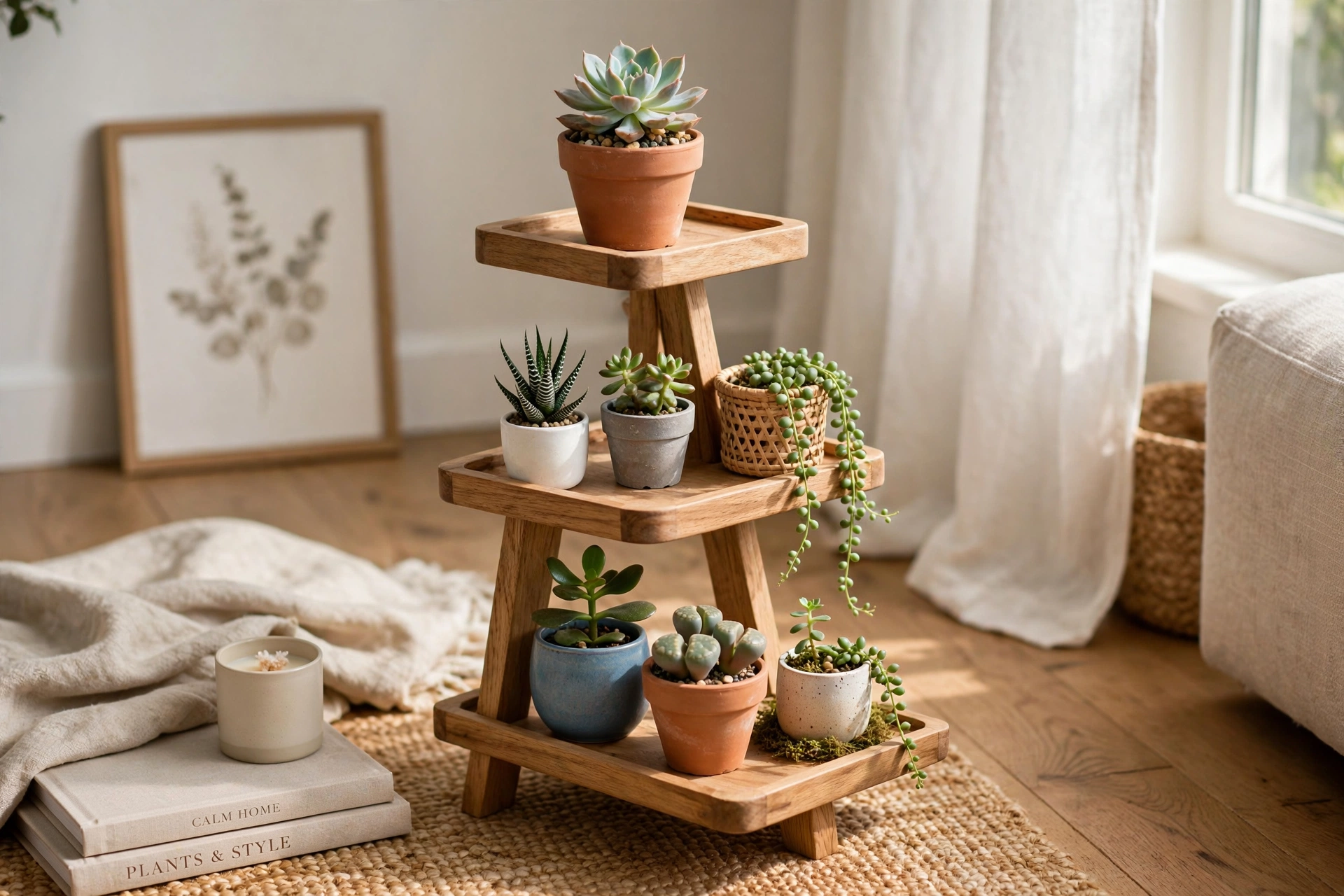
A tiered stand — three or four graduated shelves on an A-frame or ladder form — turns a dozen small pots into one composed display. It is ideal for succulent collections, herb gardens, or nursery seedlings, lifting small plants to viewing height and giving each tier its own light zone (sun-lovers on top, shade-tolerant below).
Build from cedar or buy a metal étagère rated for outdoor use; ensure each tier drains without drenching the shelf below (offset pots or add drip trays). Group by water needs per tier so one watering can serves the whole level without overwatering neighbors. In windy spots, anchor the stand to the wall — a top-heavy stand full of pots is a toppling hazard. Rotate the stand 180 degrees monthly so all sides get even light. A tiered stand against a blank fence or wall turns dead space into a living focal point.
9. Hanging Baskets at Multiple Heights
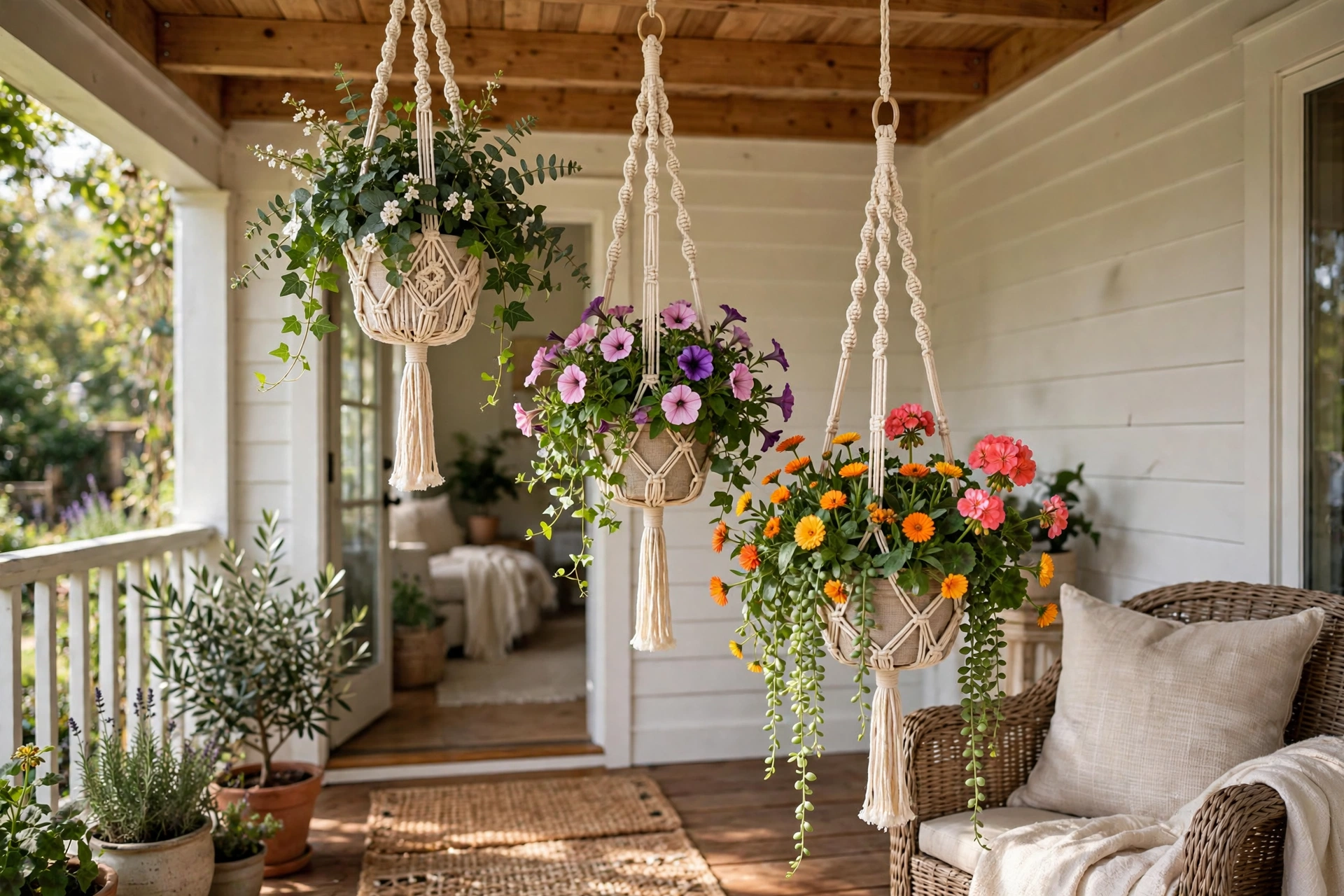
Hanging baskets add the vertical layer ground planters cannot. Hang them at staggered heights — 6.5, 7, and 7.5 feet — from shepherd’s hooks, pergola beams, or wall brackets, so they read as a floating garden rather than a uniform row. A 14-inch basket holds a full thriller-filler-spiller planting; 10-inch baskets suit single trailing varieties.
Water hanging baskets daily in summer heat — sometimes twice — because wind and elevation dry them fastest of all containers; self-watering baskets with reservoirs cut the chore in half. Use a pulley-style hanger for high baskets so watering does not require a ladder. Fertilize weekly at half strength; the frequent watering leaches nutrients relentlessly. Choose brackets rated for 25+ pounds — a saturated 14-inch basket is shockingly heavy. Ferns, fuchsia, and trailing petunias are the classic shade and sun choices respectively.
10. Repurposed Vintage Containers
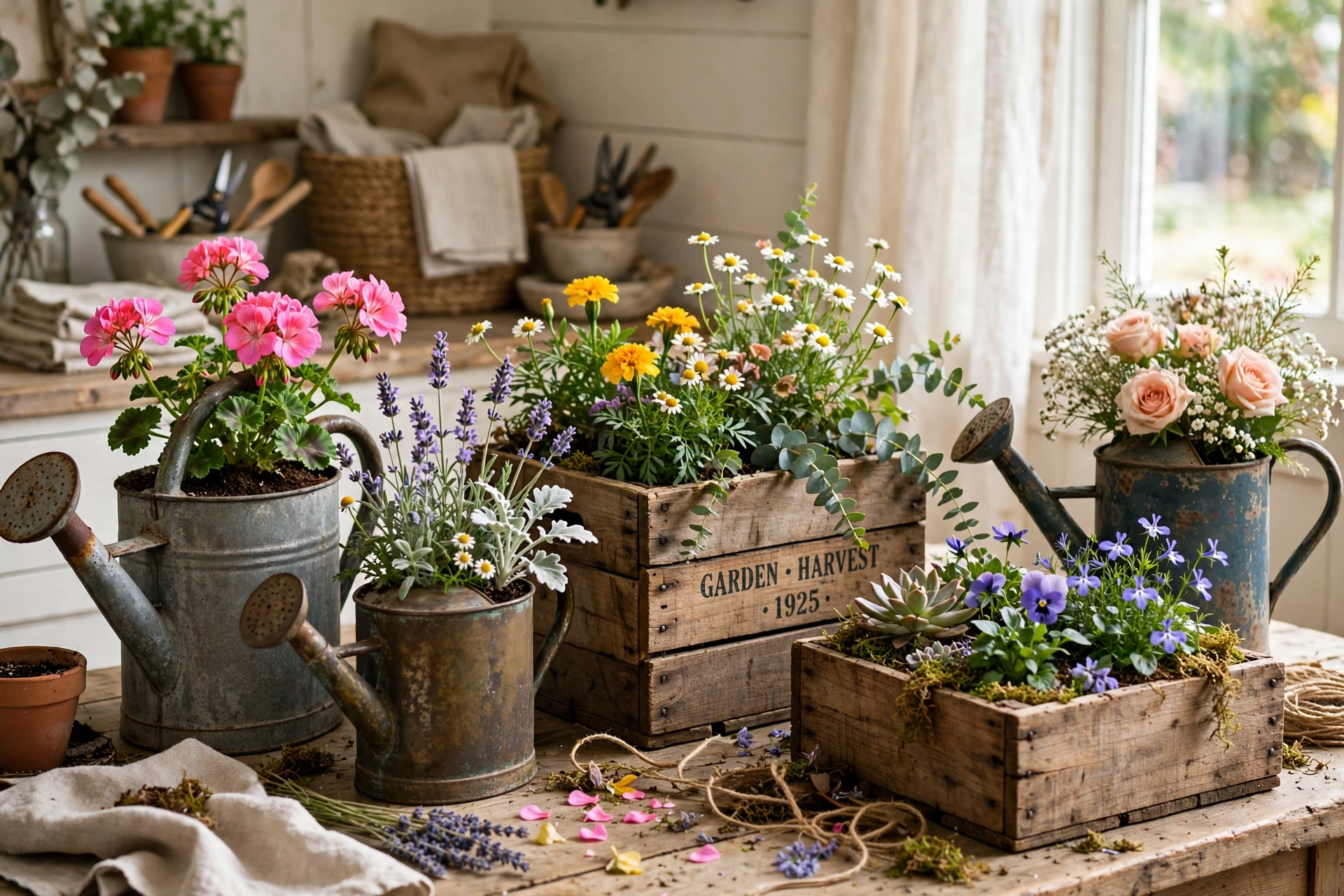
Old watering cans, wooden crates, enamel pots, wheelbarrows, and even vintage suitcases become planters with more personality than anything from a garden center. The rule: if it holds soil and can drain, it can be a planter. A galvanized watering can overflowing with trailing lobelia by the door, or a wooden crate of herbs on the patio table, tells a story mass-produced pots cannot.
Always add drainage — drill holes in metal and wood, or nest a plastic nursery pot inside containers you do not want to damage. Line porous or rust-prone vessels with a plastic pot to extend their life. Keep the planting simple so the container stays the star: one variety per vessel, or a simple spiller-only planting. Seal wooden crates with exterior polyurethane inside and out. Hunt flea markets and salvage shops in spring; the best vessels cost less than basic nursery pots and look ten times more interesting.
11. Kitchen-Door Herb Planter
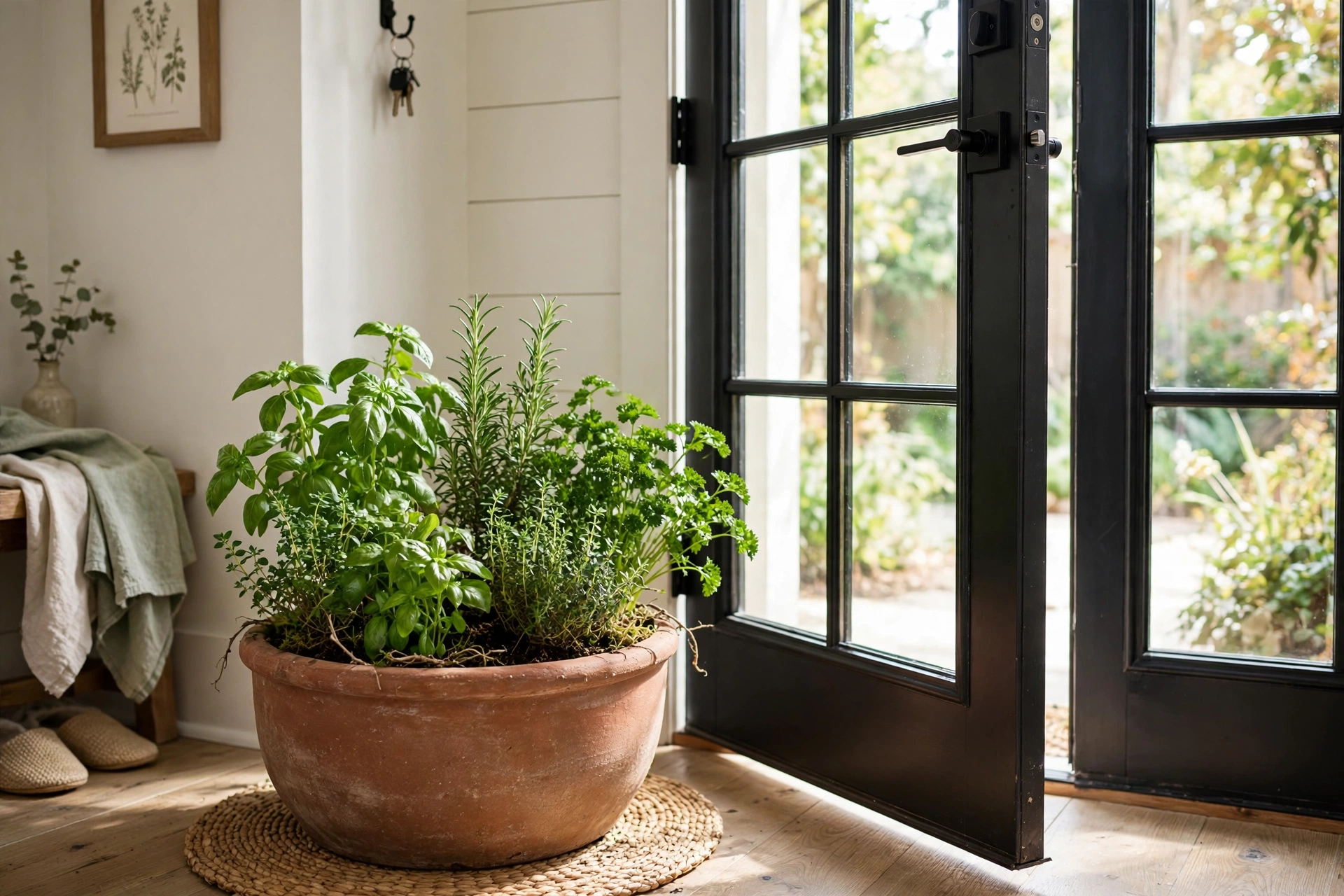
Plant a dedicated herb container within steps of the kitchen door and you will actually use it. A 24-inch round pot or a 36-inch window box holds the essentials: basil, parsley, thyme, rosemary, mint (always in its own pot — it invades), and chives. Position it where you pass daily; visibility is what turns good intentions into fresh garnishes.
Use premium potting mix amended with compost — herbs are heavy feeders in containers — and harvest regularly, which keeps plants bushy. Basil needs pinching above leaf pairs to prevent flowering; rosemary wants sharp drainage and less water than the rest. In cold climates, bring tender perennials (rosemary, bay) indoors before frost and treat basil as a summer annual. Label varieties with small slate markers for guests. One well-placed herb pot outperforms a neglected raised bed for actual kitchen use.
12. Succulent Bowl Garden
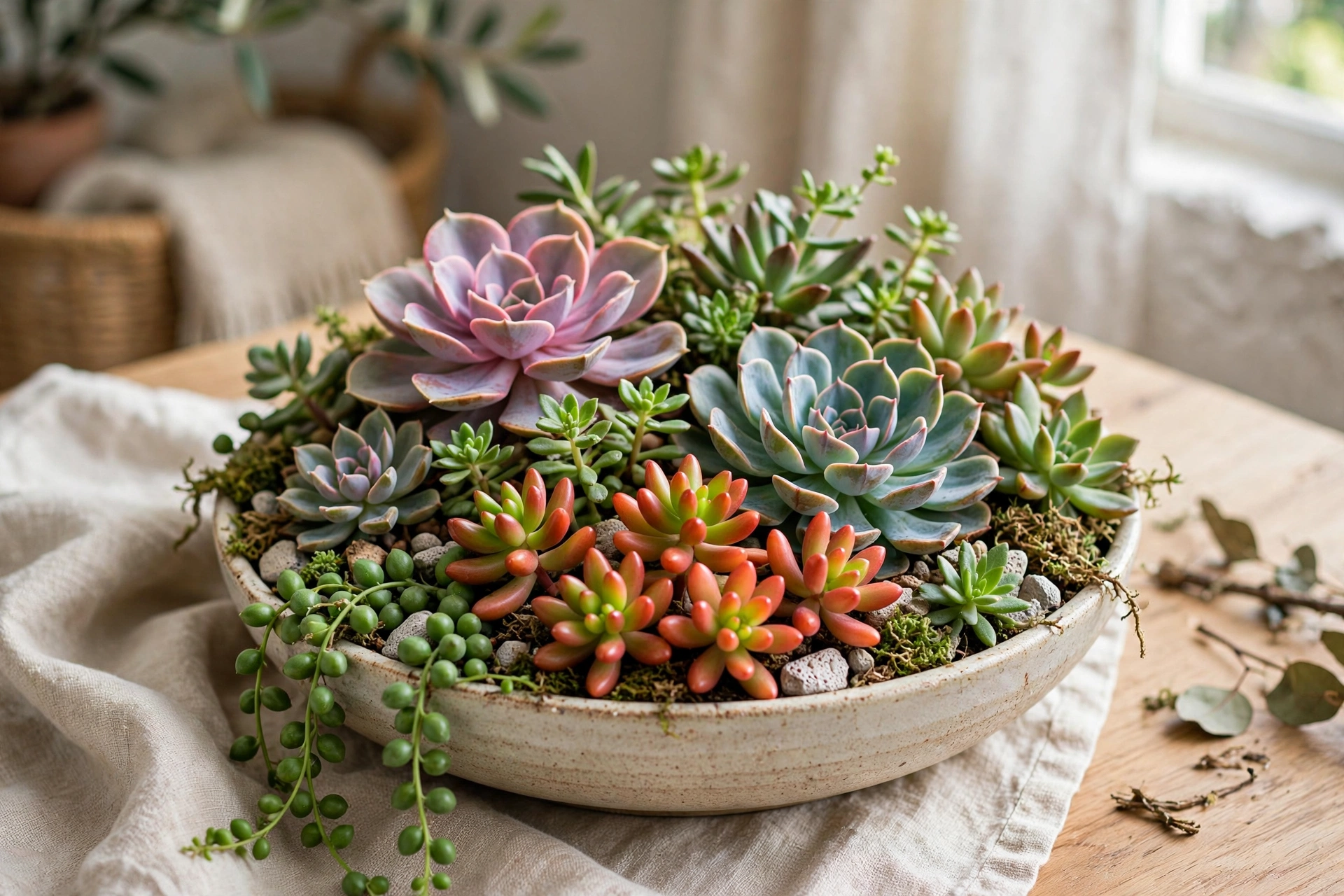
A wide, shallow bowl (16–20 inches across, 6–8 inches deep) planted with a tapestry of succulents is nearly indestructible and sculptural year-round in warm climates. Combine rosette forms (echeveria), upright accents (a small agave or haworthia as thriller), and trailing sedums spilling over the rim. Top-dress with gravel or crushed glass for a finished, moisture-regulating surface.
Use cactus/succulent mix — never garden soil — and ensure the bowl drains freely; succulents rot faster from wet feet than from drought. Water deeply but rarely: soak until water runs out, then wait until the soil is bone-dry. In zones with frost, treat the bowl as seasonal decor and overwinter it in a bright window. The gravel mulch is functional, keeping leaves off damp soil and reducing rot. A succulent bowl on a patio table needs watering only every 2–3 weeks — the lowest-maintenance planting on this list.
13. Single Specimen Statement Tree
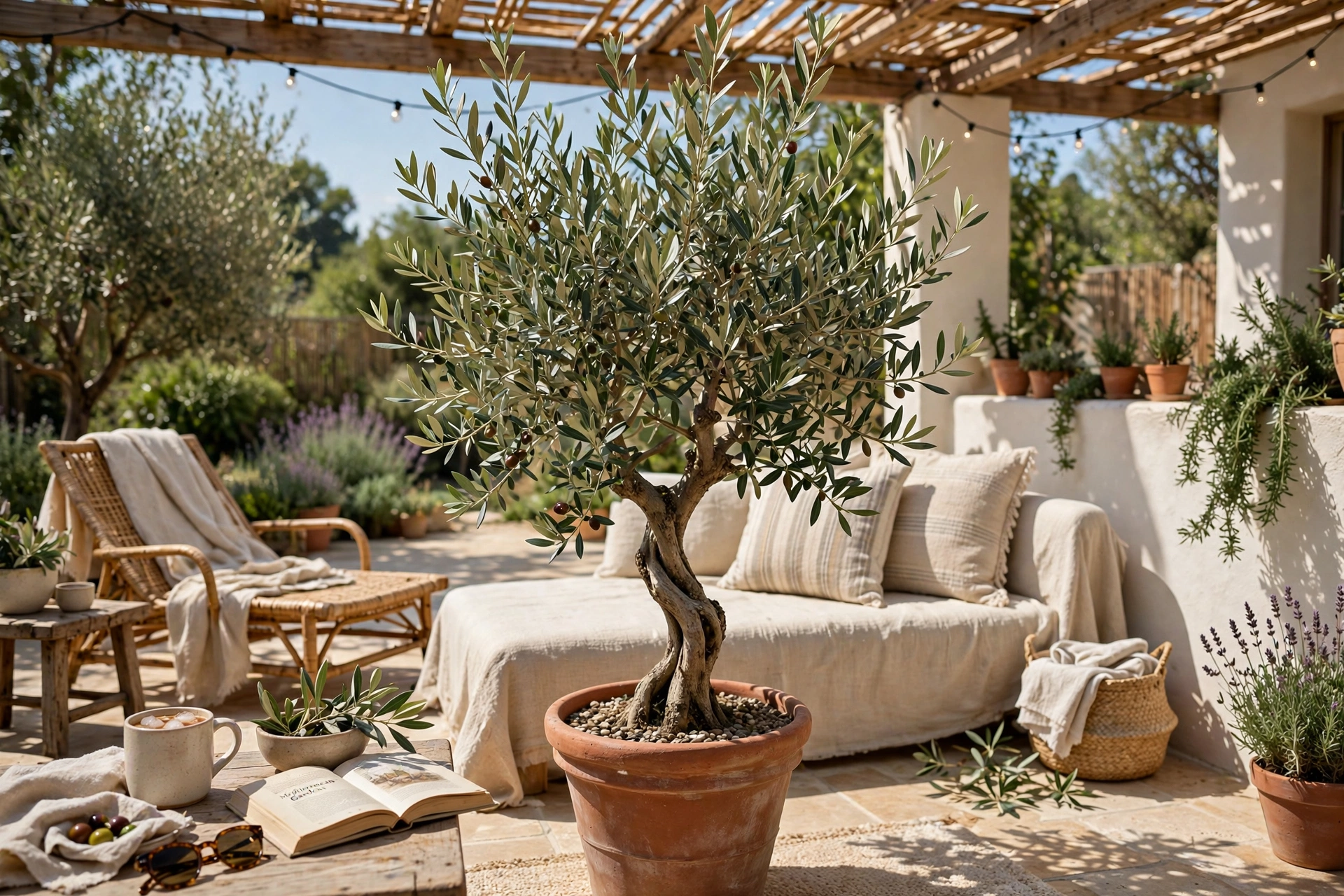
One large potted tree — an olive, citrus, Japanese maple, or bay laurel in a 22–26-inch container — gives a patio instant architecture and Mediterranean gravitas. The scale shift from small pots to a 6–8-foot tree transforms the space more than any combination planting. Choose a container 2–4 inches wider than the root ball with excellent drainage.
Citrus and olives need full sun and winter protection below freezing (roll them indoors on a plant dolly); Japanese maples prefer afternoon shade and shelter from wind. Use a soil mix with 30% perlite or bark for drainage, top-dress with compost each spring, and water deeply when the top 2 inches dry. Prune lightly each year to maintain shape — a lollipop standard (single clear trunk, ball canopy) looks most deliberate. Underplant the base with low thyme or sedum to finish the composition. The flowerpot history notes containers have showcased specimen plants for millennia — this is the timeless move.
14. Window Boxes
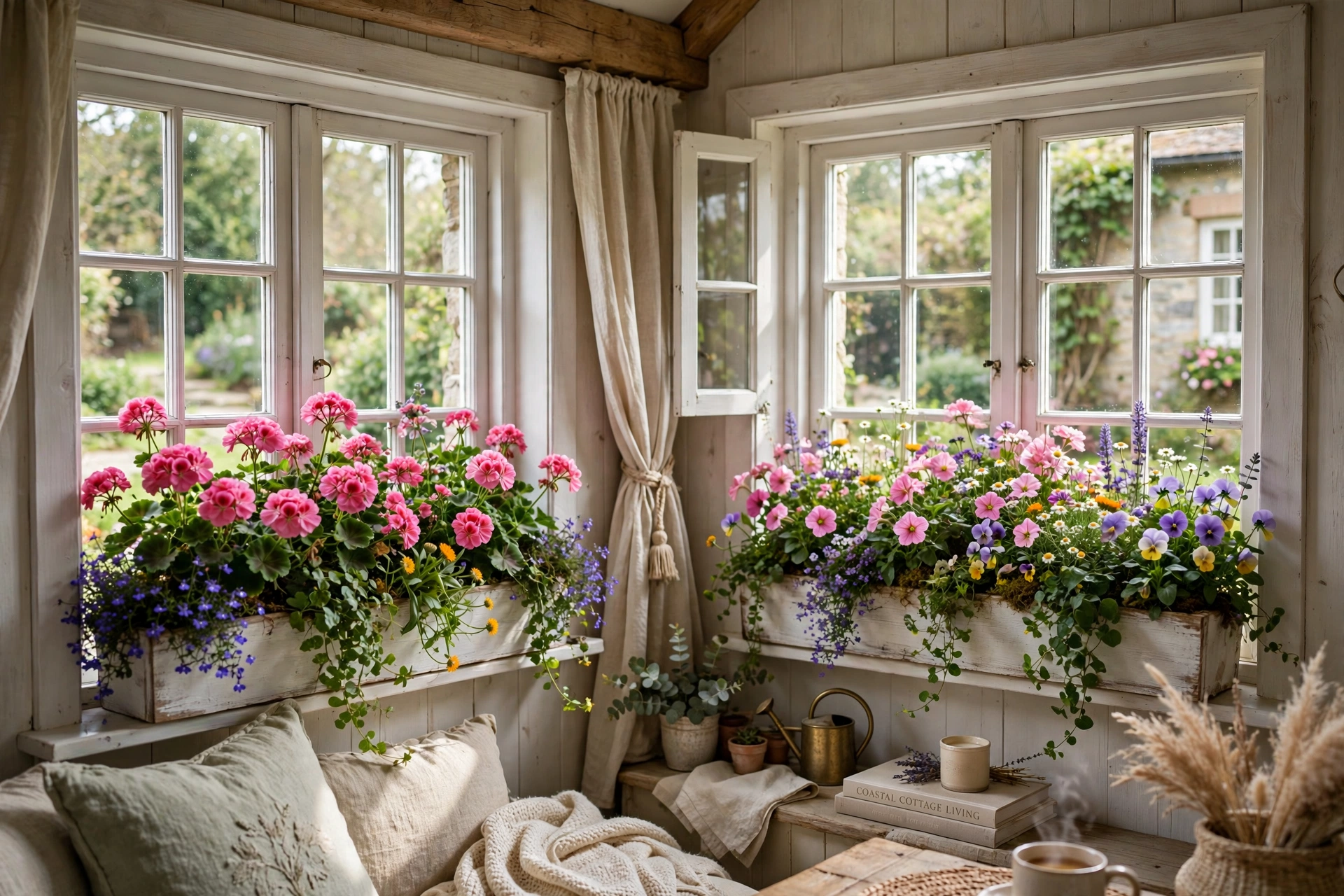
Window boxes dress the house itself, adding flower color at eye level from inside and curb appeal from the street. Size the box to the window: 6–8 inches deep, spanning the full window width minus 2 inches, mounted on brackets rated for 50+ pounds when saturated. Self-watering boxes with reservoirs are worth the premium — window boxes dry fast in sun and wind.
Plant in the thriller-filler-spiller formula scaled down: compact fountain grass or dracaena spikes as thrillers, geraniums or begonias as fillers, ivy or bacopa as spillers. Secure boxes with through-bolts into framing, not just siding — a falling window box is a hazard. In upstairs windows, choose lighter fiberglass boxes over wood or iron. Coordinate flower colors with your shutters or door for a pulled-together facade. Deadhead weekly to keep boxes blooming into fall.
15. Drainage, Soil, and Watering Foundations
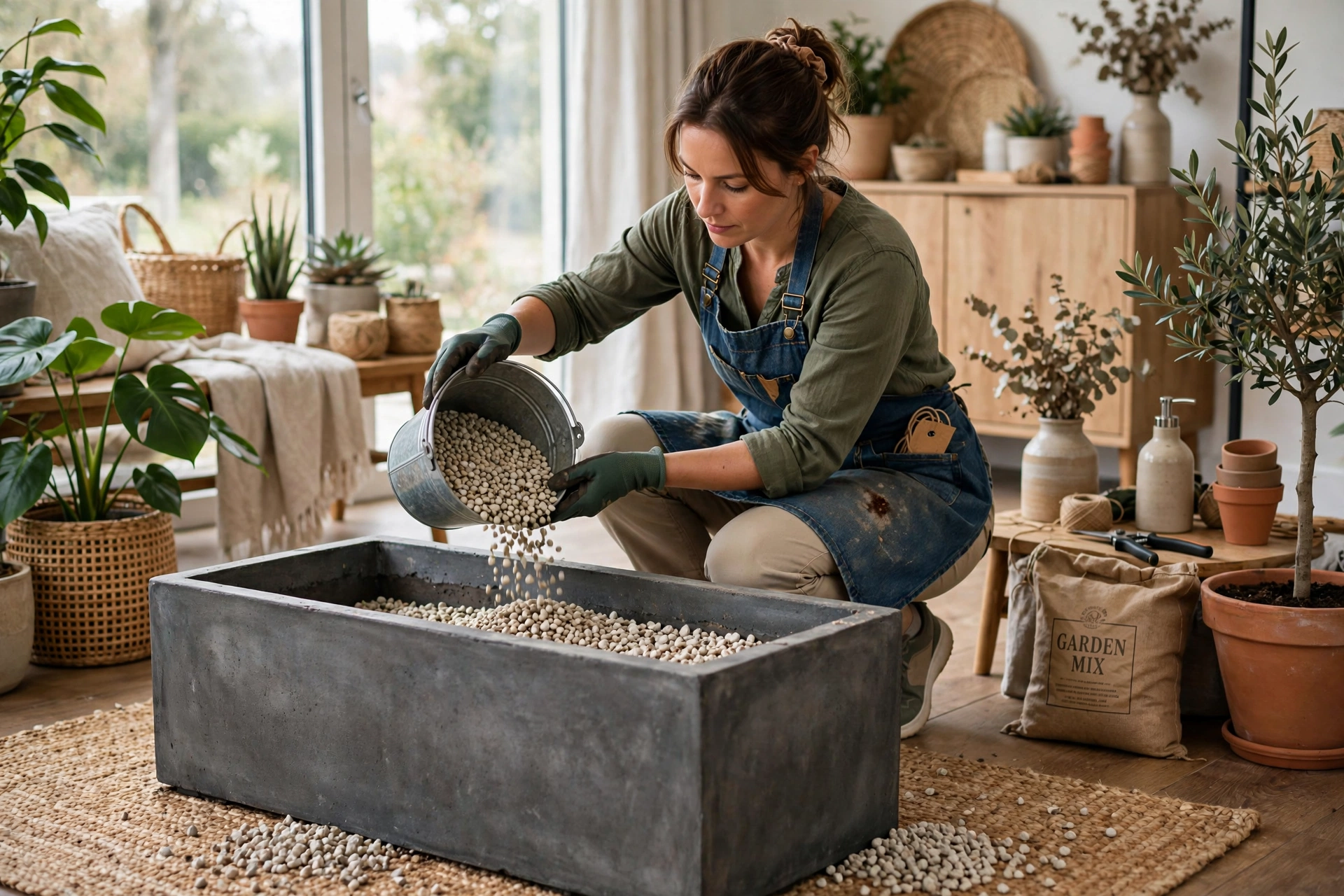
Every beautiful planter on this list fails without three fundamentals. Drainage: every container needs holes — drill them if absent — plus a 1-inch layer of coarse gravel or pot shards at the base and pot feet for airflow underneath. Soil: use bagged potting mix (peat or coco-based), never garden soil, which compacts into concrete in pots; refresh the top 3 inches each spring. Watering: check daily in summer by pushing a finger 2 inches deep — water only when dry at that depth, then soak until water flows from the holes.
Mulch container surfaces with 1–2 inches of bark or gravel to cut evaporation by up to 70%. Group pots together to create a humid microclimate that slows drying. In extreme heat, move vulnerable containers to afternoon shade — wheels or plant dollies under large pots make this a one-person job. Get these foundations right and even beginner plantings thrive; skip them and even expert designs struggle. For coordinating containers with the rest of your outdoor styling, our patio decor ideas for a stunning outdoor retreat ties planters into complete patio schemes.
Frequently Asked Questions
What is the thriller-filler-spiller method?
It is the professional formula for container design: one tall dramatic “thriller” in the center, mounding “fillers” around it for fullness, and trailing “spillers” at the edge to cascade over the rim. In a 16-inch pot that means roughly 1 thriller, 3–4 fillers, and 2–3 spillers. The formula works for sun or shade — just choose plants suited to your light — and guarantees a balanced, finished look even for beginners.
How do I keep outdoor planters from drying out so fast?
Use large containers (16+ inches), quality potting mix, and 1–2 inches of mulch on the surface. Group pots together, choose self-watering planters or add drip irrigation on a timer, and position vulnerable pots where they get afternoon shade. Terracotta and metal dry fastest; glazed ceramic, fiberglass, and wood retain moisture longer. In heat waves, even established plantings may need twice-daily watering.
Do outdoor planters need drainage holes?
Absolutely — without drainage, roots sit in water and rot. Drill holes if your container lacks them (masonry bit for concrete/ceramic, metal bit for steel, spade bit for wood), add pot feet for airflow underneath, and never rely on a gravel layer alone without an exit hole. The one exception is a true bog planting; everything else needs to drain.
What plants survive best in outdoor containers?
It depends on your light and zone, but reliable container performers include: sun — petunias, lantana, sweet potato vine, fountain grass, lavender; shade — impatiens, ferns, caladiums, ivy, hostas; year-round structure — boxwood, dwarf conifers, ornamental grasses. Always check the plant tag for your USDA zone and mature size — a plant that outgrows its pot in one season was the wrong choice.
How often should I fertilize container plants?
Every 1–2 weeks during the growing season with a balanced liquid fertilizer at half to full strength, because frequent watering leaches nutrients from potting mix rapidly. Slow-release granular fertilizer mixed into the soil at planting time provides a baseline for 3–6 months. Signs of hunger: pale leaves, weak flowering, stalled growth despite adequate water. Ease off in fall as growth slows.
Keep Exploring
Pick your material, size up boldly, plant the thriller-filler-spiller recipe, and nail drainage — four decisions that separate thriving containers from sad ones. Start with the entryway pair or one statement pot this weekend; containers are the rare garden project with same-day payoff.