
Close your eyes and imagine walking into your living room — only this time, it’s different. The surfaces are clear. The light is soft and golden. There’s room to breathe. You exhale without even thinking about it. That feeling? That’s minimalism. And it’s more achievable than you think. Minimalist living room design isn’t about living with nothing — it’s about living with exactly what you love, intentionally arranged to create space, calm, and beauty. It’s the antidote to the visual noise and accumulated clutter that so many of us quietly tolerate in our homes. Whether you’re starting from scratch or simply ready to strip your current space back to something more peaceful, these 12 minimalist living room design ideas will show you exactly how to get there — without your home ever feeling cold, bare, or unwelcoming.
Let’s create your calm.
1. Start With a Minimalist Mindset: Less Really Is More
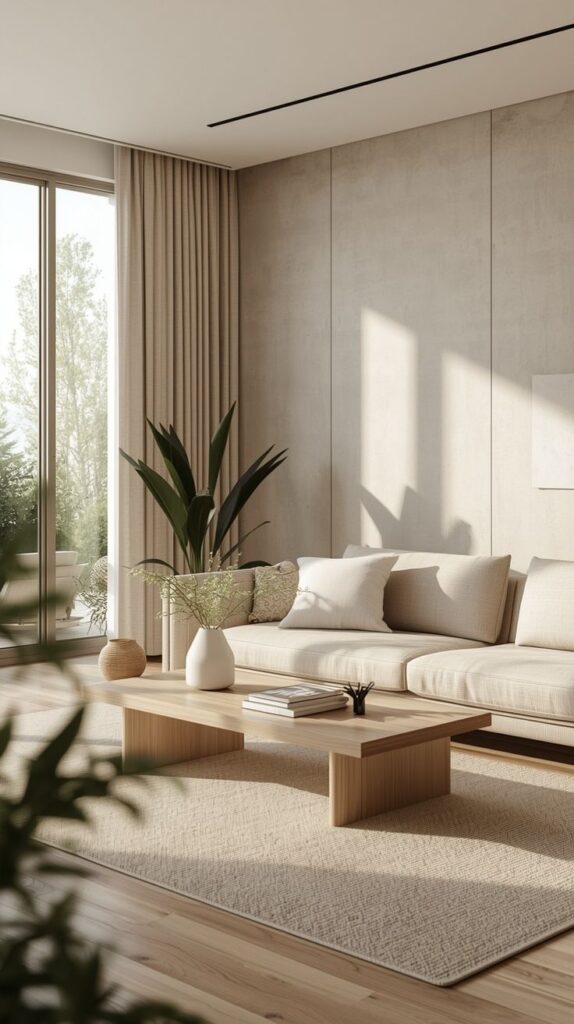
Before you move a single piece of furniture, the most powerful shift you can make is mental. Minimalism isn’t a style you impose on your home — it’s a philosophy you bring to your choices. Ask yourself: what does this room actually need to function beautifully and make me feel good? Then let that question be your filter for everything that stays and everything that goes.
The goal isn’t a showroom. It’s a room that breathes. One that has enough negative space to let your eye rest, enough calm to let your mind follow. Start by removing five things from your living room right now — just five — and notice how differently the space feels. That feeling is your compass.
2. Choose a Soft, Neutral Colour Palette
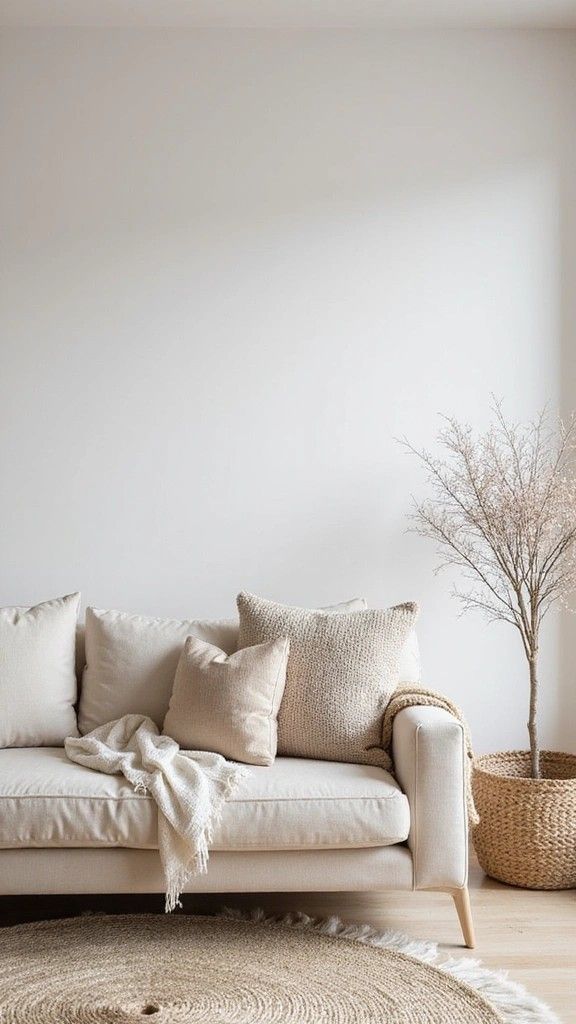
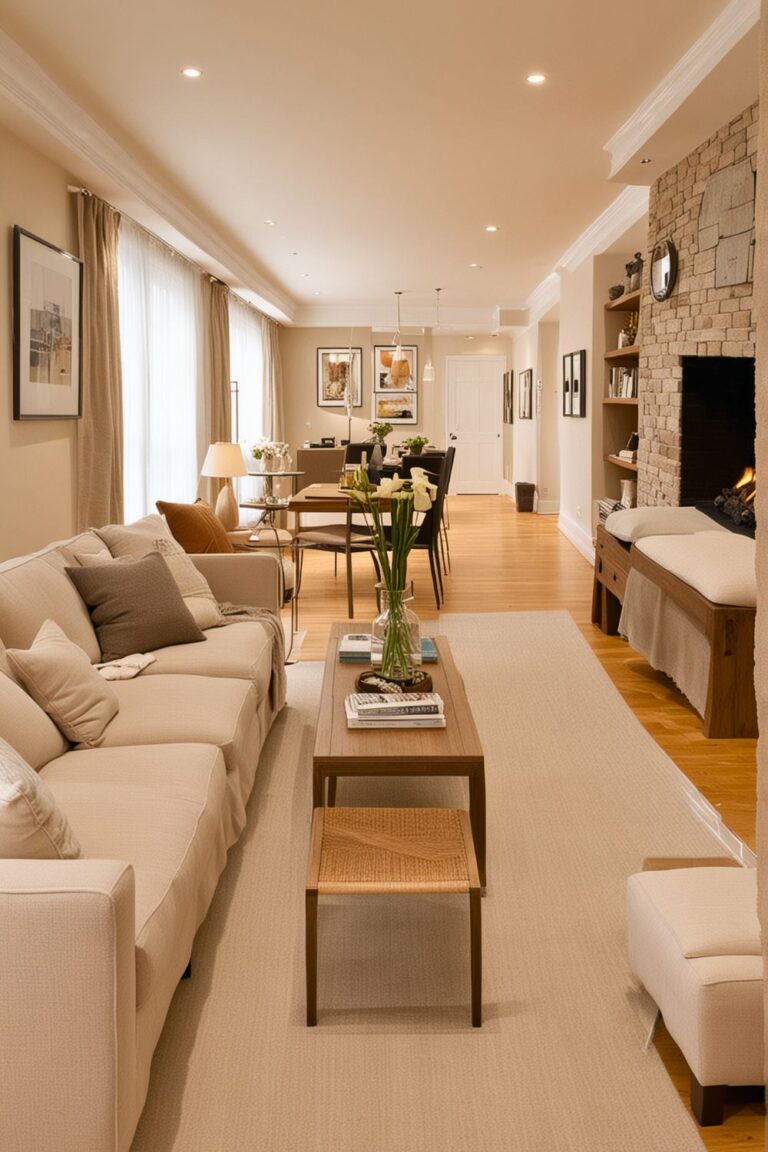
Colour is the single most powerful tool in creating a minimalist living room — and the minimalist palette is built on soft, warm neutrals that recede gently and let the architecture of the room do the talking. Think warm white, off-white, pale greige, sand, and barely-there blush. These tones reflect light beautifully, make rooms feel larger, and create an instant sense of calm.
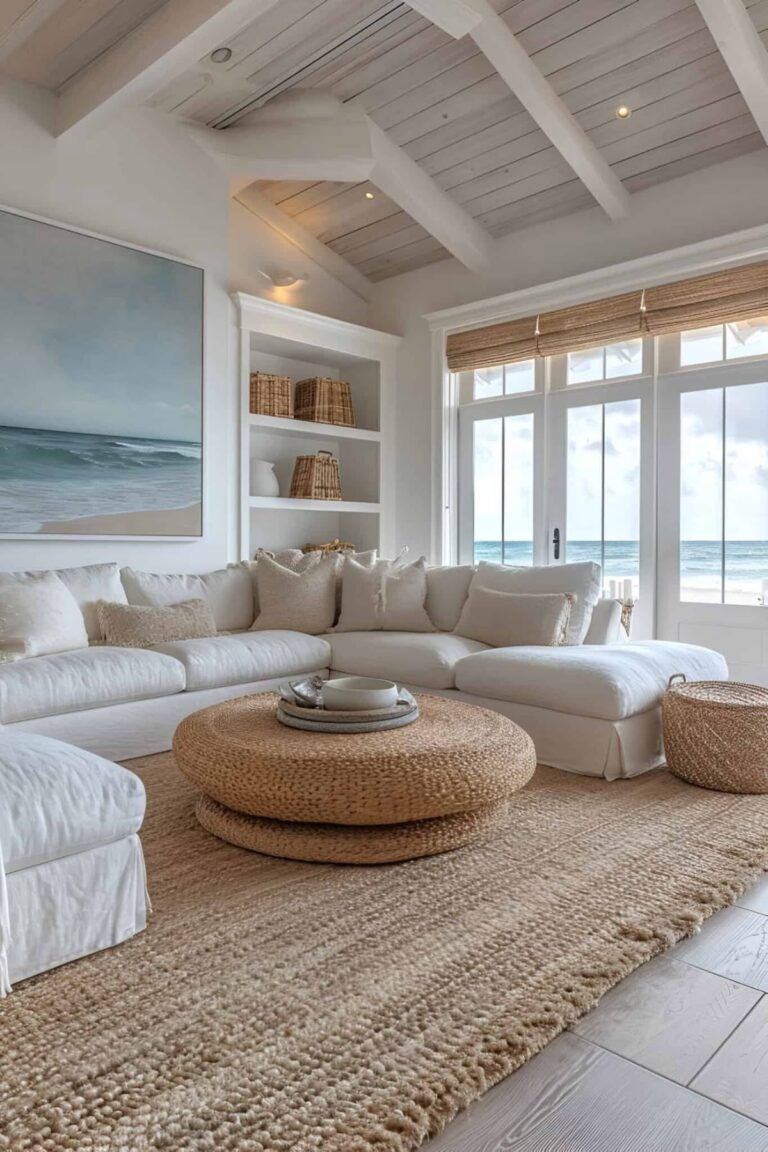
The key is to keep your palette to three tones at most — one for the walls, one for the largest furniture piece, and one for soft furnishings. Vary the texture rather than the colour to keep things interesting. A warm white linen sofa against white walls feels rich and layered when paired with a chunky jute rug and a wool throw — all in the same tonal family.
3. Edit Your Furniture Down to the Essentials
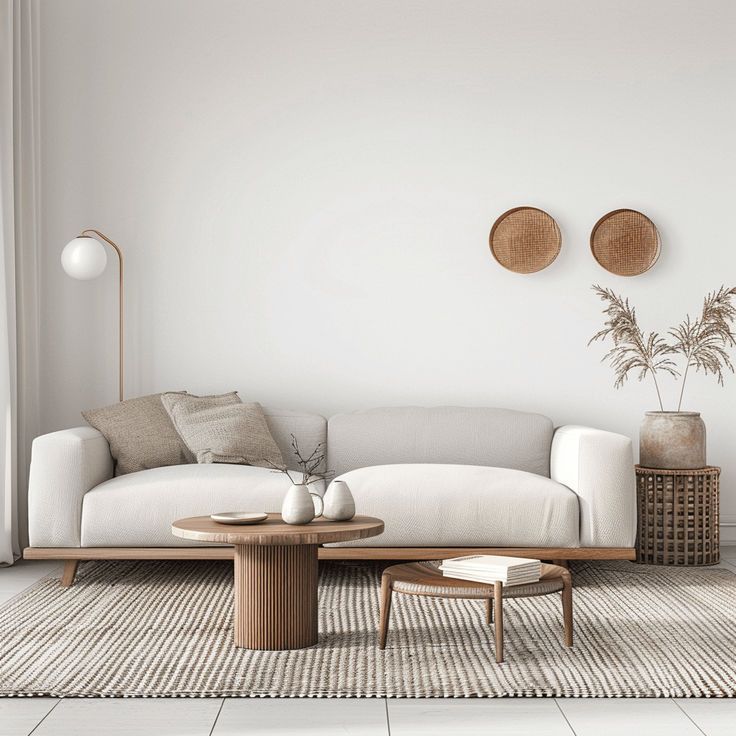
Most living rooms have too much furniture. It creeps in over the years — an extra chair here, a side table there — until the room feels full before you’ve even sat down. In a minimalist living room, every piece of furniture earns its place by being both beautiful and functional.
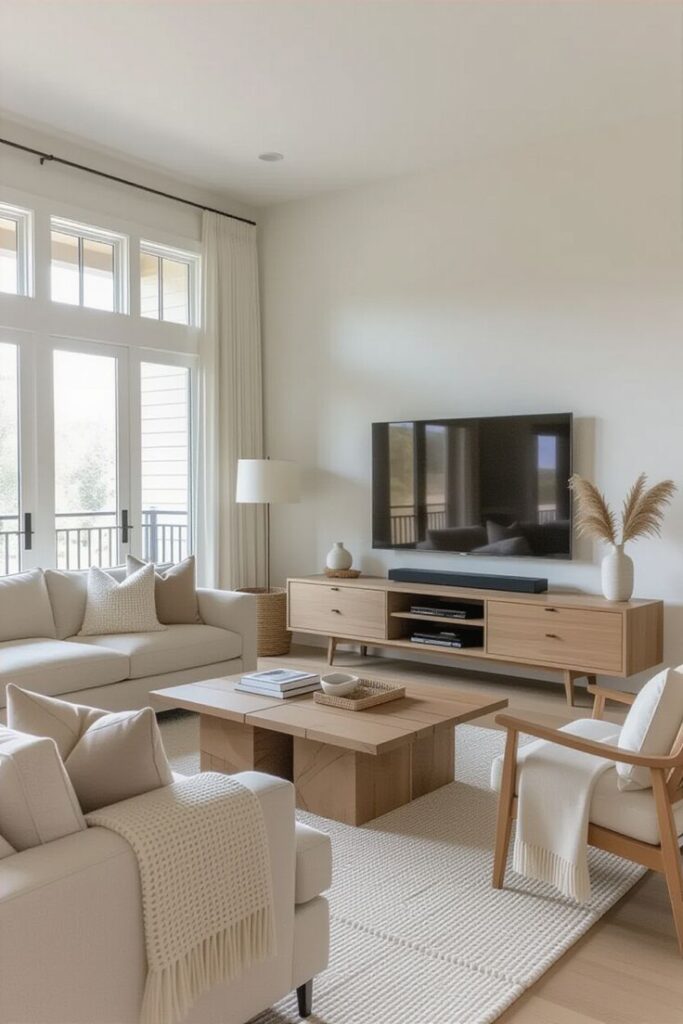
Start by removing everything and only bringing back what the room truly needs: one sofa, one coffee table, and — depending on your space — one accent chair or side table. If a piece doesn’t add function or beauty, it doesn’t return. Choose furniture with clean, slim profiles and natural materials like oak, walnut, or linen. The breathing room you create around each piece is as important as the piece itself.
4. Embrace the Power of Negative Space
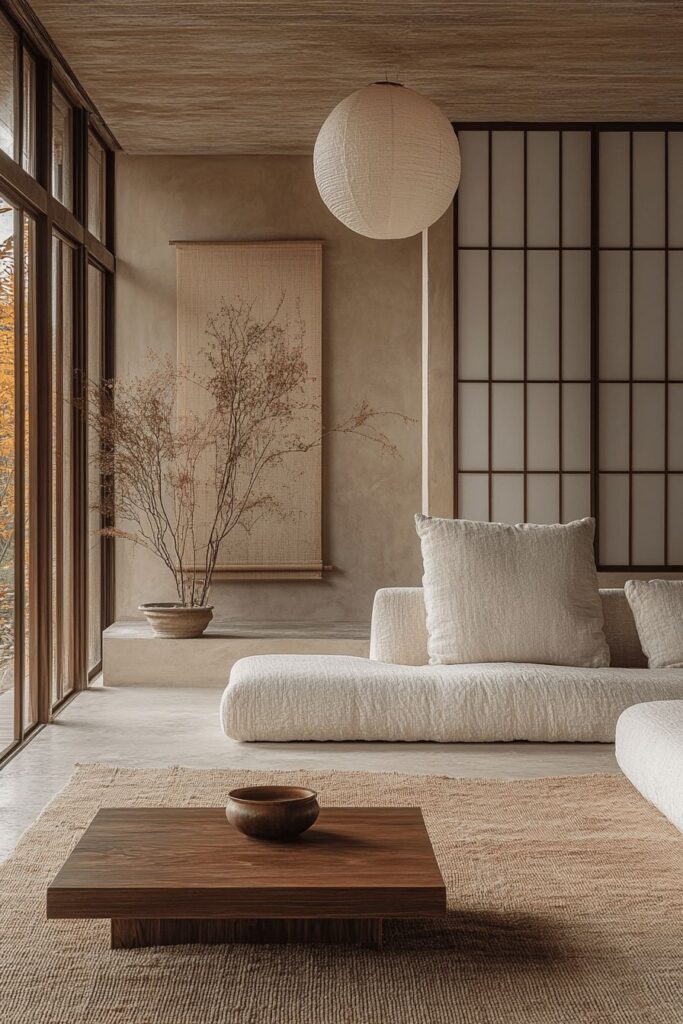
In conventional decorating, empty wall space feels like a problem to be solved. In minimalism, it’s one of your greatest assets. Negative space — the intentional absence of objects — gives the eye room to travel and the mind room to rest. It makes the things you do choose to display feel important and considered, rather than competing for attention in a crowded room.
Resist the urge to fill every wall, every corner, every surface. A single large piece of artwork on an otherwise bare wall has ten times the impact of a cluttered gallery. One sculptural vase on an empty shelf stops you in your tracks. Practice sitting with the discomfort of empty space for a week — you’ll likely find it becomes the thing you love most about your room.
5. Invest in One Hero Furniture Piece
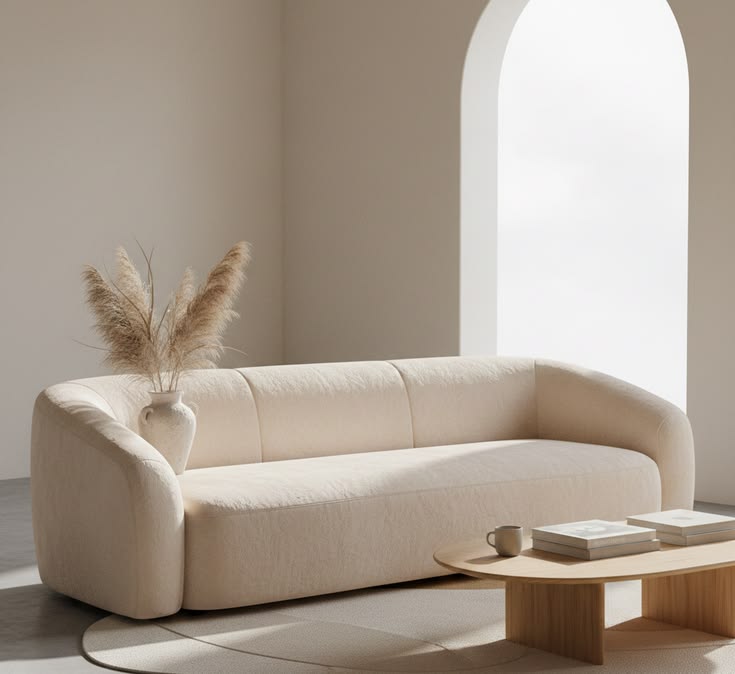
Minimalism doesn’t mean cheap — in fact, one of its greatest secrets is that a single truly beautiful piece of furniture can define an entire room. Instead of spreading your budget across many mid-range items, consider investing it in one exceptional hero piece: a beautifully crafted sofa with an interesting silhouette, a handmade ceramic coffee table, or a solid wood sideboard that will last a lifetime.
When the rest of the room is pared back and calm, this one piece becomes a work of art in itself. It elevates everything around it and gives your space a sense of purpose and confidence that no amount of accessorising can replicate. Buy less, buy better — the minimalist mantra that transforms rooms.
6. Layer Texture to Add Warmth Without Clutter
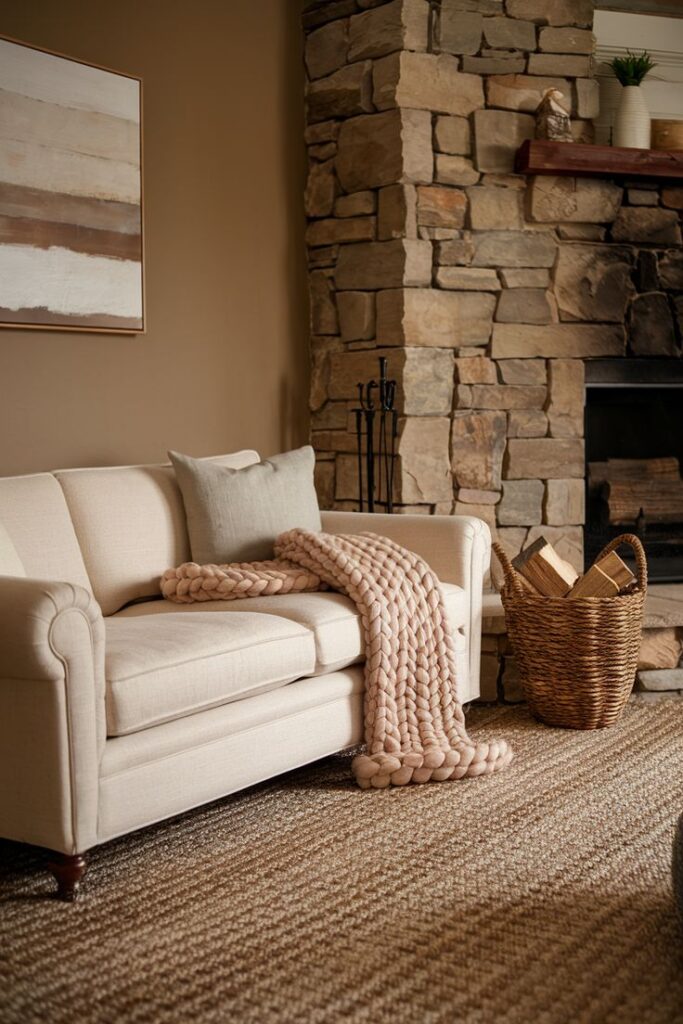
One of the most common fears about minimalism is that it will feel cold. The solution is texture — and lots of it, all within the same tonal palette. Texture adds warmth, depth, and sensory richness to a room without adding visual clutter, because it works within a colour family rather than against it.
Think of a linen sofa paired with a chunky knit throw, a smooth plaster wall beside a rough jute rug, a matte ceramic vase next to a polished wooden bowl. Each material catches the light differently and creates subtle contrast that makes the room feel layered and lived-in. The rule? Vary texture freely, but keep colour restrained. This is the formula that separates cold minimalism from warm, inviting minimalism.
7. Let Natural Light Be Your Best Accessory
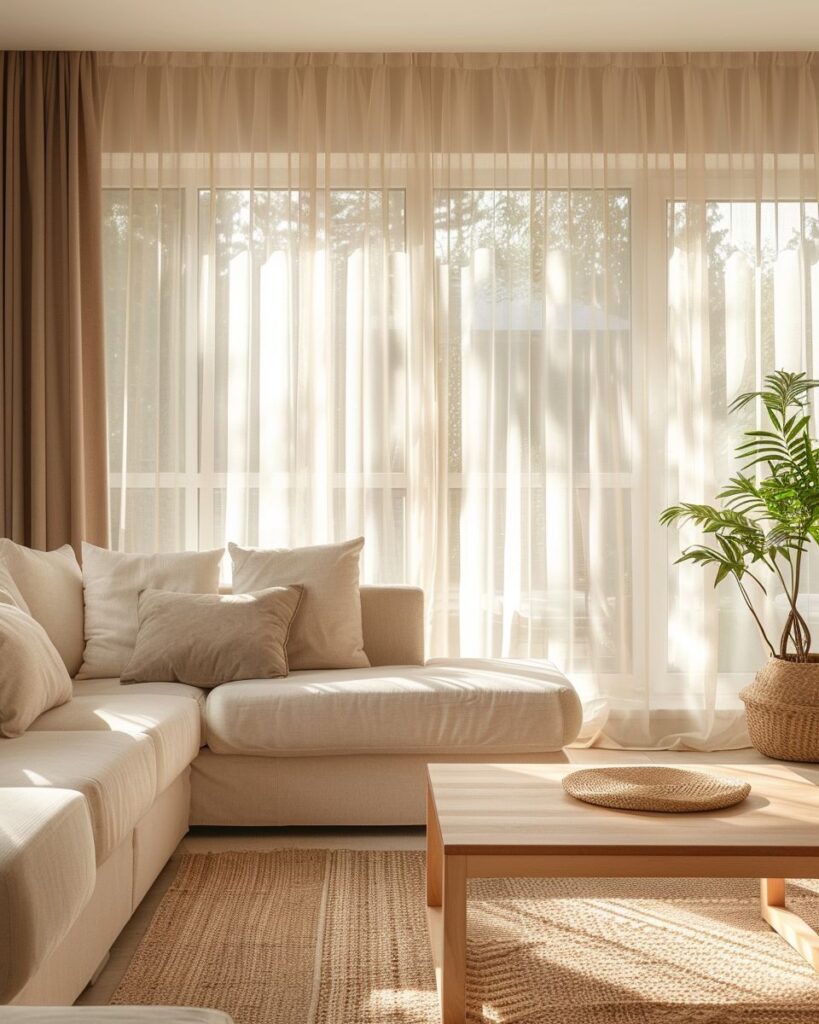
Natural light is the one design element that costs nothing and transforms everything. In a minimalist living room, light becomes the atmosphere — it shapes the space, warms the neutrals, and makes the whole room feel alive. The minimalist approach to windows is simple: maximise, don’t obstruct.
Hang curtains as close to the ceiling as possible and let them pool slightly at the floor — this draws the eye upward and makes the room feel taller. Choose sheer linen or voile panels that filter light without blocking it. Remove heavy blinds or pelmet boxes that are eating your daylight. And place mirrors strategically to bounce light from windows into darker corners. The brighter your room, the more spacious and serene it will feel.
8. Choose Storage That Disappears
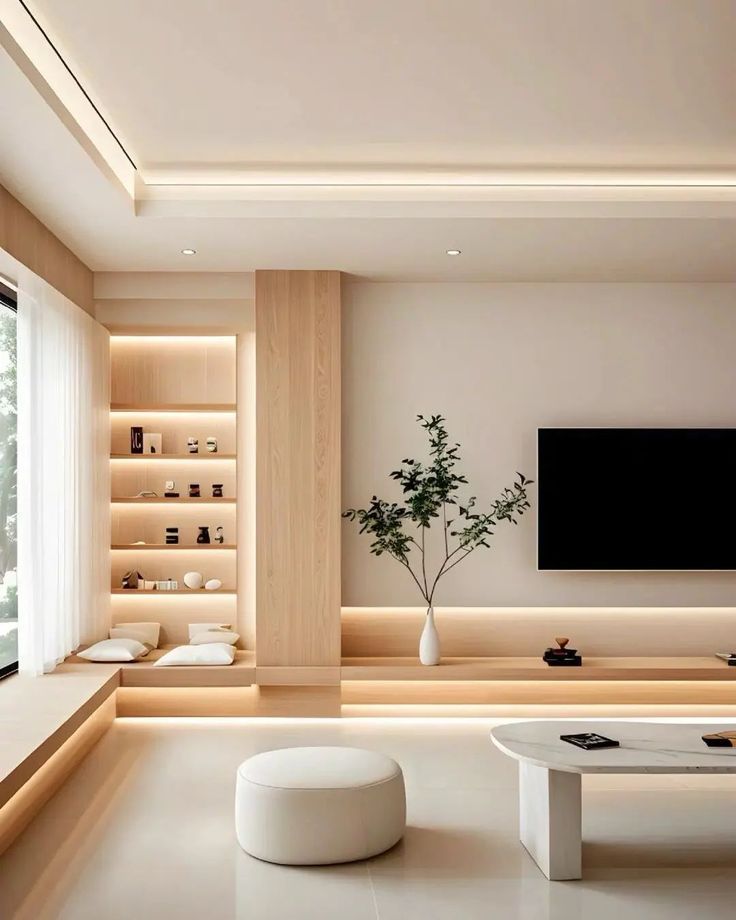
Clutter is the enemy of minimalism — and the secret to keeping it at bay is storage that works quietly behind the scenes. The best minimalist storage is either hidden entirely or so beautifully designed that it becomes part of the decor.
Consider a low media console with closed doors rather than open shelving. A storage ottoman that doubles as a coffee table. Built-in cabinetry that blends seamlessly with the walls. Baskets in natural rattan that corral remote controls, books, and throws while looking intentional. The goal is to make tidying effortless — when everything has a home, it takes seconds to restore the calm your room deserves. A tidy room isn’t just beautiful; it’s deeply restful for the mind.
9. Be Intentional With Art and Decoration
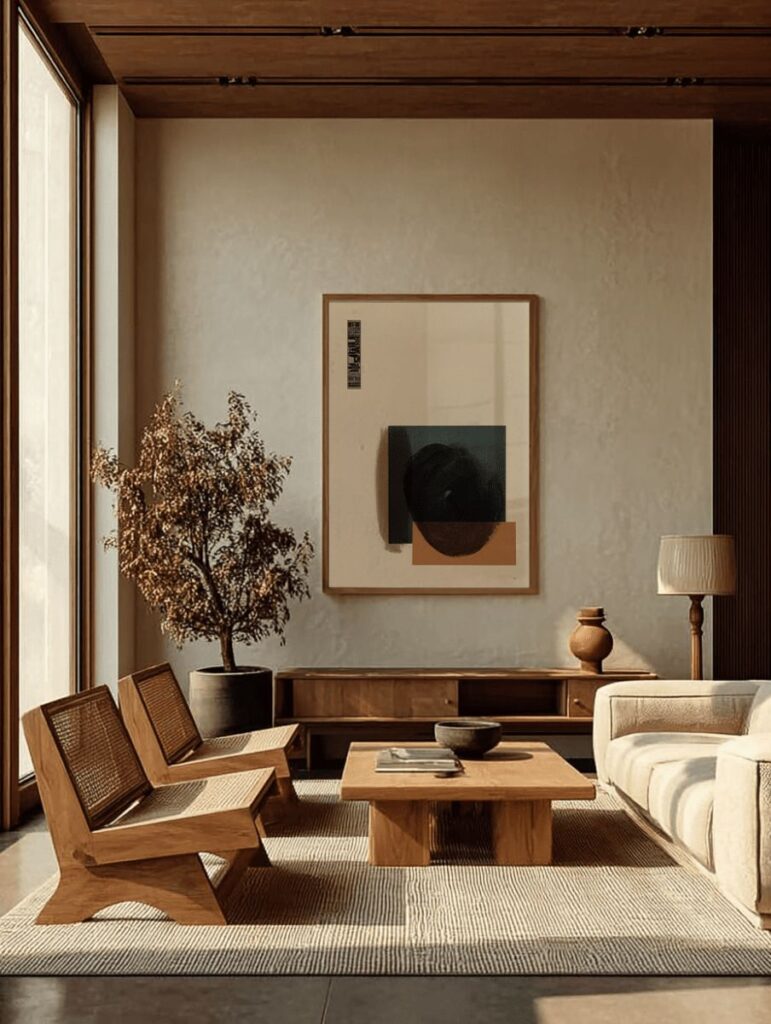
In a minimalist living room, decoration is not about quantity — it’s about meaning. Every object you choose to display should be something you genuinely love: a piece of art that moves you, a ceramic piece made by a local artist, a plant that brings you daily joy. Because the room is pared back, each object gets the attention and appreciation it deserves.
The minimalist approach to art is: go large, go singular, and go with confidence. One oversized canvas on a large wall is infinitely more impactful than six small frames competing for attention. For decorative objects, the rule of three applies — group items in odd numbers with varied heights, leave generous space between groupings, and resist the urge to keep adding. Restraint is what makes each piece shine.
10. Bring in One Perfect Plant
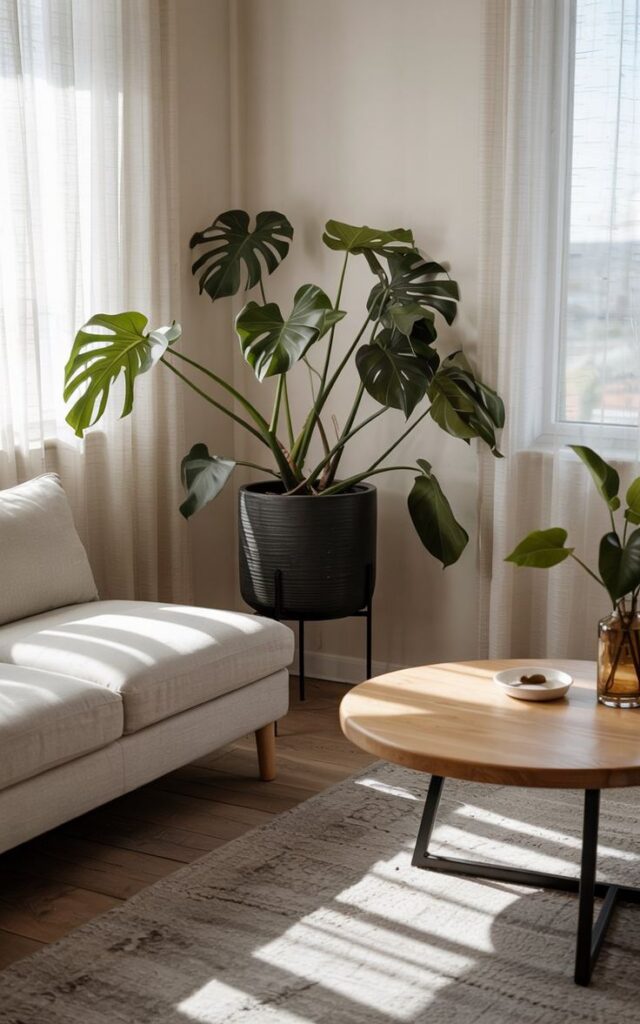
Plants are one of minimalism’s quiet secrets — they bring the one thing a pared-back room can occasionally lack: life. But in a minimalist space, the approach to plants is the same as everything else: one perfect specimen rather than many small ones.
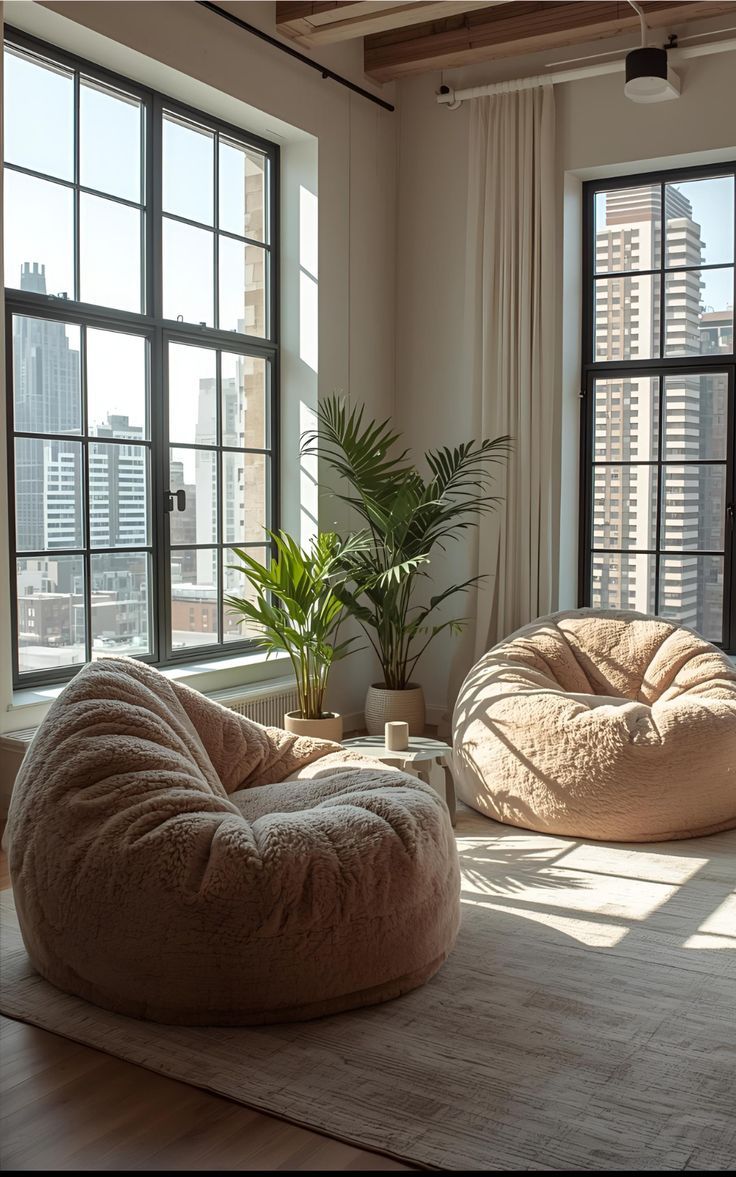
A single large-scale plant — a sculptural monstera, a dramatic fiddle leaf fig, a graceful olive tree — brings height, organic shape, and natural colour into the room without creating visual noise. Place it in a simple, beautiful pot (raw clay, matte white, or natural concrete) and let it be a feature in its own right. One magnificent plant does more for a minimalist living room than a dozen small ones ever could.
11. Design a Thoughtful Lighting Scheme
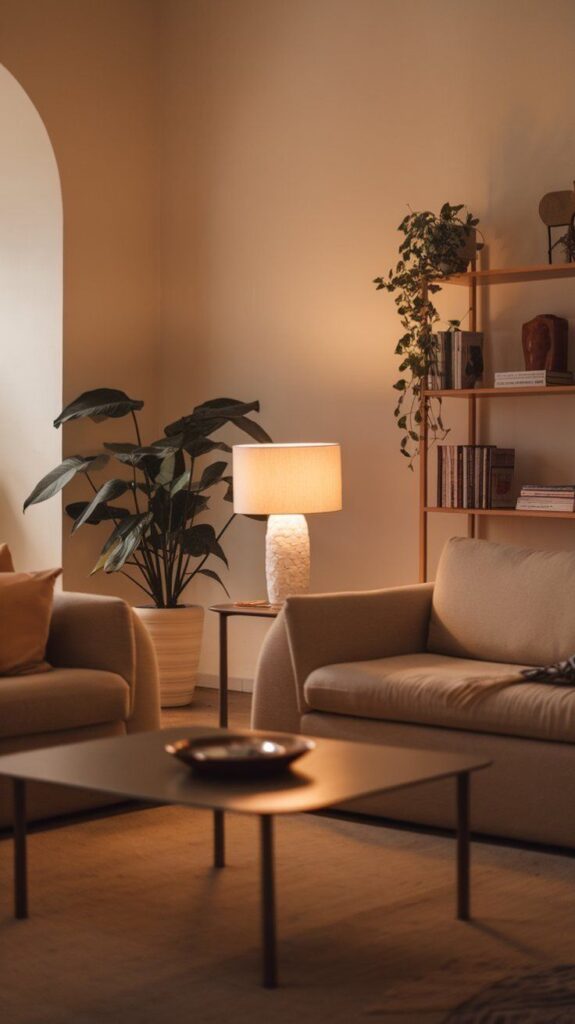
In minimalist design, lighting isn’t an afterthought — it’s part of the architecture of the room. A thoughtful lighting scheme creates atmosphere, warmth, and visual interest without adding a single physical object to the space.
Layer your lighting across three levels: ambient (ceiling or recessed, on a dimmer), task (a beautiful floor lamp for reading), and accent (a table lamp or candles on the coffee table). In the evenings, turn off overhead lights entirely and rely on warm lower lighting to transform your room into a sanctuary. The right lighting at the right level makes neutral walls glow, textures shimmer, and the whole room feel like a sigh of relief.
12. Maintain the Calm: Build a Minimal Reset Routine
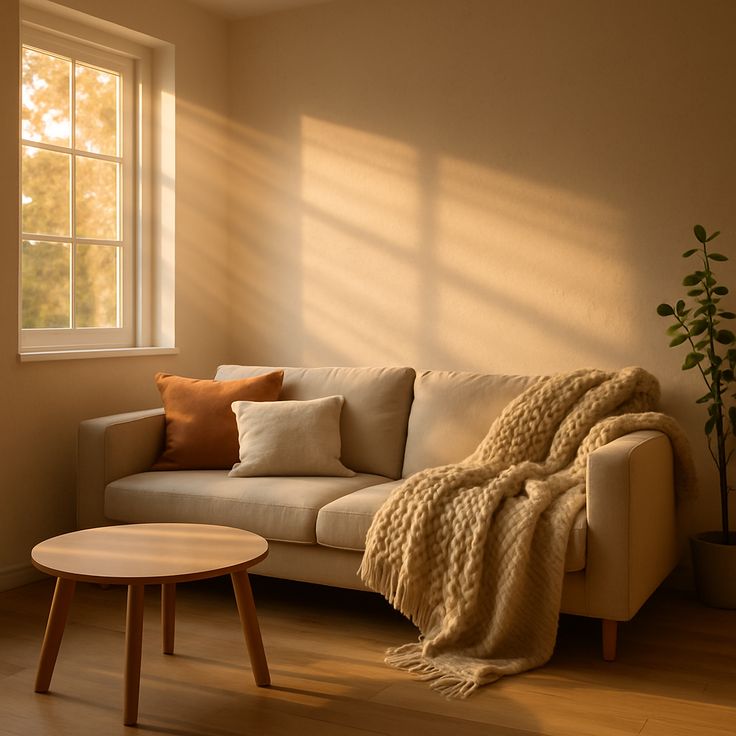
The most beautiful minimalist living room in the world is only as good as the daily habits that maintain it. One of the greatest gifts of minimalism is that, once your room has been edited and every item has a home, the daily reset takes minutes rather than hours.
Build a simple end-of-day ritual: clear the surfaces, return items to their homes, plump the cushions, fold the throw. Light a candle. Five minutes of intentional tidying is all it takes to restore the calm you’ve worked to create. When your living room is easy to maintain, you’ll find yourself protecting it — making better buying decisions, thinking more carefully before bringing new things in. That mindfulness is the true gift of minimalist living.
━━━━━━━━━━━━━━━━━━━━━━━━━━━━━━━━━━━━━━━━
Here’s what I want you to remember: minimalism isn’t about having less for the sake of less. It’s about making room for more — more calm, more clarity, more joy in the space you already have.
You don’t need to transform your entire living room overnight. Start with one idea from this list — maybe it’s clearing one surface, swapping a curtain rod higher, or finally removing that extra chair that’s been in the way for years. Notice how that one change shifts the energy of the room. Then take the next step.
Your serene, clutter-free living room is absolutely within reach. And once you experience what it feels like to live with intention in a space that truly breathes — you’ll never want to go back.
Which of these minimalist ideas are you starting with first? Drop it in the comments below — and if you share your before and afters on Instagram, tag me so I can celebrate your beautiful calm space with you!