
Let’s be honest: the TV is the elephant in every living room. It’s big, it’s dark, it’s always there — and most of us have no idea how to make it look intentional rather than like a black rectangle that hijacked our carefully considered decor.
The good news? Some of the most beautiful, designer-level living rooms have a TV as their centrepiece. The difference between a room that looks pulled-together and one that looks awkward comes down to a handful of smart, considered choices — about placement, framing, furniture, and the styling around the screen.
Whether your TV is wall-mounted, sitting on a console, above a fireplace, or recessed into a built-in unit, these 13 living room design ideas with a TV will show you exactly how to make it work beautifully. Let’s transform that awkward rectangle into a proper design feature.
━━━━━━━━━━━━━━━━━━━━━━━━━━━━━━━━━━━━━━━━
1. Make Your TV Wall a Feature, Not an Afterthought
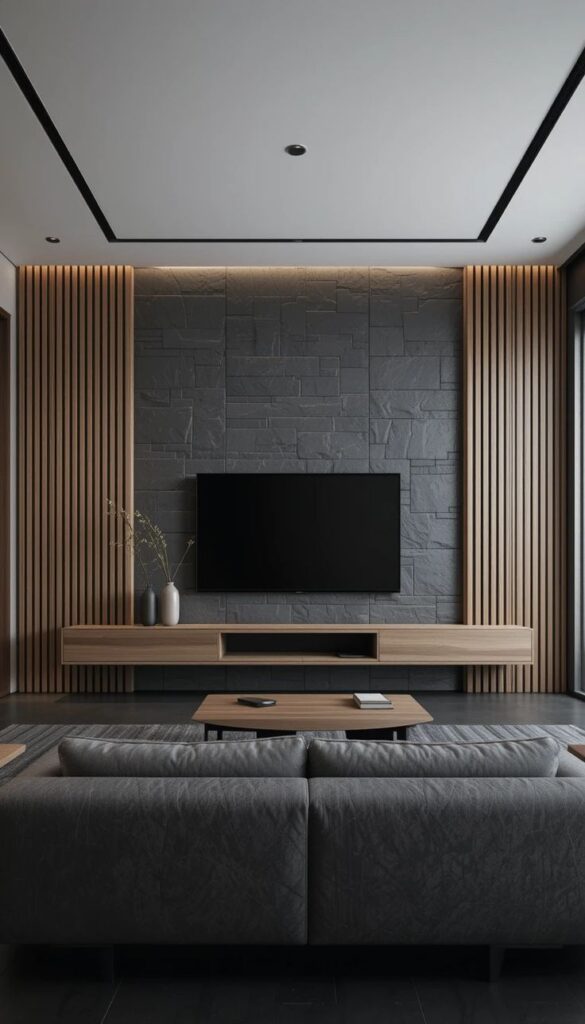
The single most transformative thing you can do for a TV-centric living room is commit to the TV wall as a deliberate design feature. Instead of hanging your TV on a plain white wall and hoping for the best, give that wall its own identity — a different paint colour, a textured limewash plaster finish, shiplap panelling, or floor-to-ceiling built-ins.
A dark, dramatic TV wall (think deep charcoal, forest green, or navy) does something magical: it visually recedes, making the television almost disappear into it when switched off, while creating a stunning backdrop that anchors the entire room. Your TV stops being the ugly thing on the wall and becomes part of a considered, gallery-like display.
2. Mount the TV at the Right Height
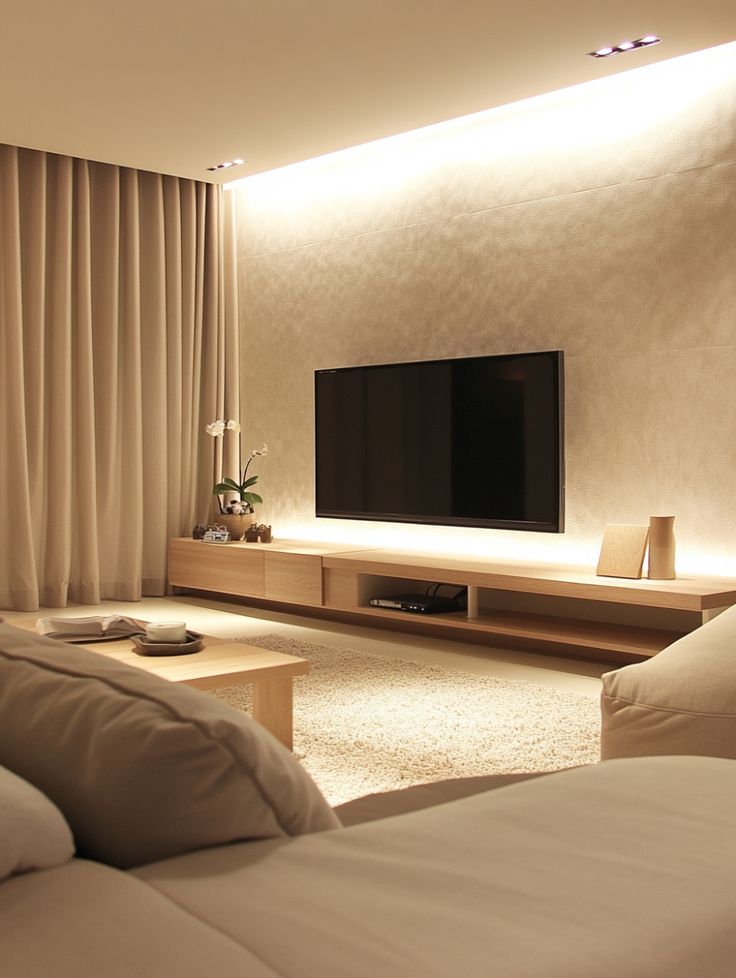
This single rule will instantly improve how your TV looks and how comfortable it is to watch: mount your television at seated eye level, not high on the wall. The centre of your screen should sit at roughly 42–48 inches from the floor — the height your eyes naturally land when you’re comfortably seated on the sofa.
TV mounting height is one of the most common decorating mistakes, and it’s almost always too high. When a TV is mounted too high, it creates neck strain and throws off the proportions of the entire wall. When it’s at the right height, the furniture arrangement makes sense, the room feels balanced, and everything just clicks. Measure before you drill — it’s worth it.
3. Build a Sleek Floating Media Wall
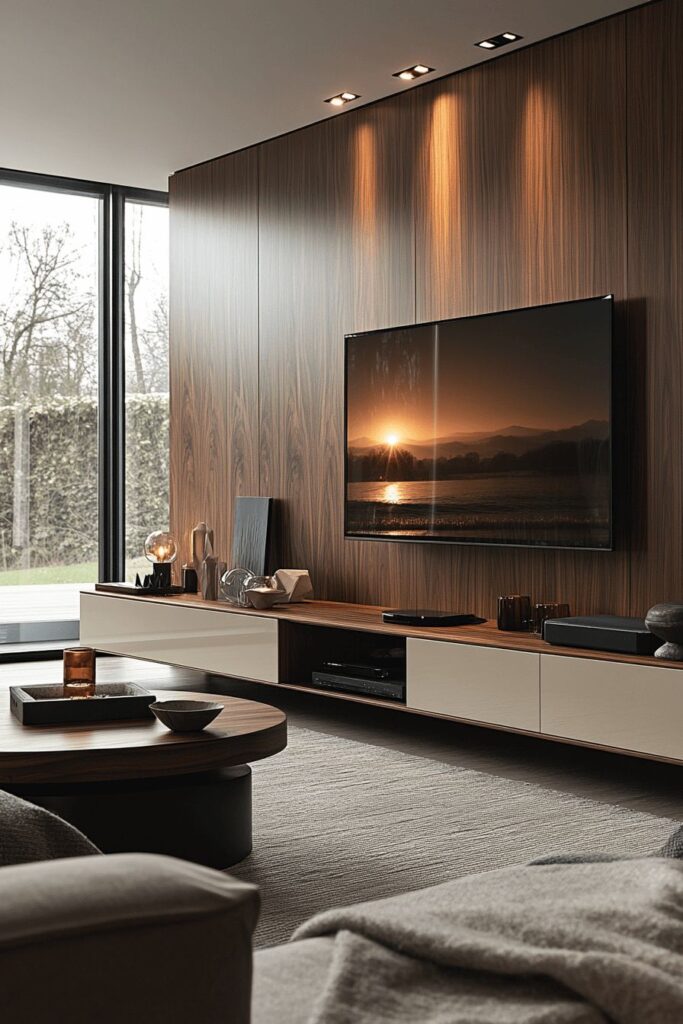
A floating media wall — where a wall-mounted TV sits above a long, low floating console that spans much of the wall width — is one of the most consistently stylish TV solutions in interior design, and it works in almost every aesthetic from Scandinavian to contemporary to mid-century.
The key is proportion: the console should be wide enough to feel grounded (ideally at least two-thirds the width of the TV wall) and low enough to keep the eye level comfortable. Choose a unit with closed storage to hide cables, remotes, and equipment. A strip of LED lighting beneath the floating unit adds a luxurious, hotel-like quality and doubles as bias lighting for your screen.
4. Frame Your TV With Built-In Shelving
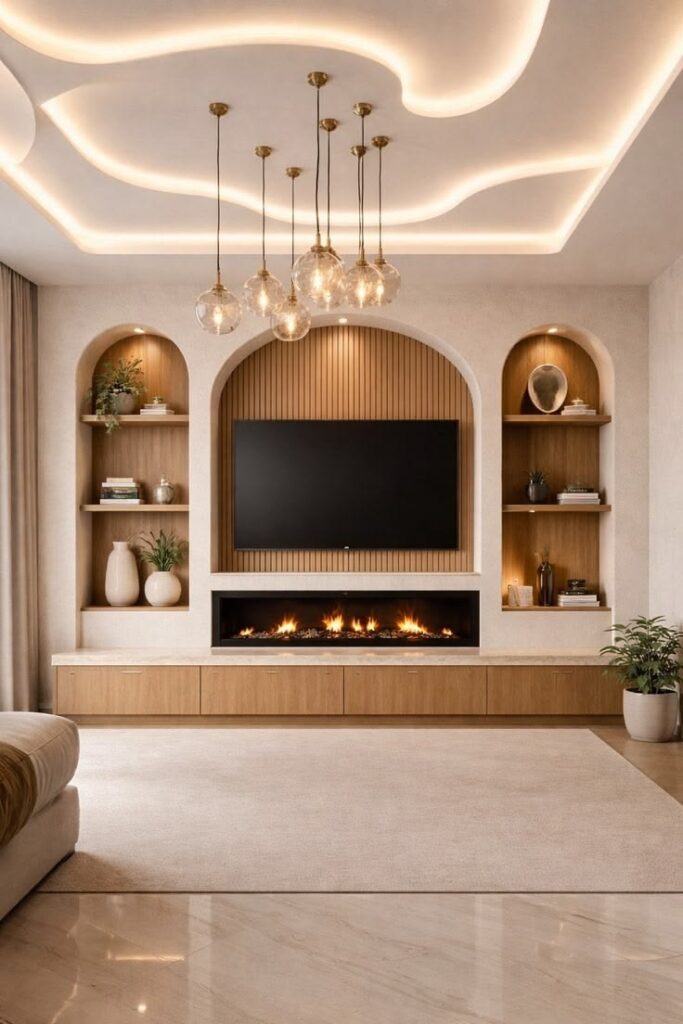
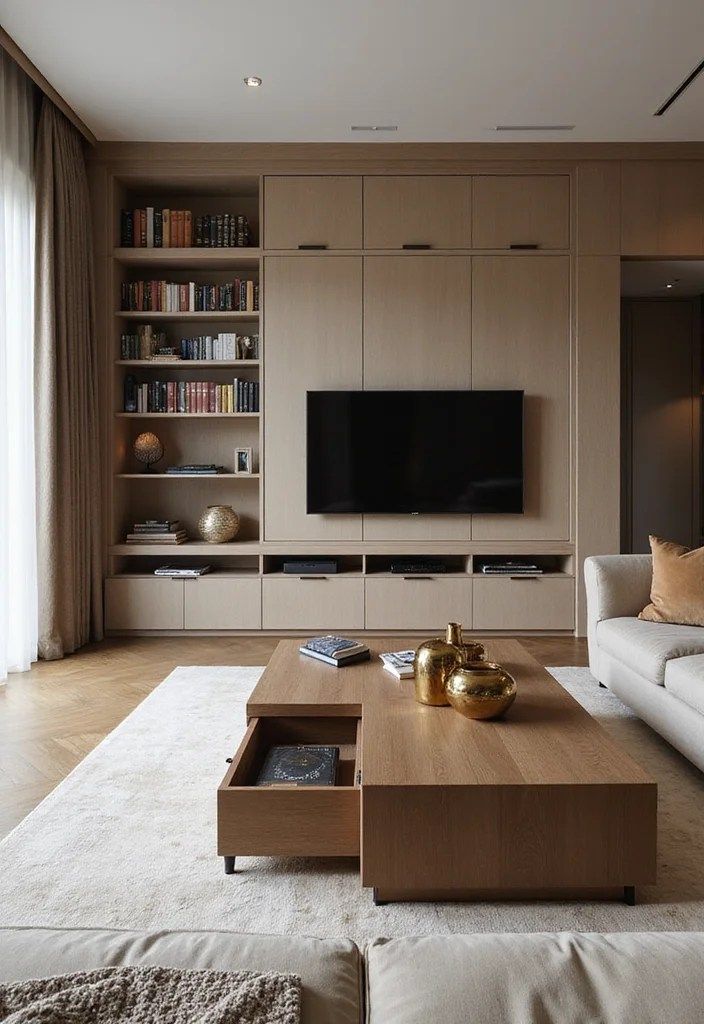
Built-in shelving flanking your TV is the classic solution that never goes out of style — and for good reason. It frames the television, gives it context and company, and provides a home for all the books, objects, and decorative pieces that express your personality.
Symmetrical shelves on either side of the TV create a balanced, intentional look that works in everything from traditional to contemporary rooms. The key is styling those shelves with intention: mix books with ceramics, plants with art, and objects of varying heights. Keep the shelves closest to the TV slightly more edited so the overall composition feels balanced rather than crowded. Paint the shelves the same colour as the wall for a seamless, built-in look.
5. Try a Gallery Wall Around the Screen
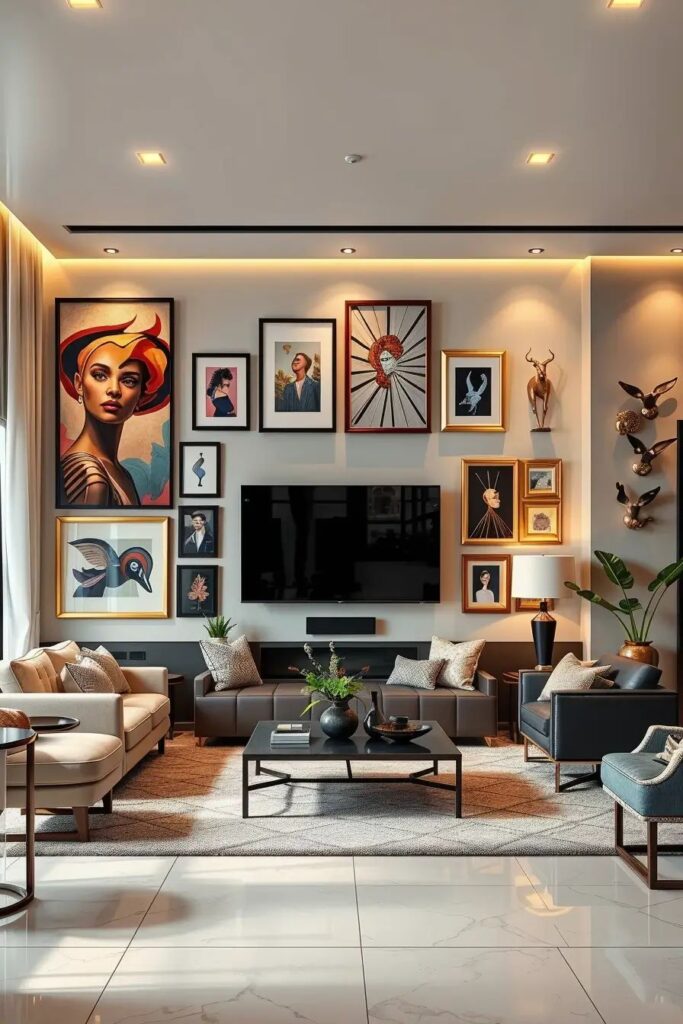
One of the cleverest ways to integrate a TV into your living room is to surround it with a gallery wall — treating the screen as just one element in a larger, curated composition of frames and artwork.
When the TV is nestled among a mix of prints, photographs, and artwork, it stops reading as the dominant focal point and becomes part of something more personal and layered. Plan your gallery wall on the floor first before hanging anything, and keep the frame styles cohesive (all black, all natural wood, or all warm gold) for a pulled-together look. Leave a small, consistent gap between each piece and the TV itself so it feels intentional rather than accidental.
6. Use Paint or Panelling to Blend the TV In
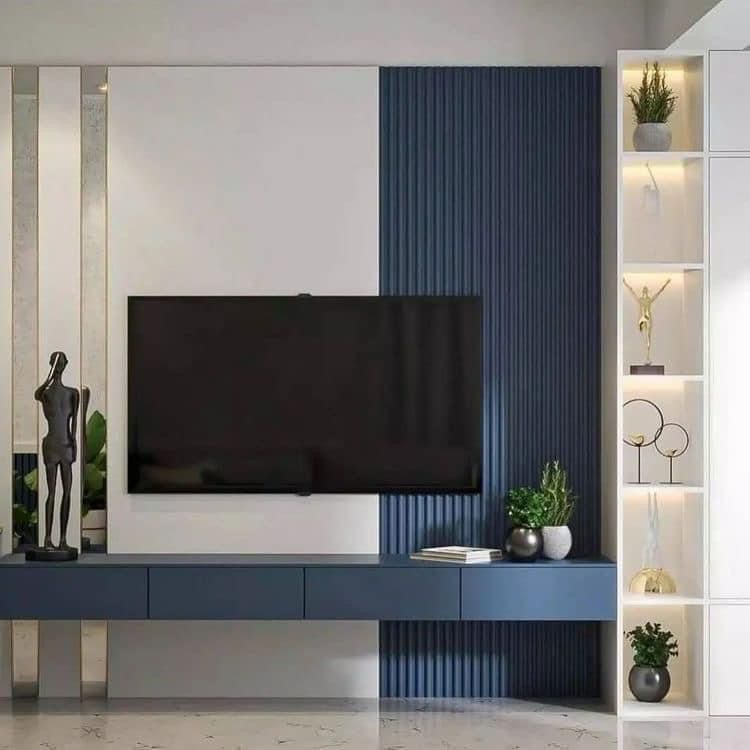
Here’s a beautifully counterintuitive trick: paint the wall behind your TV the same dark colour as the screen’s bezel. When the TV is off, it virtually disappears against the dark backdrop. When it’s on, the dark wall acts as a cinema-quality surround that enhances the viewing experience.
Add architectural interest with panel moulding, vertical slats, or a textured wall finish in the same deep tone, and you’ve turned what was once your room’s biggest eyesore into its most sophisticated design moment. Deep navy, charcoal, forest green, and warm black all work beautifully. Keep the surrounding decor light and simple so the dark wall feels intentional rather than heavy.
7. Style Your TV Console Like a Pro
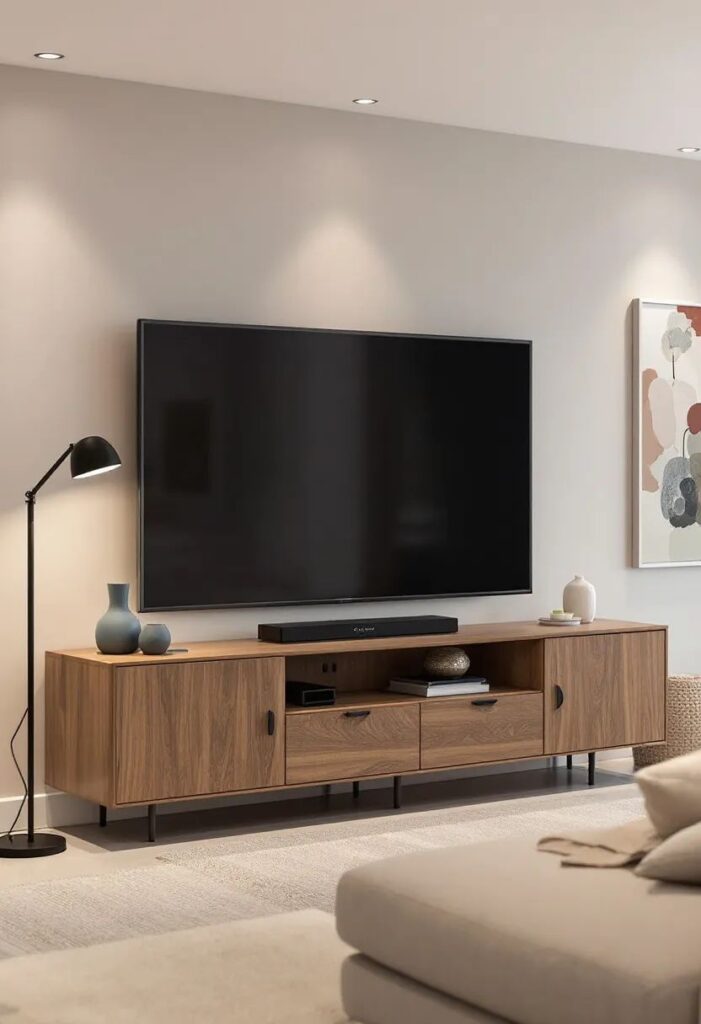
The surface of your TV console is one of the most underused styling opportunities in the entire living room. When it’s left bare or cluttered with remotes and charging cables, it drags the whole look down. When it’s styled with intention, it elevates the TV from functional necessity to design feature.
The formula: keep one side of the console clear and create a small vignette on the other. A table lamp (always on one side — asymmetry is more interesting than perfect symmetry), a small stack of books, one decorative object, and a plant or dried botanical. Corral all cables inside the unit or use a cable management box. That one styled lamp will throw warm light upward toward the TV and transform the feel of the whole wall.
8. Consider a TV Above the Fireplace — But Do It Right
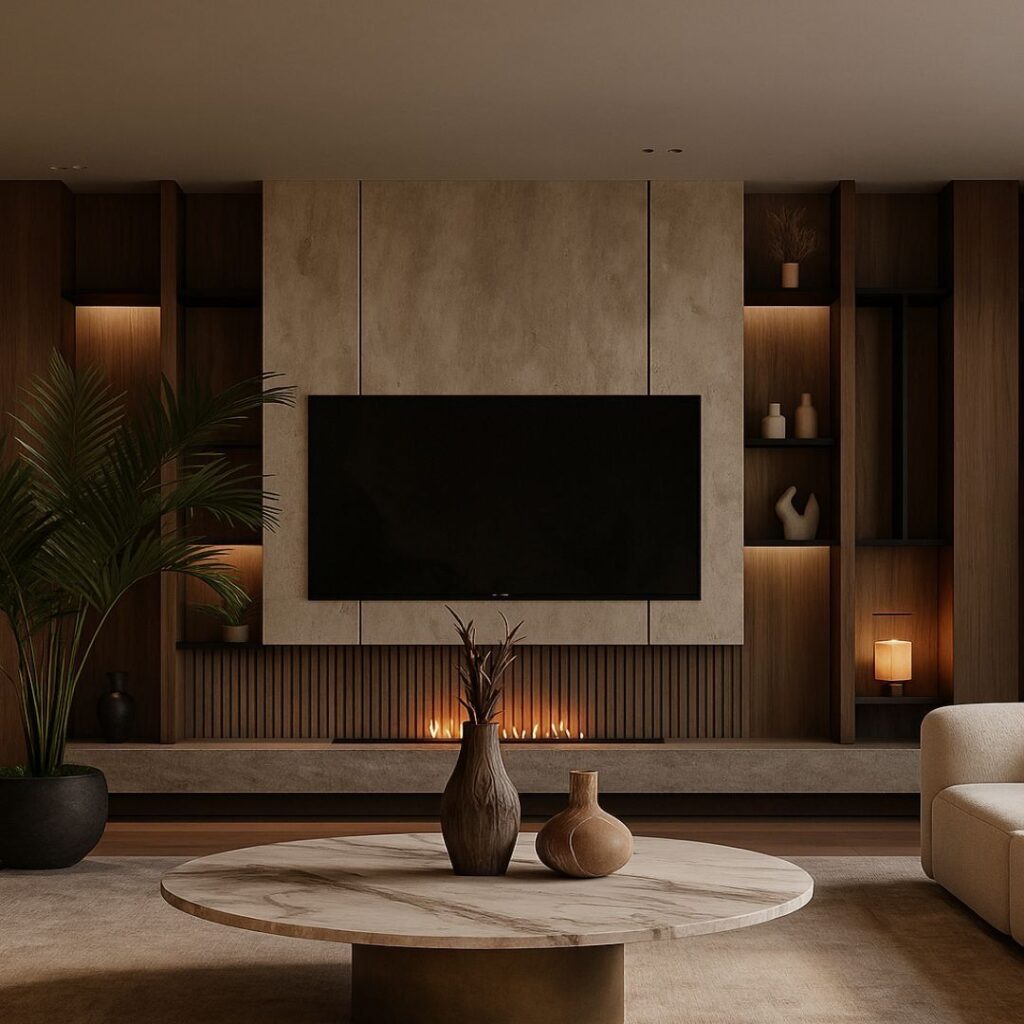
TV above the fireplace is one of the most debated topics in interior design — and when it’s done well, it’s genuinely beautiful. The key is addressing the two main challenges: height (see tip 2 — you may need a tilting wall mount) and heat (ensure your TV is the recommended distance above the firebox, typically at least 12 inches for gas and more for wood-burning).
When the proportions work, a TV above a fireplace creates a powerful, symmetrical focal wall that feels intentional and complete. Flank the fireplace with matching built-ins or alcove shelving to frame the whole composition. Choose a slim-profile TV with minimal bezel so it sits elegantly above the mantle without overwhelming it.
9. Explore a Recessed TV Niche
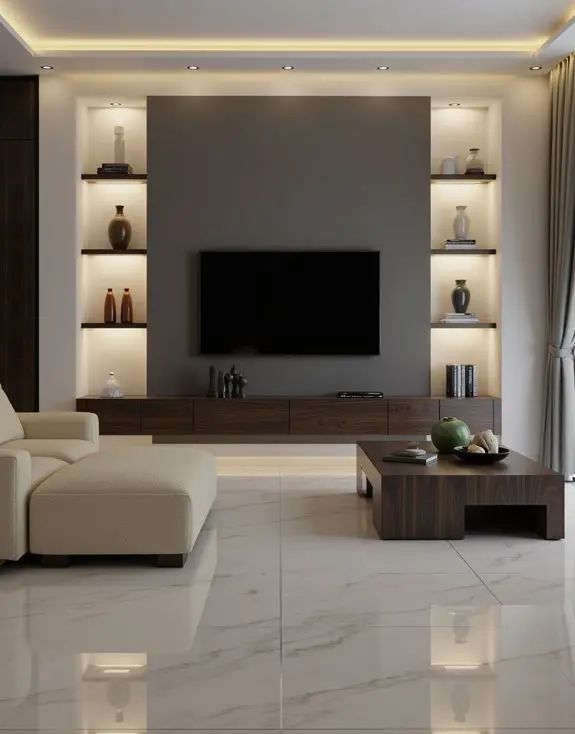
If you’re renovating or have the budget for a small building project, a recessed TV niche is the most architecturally elegant solution of all. The television sits flush within the wall plane — completely integrated, cables hidden in the wall cavity, the screen sitting at precisely the right depth so it doesn’t protrude at all.
Add integrated LED lighting around the recess for a dramatic halo effect, and the TV becomes a piece of functional art. Even on a smaller scale, recessing just a few inches into a stud wall can make a significant difference to the finished look. This is the solution you see in high-end hotel suites and designer homes — and it’s more achievable than it looks.
10. Use a Swivel or Pull-Out TV Mount for Flexibility
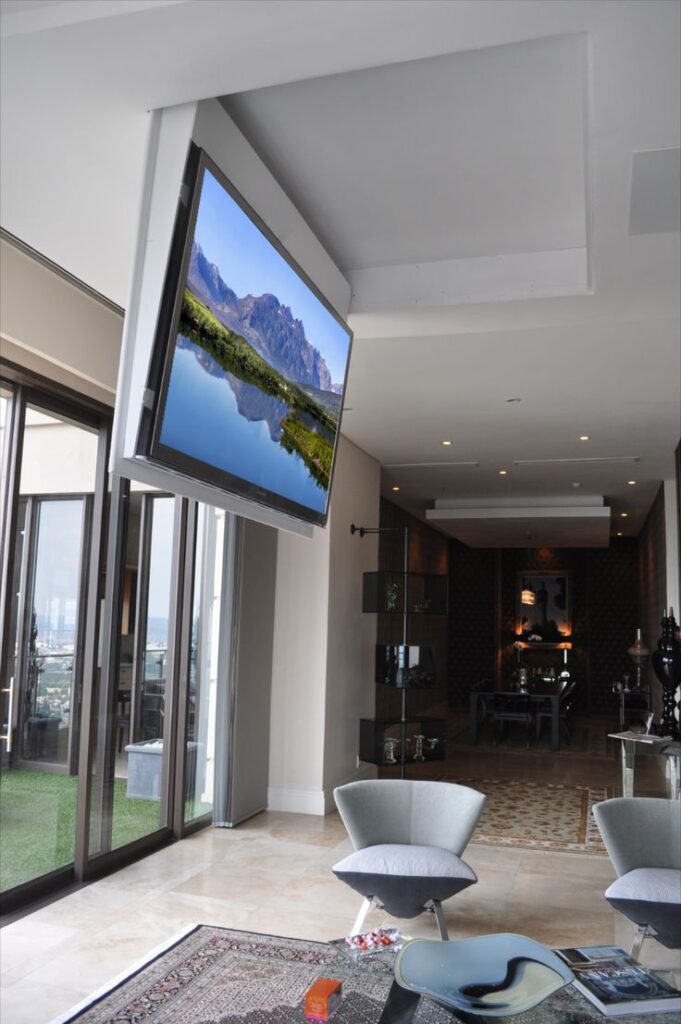
In open-plan spaces, rooms that double as guest bedrooms, or layouts where the seating faces multiple directions, a full-motion articulating TV mount is a game-changer. These mounts allow you to swivel, tilt, and extend the TV to the perfect angle for any position in the room — and fold flat against the wall when not in use.
From a design perspective, an articulating mount also means you’re not locked into one placement forever. You can mount the TV on whichever wall makes most structural sense, then simply angle it toward the sofa. Look for slim, low-profile articulating mounts in black or silver that blend with the wall when the TV is in its resting position.
11. Hide Cables Completely — It’s Non-Negotiable
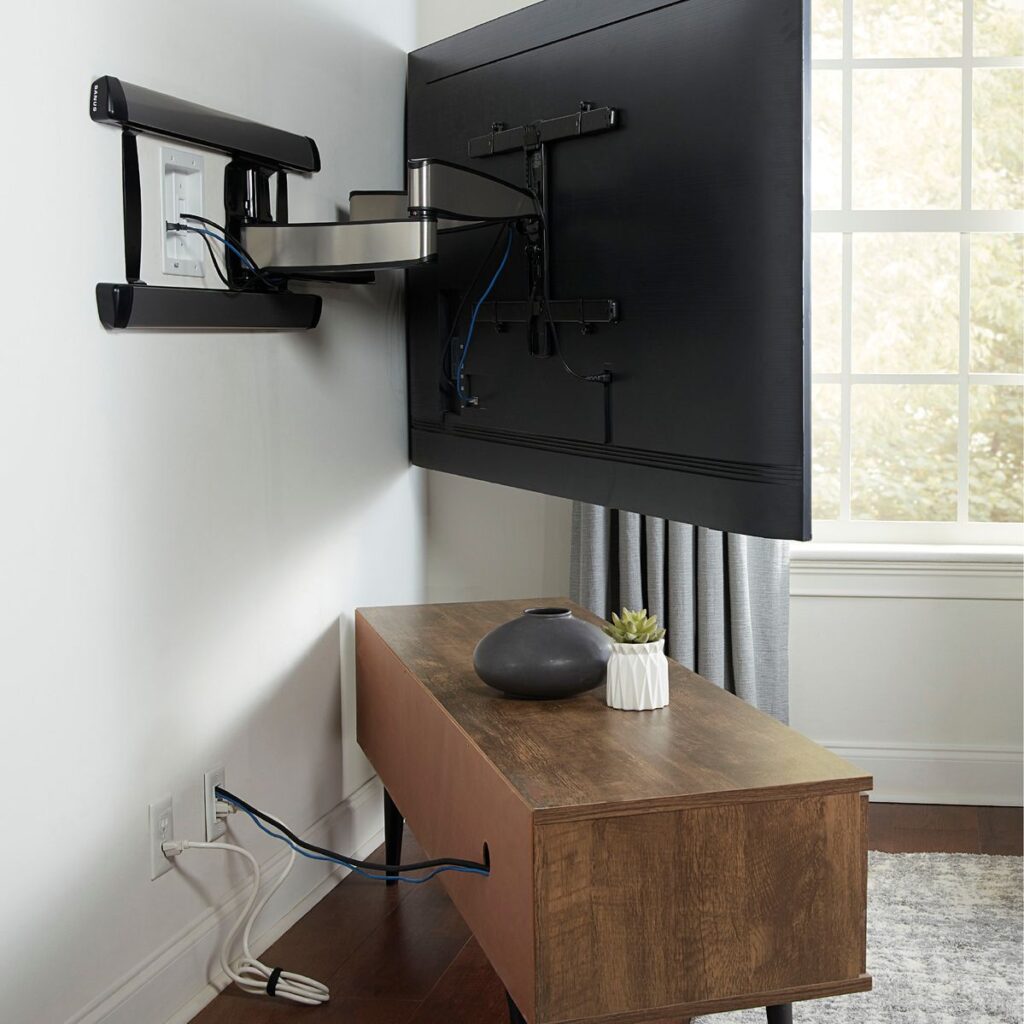
Nothing undermines a beautifully styled TV wall faster than a tangle of cables hanging down to the floor. Cable management is the finishing detail that separates a professional-looking installation from a DIY afterthought — and it’s far easier to achieve than most people think.
The cleanest solution is an in-wall cable management kit: a recessed wall plate sits behind the TV, cables run through the wall cavity, and a second plate below the console brings the cables out neatly. For renters who can’t go in-wall, a slim cable channel in the same colour as your wall is virtually invisible and costs very little. This one detail is worth every penny and every minute it takes — once you’ve experienced a cable-free TV wall, you’ll never go back.
12. Light Your TV Wall to Create Atmosphere
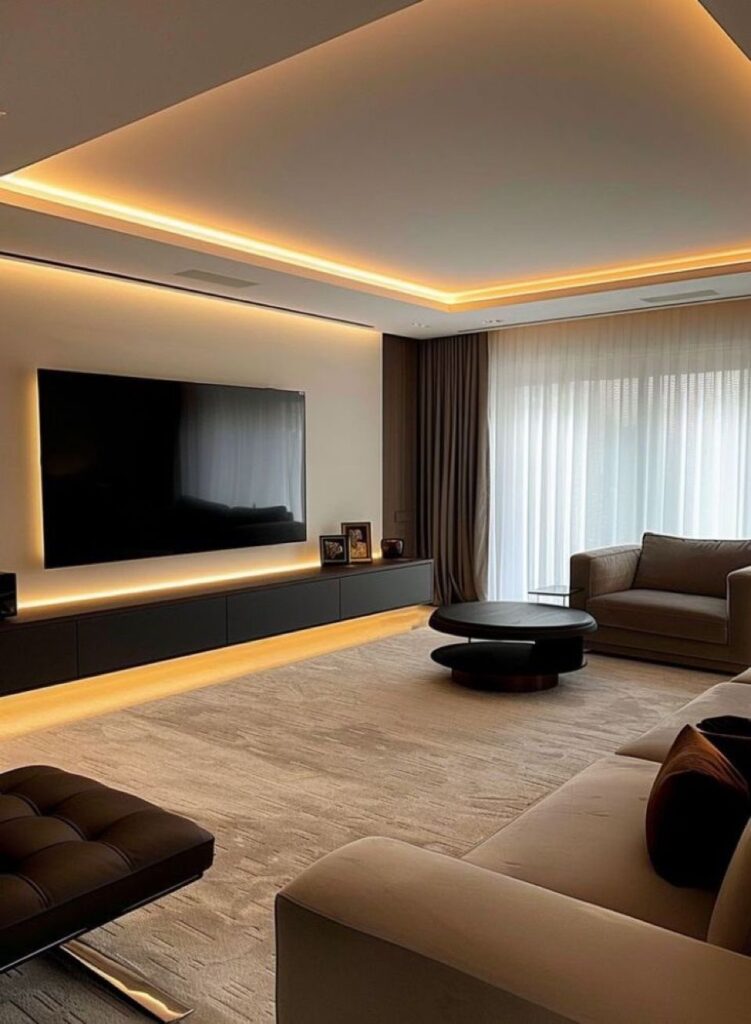
Lighting transforms a TV wall from functional to cinematic — and it’s one of the most affordable upgrades you can make. Bias lighting (a strip of LED lights attached to the back of your TV and facing the wall) reduces eye strain during viewing and creates a gorgeous, warm halo effect that makes your setup look far more high-end than it is.
Beyond bias lighting, think about how the rest of the room is lit during TV time. Turn off overhead lights and rely on side lamps, shelf lighting, and floor lamps instead. Warm, lower-level lighting makes the room cosy and immersive, improves the perceived picture quality of your screen, and — most importantly — makes your whole living room feel like a beautifully considered, intentional space.
13. Choose a TV Size That Fits the Room, Not Just the Wall
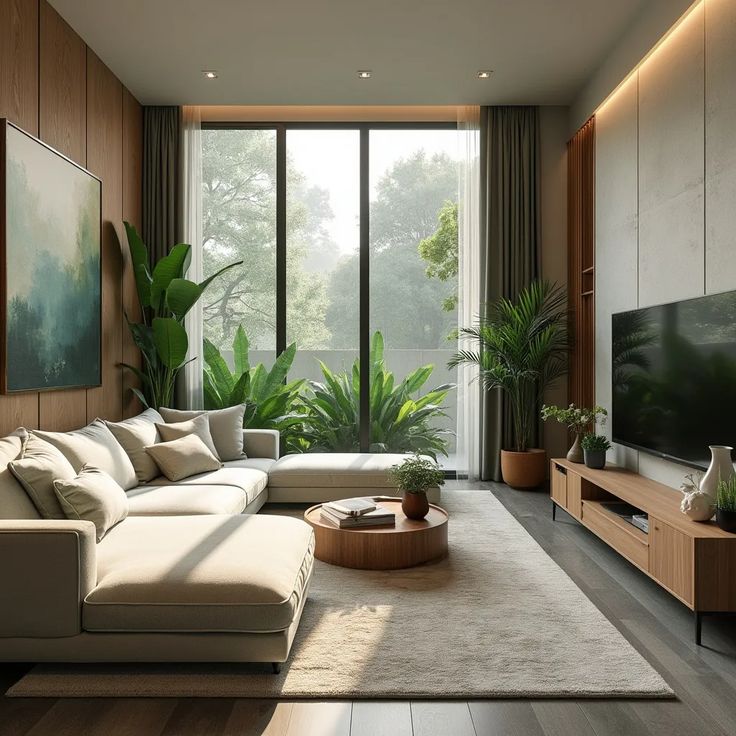
Bigger isn’t always better when it comes to TV size — and getting the proportion right is as important for the aesthetics of your room as it is for your viewing experience. The general rule for viewing distance is that your screen size (in inches) should be roughly half the distance between the sofa and the TV wall (in inches). So if your sofa is 120 inches from the wall, a 55–65 inch TV is ideal.
From a design perspective, a TV that’s too large for the wall will overwhelm the space and crowd out any styling opportunities. A TV that’s proportional to the wall allows room for the decorative elements around it — shelves, artwork, console styling — to breathe and contribute to the overall composition. Measure thoughtfully and let the room guide the size.
━━━━━━━━━━━━━━━━━━━━━━━━━━━━━━━━━━━━━━━━
Your TV doesn’t have to be the thing you apologise for when guests come over. With the right approach — a considered TV wall, smart furniture, intentional styling, and good lighting — it can become one of the most beautiful and cohesive parts of your entire living room.
Start with the tip that feels most immediately achievable. Maybe that’s finally getting the cables under control, swapping your TV console for something with closed storage, or painting the wall behind your screen a deeper, richer colour. These single changes have a ripple effect on how the whole room feels.
Your living room deserves to be both beautiful and functional — and those two things are absolutely not mutually exclusive. Great design solves real life. Let it solve yours.
Which TV styling idea are you most excited to try? Share your living room transformation in the comments — I’d love to see how you make it yours!