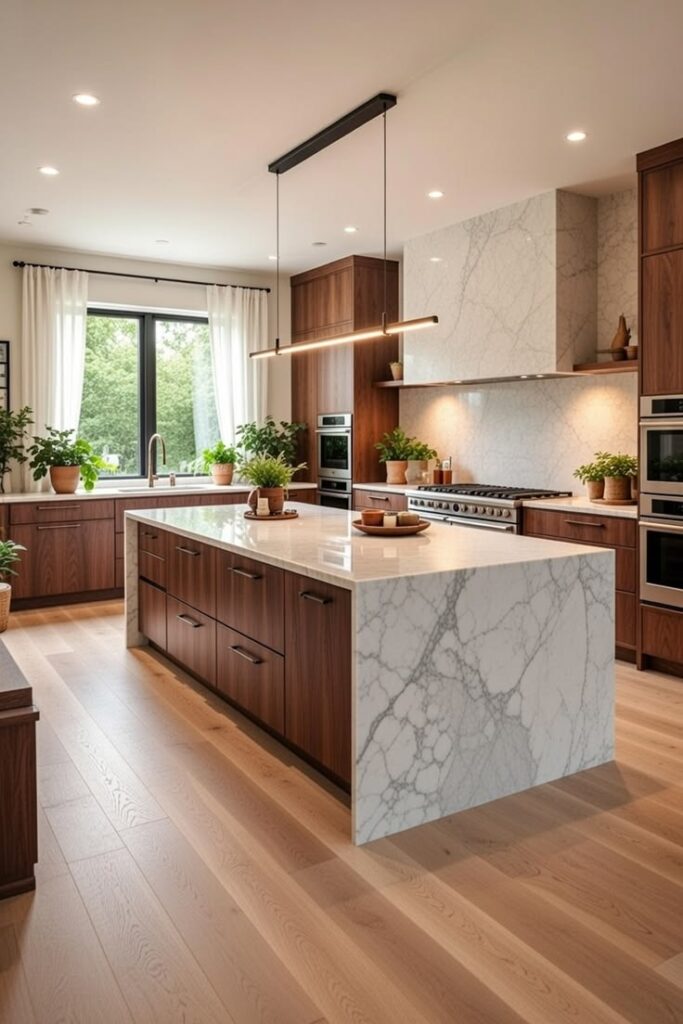

The kitchen island is the most transformative element in modern kitchen design — and arguably in modern home design altogether. More than a countertop, more than extra storage, more than a place to perch while the kettle boils: a well-designed kitchen island becomes the heart of a home. The place where children do homework while dinner is prepared, where wine is poured and conversations happen, where the kitchen transitions into something more generous and more social than a room purely for cooking.
But getting an island right — the right size, the right material, the right features, the right relationship to the rest of the kitchen — requires thought, knowledge, and a clear sense of what you’re actually trying to create. An island that’s too large crowds the kitchen. One that’s too small disappoints. One without the right features doesn’t earn its place. One with the wrong countertop surface will be a daily source of regret.
These 14 kitchen island design ideas will give you everything you need to get your island exactly right — from the first decision (how big?) to the last (how to style the surface for maximum beauty). Let’s create the island you’ve always wanted.
━━━━━━━━━━━━━━━━━━━━━━━━━━━━━━━━━━━━━━━━
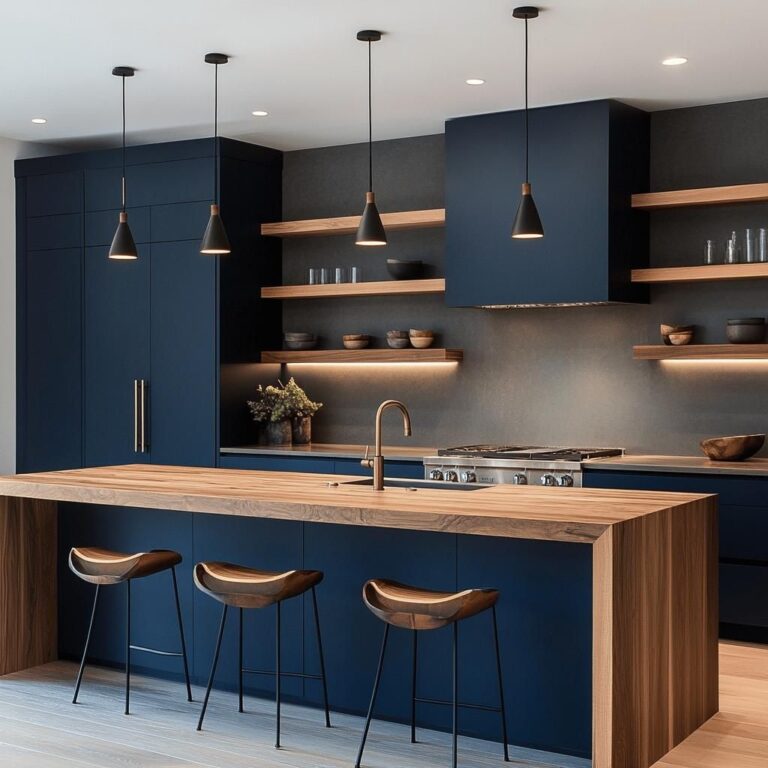
1. Get the Size and Clearance Right First
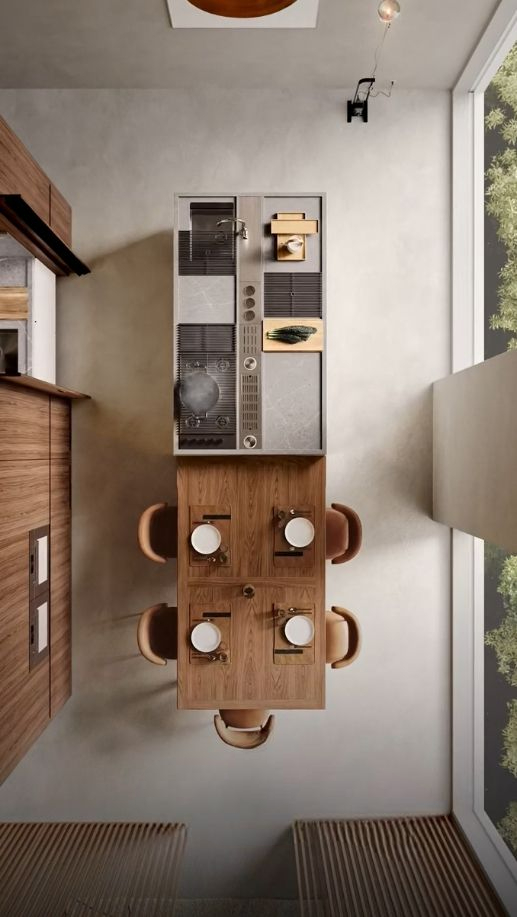
Before any other island decision is made — before countertop material, colour, or features — the question of size must be answered correctly. An island that doesn’t fit the kitchen properly is the most common and most regretted kitchen design mistake, and it cannot be disguised with beautiful styling. Too large and it creates circulation problems that make the kitchen feel cramped and difficult to work in. Too small and it fails to deliver the practical and social benefits that justify the investment.
The minimum clearance on all walkway sides of an island should be 90cm — ideally 100cm or more on the cooking side where multiple people may need to pass. For a seating overhang, the clearance on that side should increase to allow chairs to be pushed back comfortably. Measure your kitchen floor plan carefully, mark the proposed island footprint with tape, and live with it for a day before committing. The ideal island length is typically 120–180cm in a domestic kitchen — large enough to be genuinely useful, small enough to preserve circulation.
2. Choose Between Matching or Contrasting Cabinetry
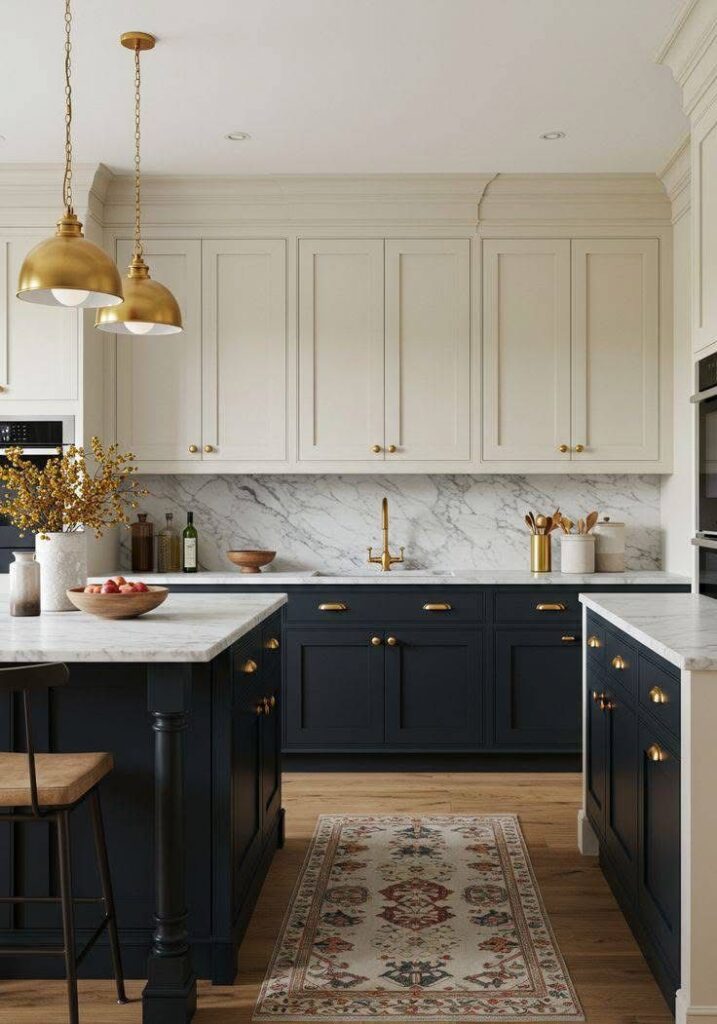
One of the most significant aesthetic decisions in kitchen island design is whether the island should match the perimeter cabinetry or contrast with it — and both approaches can result in equally beautiful kitchens when executed with confidence. Matching creates a seamless, cohesive kitchen where the island reads as part of an integrated whole. Contrasting creates a focal point that gives the kitchen dimension, personality, and a sense that the island is something special.
The contrasting island is currently one of the most popular and most beautiful kitchen design choices: a deep navy, forest green, warm charcoal, or rich terracotta island against white or cream perimeter cabinetry creates a kitchen that has genuine drama and character. The contrast works best when all other elements — hardware finish, countertop material, flooring — bridge the two colours rather than aligning exclusively with one. If you choose contrast, commit fully: the island colour should be bold enough to read as a deliberate design decision, not a tentative one.
3. Select the Right Countertop Material for Your Life
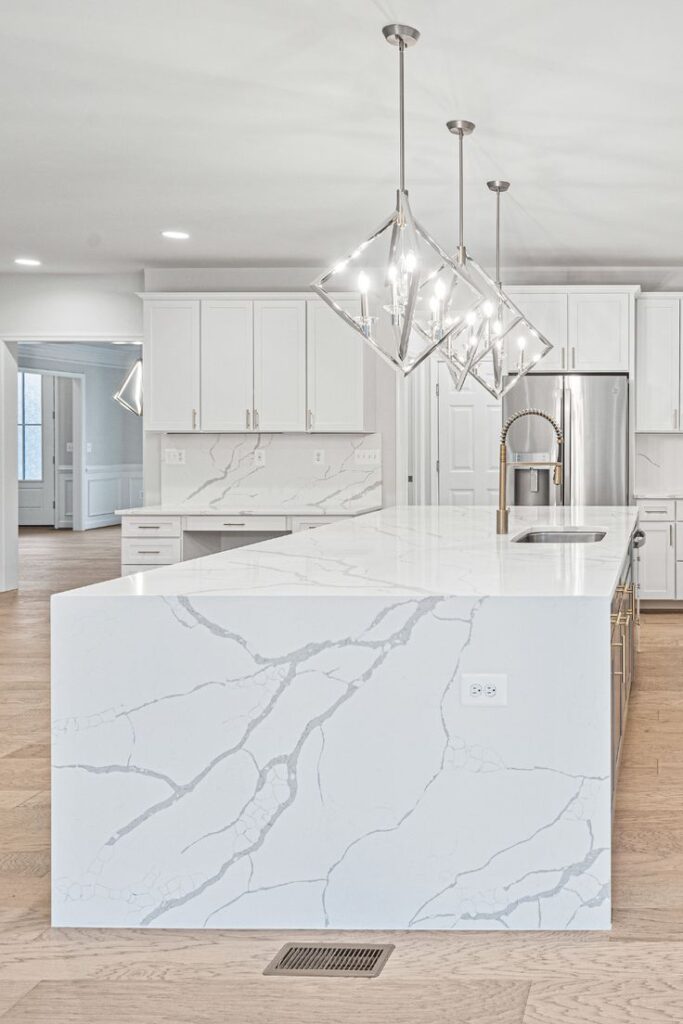
The island countertop is the most visually prominent surface in the kitchen and the one that will be touched, used, and looked at more than any other. Choosing the right material requires honest consideration of both beauty and your actual lifestyle — because some of the most beautiful countertop materials require more care than busy households can realistically provide.
Natural marble is breathtakingly beautiful but stains, scratches, and etches over time — best for households that are careful and consider this patina part of its character. Quartz (engineered stone) replicates marble’s aesthetic with far greater durability and near-zero maintenance — the practical choice for busy families. Granite offers extraordinary natural variation and excellent durability. Solid timber countertops add organic warmth but need regular oiling. Concrete provides an industrial-chic aesthetic with genuine uniqueness. Choose the material you love most among those you can realistically maintain — the best countertop is one that gets more beautiful with your life in it, not more stressful.
4. Design a Waterfall Edge for Maximum Impact
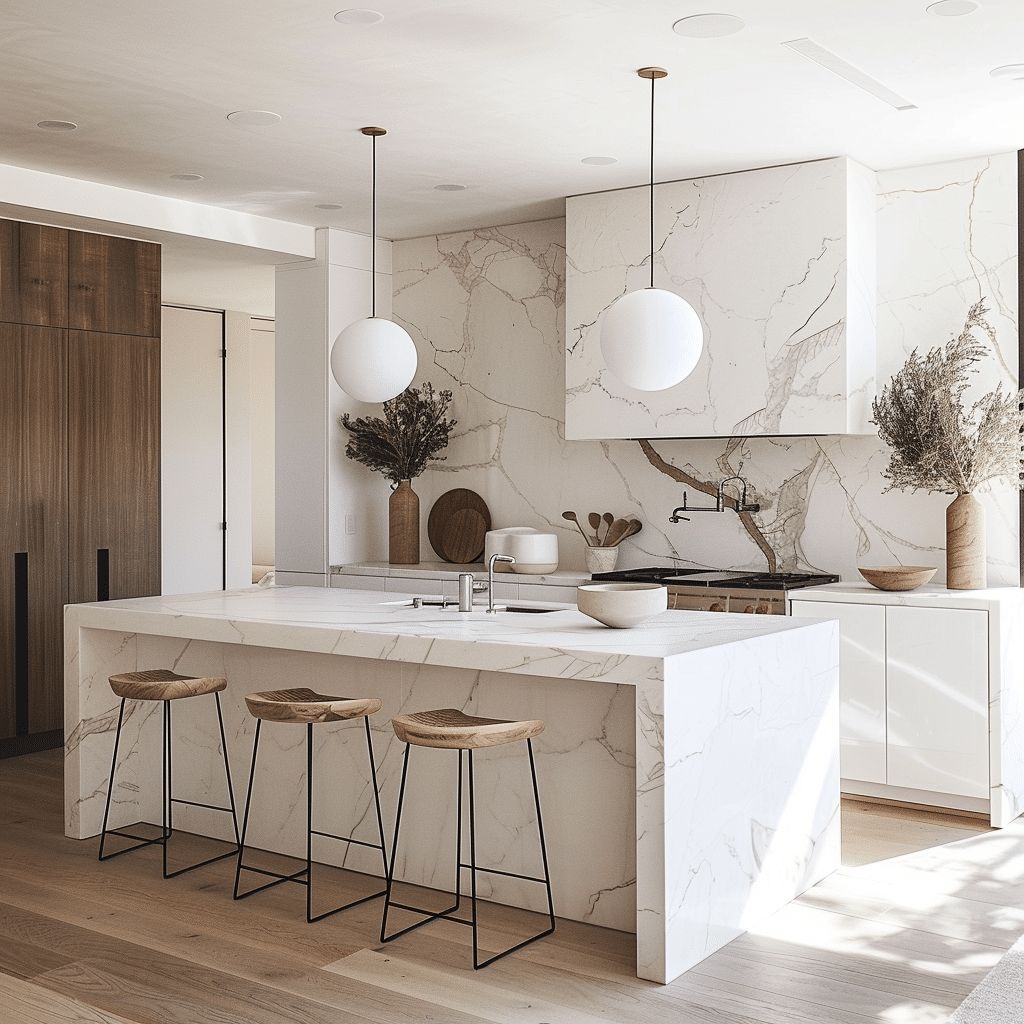
A waterfall countertop — where the island’s surface material continues seamlessly down one or both short ends to the floor, creating a continuous, unbroken vertical surface — is one of the most architecturally striking and luxurious kitchen island design choices available. It transforms the island from a piece of furniture into a sculptural element, and it reads immediately as a deliberate, high-quality design decision.
The waterfall edge works most dramatically with materials that have strong pattern or veining — marble, rich wood grain, or boldly patterned quartz — where the continuation of the pattern from horizontal to vertical creates a beautiful, wrap-around composition. It works more quietly but equally beautifully with plain-coloured concrete, white quartz, or dark granite. The practical consideration: waterfall edges require skilled stone or joinery work to execute well, particularly at the mitre joint where the horizontal and vertical surfaces meet. This is not a detail to cut corners on.
5. Build in Seating — and Design It Beautifully
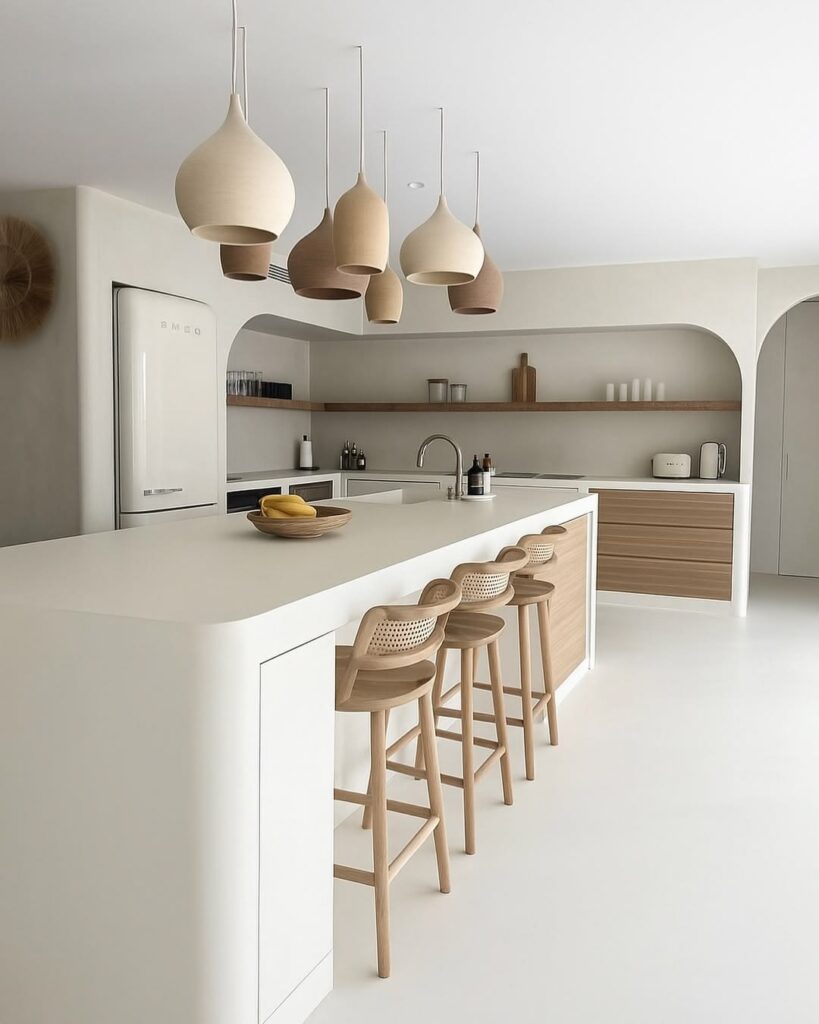
An island with seating is not just a practical feature — it’s a social one. It transforms the island from a work surface into a gathering place: the spot where the family comes together in the morning, where friends sit and chat while meals are prepared, where homework gets done in proximity to the warmth and activity of the kitchen. Designing the seating well is designing the island’s social life well.
For island seating, the countertop overhang should be at least 25–30cm to allow for comfortable knee space. Bar stools should be appropriate to the counter height: 60–70cm bar stools for a standard 90cm island countertop. Choose stools that are beautiful enough to be decorative elements in their own right — natural rattan, wooden saddle stools, or upholstered velvet stools in a warm accent colour all add material texture and warmth to the kitchen that bare metal stools lack. Allow minimum 60cm of counter width per stool position to avoid feeling crowded.
6. Maximise Storage With Considered Island Cabinetry
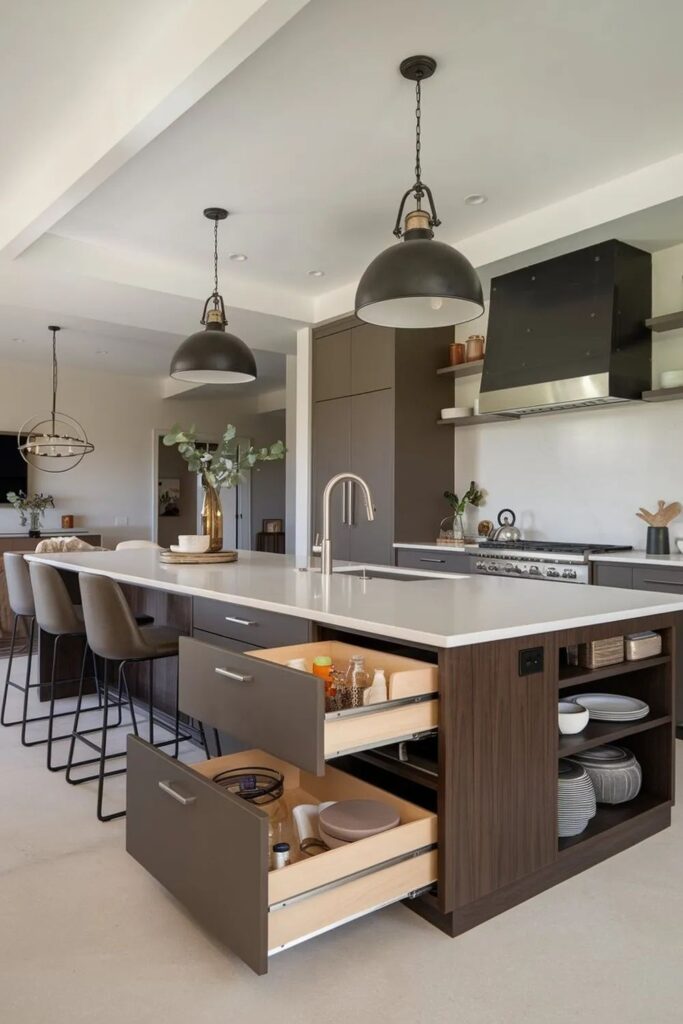
The underside of a kitchen island is one of the most valuable storage opportunities in the kitchen — and it deserves to be designed with the same care and specificity as the rest of the kitchen cabinetry. An island that wastes this space with generic cupboard doors behind which everything is difficult to access is an island that fails to deliver its practical potential.
Design island storage around how you actually use the kitchen: deep drawers on the cooking side for pots, pans, and large utensils (drawers are dramatically more accessible than cupboards for these items). A pull-out bin integrated into the island end nearest the prep area. Open shelving on the seating side, styled with cookbooks, ceramics, and plants — both practical and beautiful. A wine rack or wine cooler integrated into one end. Each storage decision should be made with a specific purpose in mind, not generically. An island that stores the right things in the right places transforms daily kitchen life.
7. Install Pendant Lights That Make the Island Sing
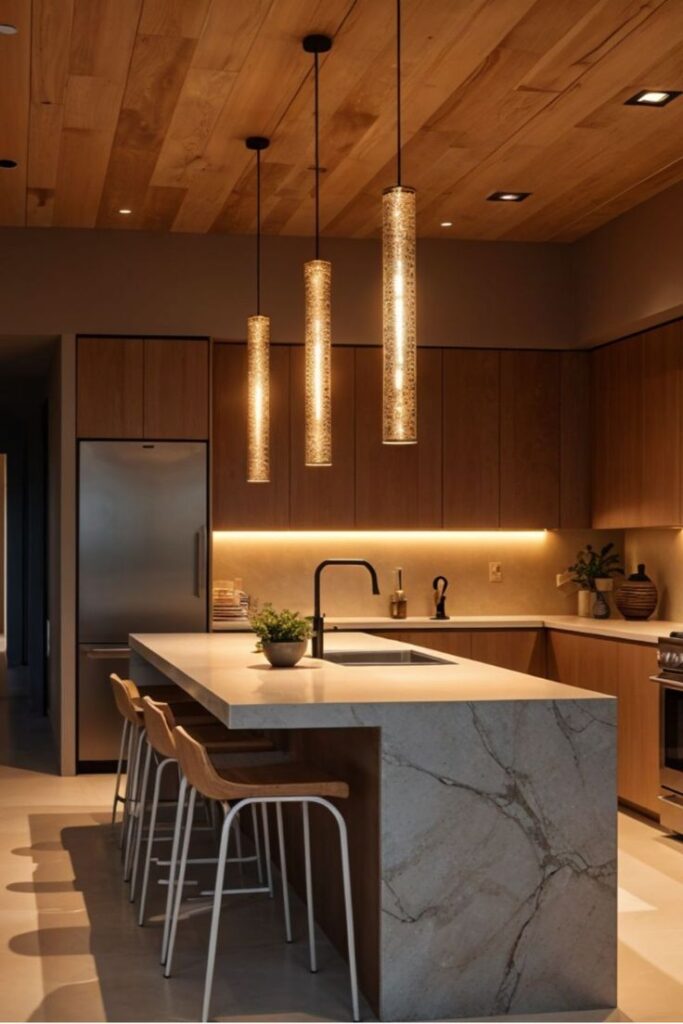
Pendant lights above the kitchen island are simultaneously one of the most functional and most decorative elements in kitchen design — and choosing them well is one of the most impactful styling decisions you can make. Good island pendant lighting provides the task illumination needed for food preparation, creates the warm, gathered atmosphere that makes an island a social destination, and adds visual character that can define the kitchen’s entire aesthetic direction.
Hang pendant lights at approximately 75–80cm above the island surface — low enough to create an intimate, lit atmosphere at the counter level, high enough not to obstruct sightlines across the island. Choose a number of pendants proportional to the island length: one or two pendants for shorter islands (120cm), three for longer ones (150–180cm+). Scale matters as much as style: a pendant that’s too small above a large island looks tentative; one that’s correctly sized looks confident and resolved. Warm-toned glass, natural rattan, aged brass, and concrete are all excellent pendant materials for kitchen islands.
8. Add an Integrated Hob for a Chef’s Island
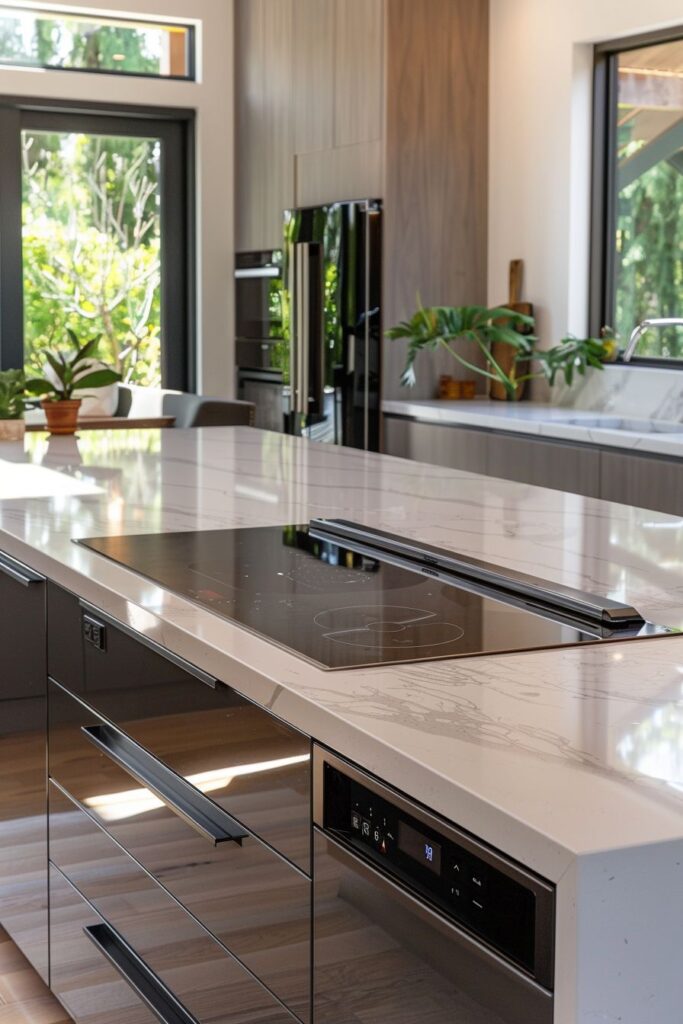
An island with an integrated hob — whether gas, electric, or induction — transforms a kitchen island from a prep and social surface into the kitchen’s primary cooking zone, and the result is a dramatically more sociable cooking experience. The cook faces the room, the conversation, and the people they’re feeding rather than a wall, and the kitchen becomes a genuinely shared social space where cooking is part of the gathering rather than separate from it.
Integrating a hob into the island requires careful ventilation planning — a ceiling-mounted extractor directly above the island hob is non-negotiable and should be specified as part of the kitchen design from the outset. Induction hobs are the most practical island choice: they’re flush-mounted, easy to clean, and have no open flames that could be hazardous in a social setting with people gathered around the island. An island hob requires sufficient clearance on all sides and is best suited to islands of at least 150cm in length.
9. Use a Butcher Block or Timber Section for Warmth
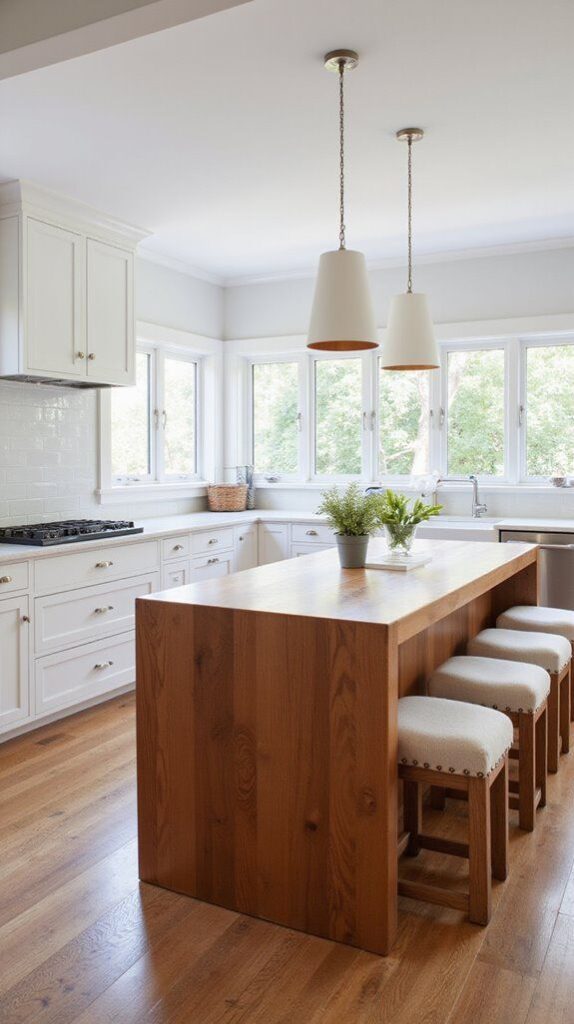
One of the most beautiful and practically clever kitchen island design ideas is incorporating a timber section — a butcher block or solid wood panel — as part of a multi-material island countertop. Rather than the entire island being in a single material, a timber section (typically at one end) adds organic warmth, a natural chopping surface, and a material contrast that makes the island feel more interesting and more characterful than a single-material approach.
Solid oak, walnut, or maple are the most beautiful and most practical timber choices for an island butcher block section. The timber should be properly sealed or oiled (food-safe finish) and maintained with regular oiling to prevent drying and cracking. The transition between the timber section and the main countertop material should be designed with care: a contrasting metal strip, a step-down in height, or a simple clean butt joint can all work well depending on the overall kitchen aesthetic. This material mixing adds depth and life to an island that a single-material surface lacks.
10. Try a Two-Tier Island for Defined Zones
A two-tier kitchen island — with a lower work surface on the kitchen side and a raised breakfast bar on the seating side — is a clever design solution that solves a practical problem beautifully: it creates a visual and functional separation between the kitchen work zone and the social seating area, concealing the prep mess from those seated at the bar and providing a more comfortable perching height for conversation.
The standard arrangement: the kitchen-facing surface sits at the standard worktop height of 90cm, and the seating-facing surface raises to approximately 105cm — a comfortable breakfast bar height for standard bar stools. The two levels can use the same material throughout for continuity, or different materials (stone prep surface, timber bar surface) for a more interesting material contrast that also defines the two zones. A two-tier island works particularly well in open-plan kitchens where the island faces an adjacent living or dining space.
11. Incorporate Open Shelving on the Living Room Side
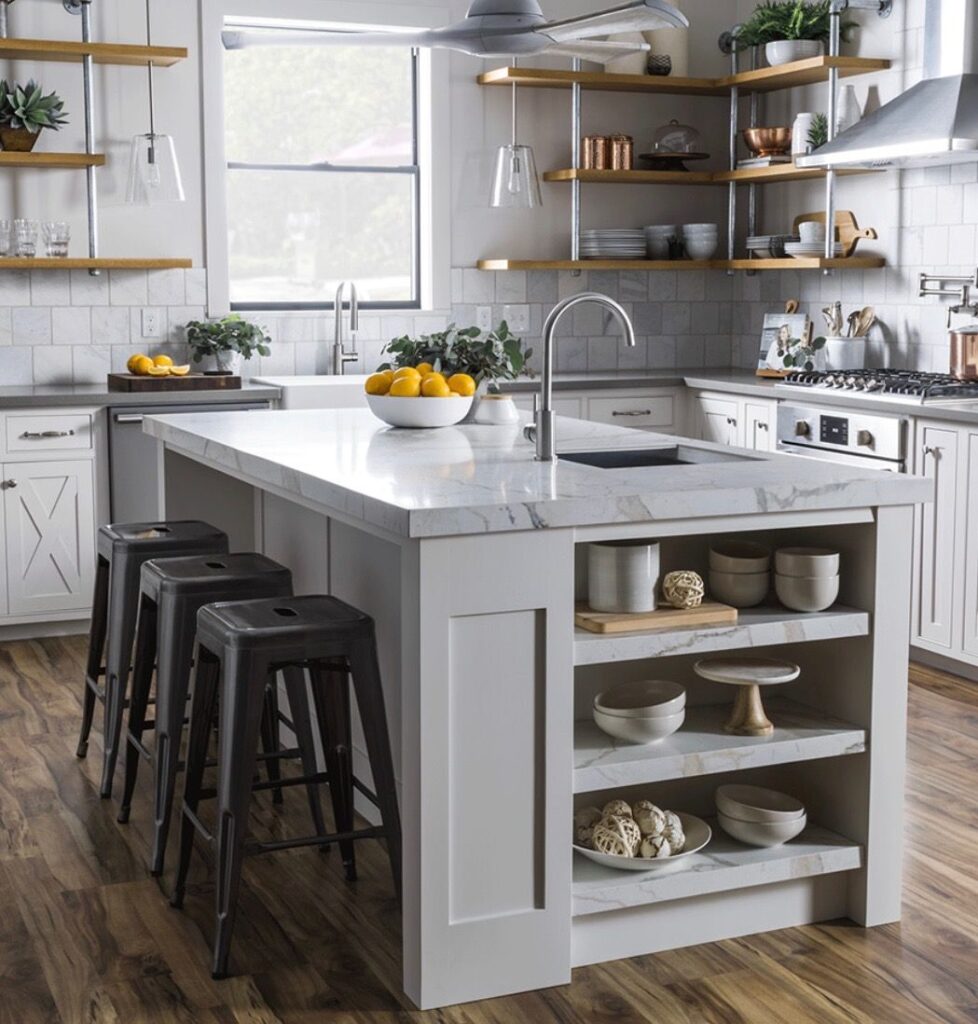
In an open-plan kitchen-living space, the island’s non-kitchen face — the side facing the living or dining area — is a design opportunity that many kitchens waste on solid cabinetry. Open shelving on the living-room-facing side of the island creates a display surface that bridges the kitchen and living spaces, provides accessible storage for everyday items, and adds the kind of styled, curated quality that makes an open-plan space feel designed as a whole rather than two separate rooms sharing a floor plan.
Style open island shelves with objects that work in both a kitchen and a living context: cookbooks, small ceramics, a trailing plant, a woven basket, a beautiful vase. These objects bring warmth and personality to the island’s ‘public’ face while remaining appropriate to the kitchen setting. Keep the shelves edited — three well-chosen objects per shelf rather than a crowded collection — and refresh the display seasonally for a space that always feels current and considered.
12. Choose Hardware That Elevates the Whole Kitchen
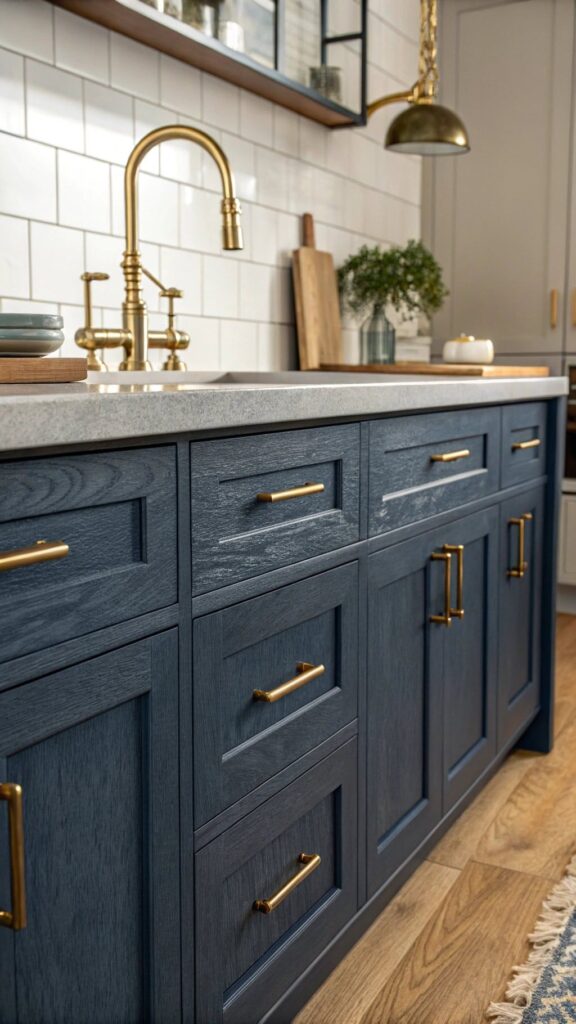
Hardware on a kitchen island — the handles, knobs, and hinges — does for the kitchen what jewellery does for an outfit. The right hardware choice elevates the entire kitchen’s quality level; the wrong choice undermines it. And because island hardware is typically seen and touched far more than the cabinetry it’s attached to, it rewards genuine investment in quality and design.
Choose a hardware finish that works with both the island colour and the perimeter cabinetry: brushed brass (warm, classic, works with most colour schemes), matte black (bold, graphic, works particularly with coloured islands), brushed nickel (cool, contemporary, understated), or ceramic knobs (charming, slightly country, works with Shaker and traditional kitchen styles). Apply the chosen finish consistently across every piece of hardware in the kitchen — mixing finishes reads as accidental rather than designed. The handle profile matters too: slim bar handles are contemporary; cup handles are traditional; knobs are classic. Choose a profile that suits the kitchen’s overall design language.
13. Style the Island Surface With Intention
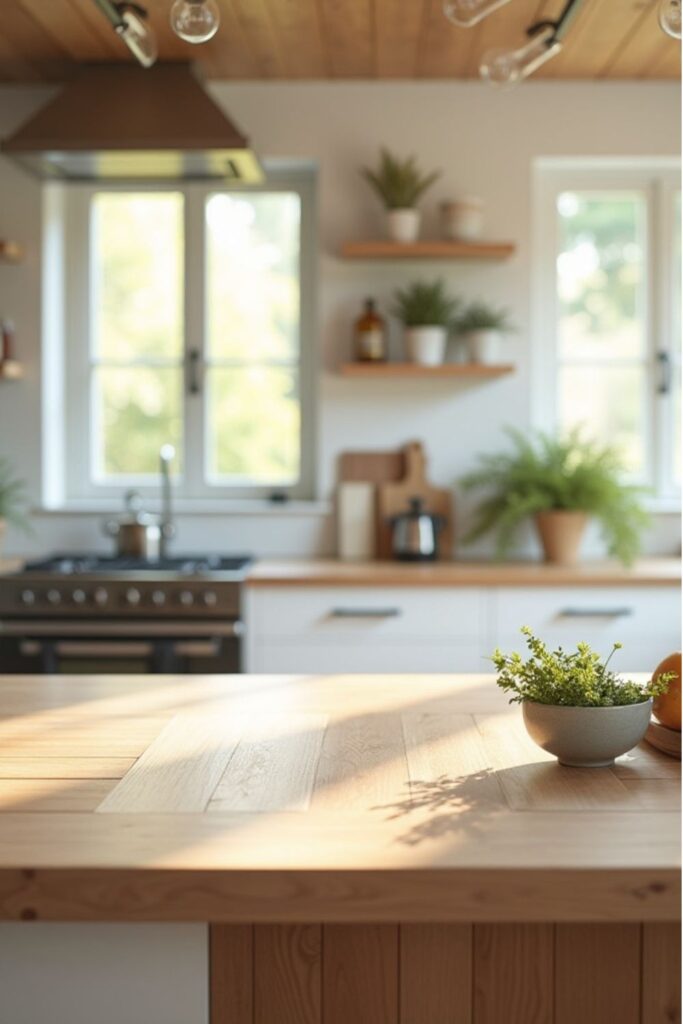
A beautifully designed kitchen island deserves a beautifully styled surface — and the objects you choose to display on it, and how you arrange them, make a significant difference to how the kitchen reads as a whole. Island styling is about finding the balance between useful objects kept out for daily access and purely decorative objects that add warmth and character without cluttering a working surface.
The most considered island styling is almost always food-adjacent and natural: a wooden bowl of seasonal fruit. A small potted herb (basil, rosemary, thyme) in a simple terracotta pot. A beautiful cookbook opened to an inspiring page. A marble or wooden chopping board propped against the edge. A ceramic crock for utensils. These objects belong in a kitchen, serve a purpose, and add organic warmth simultaneously. Keep the styling minimal and genuinely useful — an island is a working surface, not a display cabinet, and it should always feel ready to receive food, guests, and life.
14. Extend the Island Into a Kitchen Table
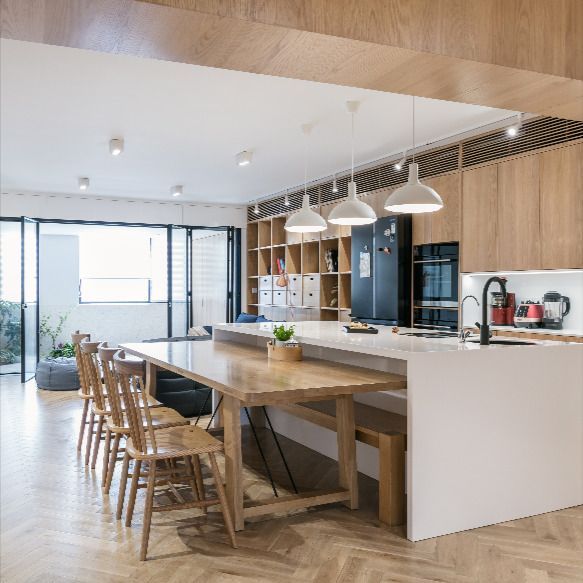
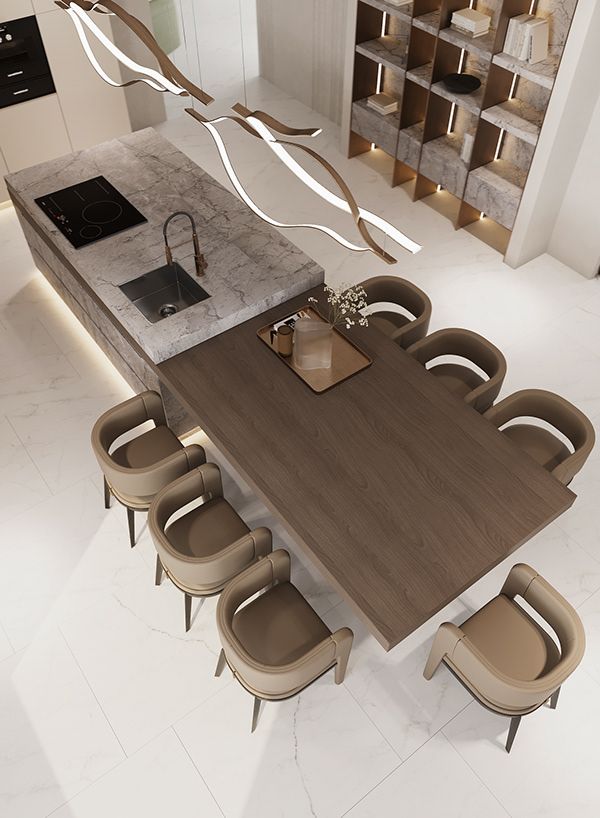
One of the cleverest and most space-efficient kitchen island design ideas for open-plan living spaces is extending the island into a dining or breakfast table — creating a single, unified piece that serves as prep surface, social island, and dining table simultaneously. The island and table share one countertop that steps down slightly at the dining end, with the lower height accommodating standard dining chairs and creating a clear visual and functional distinction between the two zones.
This approach is particularly valuable in smaller open-plan spaces where a separate dining table would feel crowded or where the kitchen-to-dining transition needs to feel as seamless as possible. It also creates one of the most genuinely social kitchen configurations possible: the cook is at one end of the surface, the family or guests are at the other, and the distance between them is a single worktop. Food, conversation, and life happen together, effortlessly. This is what a truly well-designed kitchen island makes possible.
━━━━━━━━━━━━━━━━━━━━━━━━━━━━━━━━━━━━━━━━
A beautifully designed kitchen island is more than a piece of kitchen furniture. It’s the place where your household gathers — for breakfast, for homework, for the glass of wine poured at the end of a long day while dinner comes together. It’s the heart of the kitchen, which means it’s the heart of the home.
Take your time with every decision: the size, the countertop, the colour, the seating, the lighting. Each choice compounds with the others to create either a kitchen that works exactly the way you hoped — or one that reminds you daily of the decision you’d make differently next time.
The island you’re imagining — the one that makes cooking social and the kitchen beautiful — is entirely within reach. You just made 14 better decisions than you had this morning. The rest is just choosing which ones to start with.
Which kitchen island idea are you most excited to incorporate? Share your kitchen design plans or your finished island in the comments — I’d love to see what you create!