
If there’s one thing that separates a home office you love walking into from one you dread sitting down in, it’s the layout. You can have the most beautiful desk, the most inspiring art, and the most stylish accessories — but if the furniture is arranged awkwardly, if your chair faces a wall that feels suffocating, or if your storage is all in the wrong place, the whole space will feel off. And you’ll feel it every single day.
The great news? Getting your home office layout right doesn’t require an architecture degree or a huge renovation. It just requires a little intention, some smart spatial thinking, and a handful of ideas that truly work in real homes. Whether you’re working with a generous dedicated room, a narrow spare bedroom, or a clever nook carved from a corner of your living space, these 15 home office layout design ideas will help you make the very most of what you have.
1. Place Your Desk Facing the Room — Not the Wall
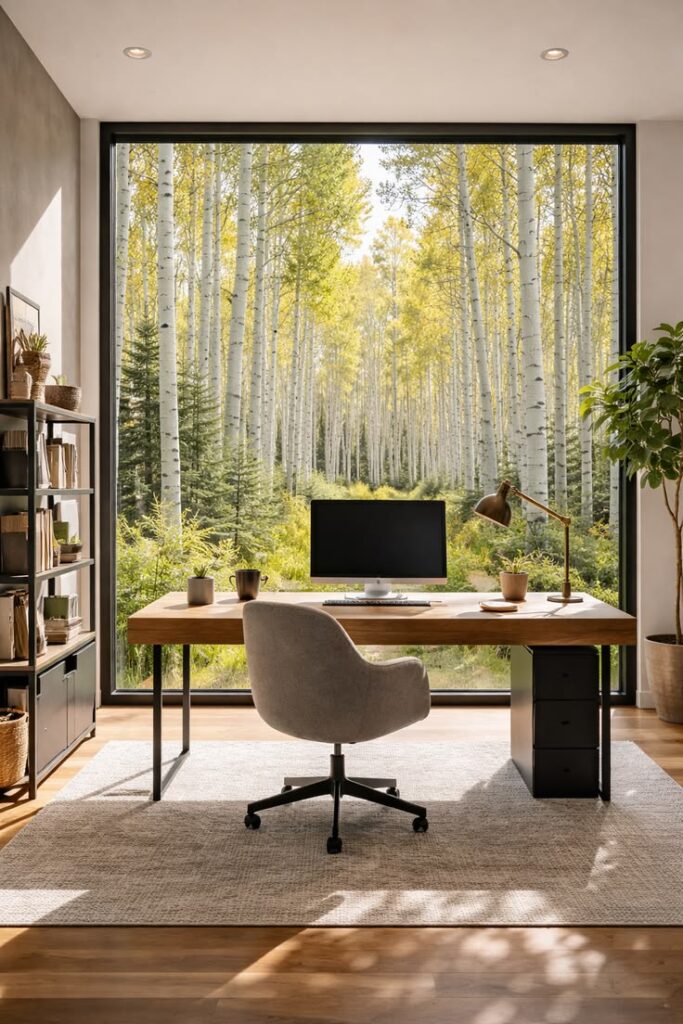
The single most impactful layout change most people can make? Stop facing the wall. When your desk faces into the room — toward the door, toward the window, or toward an open floor plan — your whole spatial experience changes. You feel less boxed in, more in command of your space, and far less likely to feel that subtle afternoon dread of staring at blank plaster for eight hours. If you’re in a smaller room and a wall-facing desk is your only option, try adding a mirror directly in front of you to visually expand the space and bring in light.
2. Maximize Natural Light With Strategic Desk Placement
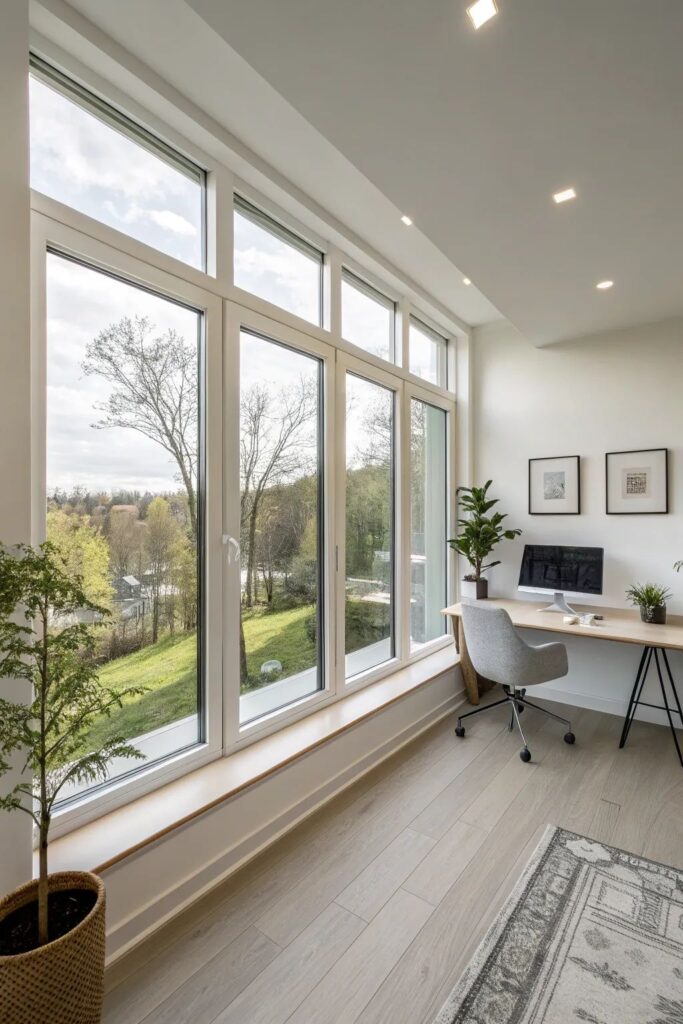
Natural light is the most powerful (and completely free) design element at your disposal — and your desk placement should always work with it, not against it. Ideally, position your desk so that natural light comes from the side rather than directly in front of or behind you: side-lighting minimizes glare on your screen and creates the most flattering, evenly lit workspace. A desk beside a window, angled to catch morning light from the left, is the gold standard. If windows are limited, face your desk toward the closest light source and supplement with a warm daylight desk lamp.
3. Try an L-Shaped Layout for Maximum Productivity
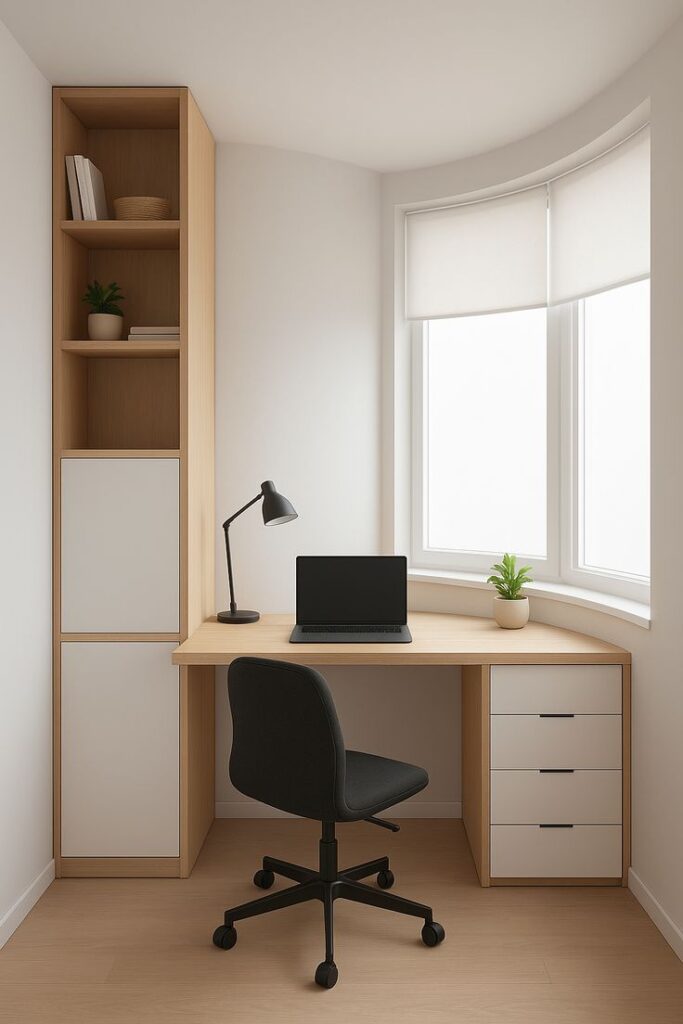
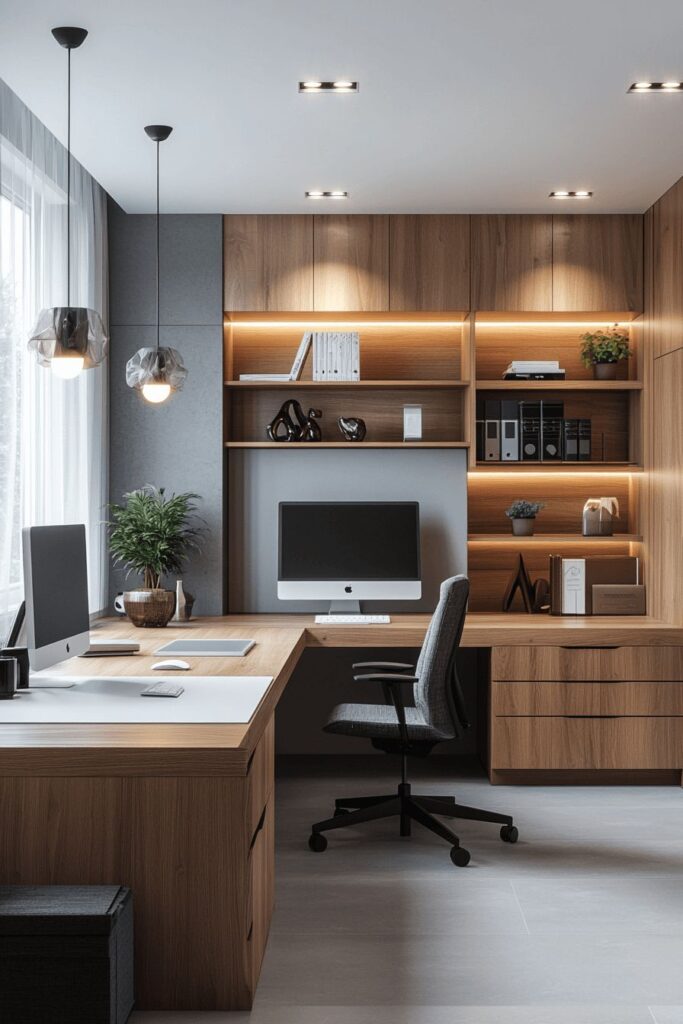
An L-shaped desk layout is a game-changer for anyone who needs both screen space and an open surface for notebooks, documents, or creative work. It makes brilliant use of corners — one of the most underutilized areas in any room — while giving you two distinct zones within a single desk footprint. Use one arm for your primary monitor setup and the second arm as a secondary work zone for writing, sketching, or spreading out materials. L-shaped desks come at every price point and look especially sharp in a corner of a bedroom-turned-office or a generous living room nook.
4. Define Zones in a Multipurpose Room
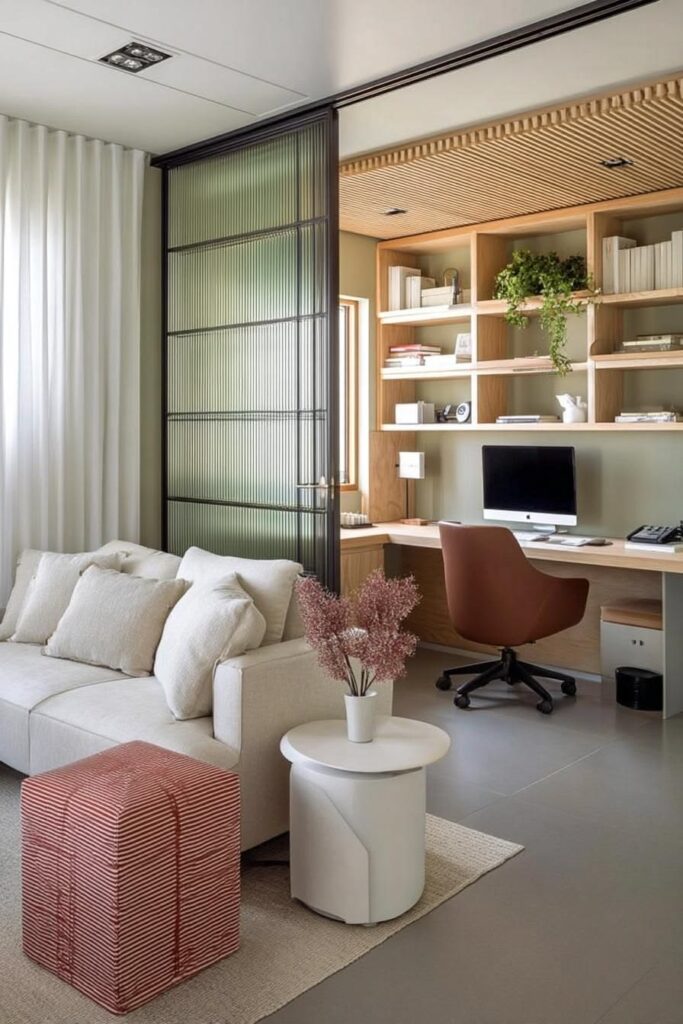
If your home office shares a room with another function — a guest bedroom, a living room, or even a corner of your kitchen — defining a clear zone for your workspace is essential for both productivity and visual harmony. Use furniture as a natural boundary: a bookshelf or open shelving unit placed perpendicular to the wall creates a partial room divider without closing off the space. A pendant light or wall sconce hung directly above your desk visually claims that area as ‘the office.’ An area rug under your desk chair further anchors the zone with purpose and personality.
5. Use a Floating Desk to Open Up a Small Room
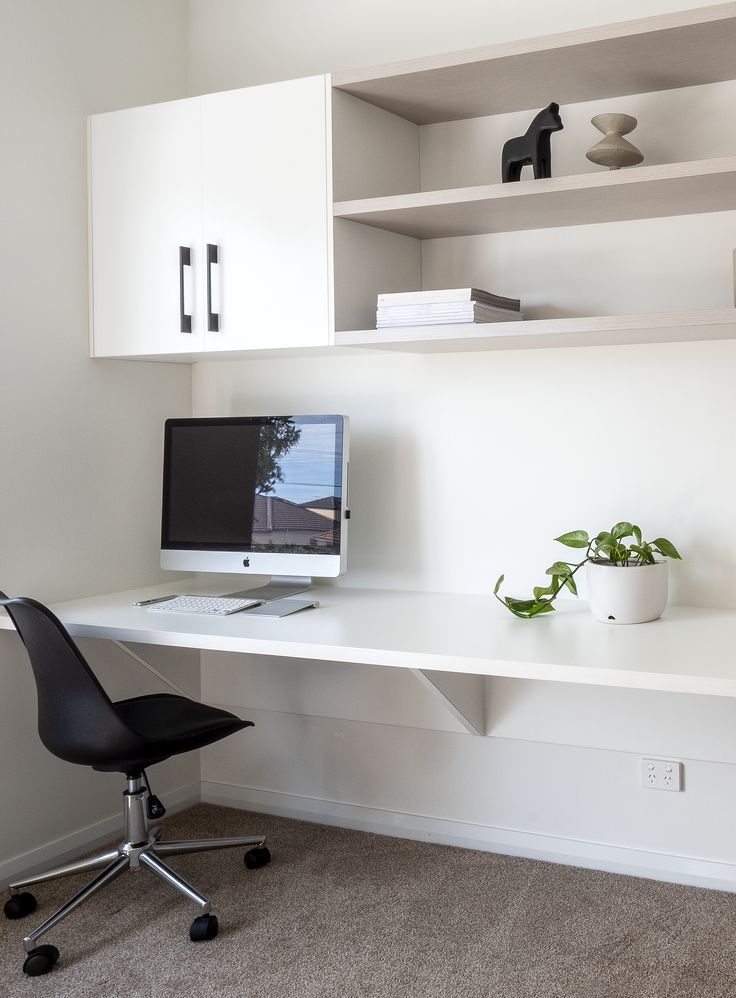
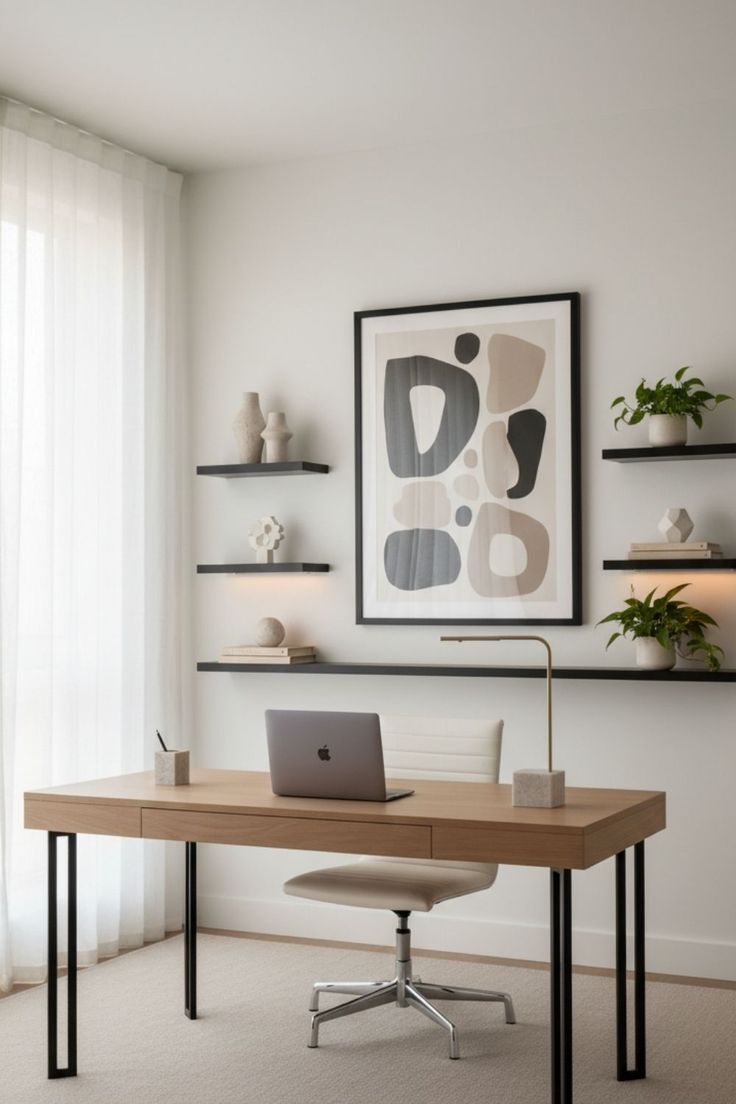
When floor space is at a premium, a wall-mounted floating desk is one of the smartest layout decisions you can make. Because it’s attached to the wall and has no legs, the floor beneath remains completely clear — which tricks the eye into perceiving far more space than actually exists. A floating desk paired with a backless stool (rather than a bulky chair) amplifies this effect beautifully. Add one floating shelf directly above it for storage, keep the surface minimal, and you have a fully functional, stylish home office layout that takes up almost no room at all.
6. Create a U-Shaped Layout for a Dedicated Home Office Room
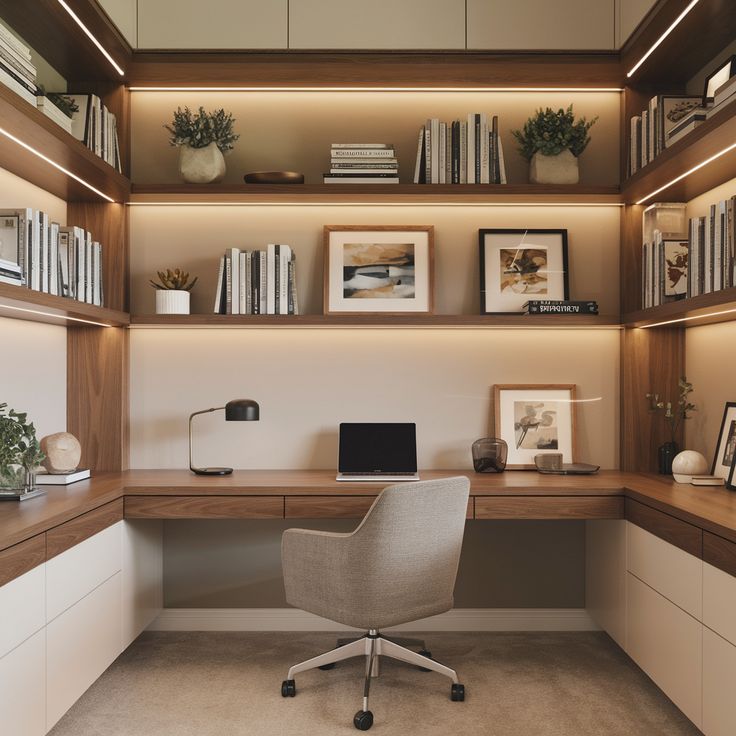
For those lucky enough to have a fully dedicated home office room, a U-shaped layout delivers the ultimate in functional workspace design. Three connected surfaces — often wrapping around three walls of the room — give you a primary workstation, an extended work surface to one side, and a printer or equipment zone on the other. This layout keeps everything within arm’s reach, eliminates unnecessary movement, and creates an immersive, command-center feel. It works best in rooms at least 10 by 10 feet, and custom built-ins make it look truly spectacular if your budget allows.
7. Put Storage Behind You — Not Beside You
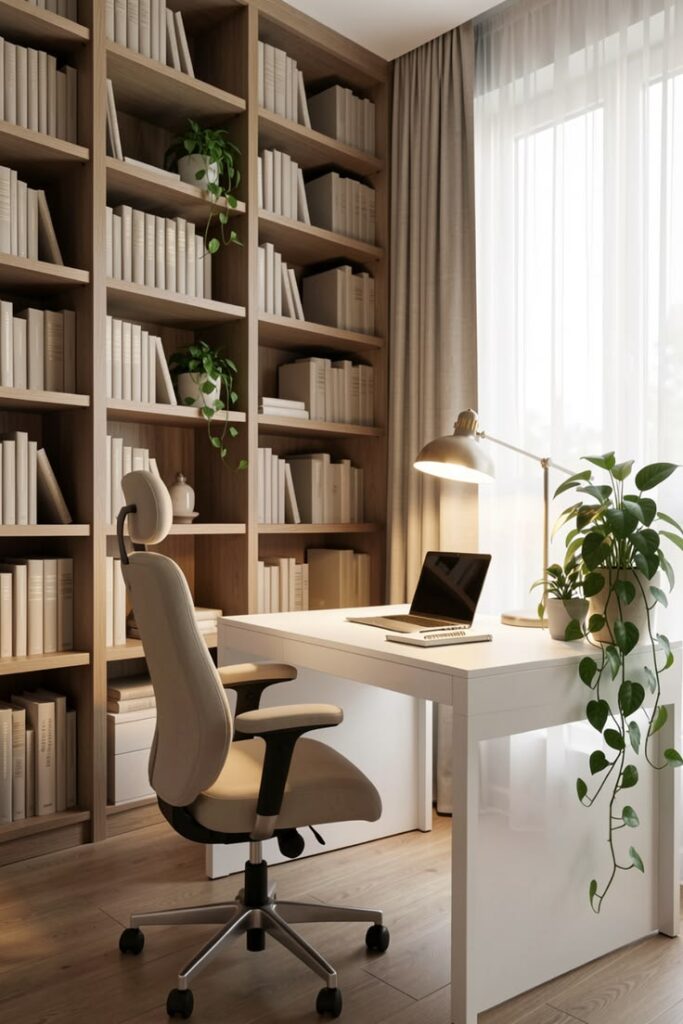
One of the most underrated layout tricks in home office design is positioning your storage wall directly behind your desk chair rather than beside or in front of you. This keeps your primary sightline clear and uncluttered, while keeping everything you need just a spin of the chair away. A wall of built-in shelves or bookcases behind you also creates the most stunning video call backdrop — styled with books, plants, and beautiful objects, it tells the world that your workspace is as intentional as your work. It’s practical and visually powerful in equal measure.
8. Design a Standing Desk Zone Into Your Layout
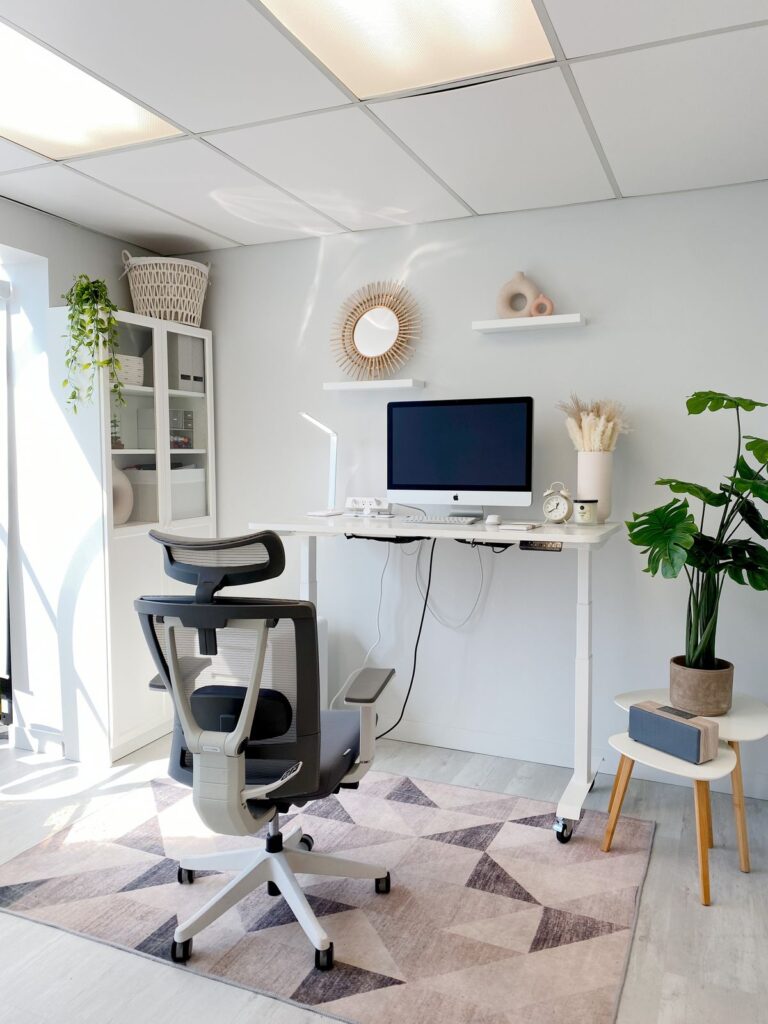
A well-designed home office layout accounts for the fact that you’ll be spending many hours a day in that space — and ergonomics should be built into the plan from the start. If a sit-stand desk fits your budget, it’s one of the best layout investments you can make for your long-term health and energy. Position it so you can easily alternate between sitting and standing without rearranging anything around you. If a full adjustable desk isn’t in the budget, a separate standing station — even a high console table against a wall — gives you the same benefit in a different part of the room.
9. Tuck a Reading Nook or Thinking Chair Into the Layout
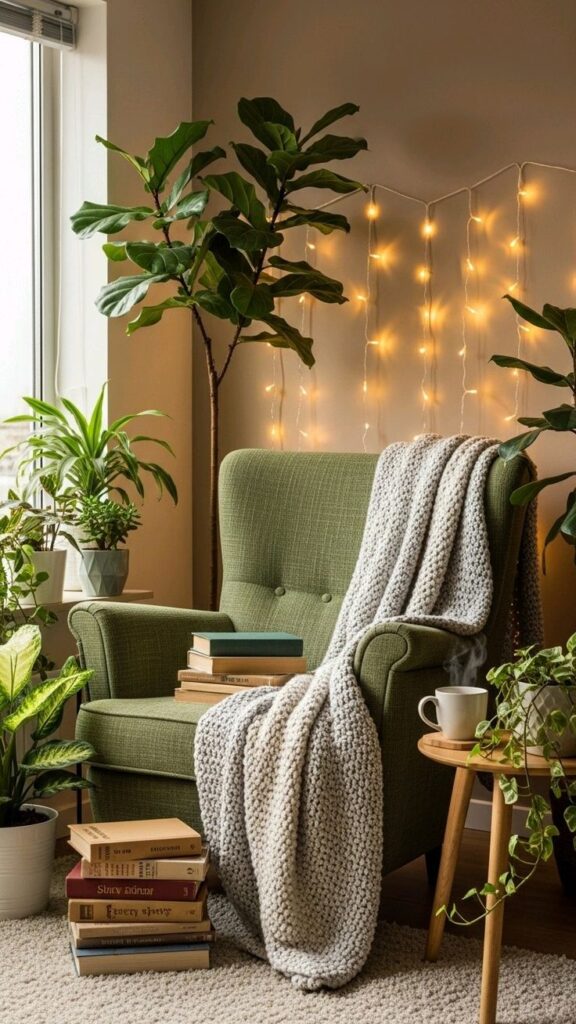
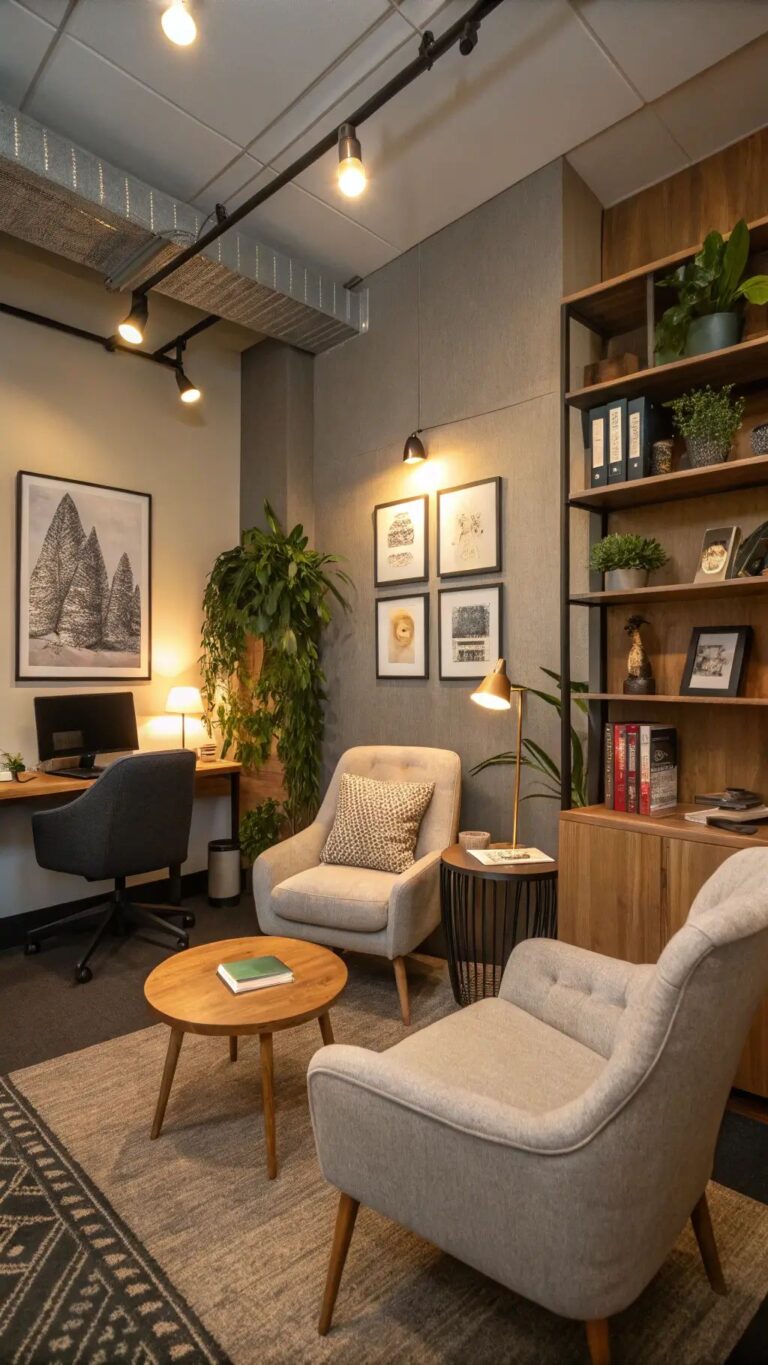
The most productive home offices aren’t just about the desk — they’re about having space to think away from the screen too. If your room has even a modest spare corner, consider tucking in a small armchair or a low settee as a dedicated reading and thinking zone. This becomes the place where you review documents, brainstorm, take calls, or simply decompress between focus sessions. A small side table for your coffee cup and a floor lamp complete the nook. It makes your home office feel more like a private study than a corporate cubicle, and that feeling changes everything.
10. Use Vertical Space to Free Up Your Floor Plan
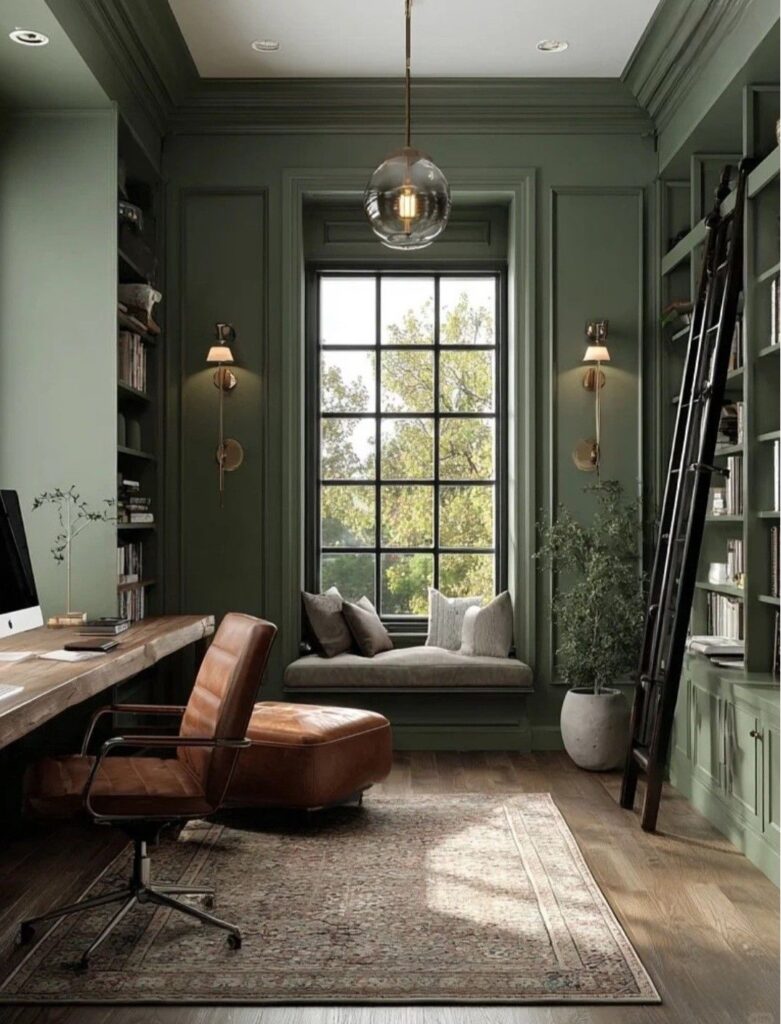
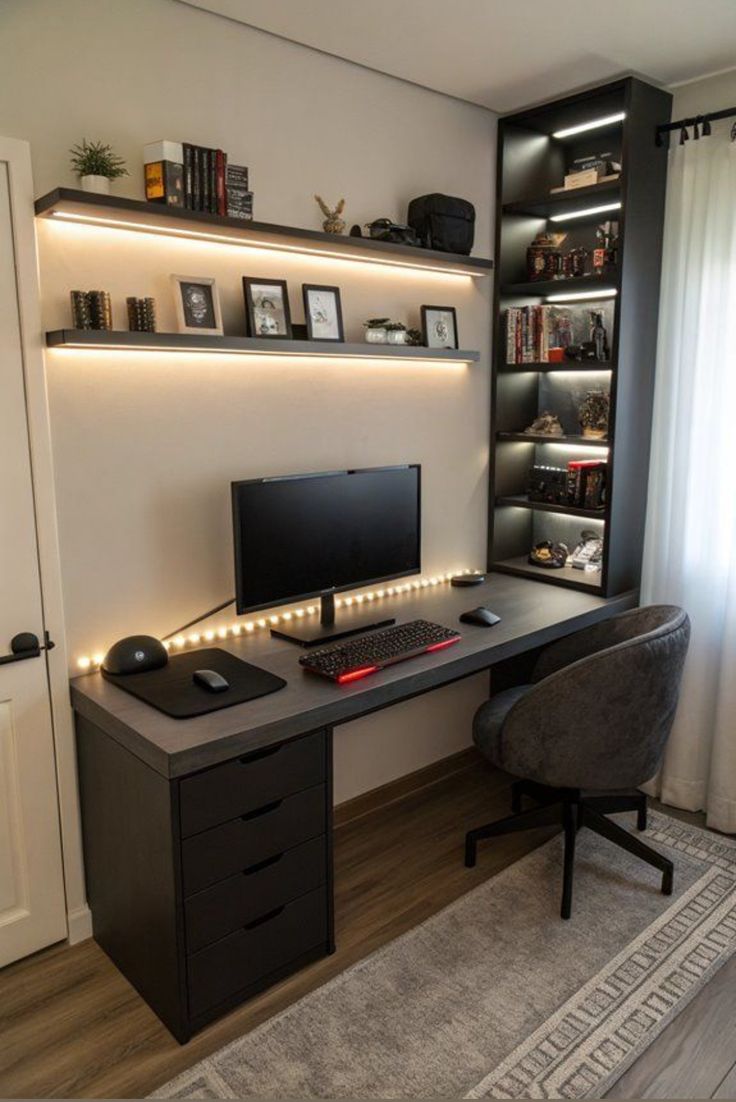
In any home office layout, the walls are your most underused asset. By building or installing storage all the way to the ceiling — rather than relying on low furniture that eats up floor space — you dramatically free up the room’s footprint while adding serious style and storage capacity. Floor-to-ceiling bookshelves flanking your desk create an architectural moment that looks custom and considered. Wall-mounted cabinets above your desk replace bulky side tables. Floating shelves in vertical columns use dead wall space for display and storage. The higher you go with storage, the more open your floor plan feels below.
11. Design for Your Actual Work Style — Not a Pinterest Ideal
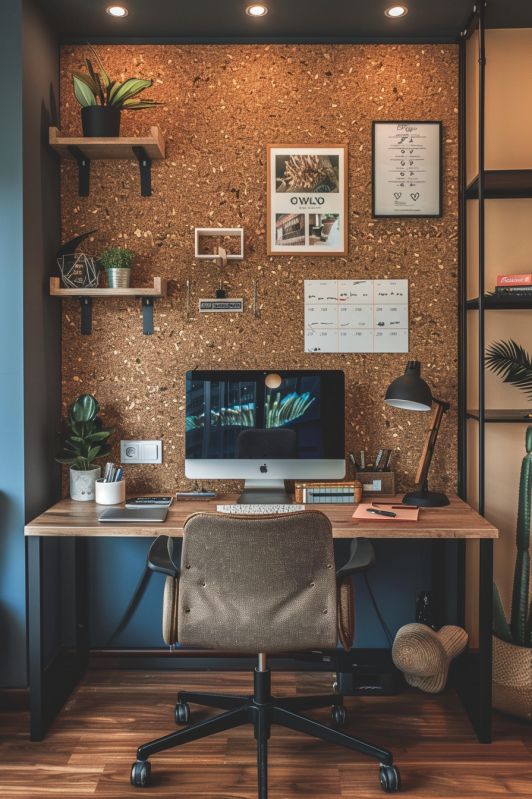
Here’s the layout advice that trumps all others: design for how you actually work, not for how your office looks in a mood board. Are you someone who spreads papers everywhere? You need wide, clear surface area. Do you take a lot of video calls? Your background needs to be intentional. Do you work better with music and low light? Your layout should support ambient lighting and acoustic comfort. Do you move between devices constantly? Keep charging stations accessible. The most beautiful home office layout is the one that fits your workflow so naturally that the room itself disappears and you can just focus on the work.
12. Plan for a ‘Reset’ at the End of Every Day
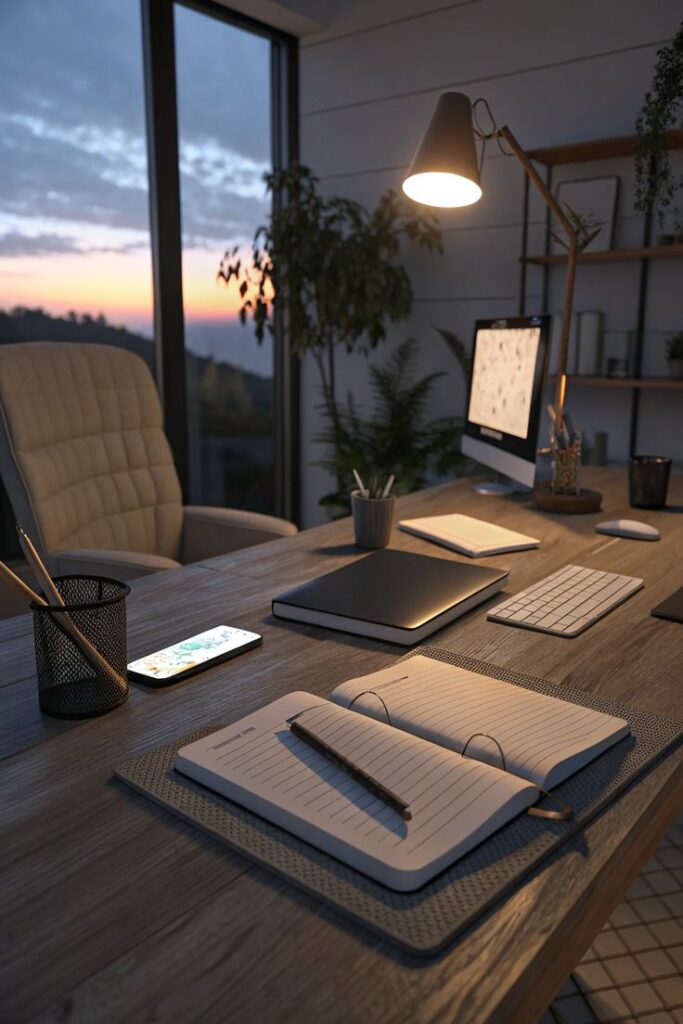
A great home office layout isn’t just about how the room functions at its best — it’s about how easy it is to return to that state. Build your layout around a five-minute daily reset: a spot where paperwork goes, a designated home for every device, a drawer for the daily clutter. The layout itself should make tidying feel natural, not effortful. A desk with a small tray for loose items, a filing drawer within reach, and a hook for headphones all make the reset nearly automatic. When you walk into a clean, beautifully arranged workspace each morning, you start every single day already winning.
Your Best Work Starts With Your Best Layout
A home office layout that truly works isn’t something you stumble into — it’s something you design deliberately. And the beautiful thing is that even one change, moving your desk to face the room, adding a floating shelf to reclaim floor space, or carving out a tiny reading corner, can shift the entire energy of your workspace. You deserve a home office that feels as good as the work you do in it. So pick one layout idea from this list and try it this week. Rearrange a single piece of furniture. Claim a new corner. Then share a photo in the comments or tag me on Pinterest — seeing your real-life transformations is the absolute best part of what I do. Your best work is waiting in a space that’s finally set up to support it. Let’s build it together.