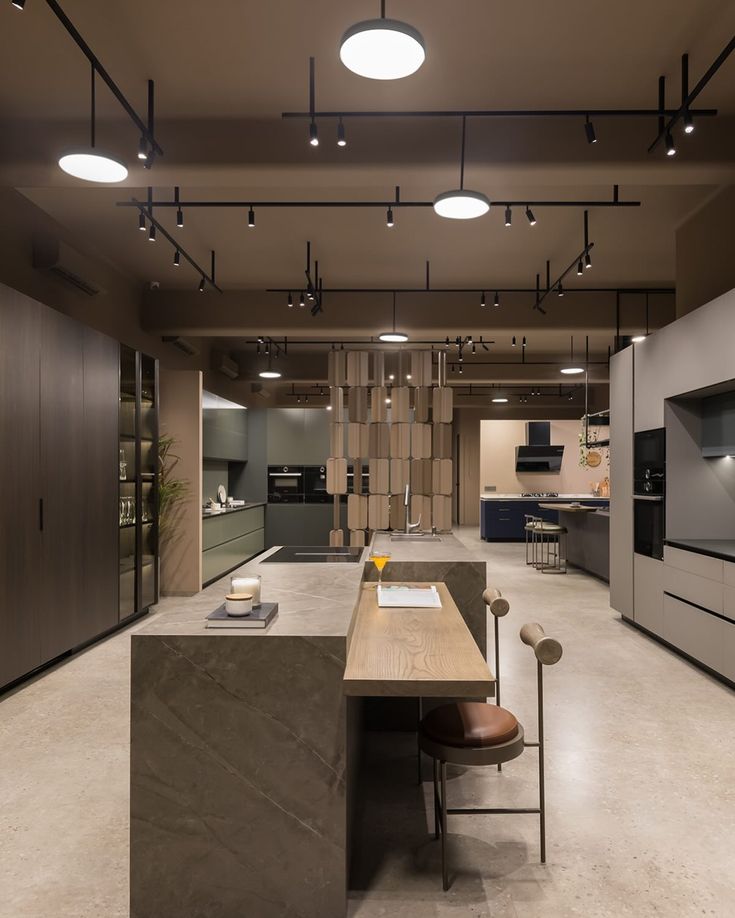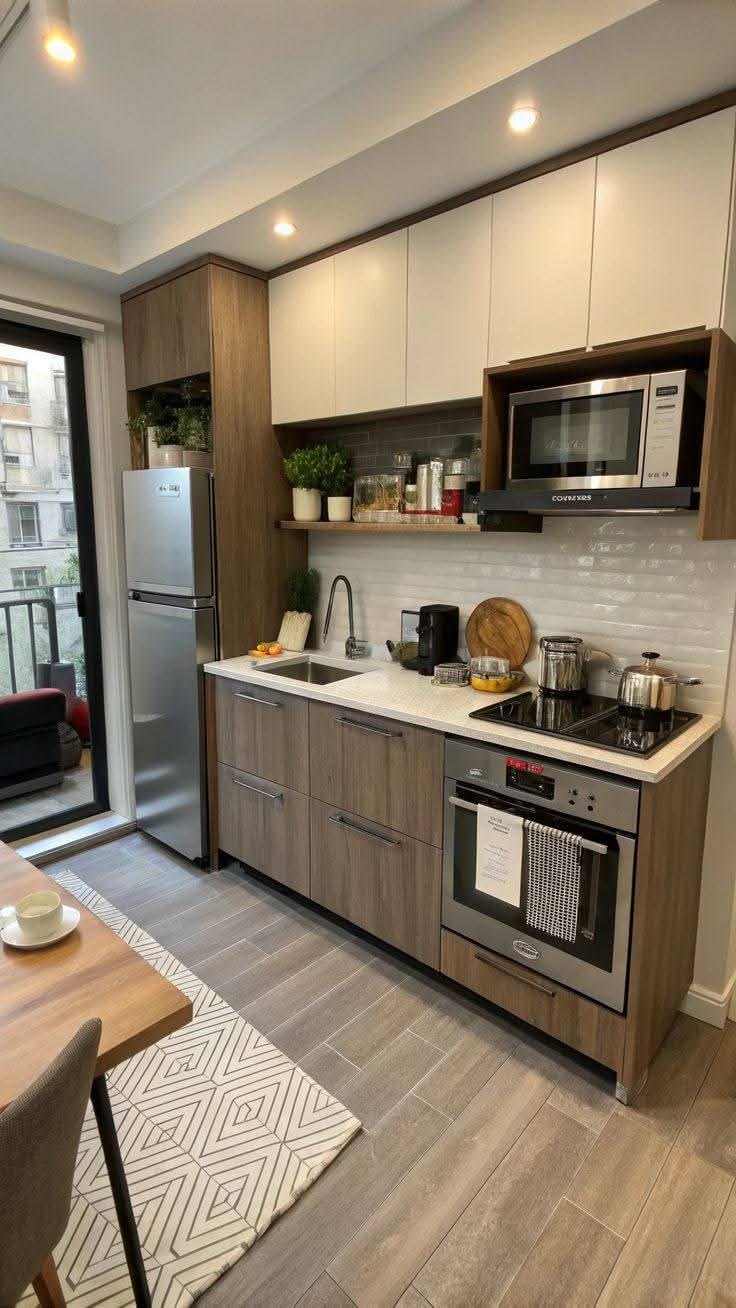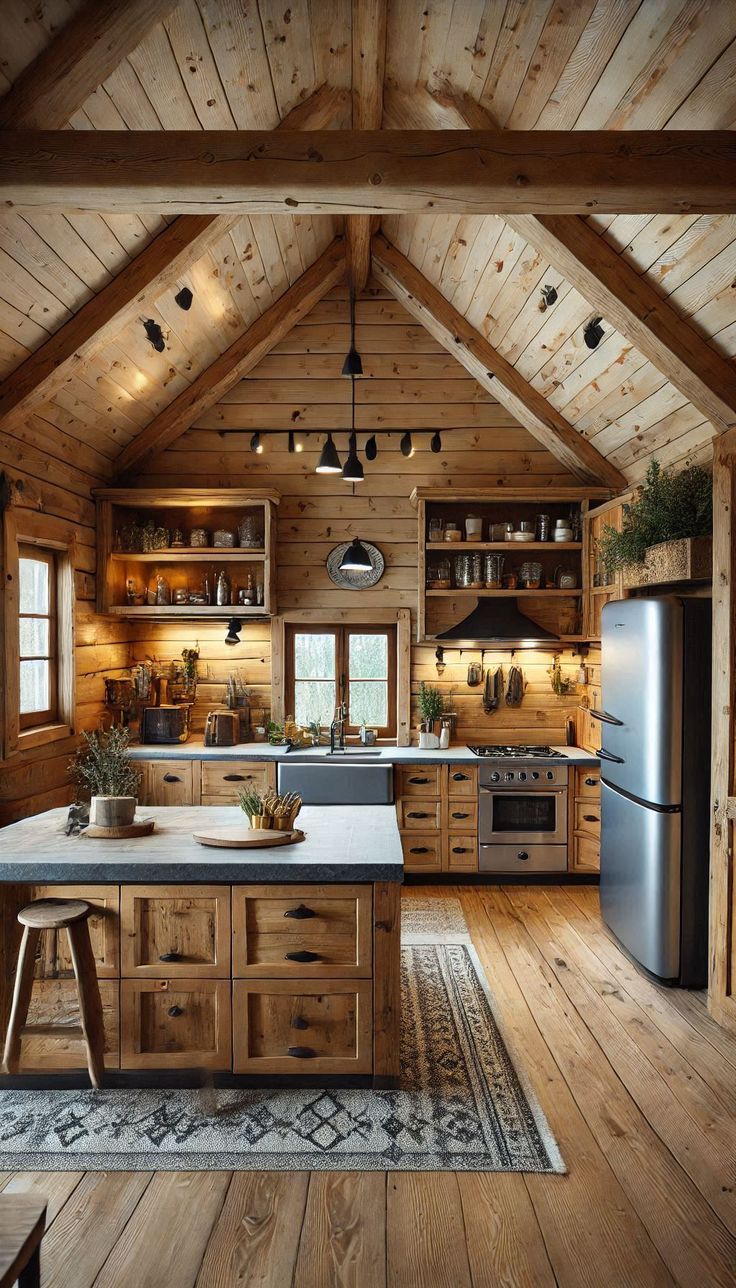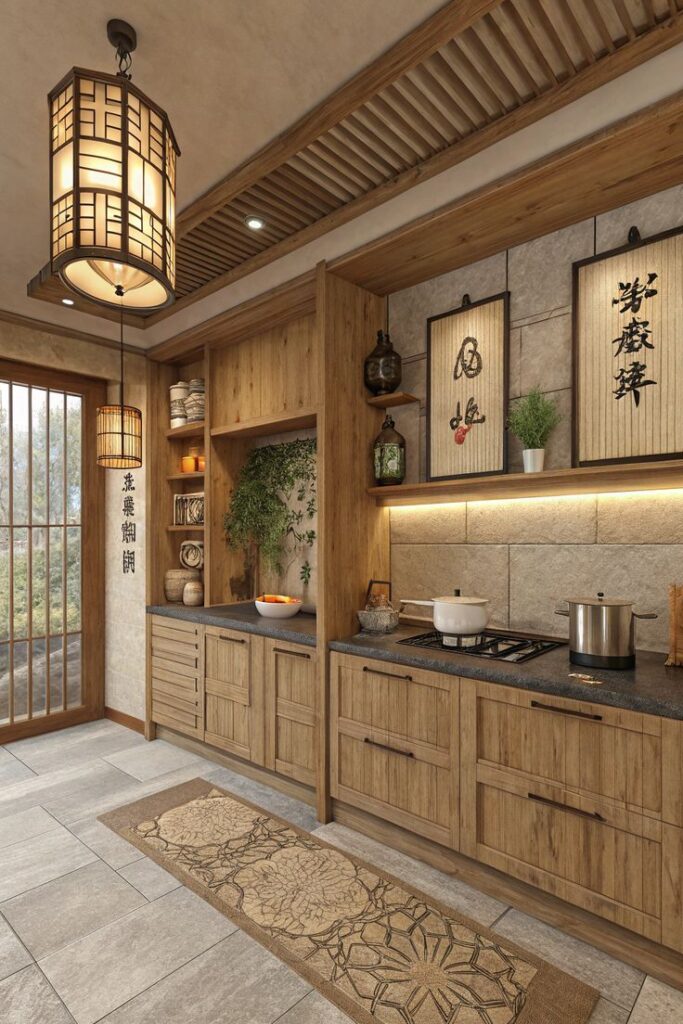

There is something deeply calming about an Asian-inspired kitchen. The clean lines, the natural materials, the intentional use of space — it all works together to create a room that feels like a breath of fresh air every time you walk in.
Whether you’re drawn to the quiet minimalism of Japanese design, the bold drama of Chinese lacquerware, the earthy warmth of Balinese decor, or the modern elegance of Japandi style, these asian kitchen design ideas will help you create a space that is as beautiful as it is functional.
Let’s explore 13 ideas to help you bring that distinctive Eastern elegance into your kitchen — no matter your budget or the size of your space.
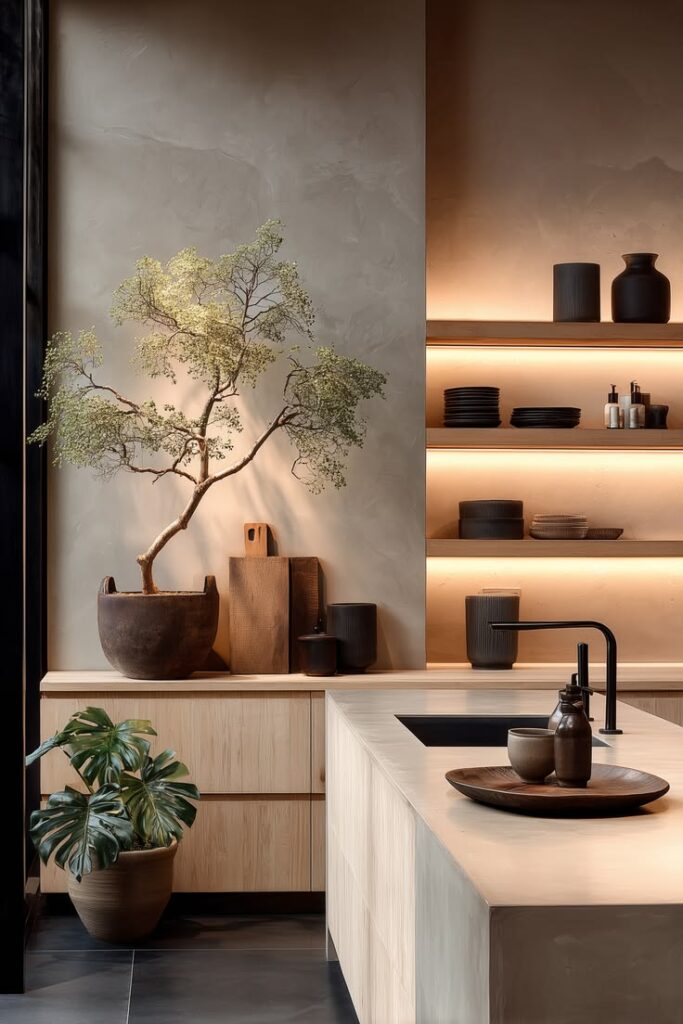
1. Start With the Japandi Aesthetic: Where Japan Meets Scandinavia
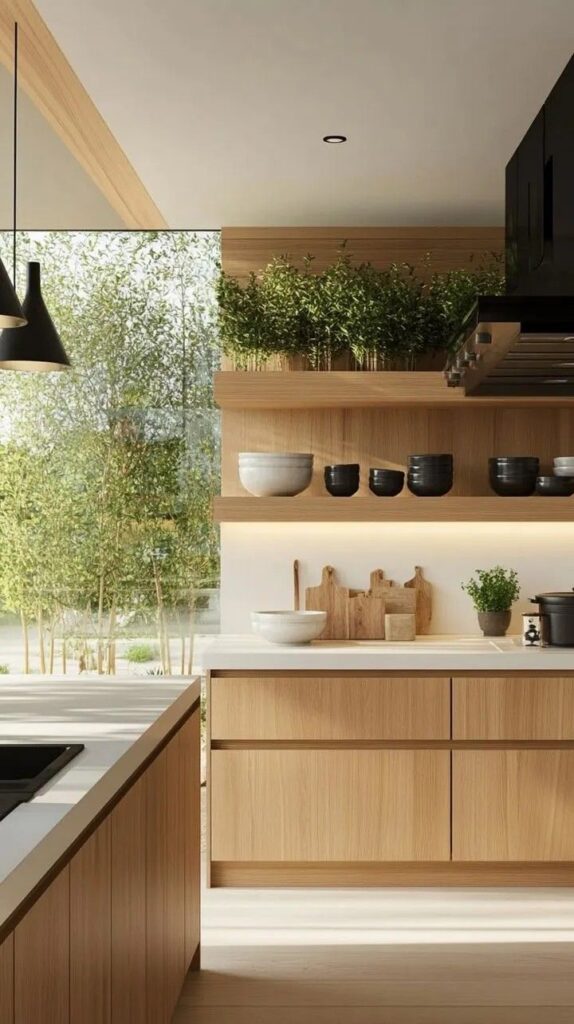
If you want one of the most quietly powerful asian kitchen design ideas, look no further than Japandi — the beautiful fusion of Japanese wabi-sabi philosophy and Scandinavian hygge. It’s minimalist without feeling cold, warm without feeling cluttered.
In a Japandi kitchen, every item earns its place. Flat-front cabinetry in warm oak or muted greige, matte black or brushed brass hardware, and a neutral palette of stone, sand, and white form the foundation. Add a single ceramic vase or a small bonsai plant and you have everything you need. The magic is in restraint — and the profound beauty that restraint creates.
2. Embrace Natural Wood for Warmth and Texture
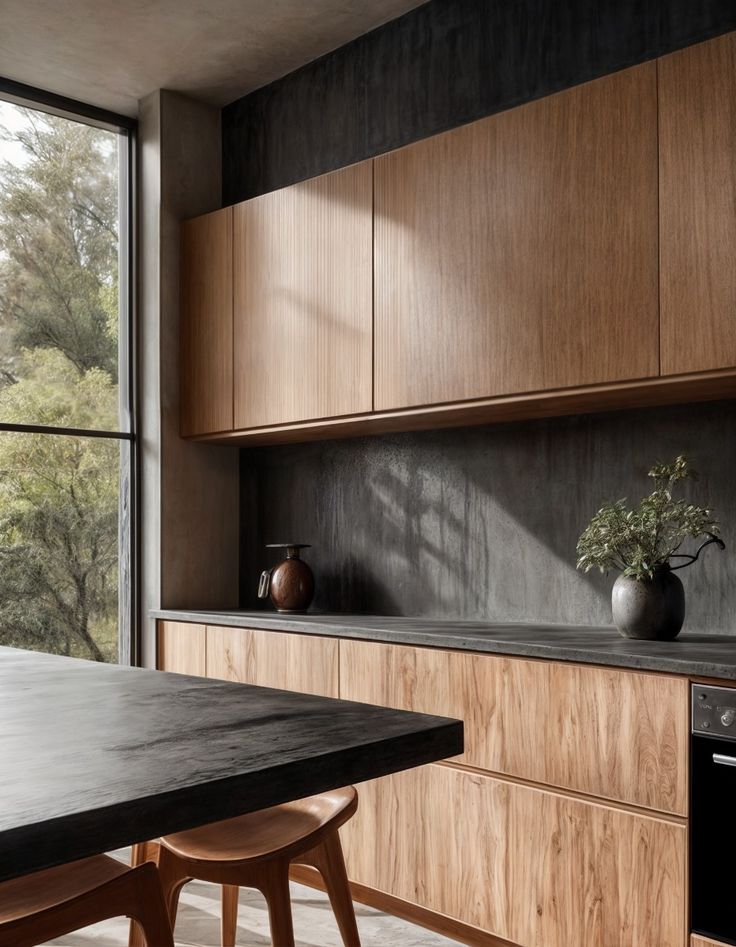
Wood is the soul of Asian interior design. In nearly every Asian design tradition — Japanese, Korean, Chinese, Balinese — natural wood is used to bring warmth, texture, and a connection to the natural world into the home.
In your kitchen, consider walnut, teak, bamboo, or oak for cabinetry, open shelving, or ceiling beams. Even a simple butcher-block countertop or a set of wooden bar stools can introduce this essential element. Let the grain show, embrace the imperfections, and resist the urge to over-finish — because in wabi-sabi philosophy, the beauty is in the natural, the aged, and the perfectly imperfect.
3. Choose a Serene, Earth-Toned Color Palette
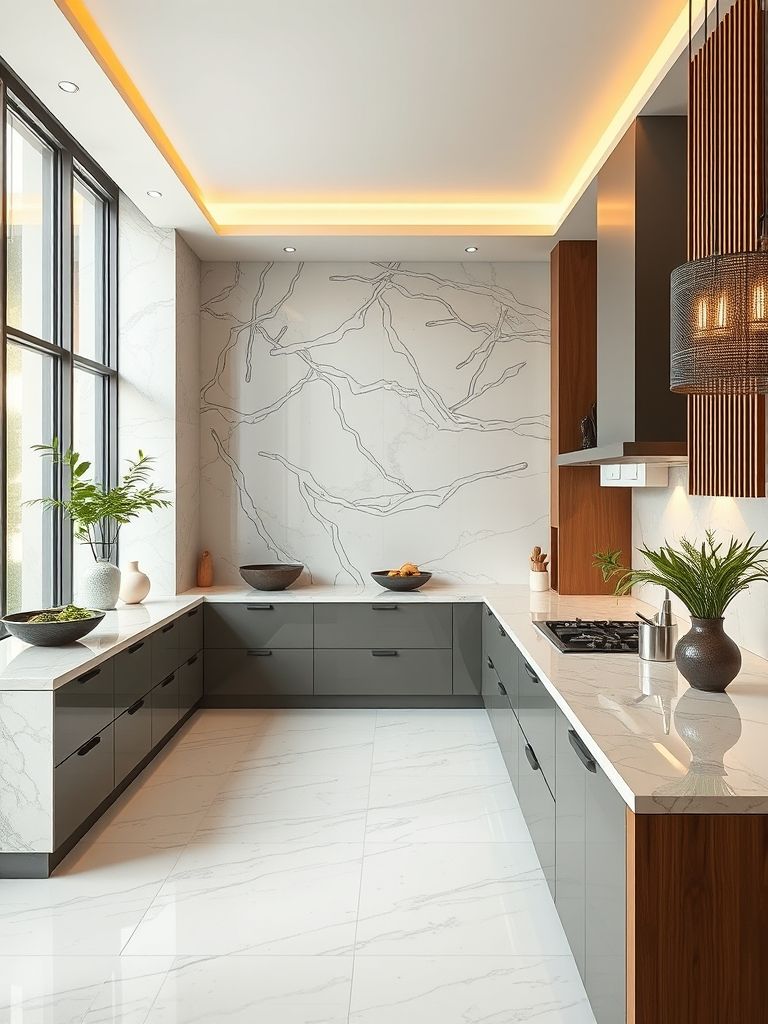
One of the most defining features of Asian kitchen design ideas is the use of a calm, nature-inspired color palette. Think ink black, warm white, clay, sand, charcoal, sage green, and deep forest tones — colors you would find on a walk through a bamboo grove or beside a Japanese rock garden.
These quiet hues create a visual calm that makes the kitchen feel like a retreat rather than a workspace. Try painting your walls in a warm greige or deep slate, pair with warm wood tones, and use matte black or aged brass as accent finishes. Avoid anything too bright or synthetic — in Asian design, nature always leads the way.
4. Add a Statement Tile Backsplash Inspired by Asian Craftsmanship
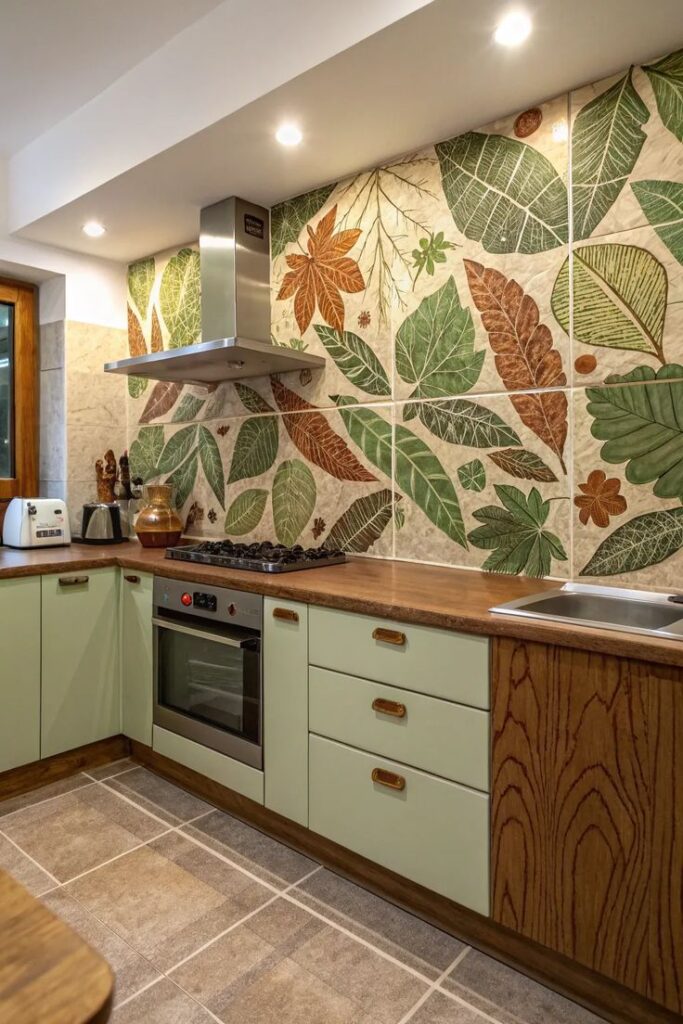
A beautiful tile backsplash is one of the most impactful asian kitchen design ideas you can implement. Asian tile traditions are extraordinarily rich — from Japanese hand-painted ceramics and Chinese blue-and-white porcelain motifs to Korean celadon tiles and Indonesian batik-inspired patterns.
For a modern Asian kitchen, try irregular handmade tiles in matte white, celadon green, or ink blue for an artisanal feel. Or use long, slim subway tiles in a stacked vertical pattern for a quietly Japanese look. The goal is a backsplash that feels handcrafted and considered — not mass-produced. Even a small section of patterned tile as a focal point behind the stove can anchor the entire room.
5. Incorporate Open Shelving for a Curated, Gallery-Like Display
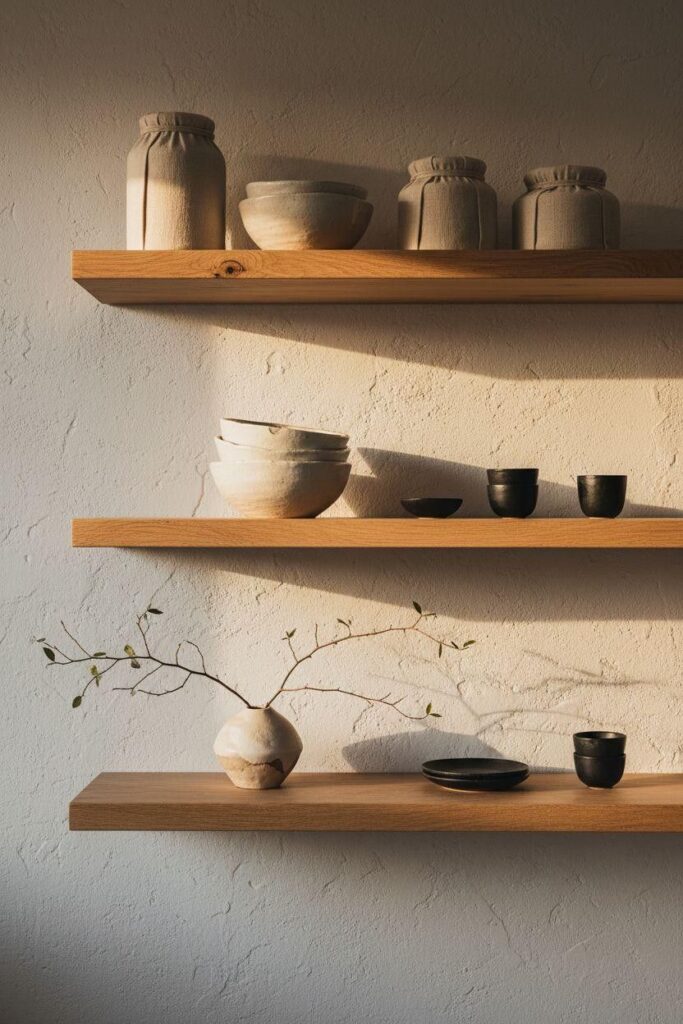
Open shelving is a beautiful tool in Asian-inspired kitchen design because it encourages intentionality. Every item on display becomes part of the room’s aesthetic story — so you are naturally motivated to keep only what is beautiful and meaningful.
Style your shelves with a curated collection of Japanese ceramics, a small tea set, handwoven baskets, or a line of matching canisters. Use odd numbers, vary the heights of objects, and leave breathing space between groupings. This is kitchen display as meditation practice — and the result is a space that always looks serene, even when life is busy.
6. Use Bamboo as a Versatile, Sustainable Design Element
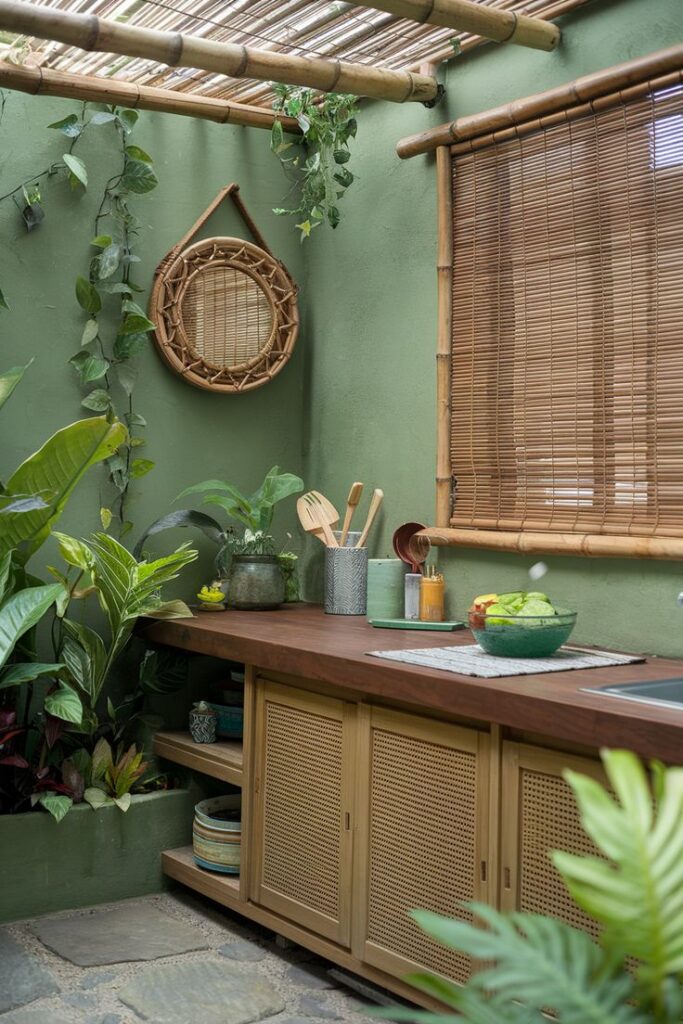
Bamboo is one of the most iconic materials in Asian design — and one of the most sustainable. In your kitchen, bamboo can appear in many forms: cabinet fronts, countertops, cutting boards, woven pendant lights, window blinds, trays, or even a statement bamboo plant on the sill.
Beyond its beauty, bamboo is incredibly practical — it’s harder than many hardwoods, naturally resistant to moisture and bacteria, and grows back rapidly after harvesting. Using bamboo in your kitchen is not just a design choice; it’s a lifestyle statement about living in harmony with the natural world. And that philosophy is at the heart of every great Asian interior.
7. Create a Dedicated Tea or Matcha Station
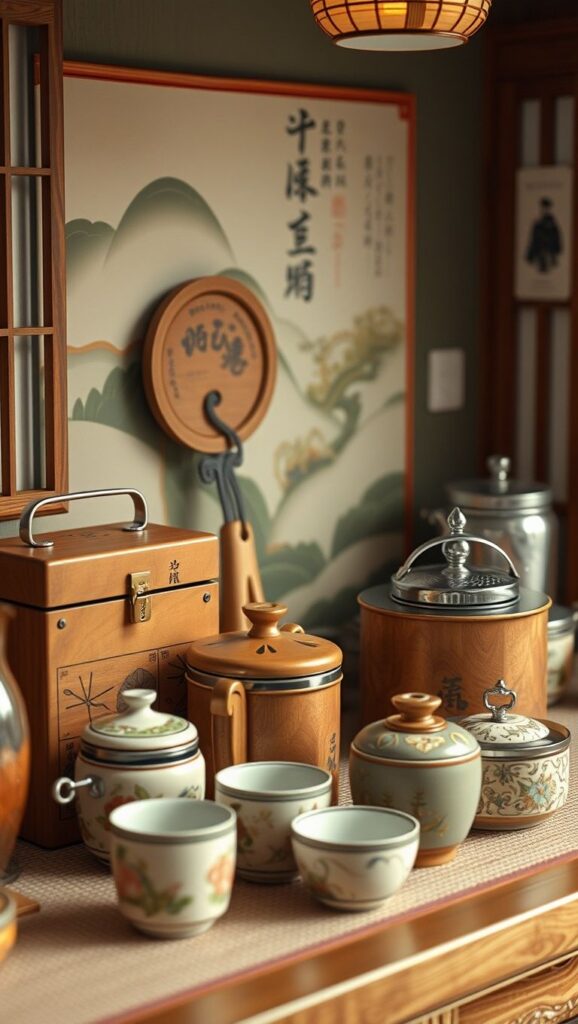
If there is one ritual that defines Asian home culture, it is the art of tea. Creating a dedicated tea or matcha station in your kitchen is one of those asian kitchen design ideas that adds both beauty and daily ritual to your life.
Use a beautiful wooden tray to corral a cast iron tetsubin, a bamboo matcha whisk, a small ceramic bowl for tea leaves, and your favorite cups. Add a small piece of calligraphy art or a dried botanical arrangement behind the station. Every morning, your tea ritual becomes a moment of genuine calm — and your kitchen counter becomes a work of art.
8. Introduce Shoji-Inspired Design Elements
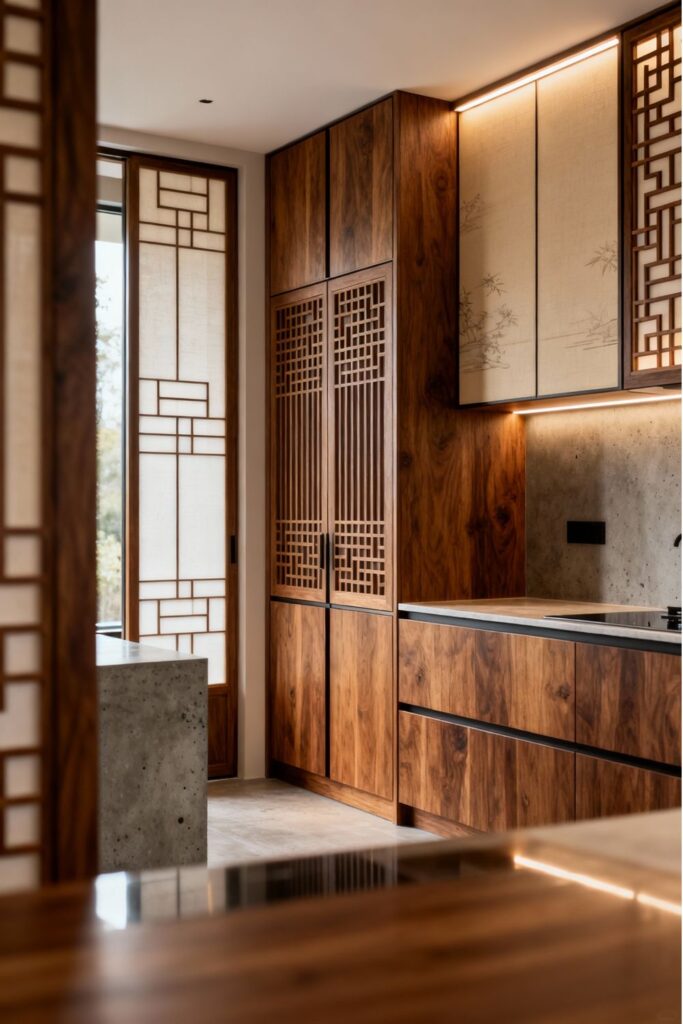
The shoji screen — Japan’s iconic paper-and-wood room divider — is a masterclass in how simplicity can be breathtaking. You can bring this energy into your kitchen without installing actual shoji screens by looking for design elements that echo its grid-like geometry and translucent beauty.
Try cabinet doors with frosted or ribbed glass inserts framed in warm wood, or a kitchen window dressed with a natural woven roman shade. Even pendant lights with a slatted wooden shade cast a beautiful shoji-like shadow. These details add layers of visual interest while keeping the overall feeling peaceful, light-filled, and deeply Japanese in spirit.
9. Add a Bold Lacquer Moment — the Chinese Design Influence
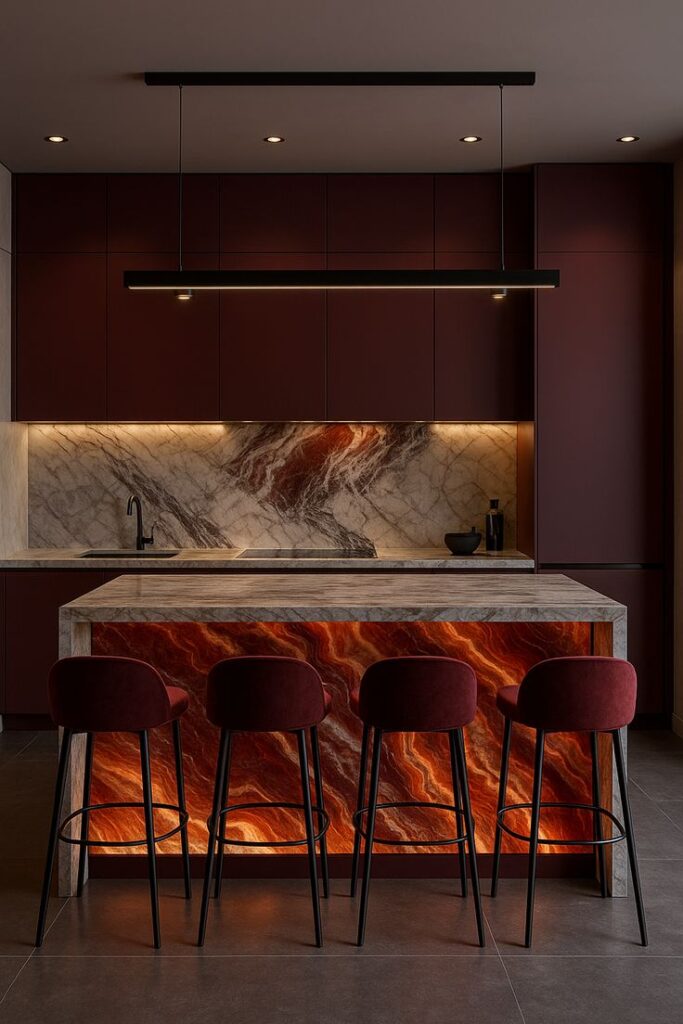
While Japanese and Japandi aesthetics tend toward quietness, Chinese design traditions embrace drama, richness, and bold color — and your kitchen can beautifully reflect this. Lacquered cabinetry in deep oxblood red, midnight navy, forest green, or glossy black makes a statement that is unmistakably Asian and absolutely stunning.
A kitchen island painted in a rich lacquer tone against white or neutral surround cabinets is one of the most dramatic asian kitchen design ideas you can execute. Add gold hardware and a statement pendant light, and the result is a kitchen that feels like it belongs in a luxury Shanghai apartment. It’s bold, it’s beautiful, and it’s unforgettable.
10. Layer Natural Textiles for Warmth and Softness
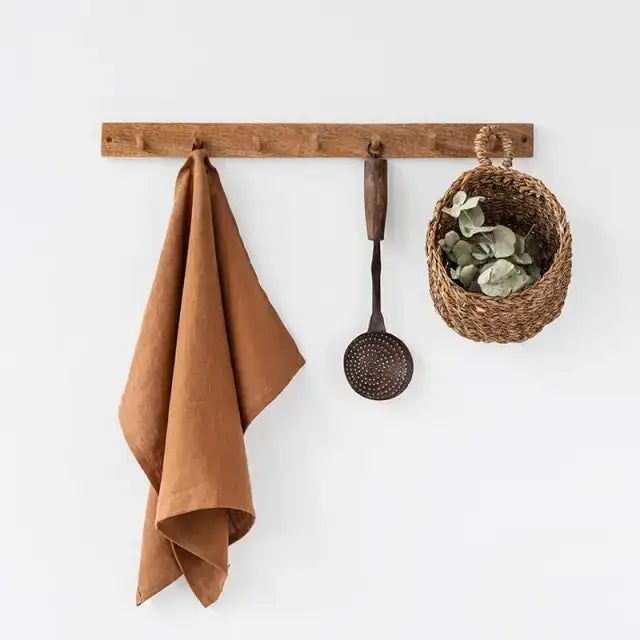
Textiles are the warmth-givers of any room — and in an Asian-inspired kitchen, the choice of fabric matters enormously. Look for natural, undyed, or hand-dyed materials: rough linen dish towels, hand-woven rattan placemats, a batik-print cushion on a bar stool, or a simple hemp runner beneath your island.
Southeast Asian design traditions — Balinese, Thai, Vietnamese — are especially rich in textile culture, and even small touches of handwoven or hand-dyed fabric add enormous depth and authenticity to an Asian kitchen. These textures also soften the harder elements like stone countertops and wood cabinets, creating a balance that feels truly harmonious.
11. Bring the Garden Indoors With Intentional Plant Styling
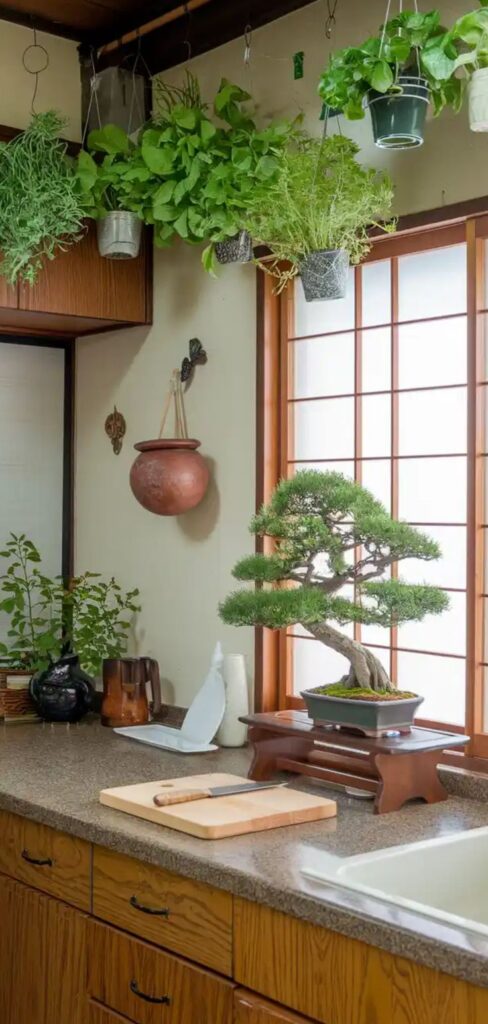
In Asian design philosophy, the boundary between indoors and outdoors is purposefully blurred. Plants are not decoration — they are essential living elements that connect your home to the natural world. And in a kitchen, they have the added magic of making the whole room feel fresh and alive.
Choose plants with meaning and intentionality: lucky bamboo for prosperity, a jade plant for abundance, a graceful fiddle leaf fig for drama, or a trailing pothos for easy everyday greenery. Display them in handmade ceramic pots, simple terracotta, or beautiful woven baskets. And remember the Japanese concept of ma — the beauty of empty space — so don’t overcrowd. One or two well-chosen plants will say more than ten.
12. Light Your Kitchen With Warmth and Intention
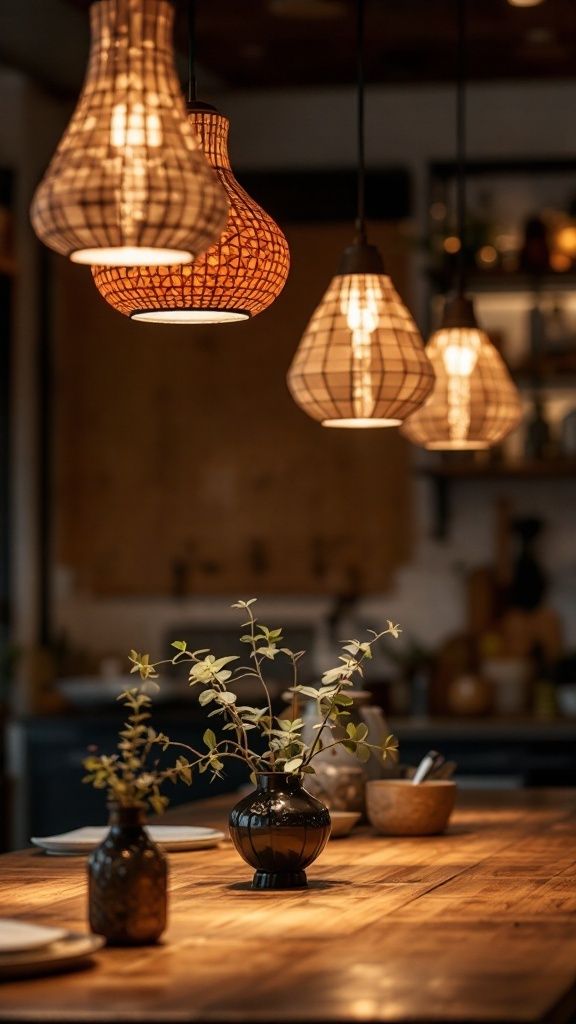
Lighting is one of the most powerful tools in any designer’s kit — and in Asian kitchen design, lighting is used to create mood, shadow, and warmth rather than simply illuminate a workspace. Harsh, bright overhead lighting has no place in a zen kitchen.
Layer your light sources thoughtfully: a statement paper or bamboo lantern as a pendant over the island, warm-toned LED strips under the cabinets, and perhaps a few candles or small table lamps in an adjacent dining area. The goal is a kitchen that glows in the evening rather than blazes — a space where you want to linger, sip tea, and let the day gently unwind.
13. Edit Ruthlessly — Let Negative Space Be Your Final Design Move
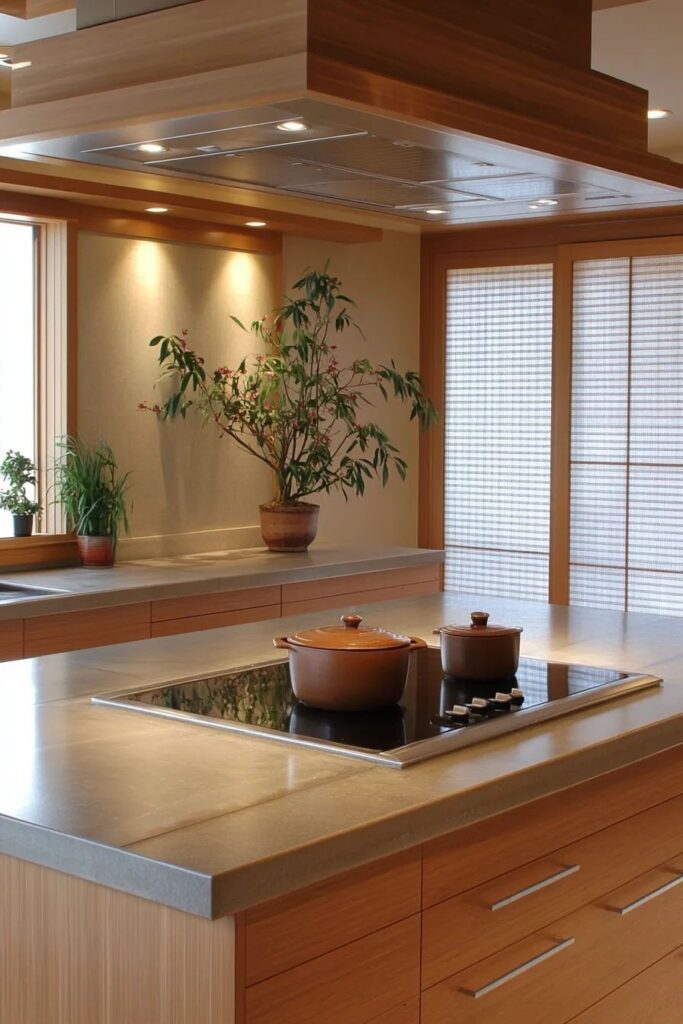
The most important of all asian kitchen design ideas is the one that costs nothing at all: the art of editing. In Japanese design, the concept of ma — the beauty of intentional empty space — is as important as what you choose to include. In your kitchen, this means clearing the countertops, removing everything that doesn’t serve a purpose or bring you joy, and letting the room breathe.
A single ceramic bowl. One beautiful cutting board leaning against the backsplash. A single stem in a slender vase. Negative space is not emptiness — it is room for the eye to rest, for beauty to be appreciated, and for calm to take hold. Edit your kitchen down to its most essential, most beautiful elements, and you will have created something truly extraordinary.
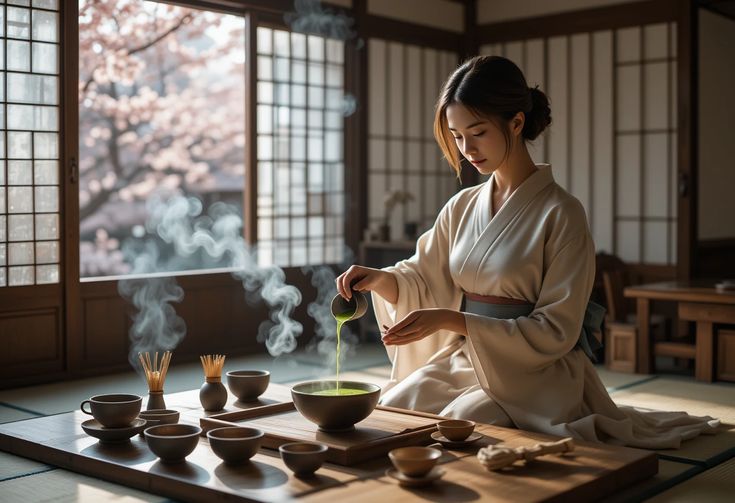
Asian kitchen design is not just a visual style — it’s a philosophy. It’s about choosing intention over abundance, calm over chaos, and beauty over busyness. Every one of these asian kitchen design ideas is rooted in a design tradition that has been refined over centuries to create spaces where people feel genuinely at peace.
You don’t need to redo everything at once. Start with one idea that resonates with you most. Maybe it’s clearing your countertops and discovering the joy of negative space. Maybe it’s finally adding that bamboo pendant light you’ve been saving on Pinterest. Maybe it’s setting up a tiny tea station that gives your mornings a new kind of ritual.
Wherever you begin, trust that small, intentional changes add up to something beautiful. Your kitchen is waiting to become your sanctuary — and now you have everything you need to get there. I would love to see your transformation! Share your Asian-inspired kitchen photos in the comments below or tag me on Pinterest. Let’s inspire each other.