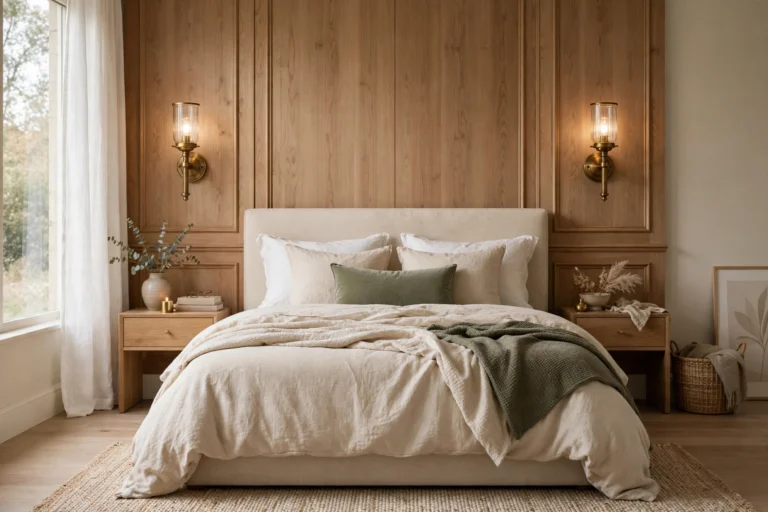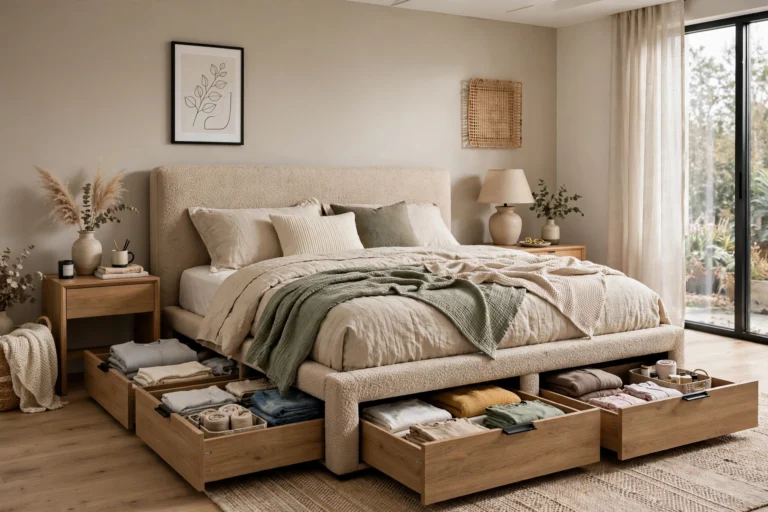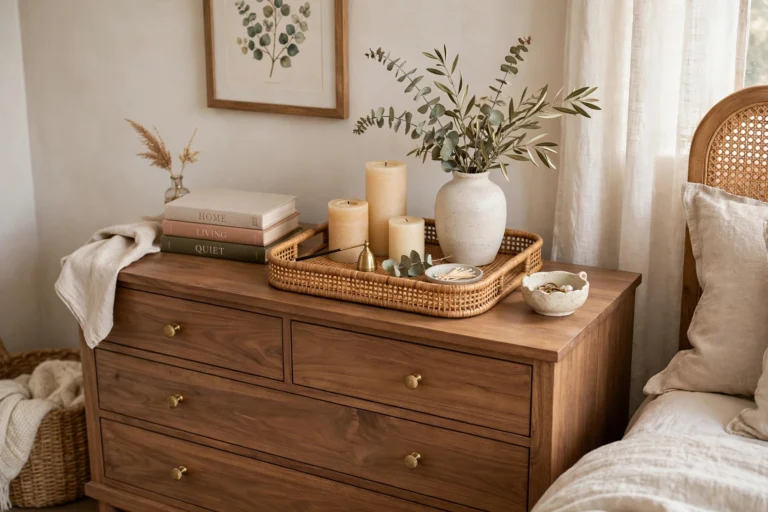

Some styles shout; traditional style speaks in a confident, well-modulated voice. It is the bedroom of four-poster beds and Persian rugs, of crown molding and toile curtains, of furniture built to be inherited rather than replaced. While trends cycle through every few years, traditional design simply endures — which is exactly why it never looks dated.
These traditional bedroom design ideas show how to build a room with classic elegance that still feels fresh and livable. The formula is time-tested: quality wood furniture, layered textiles, a rich but restrained palette, symmetrical arrangements, and details borrowed from European design history. Here are fifteen ideas for a bedroom that will look as good in twenty years as it does today.
1. Anchor the Room With a Four-Poster Bed
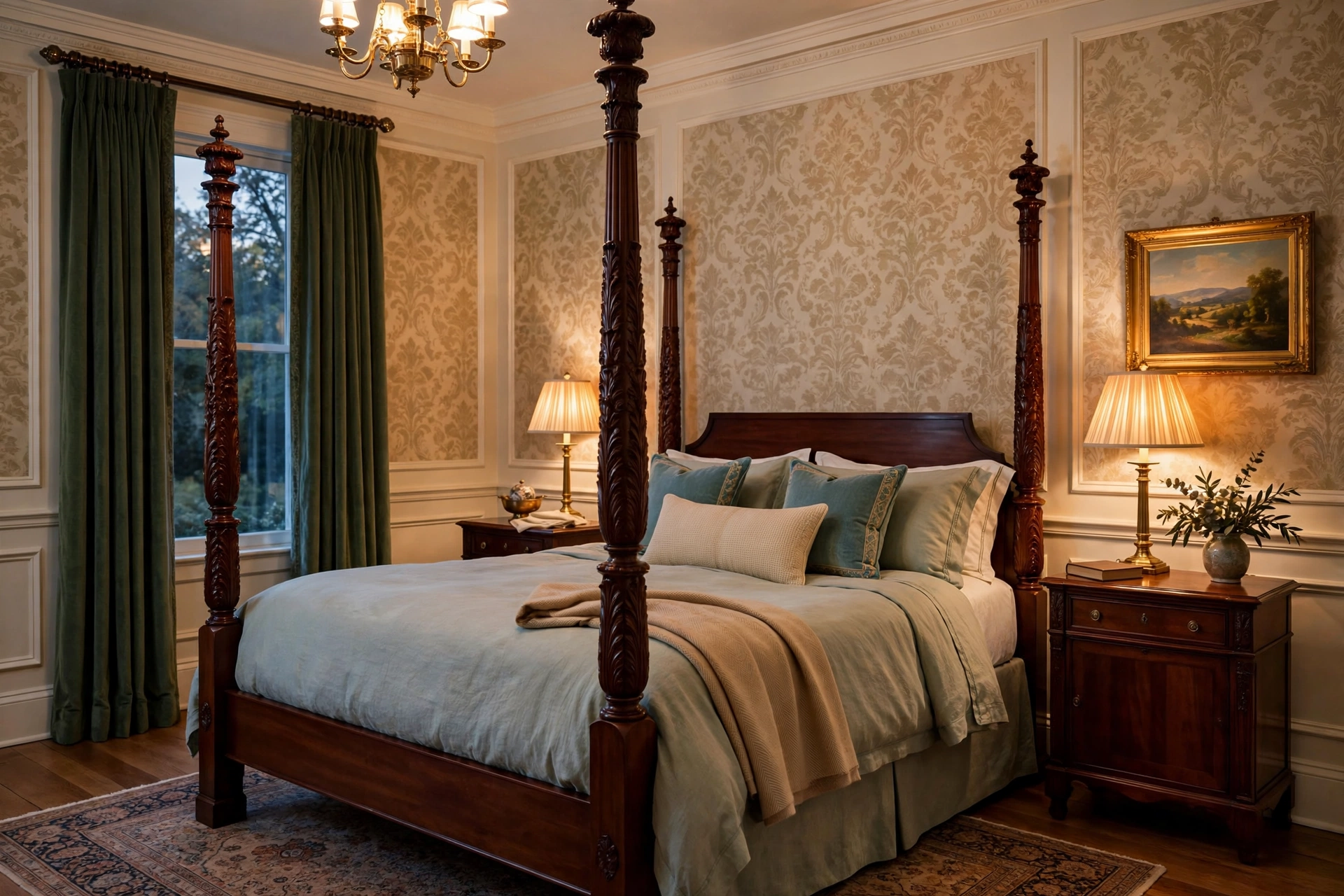
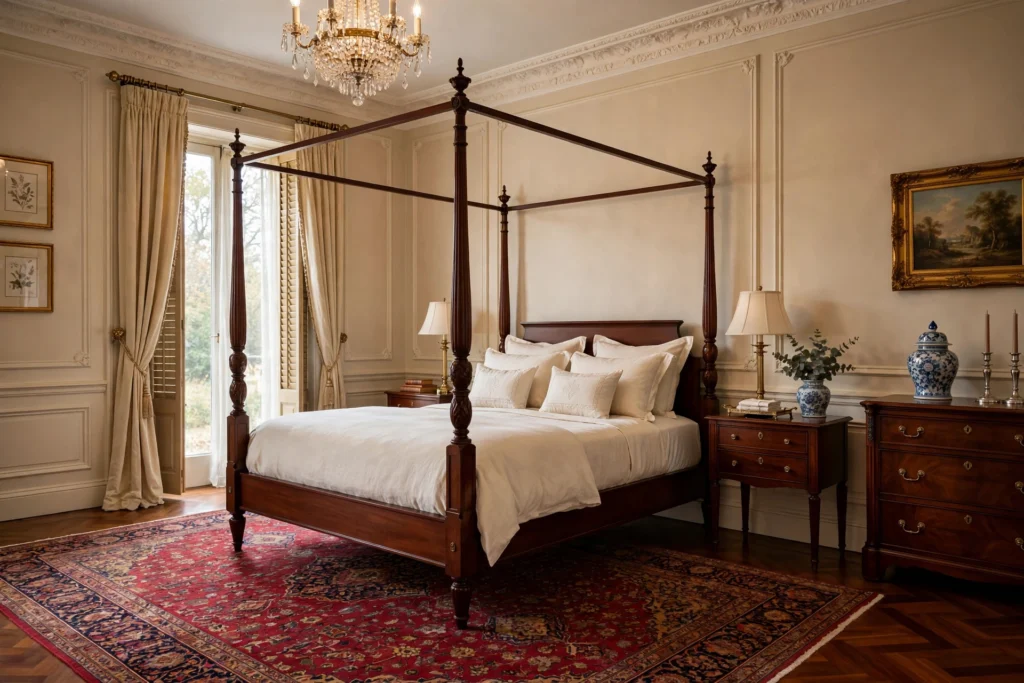
Nothing says traditional bedroom like a four-poster bed. Whether it is a stately mahogany tester, a carved cherry canopy, or a simpler pine poster bed, those four columns give the room instant architecture and gravitas. The bed becomes the room’s landmark — everything else arranges itself around it.
You don’t need a palace-sized room: in smaller spaces, choose a bed with slimmer posts and skip the canopy fabric so the frame adds height without heaviness. Dress it with a tailored bed skirt, a matelassé coverlet, and proper sleeping pillows plus Euro shams — traditional bedding is generous but never sloppy. A four-poster in a warm wood tone will outlast every trend you will ever flirt with.
2. Choose Rich, Timeless Wood Tones
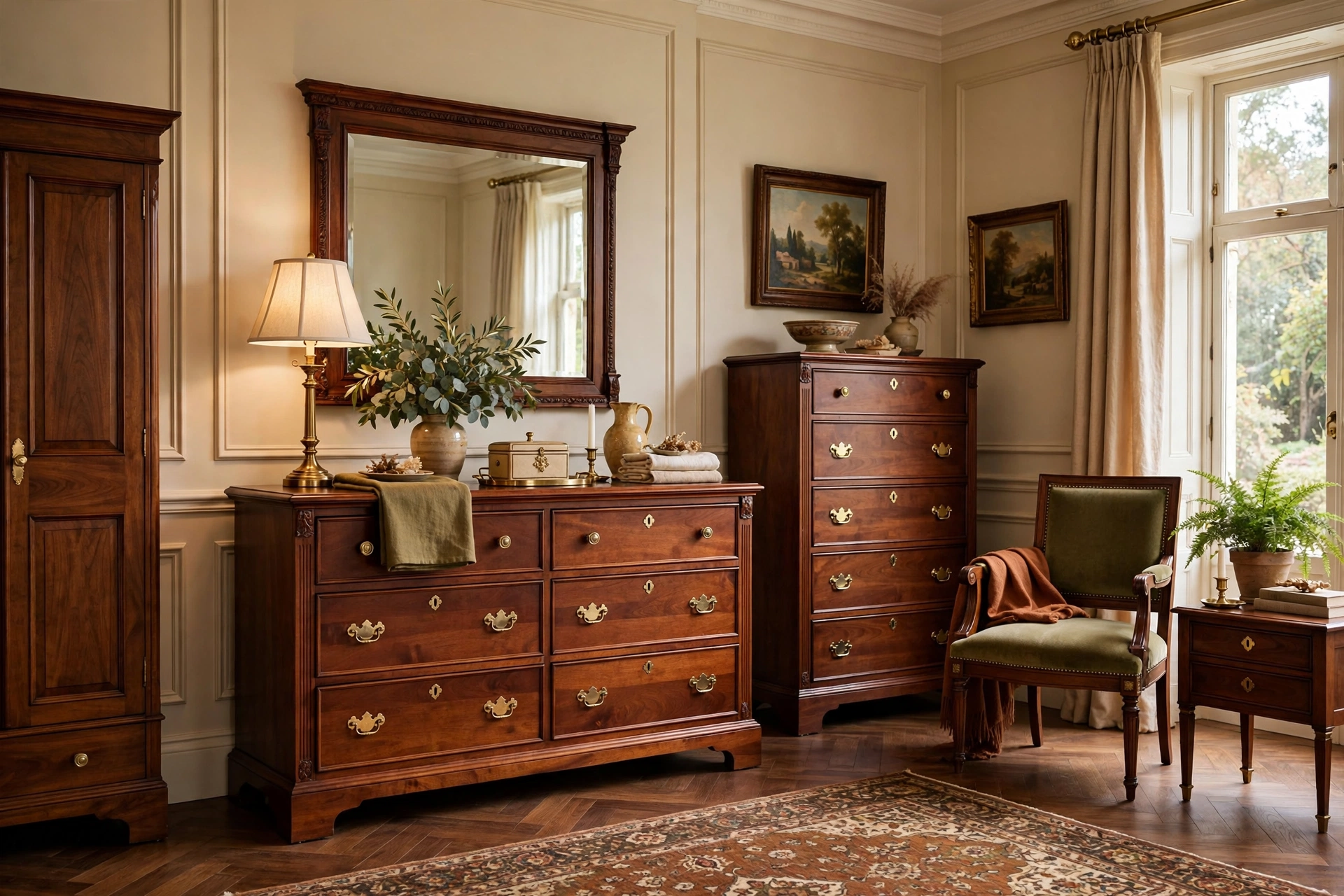
Traditional bedrooms are built on wood — mahogany, cherry, walnut, oak — with real grain and real weight. A classic dresser with dovetailed drawers, a nightstand with brass hardware, an armoire that could hold a lifetime of linens: these pieces bring the warmth and permanence that define the style.
Let the wood tones relate without matching exactly; a room where every piece is the same finish feels like a showroom set. Cherry nightstands beside a mahogany bed, an oak bench at the foot — related warmth, not identical twins. HGTV’s guide to bedroom design styles describes the traditional bedroom as grounded in European influence, with antiques, rich colors, and regal furniture anchored by a carved four-poster bed — and the wood is where that richness begins.
3. Layer Classic Textiles
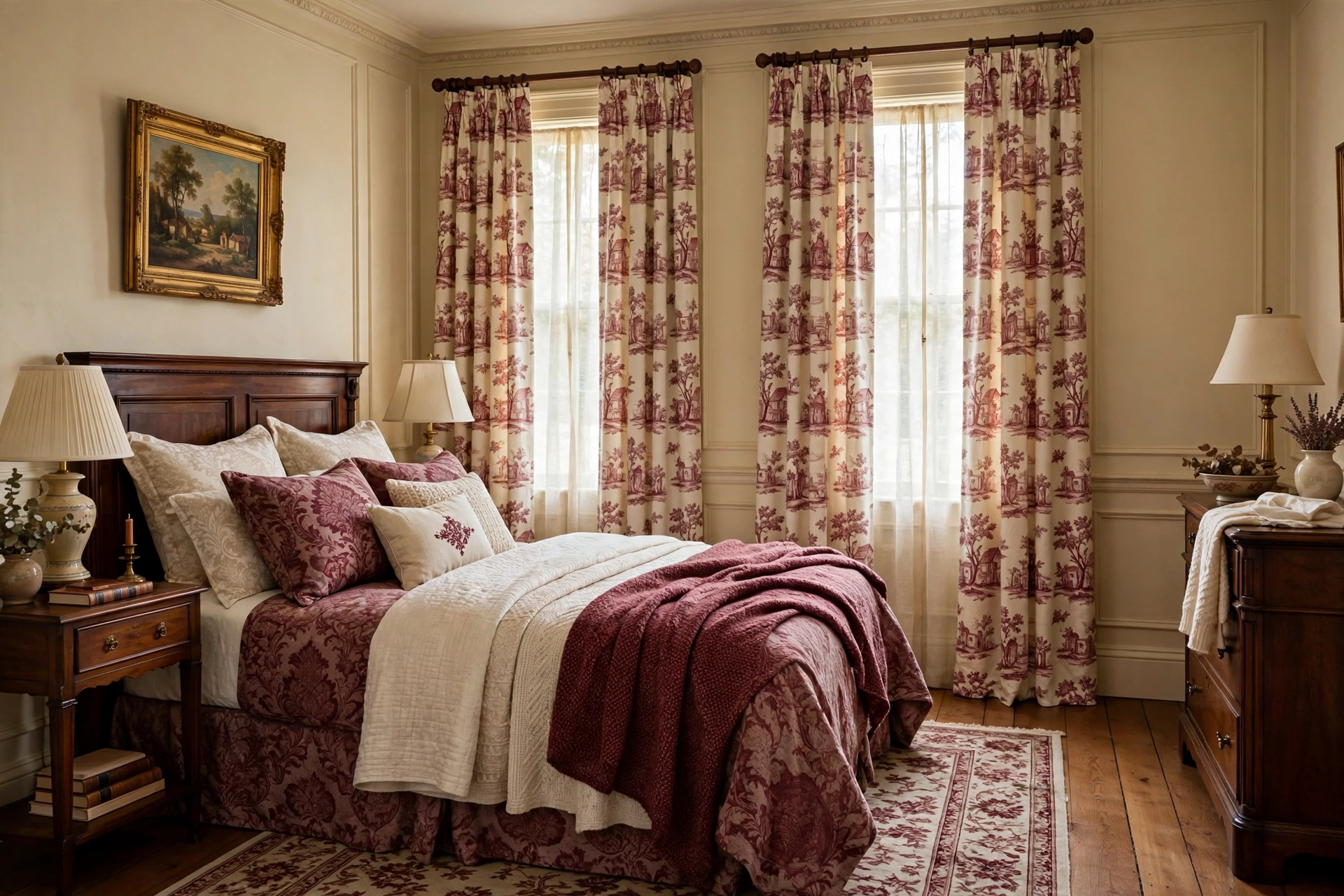
Traditional textiles have patterns with pedigrees: toile de Jouy, damask, chinoiserie, subtle stripes, and small florals. Layer them the classic way — curtains in one pattern, bedding in a coordinating solid or smaller-scale print, throw pillows that pull colors from both. The palette stays rich but controlled: burgundy, navy, forest, gold, cream.
The rule is scale variety: one large-scale pattern (curtains or an accent wall), one medium (bedding), one small (pillows). All in the same color family. This is the opposite of matchy-matchy — it is coordinated, which is harder and looks infinitely better. Natural fibers (cotton, linen, wool, silk) keep the layers feeling luxurious rather than stiff.
4. Add Crown Molding and Wainscoting
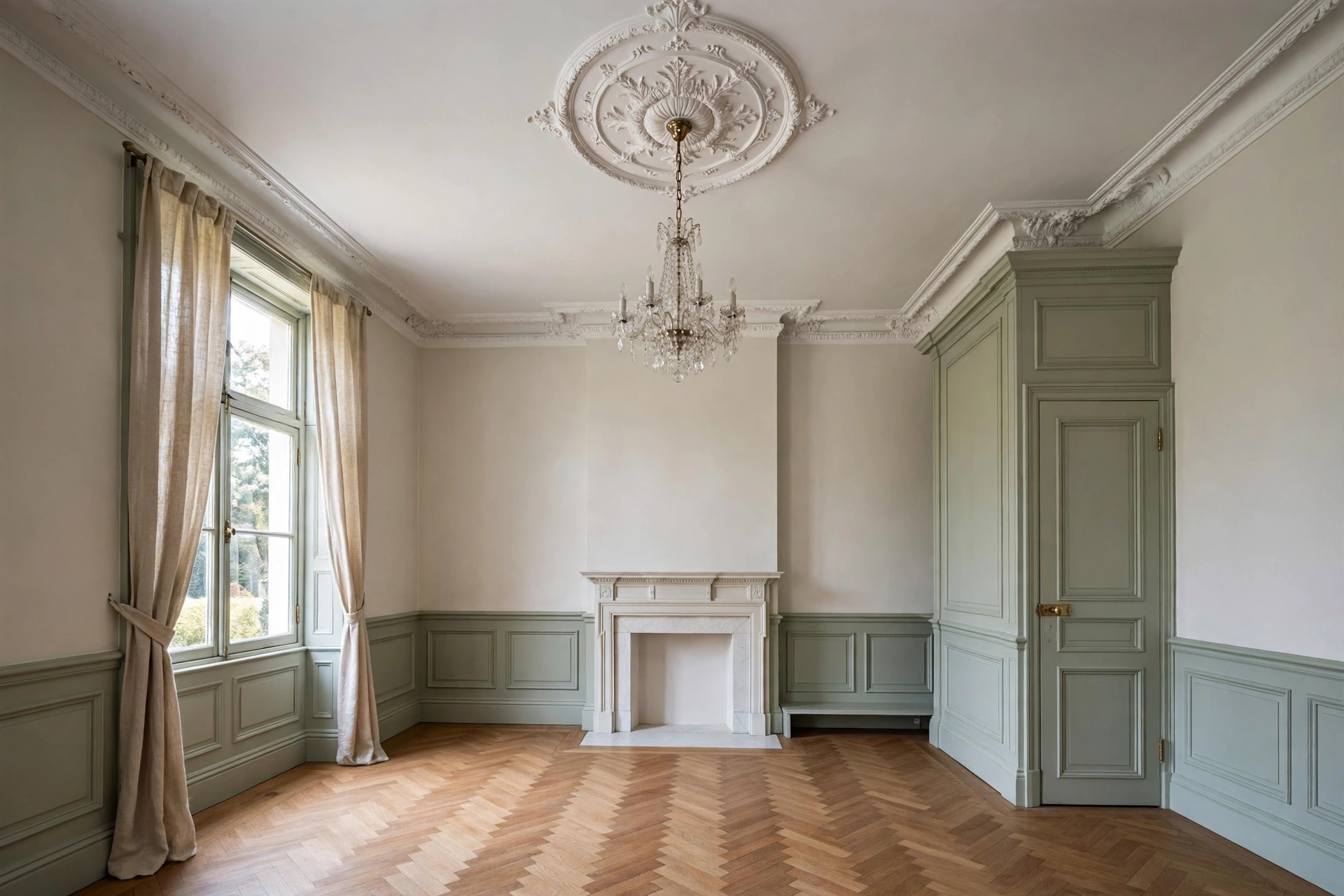
Architecture is the traditional bedroom’s secret weapon. Crown molding at the ceiling, wainscoting or chair rails on the walls, a picture rail, a ceiling medallion around the chandelier — these details make even a simple room feel established and expensive. They are the difference between a bedroom and a proper chamber.
You don’t need original plasterwork: paint-grade molding from the home-improvement store, installed with care, transforms flat drywall walls. Paint the molding the same white as the trim for a crisp look, or go bold and paint walls and molding one deep color for a cocooning, library-like feel. One weekend of trim carpentry pays off every single day.
5. Hang an Elegant Chandelier
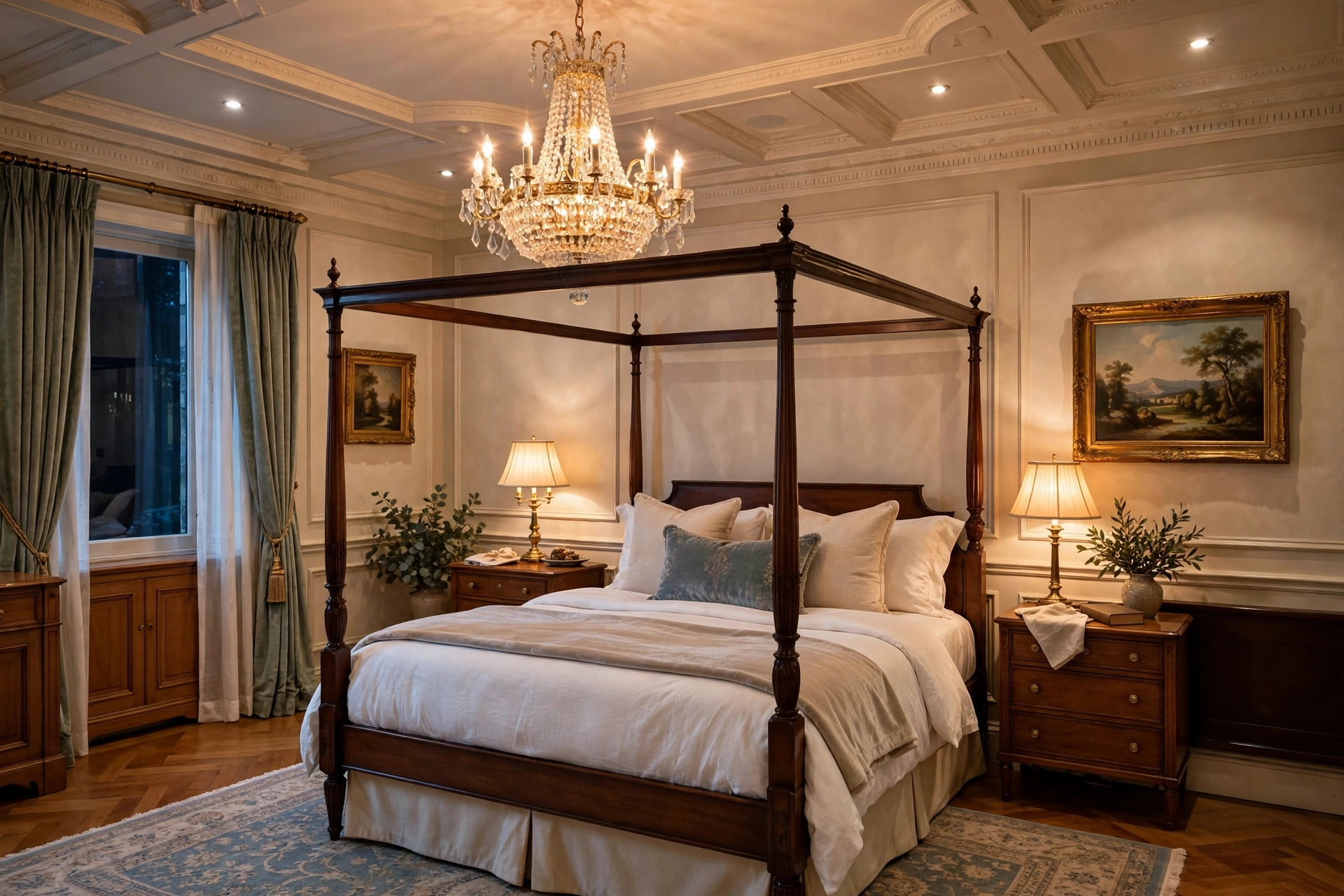
Overhead lighting in a traditional bedroom should be beautiful enough to be the room’s jewelry. A crystal chandelier, a brass candelabra-style fixture, or an alabaster pendant — scaled to the room but never apologetic — casts the warm, flattering light that traditional rooms are famous for.
Put it on a dimmer; traditional bedrooms live in layered, adjustable light. The chandelier handles the ambient glow, while table lamps with fabric shades flank the bed for reading. Keep every bulb warm (2700K or lower) — cool light flattens wood tones and makes classic fabrics look harsh. A medallion on the ceiling around the fixture is the traditional finishing touch.
6. Embrace Symmetry
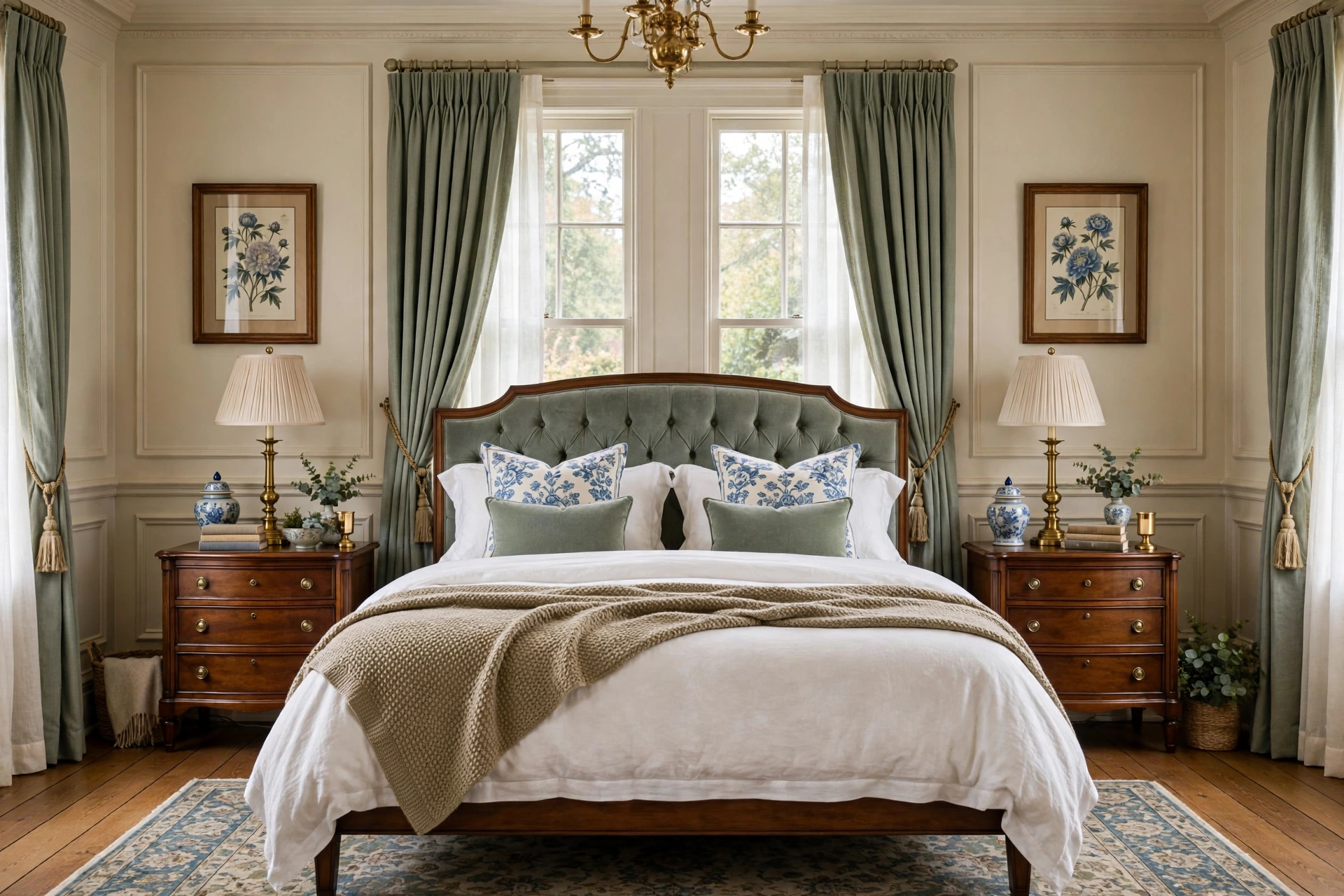
Symmetry is the organizing principle of traditional design: matching nightstands with matching lamps, a centered bed with balanced art above it, pairs of chairs flanking a window. The symmetry creates the calm, orderly feeling that makes traditional bedrooms so restful.
You don’t have to be rigid — perfect symmetry on the big pieces with a little asymmetry in the styling (different books on each nightstand, one plant on one side) keeps it from feeling like a hotel. But the bones should mirror: bed centered, nightstands matched, lamps paired. When in doubt, buy two. Our French provincial bedroom design ideas show the same European symmetry applied with a lighter, more romantic hand.
7. Lay Down a Persian or Oriental Rug
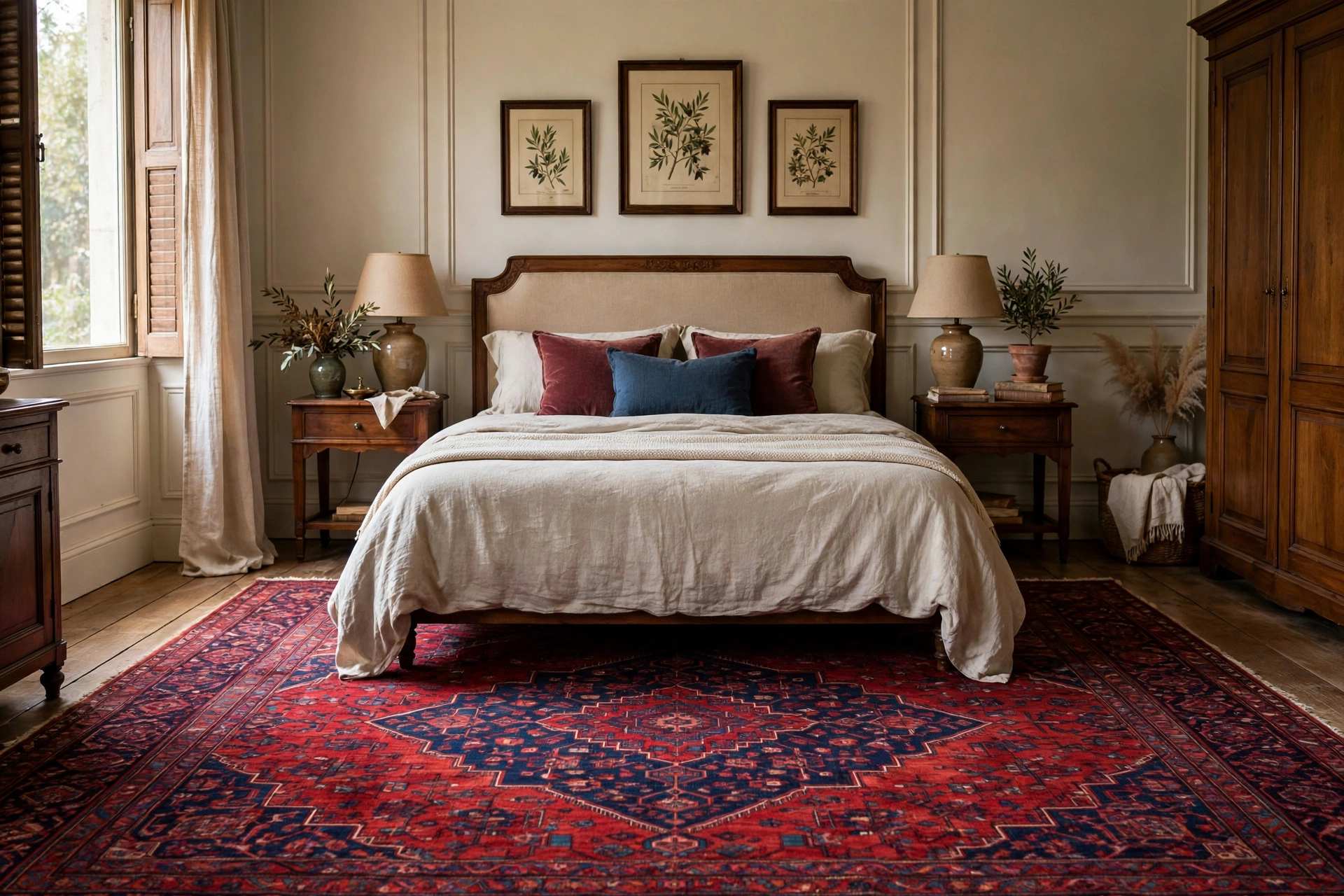
A Persian or oriental rug is the traditional bedroom’s foundation — literally and stylistically. The rich reds, indigos, and creams of a hand-knotted rug set the room’s entire palette and add the pattern and history that flat, modern rugs can’t. Even a good-quality reproduction delivers the look.
Size it generously: the rug should extend at least 24 inches beyond the bed on each side and reach toward the foot, so the room feels anchored. In a small bedroom, a runner on each side of the bed gives the same effect. Let the rug’s colors guide your textile choices — pull two or three shades from it for curtains and bedding, and the room composes itself.
8. Dress the Windows Properly
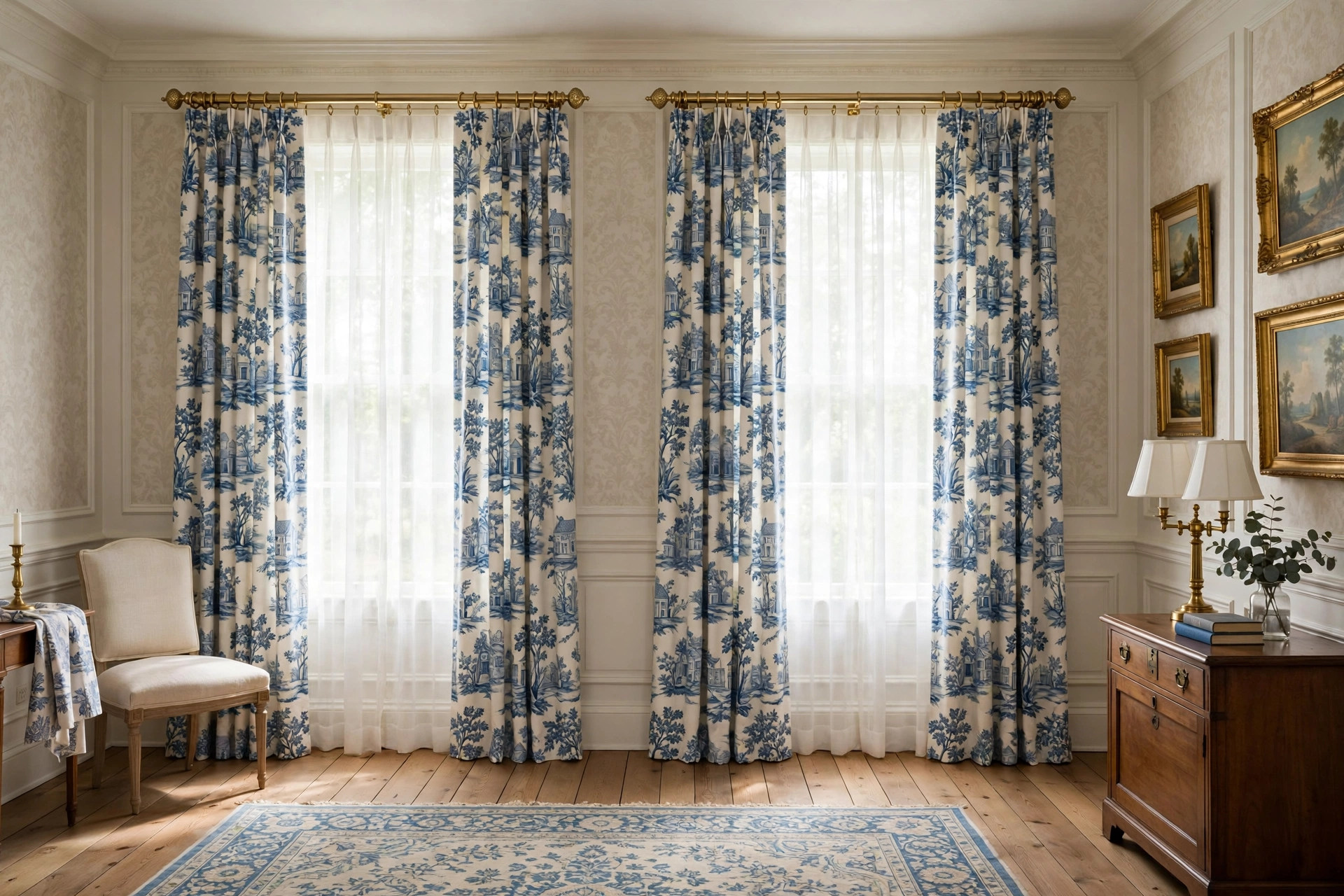
Traditional windows are dressed, not decorated: full-length curtains in a classic fabric, hung high and wide, pooling just slightly or breaking at the floor. Add sheers underneath for daytime privacy, and consider a valance or cornice board for the full period effect. Curtain hardware should be substantial — wood or brass rods with real finials.
The fabric matters as much as the cut: linen, silk, or a good cotton in toile, stripe, or damask. Avoid anything too sheer or too skimpy — traditional curtains have presence and weight. In a bedroom, lined curtains also do the practical work of blocking morning light, so beauty and function arrive together.
9. Add an Upholstered Bench or Settee
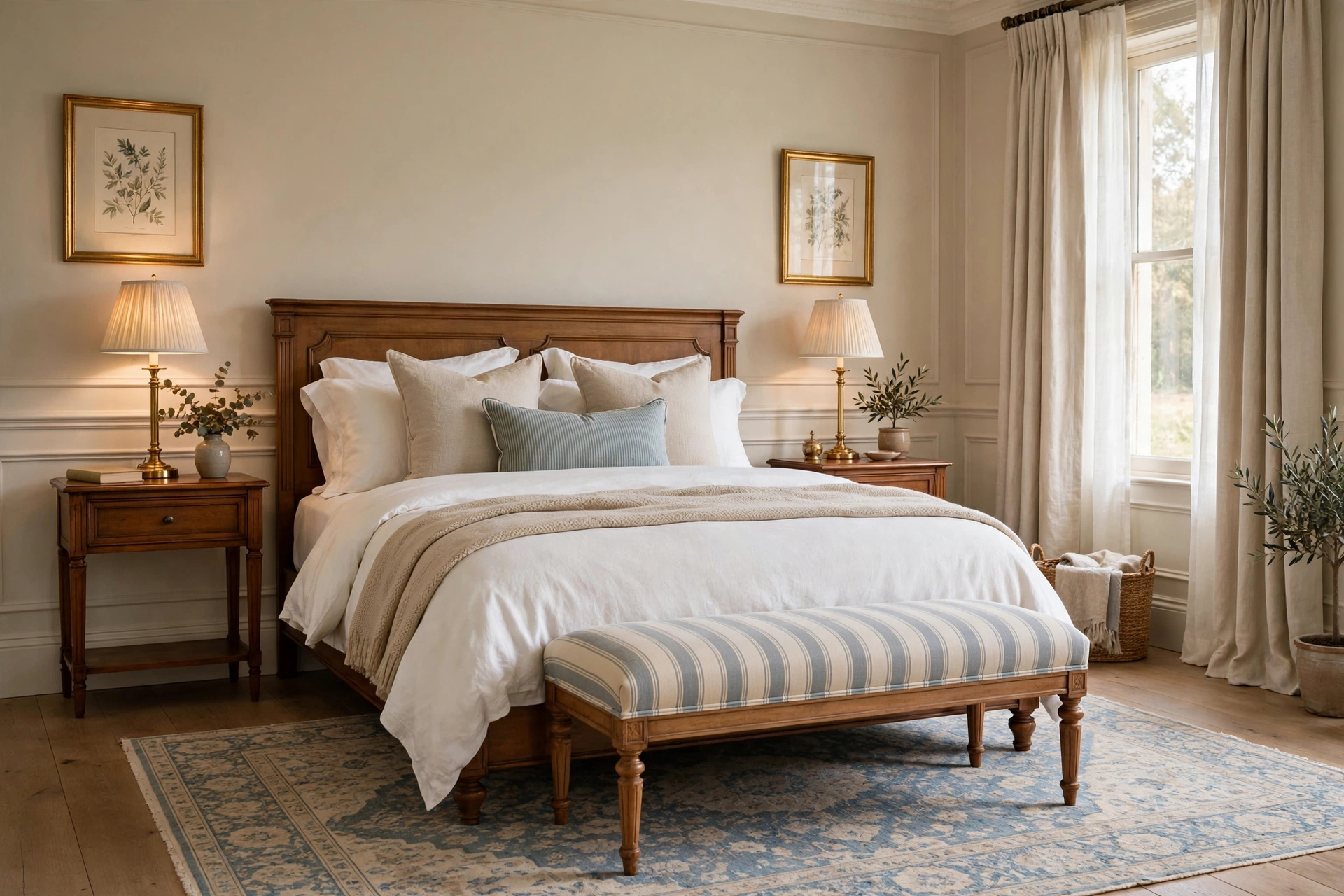
A bench at the foot of the bed is a classic traditional gesture — useful for laying out tomorrow’s clothes, sitting to put on shoes, and finishing the bed’s composition. Choose one upholstered in a classic fabric (a subtle stripe, a small damask, or a solid linen) with turned wood legs that echo the room’s furniture.
A small settee or a pair of slipper chairs in the corner creates a sitting area that makes the bedroom feel like a true retreat rather than just a place to sleep. Keep the upholstery tailored — skirts, tufting, and nailhead trim are all traditional vocabulary. This is the furniture that makes guests say the room feels “finished.”
10. Display Antiques and Heirlooms
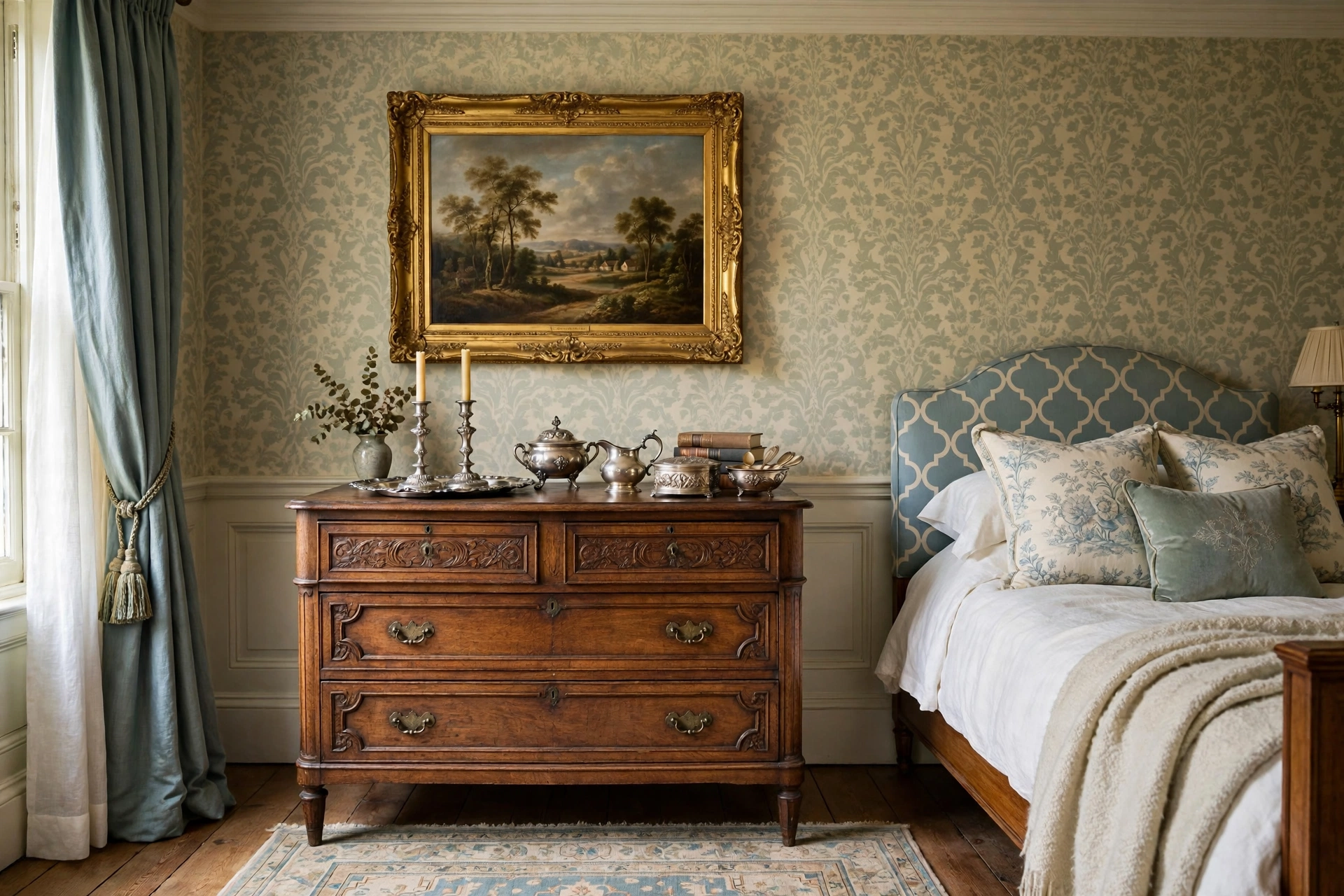
Traditional style is the natural home for antiques: a grandmother’s dresser, a flea-market oil painting in a gilt frame, a silver tray on the nightstand, a porcelain lamp with real age to it. These pieces bring the patina and story that new furniture can’t fake.
Mix one or two genuine antiques with good-quality new pieces — the antiques add soul, the new pieces keep the room feeling fresh rather than like a museum. HGTV’s grandmillennial style guide makes the same case for a new generation: real wood furniture, vintage finds, and pieces built to last are what give a traditional-leaning room its heart. Hunt estate sales and salvage shops; the best traditional rooms are assembled over time.
11. Choose a Classic Color Palette
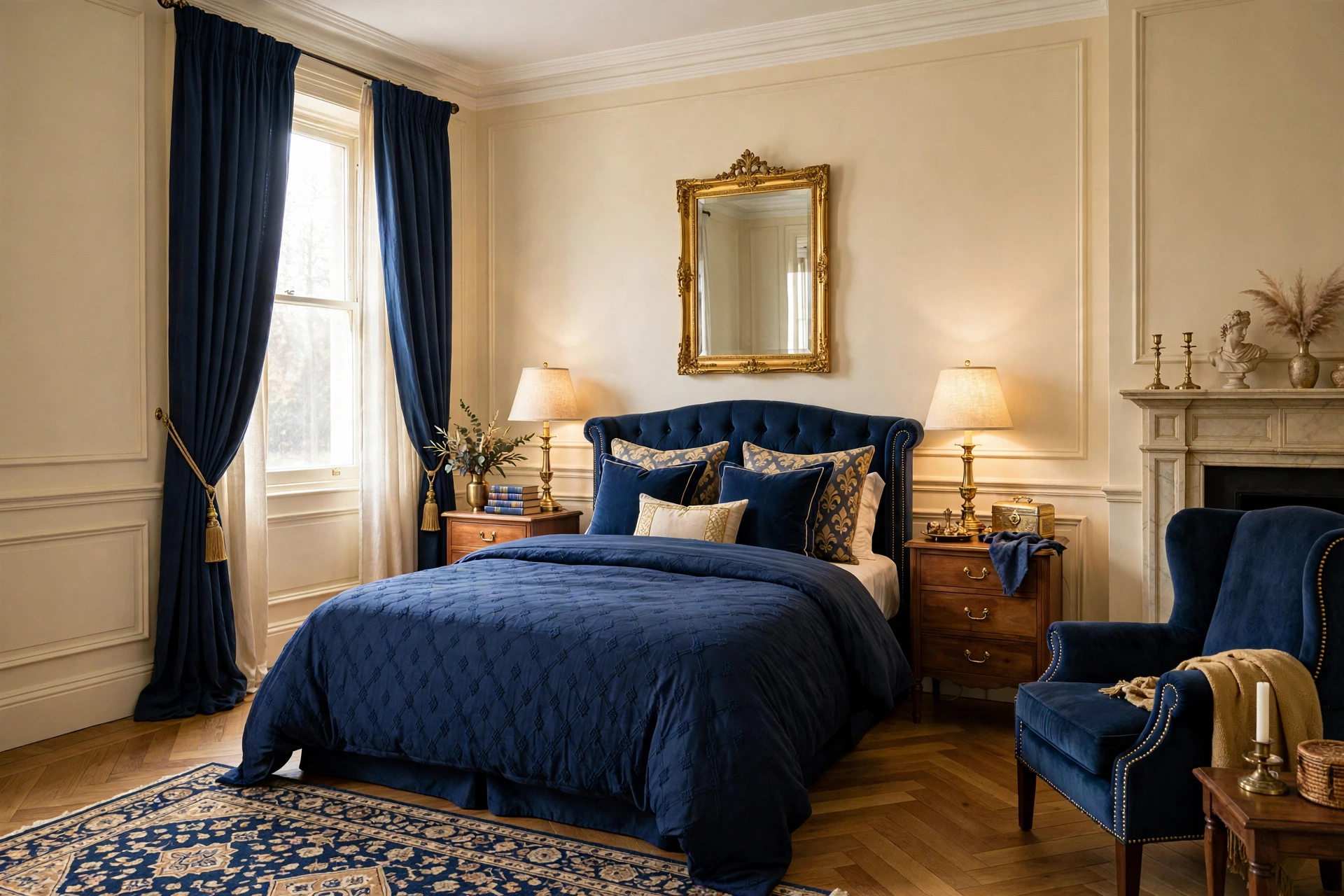
Traditional color is rich but never loud: warm whites and creams, soft sage, dusty blue, burgundy, forest green, navy, and gold. These are colors with history — they appear in centuries of European interiors because they flatter wood, fabric, and skin alike. Pick a base (usually a warm neutral), one deep accent, and one metallic.
Avoid the trendy and the neon; traditional palettes are the opposite of disposable. If you want the room to feel lighter, lean on the creams and soft blues; for drama, go deep with navy or forest on an accent wall. The palette should feel like it could have existed a hundred years ago — because the best versions did.
12. Add Tailored Bedding With Details
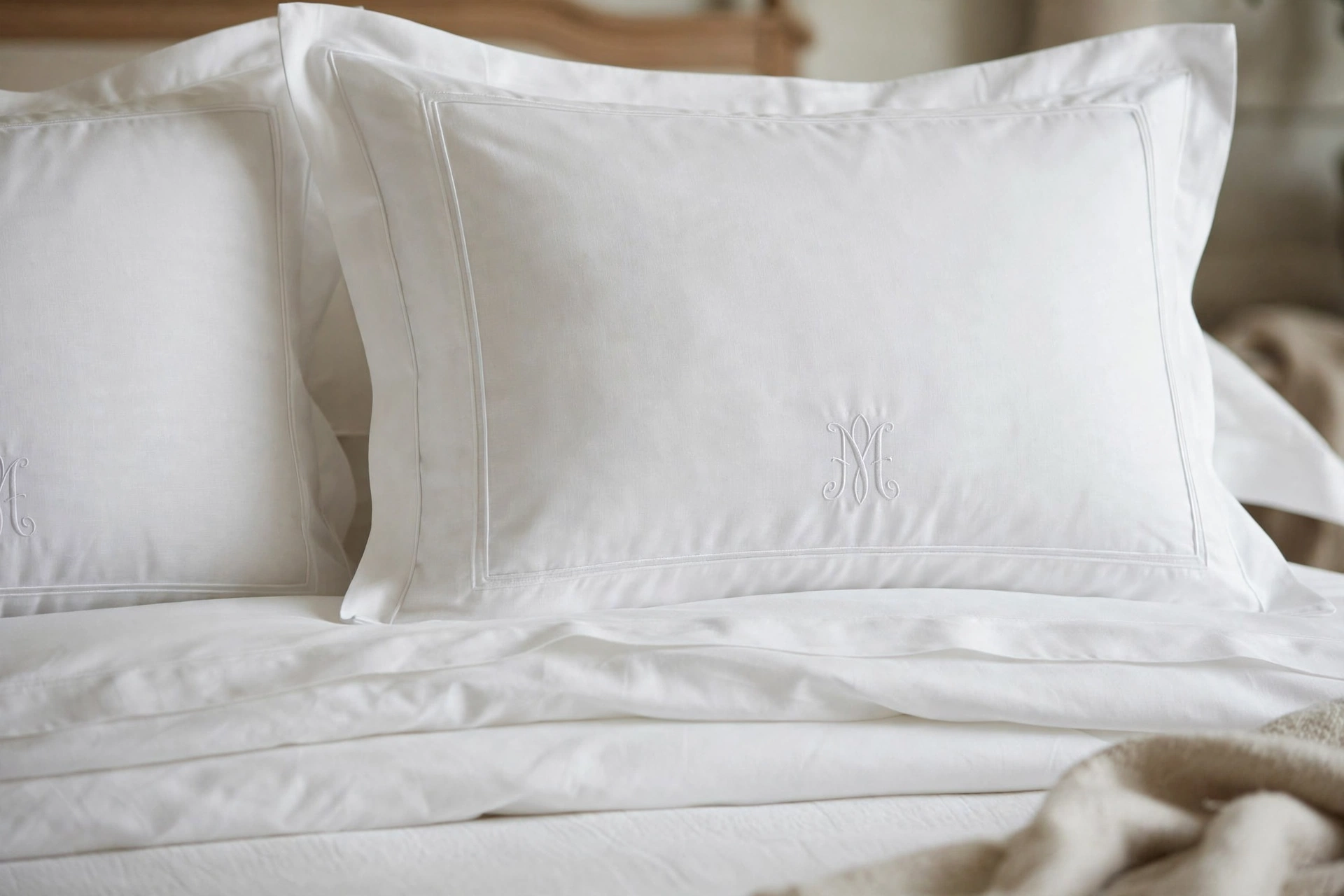
Traditional bedding is all about the details: a tailored bed skirt (not a ruffled one — this is classic, not cottage), a coverlet or duvet in a refined fabric, sleeping pillows plus Euro shams in back, and a lumbar or boudoir pillow in front. Piping, monograms, and subtle embroidery are the traditional finishing vocabulary.
Keep the palette coordinated with the room: pull the bedding colors from the rug and curtains. White or ivory sheets are non-negotiable in a traditional bedroom — they are the crisp foundation everything else sits on. Iron the pillowcases if you want the full effect; in a traditional room, those small disciplines are visible and they matter.
13. Include a Proper Reading Chair
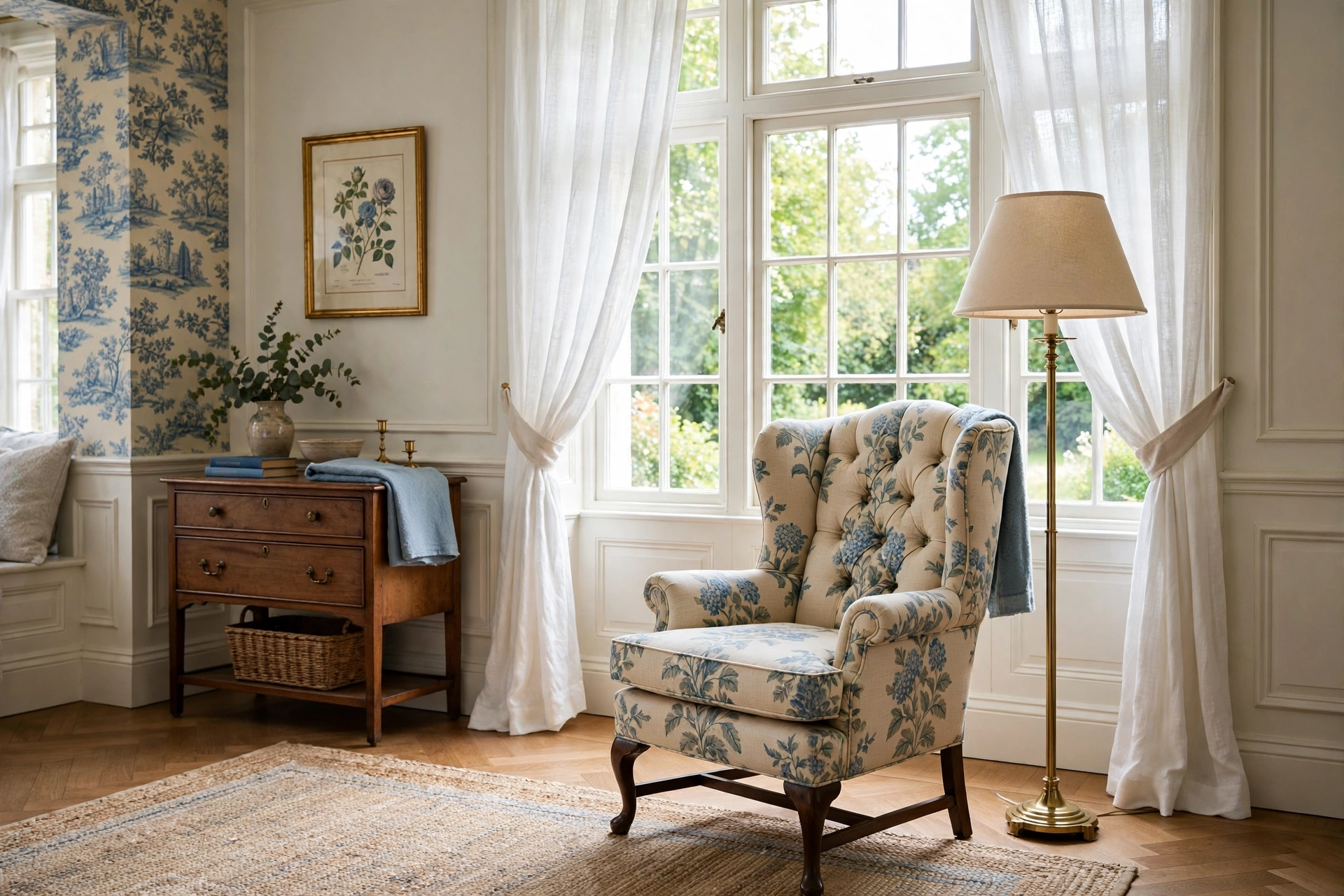
A traditional bedroom deserves a proper place to sit that isn’t the bed: a wingback chair, a bergère, or a club chair in leather or a classic fabric, paired with a small side table and a good reading lamp. Tuck it by the window or in a corner, and the bedroom gains a second life as a private retreat.
The chair should be comfortable enough for an hour with a book — deep seat, supportive back, arms at the right height. A floor lamp with a fabric shade beside it completes the setup. Drape a throw over the arm; even the most formal traditional room benefits from one soft, inviting gesture.
14. Hang Framed Art With History
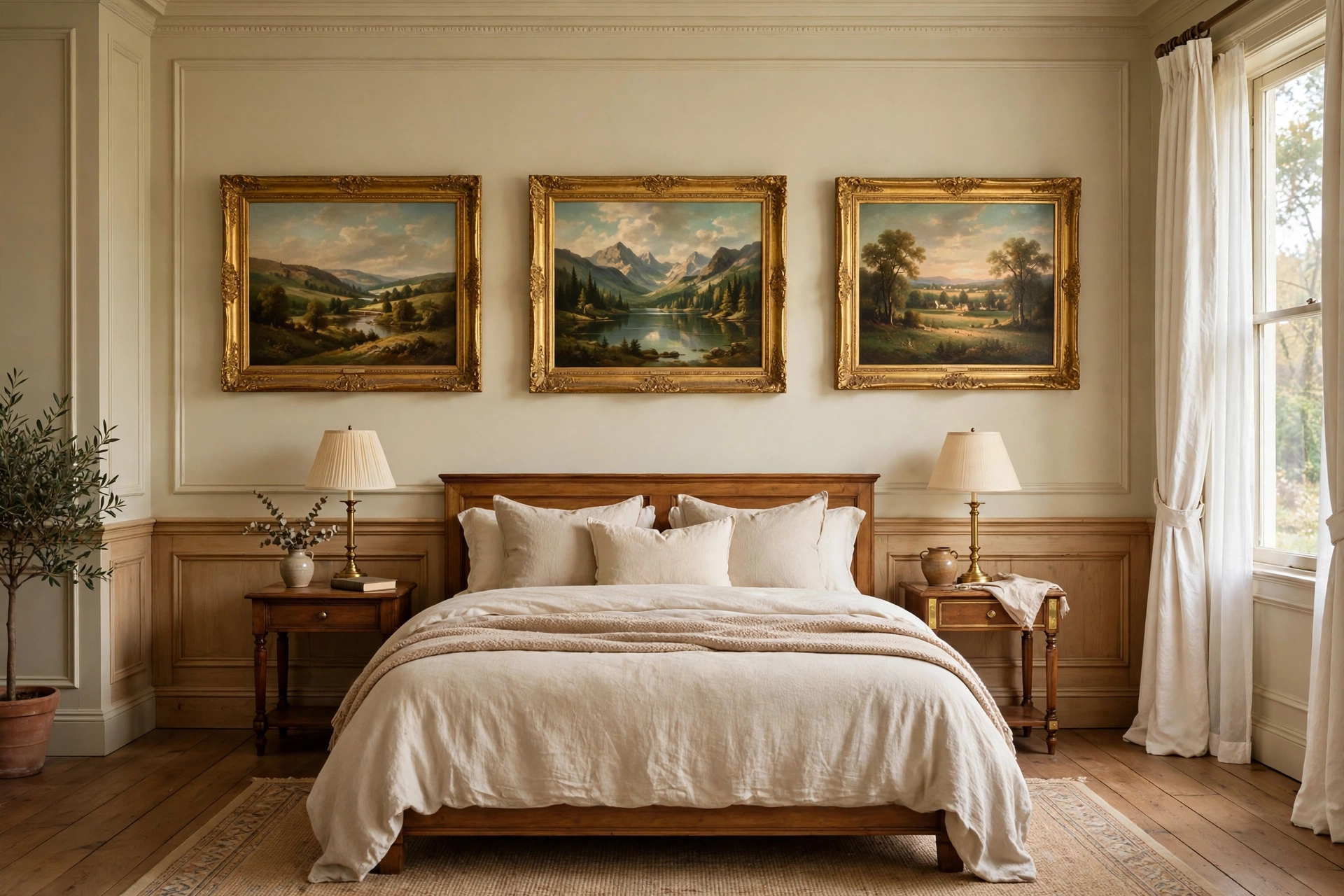
Traditional walls wear art with age and weight: oil landscapes, botanical engravings, portraits, architectural prints — framed in wood or gilt, hung with intention. A large piece over the bed or dresser anchors the room; smaller pieces can flank windows or fill a hallway wall.
Group frames thoughtfully: symmetrical pairs flanking the bed, or a salon-style arrangement over the dresser with consistent spacing. The frames matter as much as the art — gilt, dark wood, or black with gold inner trim all speak the traditional language. Avoid anything too small or too sparse on the walls; traditional rooms like their walls dressed as fully as their windows.
15. Finish With Fresh Flowers and Silver
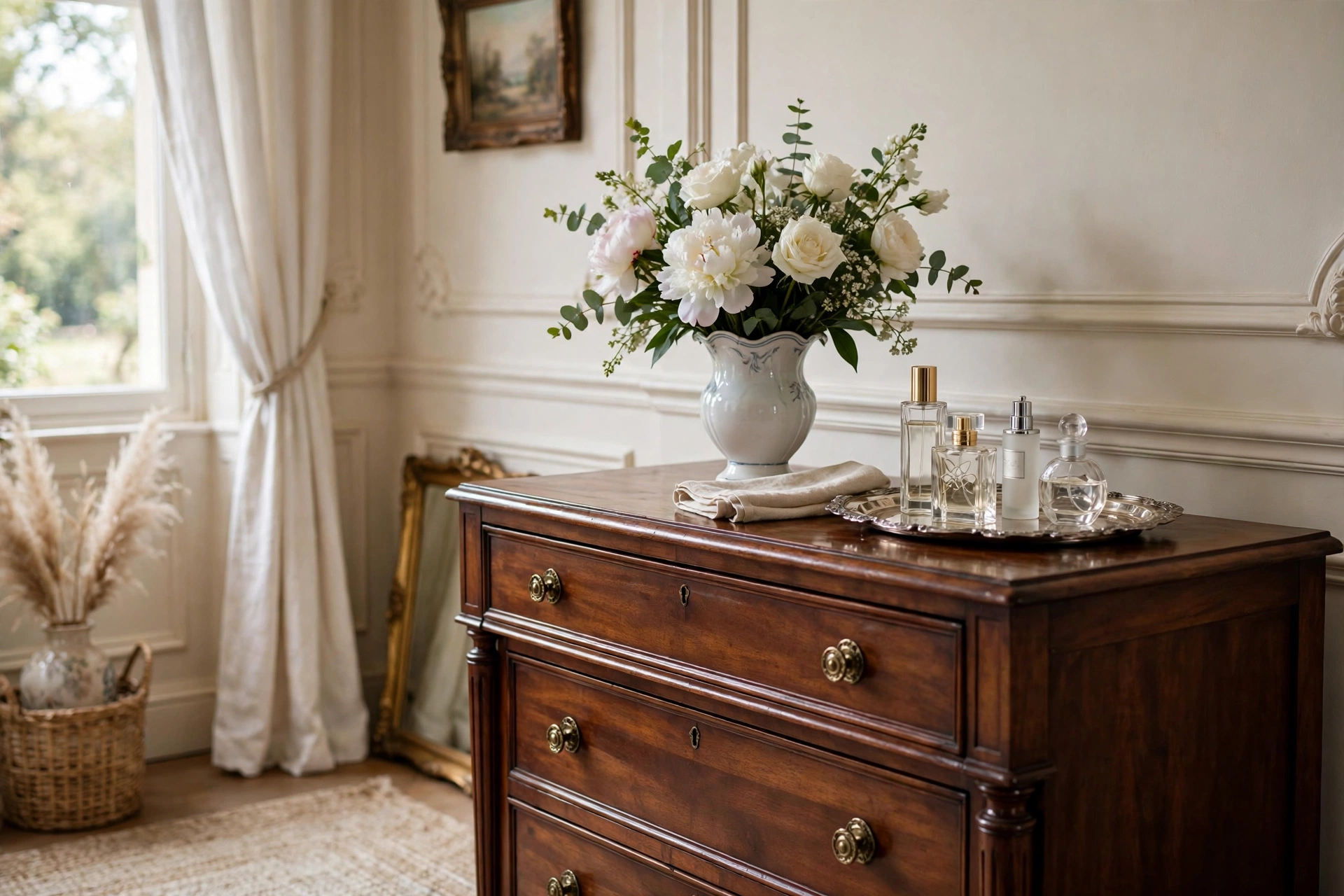
The final layer of a traditional bedroom is the living one: fresh flowers on the dresser or nightstand, a silver tray holding perfume bottles, a small dish for jewelry. These are the details that make the room feel cared for rather than merely decorated.
Keep it simple and consistent: one arrangement, refreshed weekly, in a classic vase. Silver — a tray, candlesticks, a small bowl — adds the quiet gleam that traditional rooms love. For a warmer, more rustic take on classic comfort, our farmhouse bedroom design ideas show how the same attention to detail works in a more relaxed register.
Frequently Asked Questions
What defines a traditional bedroom?
Classic wood furniture (four-poster beds, dressers with dovetail drawers), symmetrical arrangements, rich textiles with historic patterns (toile, damask, chinoiserie), a warm restrained palette, crown molding and wainscoting, Persian rugs, and elegant layered lighting. It should feel established and timeless.
How do I keep a traditional bedroom from looking dated or stuffy?
Edit and lighten: leave breathing room on surfaces, mix in one or two contemporary pieces (a clean-lined bench, modern art in a classic frame), keep the palette fresh with plenty of cream and white, and avoid over-accessorizing. Traditional should feel curated, not crowded.
Can I mix traditional with modern furniture?
Absolutely — the mix keeps traditional fresh. Let traditional pieces lead (the bed, the dresser) and add modern in quiet supporting roles: a simple upholstered bench, clean-lined lamps, abstract art. Shared materials and a consistent palette bridge the eras.
What is the best color for a traditional bedroom?
Warm neutrals (cream, ivory, soft beige) as the base, with deep accents like navy, burgundy, forest green, or chocolate. These combinations have centuries of precedent because they flatter wood tones and look good in both daylight and lamplight.
Where can I find affordable traditional furniture?
Estate sales, flea markets, antique malls, and secondhand marketplaces are the best sources — traditional furniture was built to last, so vintage pieces are often better made than new ones at the same price. Look for dovetail joints, solid wood, and original hardware; finish can always be refreshed.
Keep Exploring
A traditional bedroom is a promise of permanence in a disposable world — furniture with weight, colors with history, and details that reward a second look. Start with the bed and the rug, build the symmetry, and let the room accumulate its character the traditional way: slowly and well.
For a European take on classic elegance, our Italian bedroom design ideas bring Mediterranean warmth to the traditional vocabulary. And for bedroom inspiration across every style, explore our bedroom decor ideas — because timeless is always in fashion.