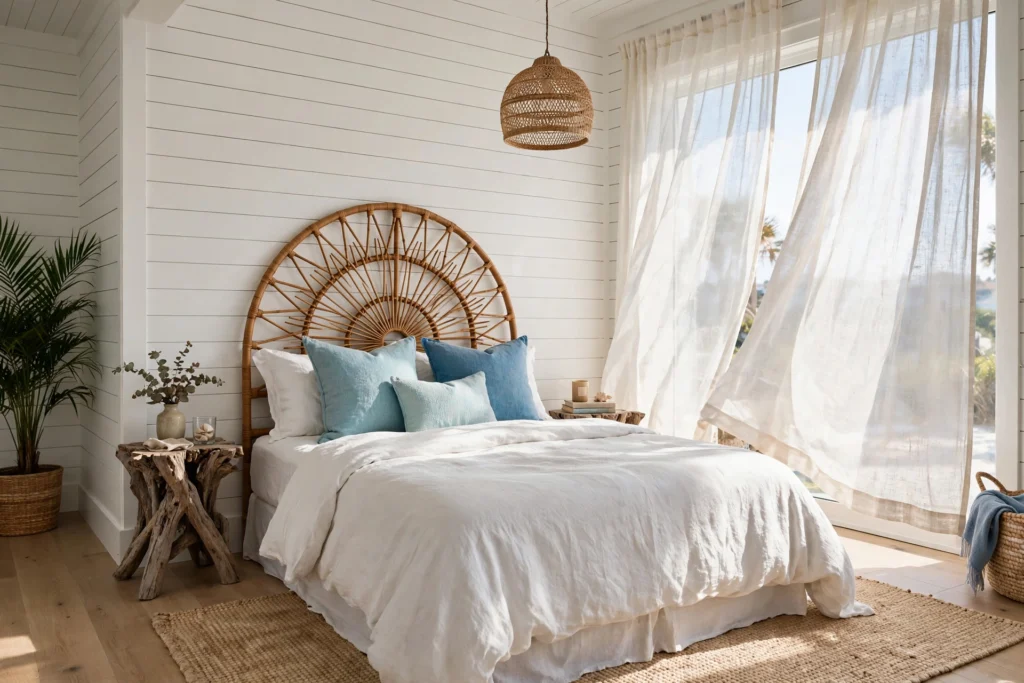

There is a reason the best coastal bedrooms feel like a deep breath. They borrow their palette from the shoreline — pale sand, soft white, and the easy blues of shallow water — and let natural textures do the decorating. A coastal bedroom is not about filling a room with shells and striped everything; it is about restraint, light, and materials that feel good to touch.
These 15 coastal bedroom design ideas work whether you live three streets from the ocean or three hundred miles inland. They layer paint, fabric, and woven texture so your bedroom feels like the calmest room in the house, every single day of the year.
1. Start With Crisp White Walls
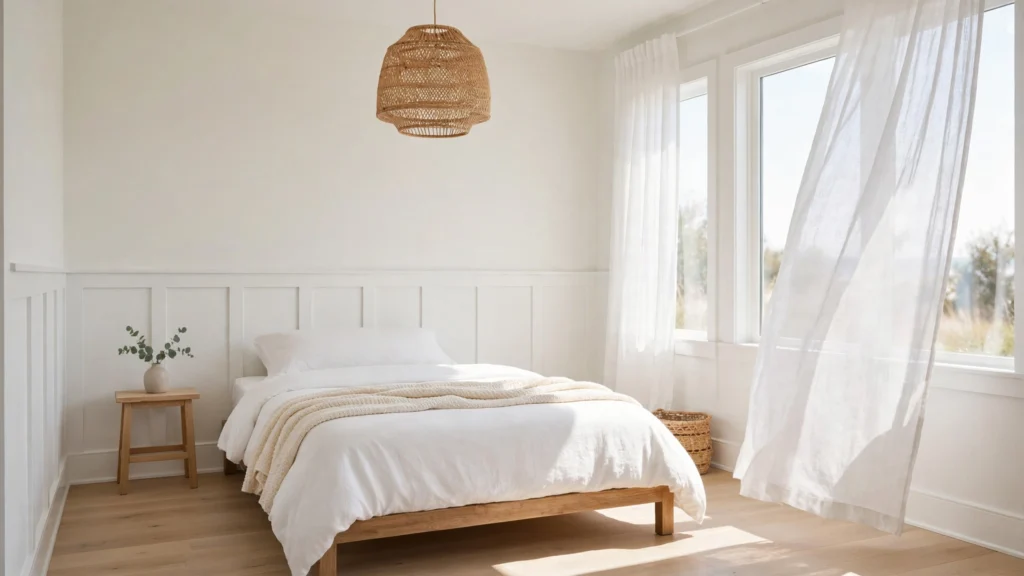
White walls are the foundation of every believable coastal bedroom. They bounce daylight around the room, make ceilings feel higher, and give every other color room to breathe. Choose a warm white rather than a clinical one — a shade with the faintest cream undertone keeps the room feeling soft instead of stark, especially in north-facing rooms that get cooler light.
The finish matters as much as the color. Use a matte or eggshell on the walls so the surface looks velvety rather than glossy, and reserve a semi-gloss for trim and doors so they pop in contrast. If pure white feels flat to you, add architectural interest instead of a second color: board-and-batten, vertical shiplap, or simple picture-frame molding painted the same white adds depth while keeping the palette effortless.
2. Anchor the Room With a Sea-Blue Accent Wall
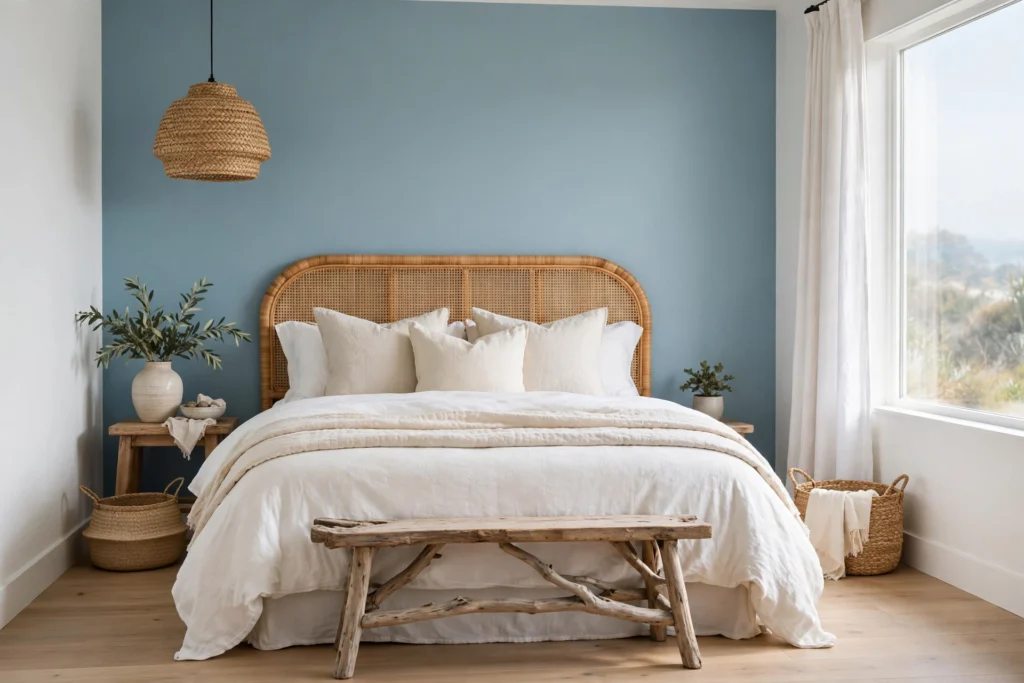
One wall in a soft sea blue gives a coastal bedroom its anchor without overwhelming the calm. Pick a muted, grayed-out blue — think misty morning water rather than tropical lagoon — and keep the remaining walls white. The accent wall works best behind the bed, where it frames the headboard and draws the eye straight into the room when you walk in.
Test the paint before you commit. Blue shifts dramatically with light, and a color that looks serene on the swatch can turn icy on a north-facing wall. Paint a large sample board, move it around the room through the day, and look for a tone that still feels warm at dusk. Keep bedding mostly white and cream against the blue wall so the color does the talking.
3. Choose a Rattan Headboard as the Centerpiece

A rattan headboard is the single fastest way to say coastal bedroom without saying a word. The woven texture brings in the beach-house warmth that paint alone cannot deliver, and its open weave lets light pass through, which keeps even a large headboard feeling light instead of bulky. Look for a tight cane webbing or a sunburst design in a natural honey tone.
Match the scale to the bed. A headboard that sits too low gets lost behind pillows, while an oversized one can crowd a low ceiling. Aim for the top of the headboard to land roughly at the midpoint between the mattress top and the ceiling. Style it simply — two sleeping pillows and one long lumbar pillow in a natural linen — and let the weave be the decoration.
4. Add a Driftwood-Inspired Wood Finish
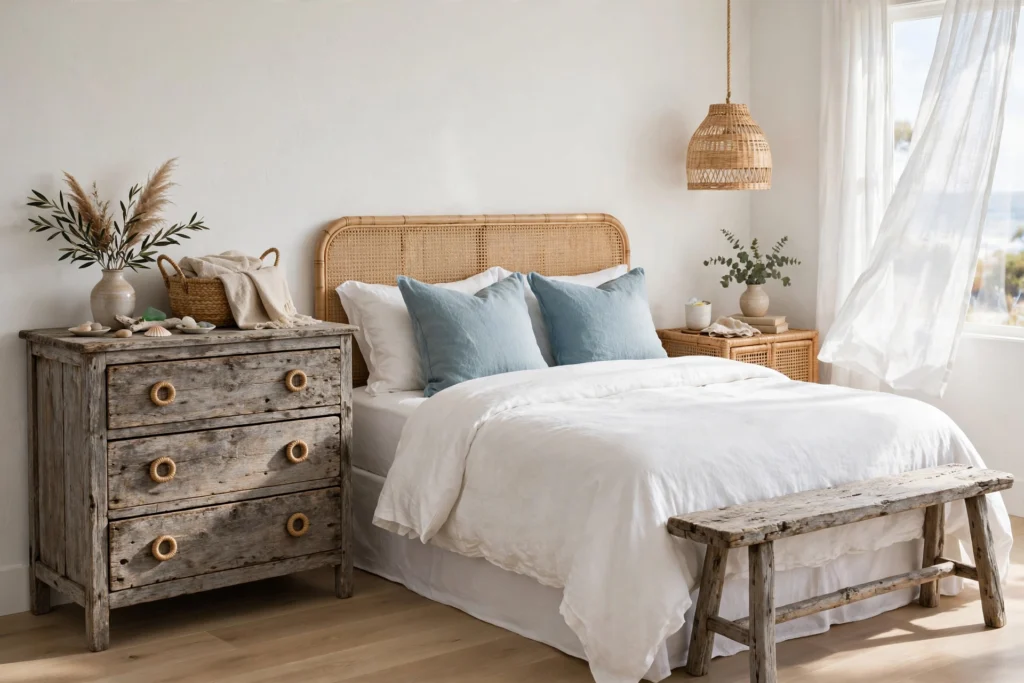
Driftwood tones bridge the gap between the room’s whites and its blues. Look for a weathered, sun-bleached wood finish on a dresser, nightstand, or bed frame — the grayish-brown wash reads instantly as found-on-the-beach rather than brand-new lumber. You can fake the effect on existing furniture with a wash of diluted gray and white chalk paint sanded back at the edges.
Balance is the trick. One or two driftwood pieces give the room its coastal credibility; a full suite turns it into a theme park. Pair a driftwood dresser with crisper white nightstands, or choose a weathered bench at the foot of the bed as the only aged piece. The contrast between worn wood and clean white is exactly what makes the look feel curated instead of kitschy.
5. Hang Sheer Linen Curtains
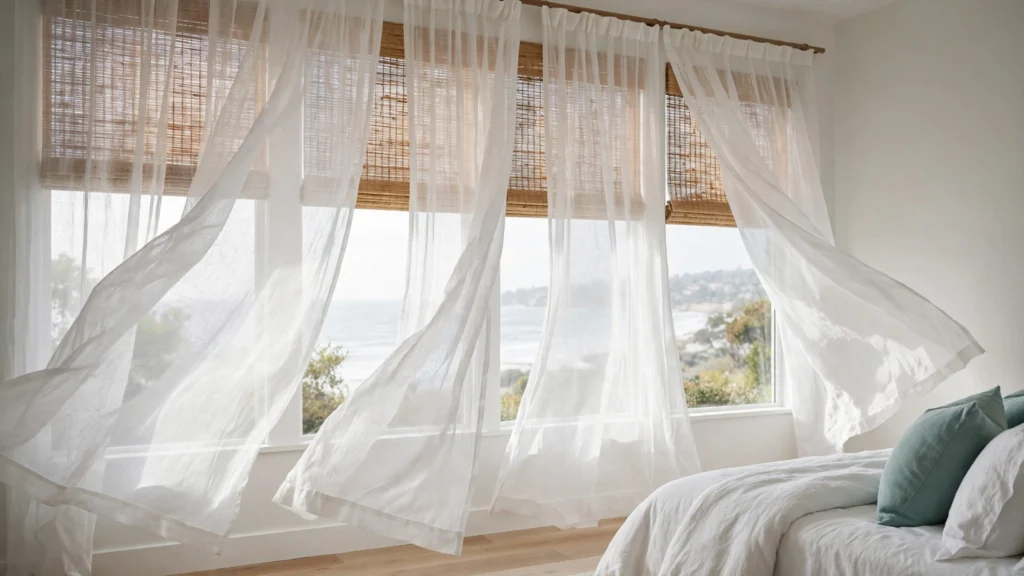
Sheer linen curtains are the coastal bedroom’s secret weapon for light. They soften harsh sunlight into a warm glow, add gentle movement when the window is open, and make a plain window feel styled without the heaviness of lined drapes. Mount the rod wide and high — at least a few inches above the frame and well beyond its sides — so the panels frame the glass instead of covering it.
Choose a natural or whitewash linen and let the panels fall to just kiss the floor. Avoid patterns here; the fabric’s nubby texture is decoration enough. For privacy, layer a simple roller shade or a Roman shade in a natural weave behind the sheers — you keep the breezy daytime look and still get a dark, restful room at night.
6. Build an Aqua and Sea-Toned Bedding Palette

Bedding is where the ocean colors live. Layer whites and creams as the base, then add aqua, seafoam, and dusty blue in the pillows and a throw. Mixing two or three tints of the same family — say, a pale aqua duvet, a deeper sea-blue lumbar pillow, and a soft teal throw — creates the depth that a single flat color cannot.
Keep the fabrics natural. Washed linen, cotton voile, and lightweight cotton quilts wrinkle beautifully and feel right against skin, which suits the relaxed coastal mood better than stiff sateen. A quilted coverlet in a tone-on-tone pattern — subtle wave quilting or a small pinstripe — adds visual interest up close while reading as solid from the doorway.
7. Lay Down a Natural Jute or Sisal Rug

A jute or sisal rug grounds a coastal bedroom the way sand grounds a beach. The coarse golden fiber warms up light wood floors and adds a layer of organic texture underfoot. Size it generously — the rug should extend at least two feet beyond the bed on both sides so you step onto softness in the morning.
Sisal wears like iron but can feel scratchy on bare feet, so choose jute if softness matters to you, or layer a smaller washable cotton rug on top for the bedside area. Stick to natural tones rather than dyed blues or greens; the rug is the neutral foundation, and the color should come from bedding and accessories where it is easier to change.
8. Flank the Bed With Wicker Nightstands
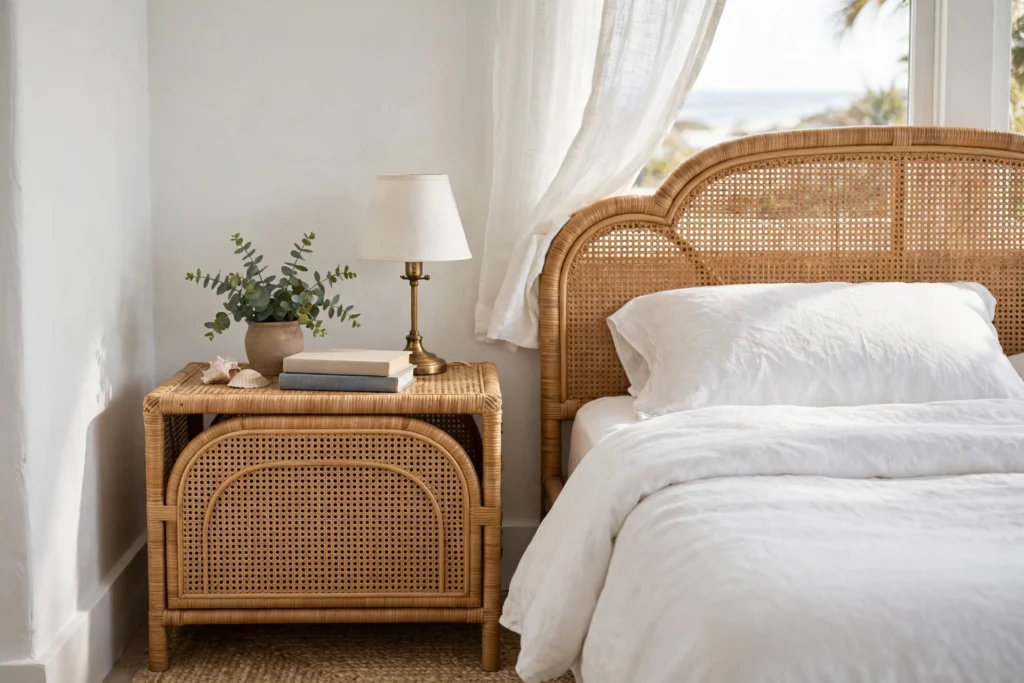
Matching wicker nightstands add symmetry and texture in one move. The woven fronts catch the light differently throughout the day, which keeps the bedside area feeling alive, and the open weave is forgiving — it hides the visual clutter of books and chargers better than a glossy painted surface.
Function first, though. Make sure the nightstands are roughly the height of the mattress top so lamps sit at a usable reading level, and check that the woven sides have a solid shelf or tray so small items do not slip through. If your room is small, choose a single larger wicker table on one side and a floating shelf on the other — the asymmetry looks intentional in a relaxed coastal room.
9. Introduce Sea-Glass Accents
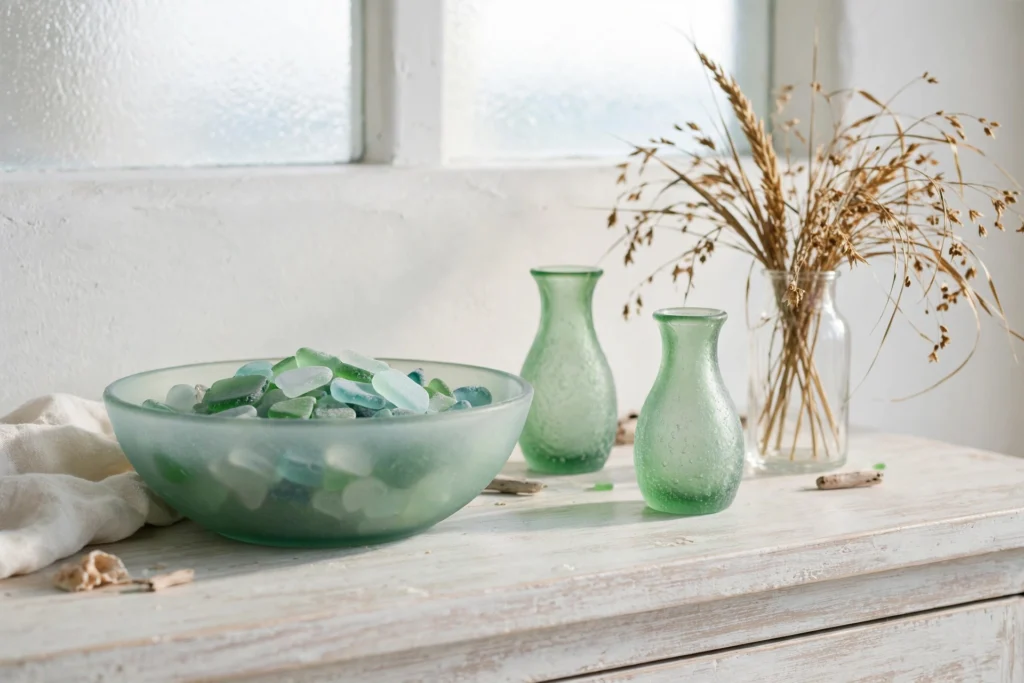
Sea glass gives you coastal color in its most delicate form. A bowl of frosted sea glass on the dresser, a pair of sea-glass-colored glass table lamps, or small vases in seafoam green add jewel-like points of interest without demanding attention. The frosted finish diffuses light beautifully, which makes these pieces glow on a sunny windowsill.
Keep the quantities small and the shapes simple. Three small pieces grouped together read as a styled moment; a dozen scattered around the room read as a collection that has taken over. Sea-glass green pairs perfectly with the blue bedding palette because it sits naturally between aqua and clear glass — it feels like a find rather than a purchase.
10. Light the Room With a Woven Pendant
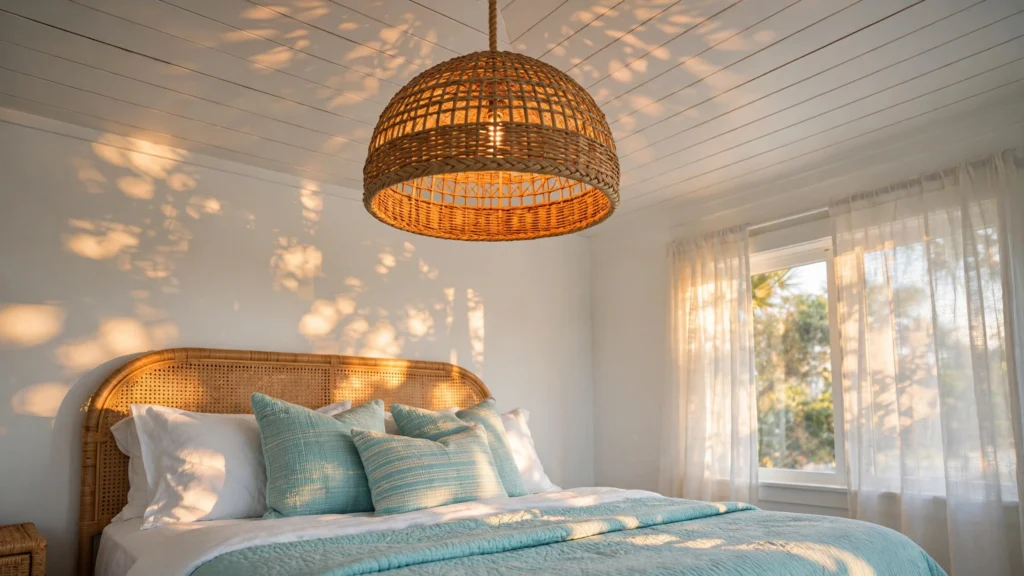
Swap the standard ceiling fixture for a woven pendant — rattan, seagrass, or jute — and the whole room shifts toward the coast. The material throws a warm, dappled light that feels like sunlight through a beach umbrella, and the open weave keeps the fixture from visually lowering the ceiling the way a solid shade would.
Scale it to the bed: the pendant should be about one-third the width of the bed and hang so its bottom sits roughly seven feet off the floor, well above head height. If the ceiling is low, choose a flush-mount woven fixture instead — you get the same texture without the hang-down. Pair it with warm-white bulbs around 2700K to keep the evening light golden rather than blue.
11. Use Mirrors to Multiply the Light
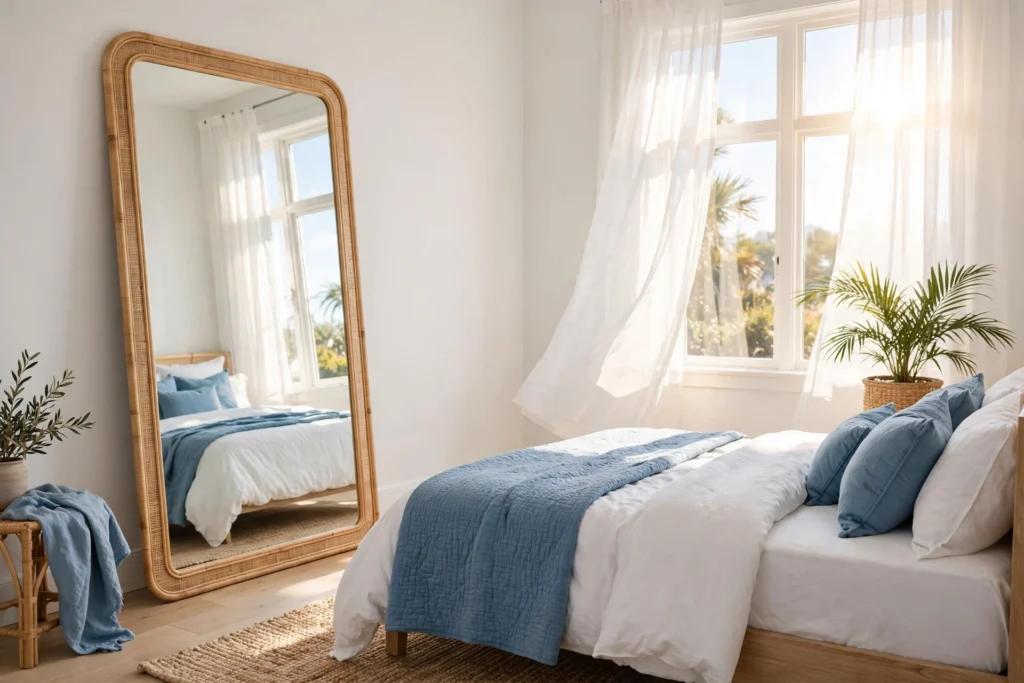
Coastal bedrooms run on light, and mirrors are the cheapest way to double it. A tall leaning mirror opposite the window bounces daylight deep into the room and gives you a full-length view — practical and pretty in one. A round mirror above the dresser adds a soft curve that balances all the rectangular furniture.
Keep the frames in the coastal family: light wood, whitewashed, rattan, or a thin brass that reads warm rather than formal. Avoid heavy dark frames, which anchor the eye in the wrong way. And be strategic about placement — angle the mirror so it reflects the window or a pretty corner, not the laundry pile on the bench.
12. Bring in Living Greenery
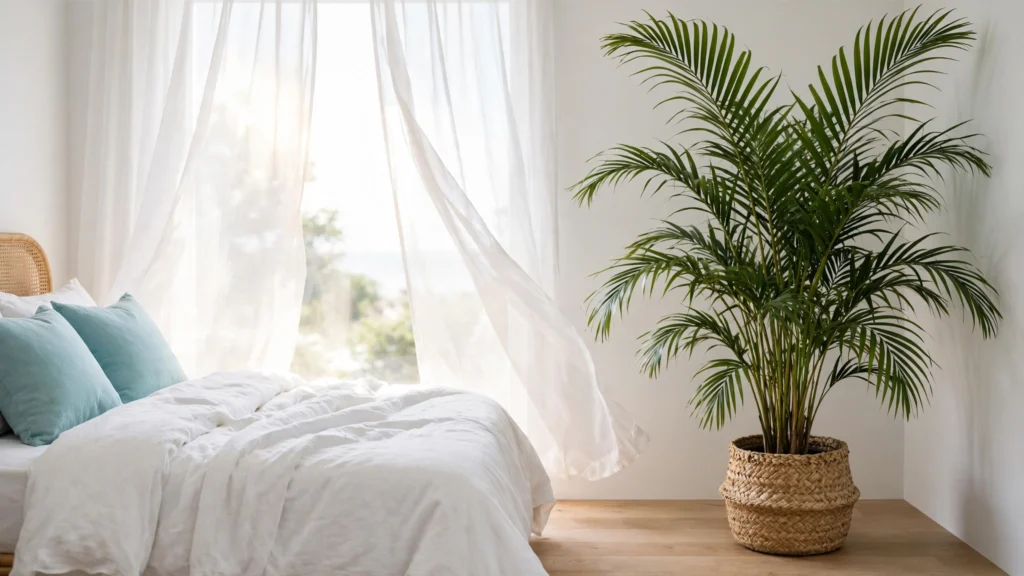
A coastal bedroom needs something alive. A tall potted plant — a palm, a fiddle-leaf fig, or an olive tree — adds the one element paint and fabric cannot: real green. Place it in the corner opposite the window where the foliage catches side light, and use a woven basket or a white ceramic pot as the planter so it matches the room.
If your room runs dark or you are hard on plants, cheat with care. A preserved eucalyptus arrangement or a few stems of pampas grass in a tall vase give you the height and texture with zero maintenance, and dried botanicals suit the weathered, collected coastal look. Just dust them occasionally — beach air or not, bedroom plants collect bedroom dust.
13. Add a Slipcovered Bench at the Foot of the Bed

A slipcovered bench finishes the bed the way a dock finishes a shoreline — it gives the eye somewhere to land. Choose a bench in washed white or natural linen with a removable, washable cover, because this is the piece that gets sat on with sandy shoes and salty air. The slipcover look stays casual and can be refreshed or replaced for the price of new fabric.
Use it practically. It is the landing pad for the throw you kick off at night, the seat for putting on shoes, and the place to stack the day’s pillows. Keep its footprint slim — the bench should be narrower than the bed and leave walking room on at least one side. A bench with a hidden storage compartment is a bonus in small bedrooms.
14. Create a Gallery Wall of Ocean Photography
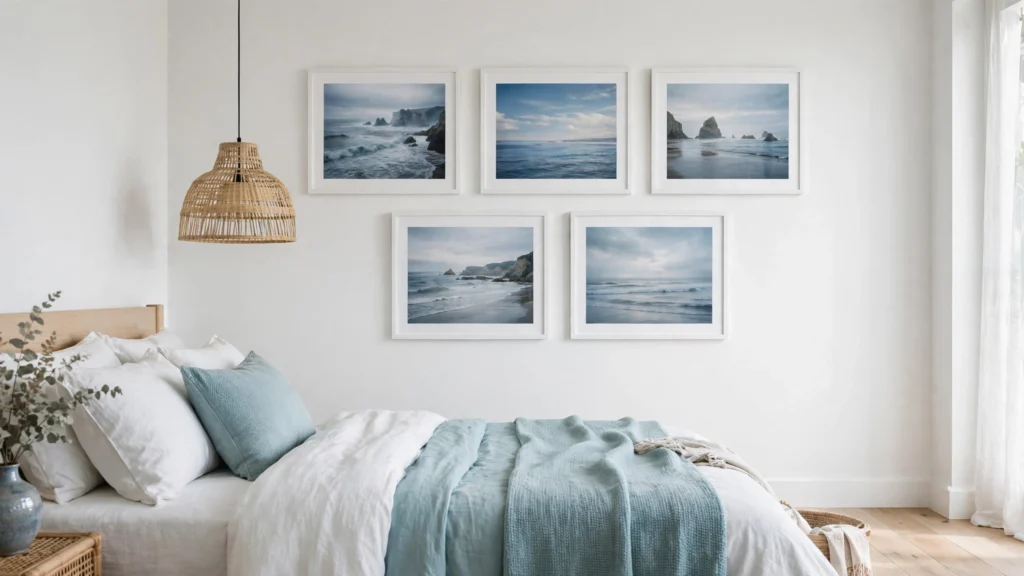
A small gallery wall makes the coastal theme personal instead of generic. Frame three to five photographs — actual ocean shots you took, prints of moody seascapes, or abstract close-ups of water and sand — and hang them in a tight grid or a loose cluster on the wall opposite the bed so you see them first thing in the morning.
Keep the frames uniform and simple: thin white, natural wood, or whitewashed. The consistency of the frames is what makes mismatched photos look intentional. Stick to a limited color range within the images themselves — blues, grays, and whites — so the gallery feels calm rather than busy. If you have no ocean photos of your own, local art prints and vintage travel posters of coastlines work just as well.
15. Carve Out a Small Reading Nook
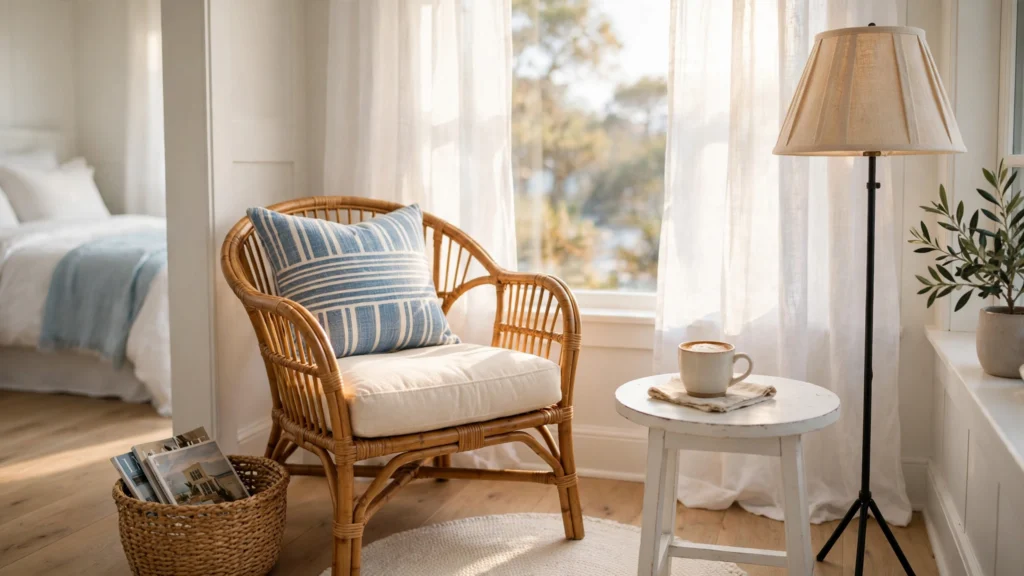
A coastal bedroom earns its breezy reputation with a spot made for slow mornings. Tuck a rattan armchair or a papasan chair into the brightest corner, add a small side table for coffee, and drape a light throw over the arm. Face the chair toward the window so the view — even a garden view — becomes the backdrop.
Keep the nook’s footprint honest. A floor lamp with a linen shade, a basket for magazines, and a washable cotton rug under the chair are enough; crowding the corner defeats the airy purpose. This is also the spot where the coastal palette shows its softer side — a striped cushion here is fine, because the rest of the room has stayed disciplined.
Frequently Asked Questions
What colors define a coastal bedroom?
The coastal bedroom palette starts with white and cream as the dominant base, layered with sea blues and aqua as the secondary colors, and grounded by sandy neutrals like jute, driftwood gray, and natural rattan. The key is proportion: roughly sixty percent white, thirty percent blue, and ten percent sandy neutrals. Avoid strong navy and bright turquoise, which push the room toward a nautical or tropical look instead of a calm coastal one.
How do I make a coastal bedroom feel sophisticated, not kitschy?
Restraint is the whole game. Use coastal materials — rattan, linen, driftwood, jute — instead of coastal symbols like anchors, ship wheels, and word art. Let texture carry the theme and keep the colors soft and grayed rather than saturated. One nod to the sea, like a gallery wall of ocean photography or a bowl of sea glass, is enough. If every surface says “beach,” none of them do.
Can I do coastal bedroom decor in a small or dark room?
Yes — coastal style actually flatters small, dark rooms because it is built on light reflection. Keep walls a warm white, use mirrors opposite the window, choose a rattan headboard whose open weave does not block sightlines, and keep furniture pieces slim and leggy so the floor stays visible. Skip heavy drapes in favor of sheer linen, and rely on layered lighting — a woven pendant plus bedside lamps — so the room feels bright after dark.
Does coastal bedroom decor only work in warm climates?
Not at all. The coastal look is about light and calm, not latitude. In colder climates, keep the white-and-blue palette but add warmth through texture: a chunky knit throw in cream, a wool rug layered over the jute, and heavier linen bedding for winter. The room still reads coastal because the colors and materials stay true; you have simply made it cozy enough for the season.
Keep Exploring
A coastal bedroom comes together one texture at a time — start with the wall color, add a woven headboard or pendant, and let the sea blues and sandy neutrals accumulate naturally. For more ideas that keep the calm going, explore our bedroom decor guides on calming color palettes, natural-material furniture, and small-space layouts that make every square foot feel like a deep breath.








[…] styles, from cottage to modern — and if your slope is still undecided, the breezy palettes in our 15 Coastal Bedroom Design Ideas for a Breezy Beach Feel pair beautifully with either […]
[…] them: pillows in three blue tones, a blue-and-white rug, art with ocean hues, a denim throw. Our coastal bedroom design ideas use the same layered-blue approach — the palette translates beautifully from room to room, which […]