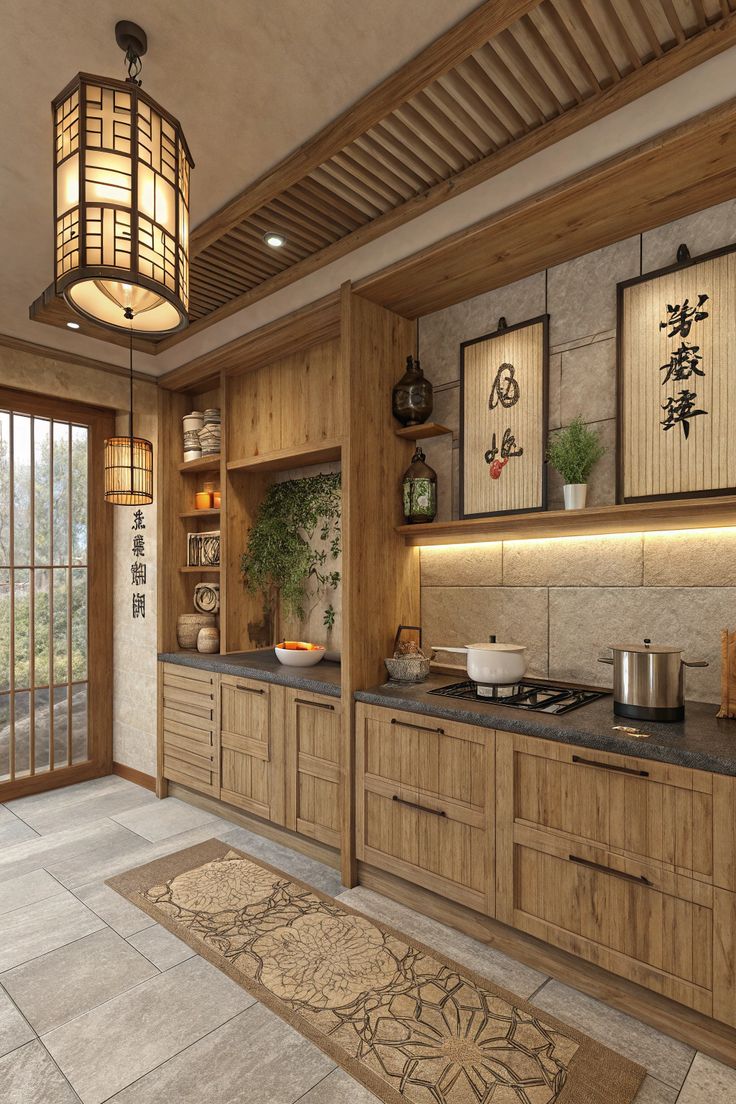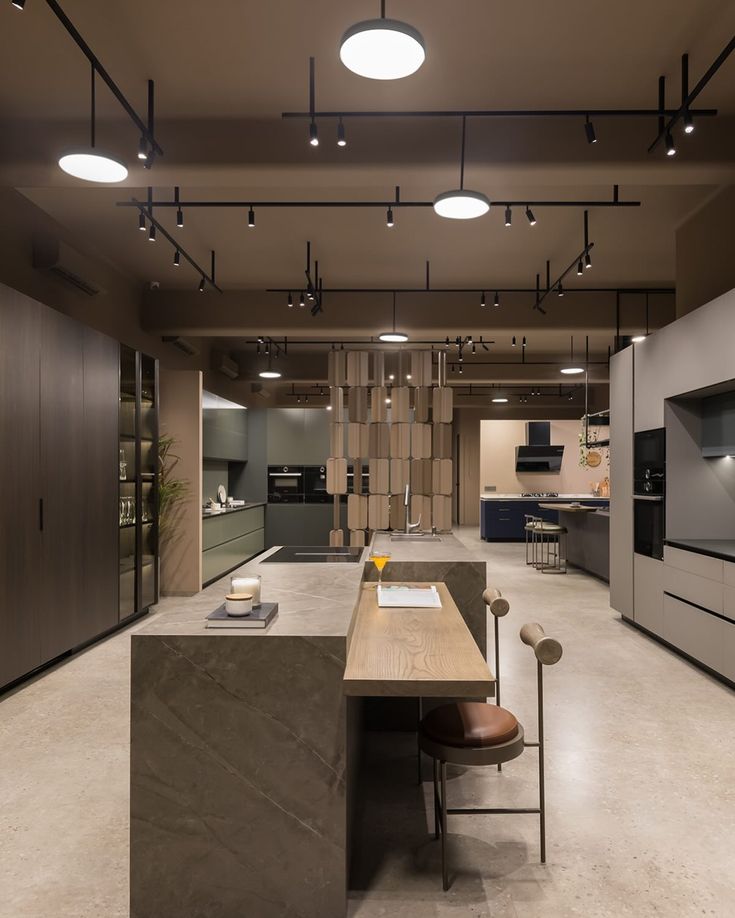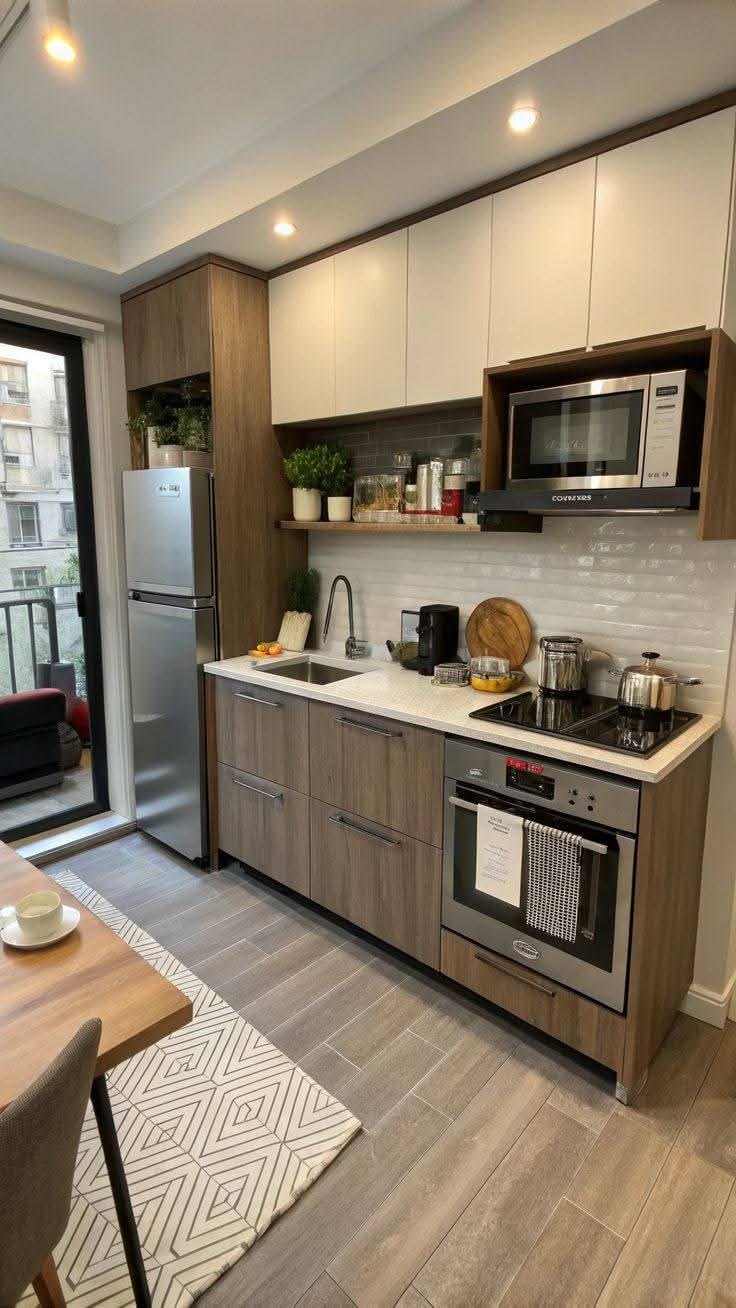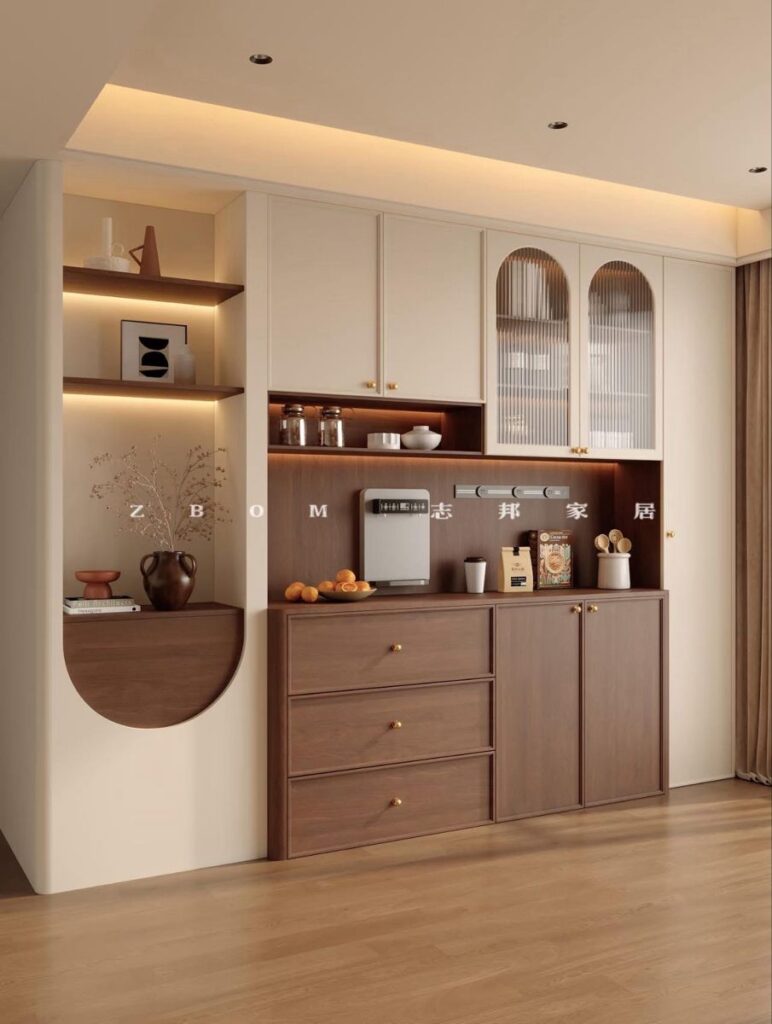

There’s a reason Scandinavian kitchen design has captivated home lovers around the world for decades — and shows absolutely no sign of going anywhere. It taps into something deeply universal: the desire for a home that feels calm, considered, and genuinely good to be in. A space where simplicity is a form of richness rather than an absence of it.
The Scandinavian kitchen isn’t about minimalism for its own sake. It’s about function meeting beauty in the most intelligent, graceful way possible — where everything has a place, natural light is maximised, materials are honest and lovely, and the kitchen becomes one of the most welcoming rooms in the house.
Here are 13 beautiful Scandinavian kitchen design ideas to inspire your own space. Whether you’re renovating from scratch or refreshing what you have, these principles will guide you toward a kitchen that truly embodies the Nordic philosophy: less, but better.
1. Start With a Foundation of White, Warm Cream, or Soft Grey
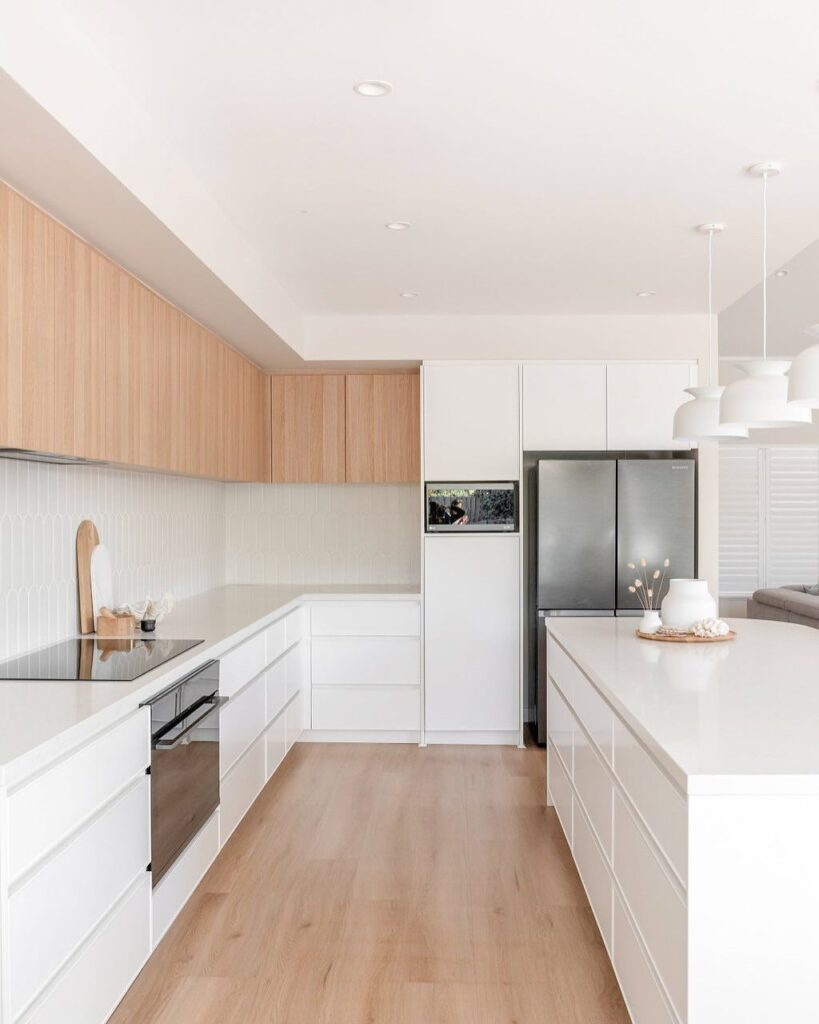
The Scandinavian color palette is built on a foundation of whites, warm creams, and soft greys — and in the kitchen, this foundation is everything. These light, neutral tones serve a deeply practical purpose in Nordic countries where winters are long and natural daylight is precious: they bounce every available beam of light around the room, keeping the space bright, open, and uplifting.
But the trick to avoiding a cold or clinical result is warmth within the neutrals. Choose white with a warm undertone rather than a stark cool white. Pair with a slightly warmer cream on the walls or cabinetry. Add soft grey in the benchtop or floor. These tonal variations create depth and coziness that a single flat white simply cannot. The result should feel like sunlight, not a laboratory.
2. Bring in Natural Timber as Your Warmth Anchor
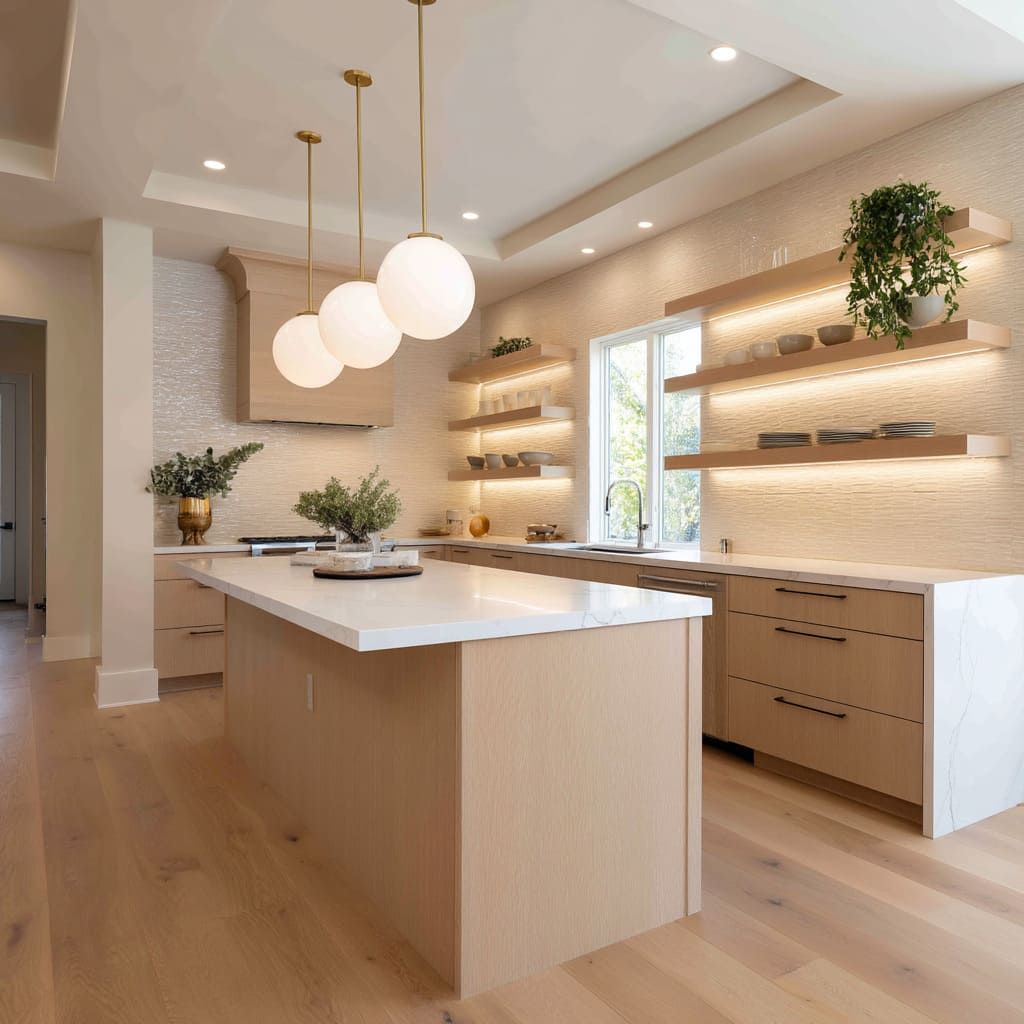
If white and grey are the canvas of the Scandinavian kitchen, natural timber is the heart. Timber brings the warmth, tactility, and organic beauty that stops a neutral kitchen from feeling empty — and it does so in the most authentic, honest way possible. In Nordic design, natural materials are never hidden or treated as merely practical; they’re celebrated as genuinely beautiful in their own right.
Timber appears in the Scandinavian kitchen in many forms: blonde oak floating shelves that warm a white wall, timber-veneer cabinet door fronts, a butcher-block section of benchtop beside the sink, a timber dining table pulled into the kitchen space, or simply a beautiful chopping board displayed on the bench. Even one timber element changes the entire emotional temperature of a white kitchen — almost immediately.
3. Choose Simple, Functional Cabinet Hardware
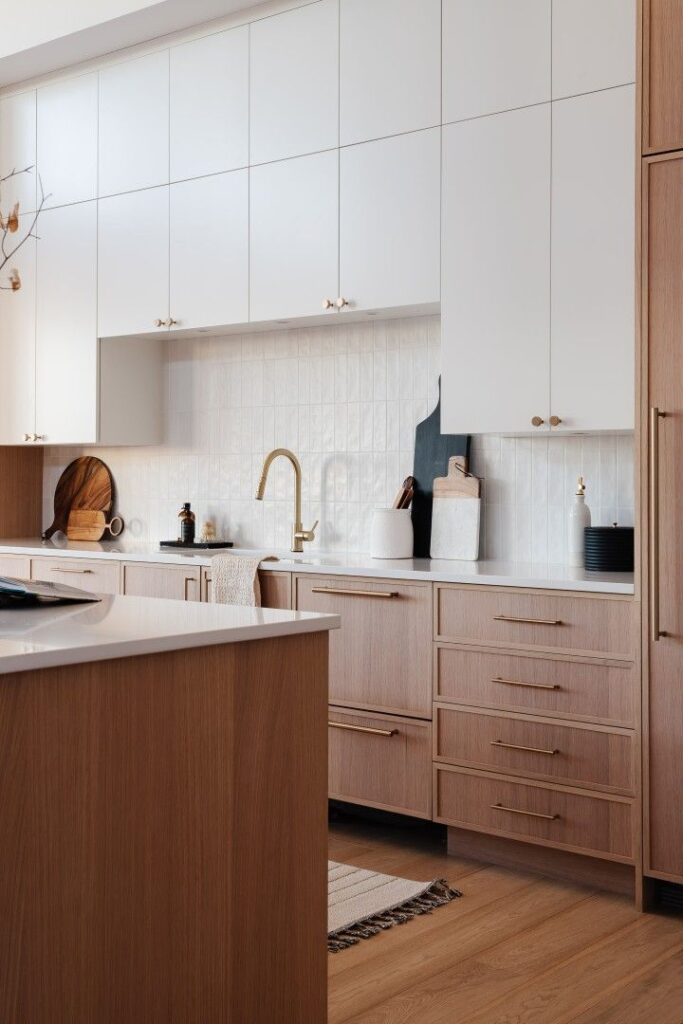
Hardware in a Scandinavian kitchen follows the same design principle as everything else: function first, beauty through simplicity. The goal is never to make hardware a decorative statement in itself, but to choose pieces that are so well-designed and well-proportioned that they become an elegant, integral part of the whole.
Slim bar pulls in brushed steel, brushed nickel, or matte black are the most authentically Scandi options — they’re clean, understated, and work beautifully with both flat-front and shaker cabinetry. Simple round knobs in ceramic or timber add a softer, more organic touch. Whatever you choose, keep it consistent across all cabinets and drawers, and consider matching the finish to any other metal elements in the space — tapware, light fittings, sink accessories — for that quietly cohesive designer result.
4. Let Natural Light Lead Every Design Decision
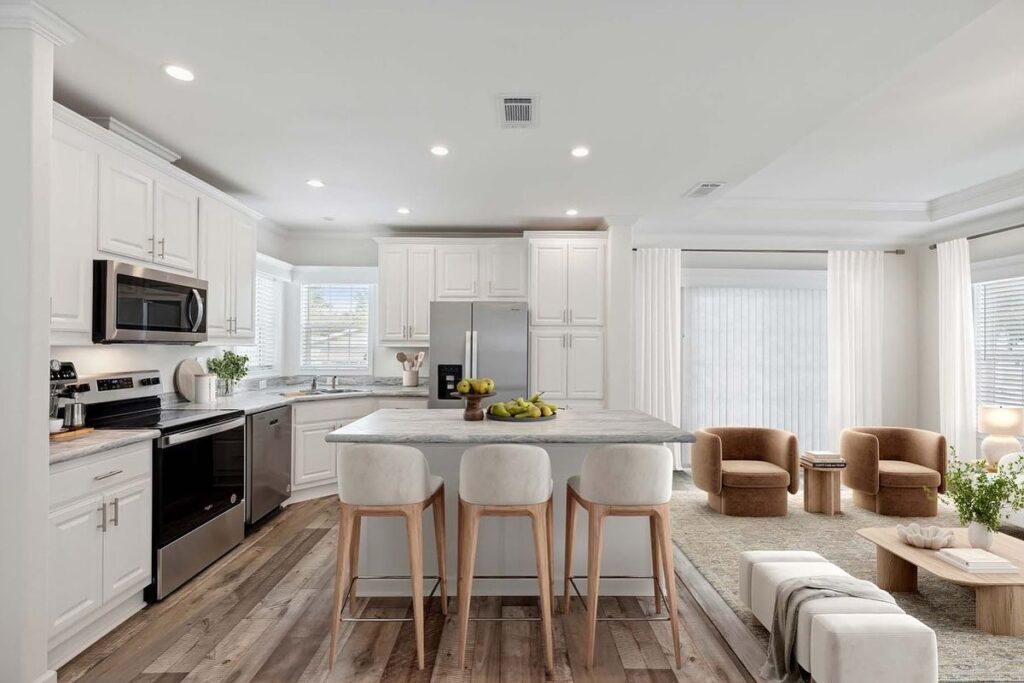
In Scandinavian design, natural light isn’t just a practical consideration — it’s a philosophical one. The long, dark Nordic winters have made natural light deeply precious in Nordic culture, and Scandinavian interiors are designed to capture, amplify, and celebrate every beam of it.
In the kitchen, this means keeping windows uncovered or dressed only with the lightest sheer linen panels that filter without blocking. Keep windowsills clear, or place only a single small plant that frames rather than obstructs the view. Use light-reflective surfaces — white cabinetry, light stone benchtops, pale timber floors — that bounce daylight around the room. Position mirrors or reflective surfaces to amplify light in darker corners. When you design with light as a priority, everything else becomes easier.
5. Use Open Shelving Thoughtfully and Sparingly
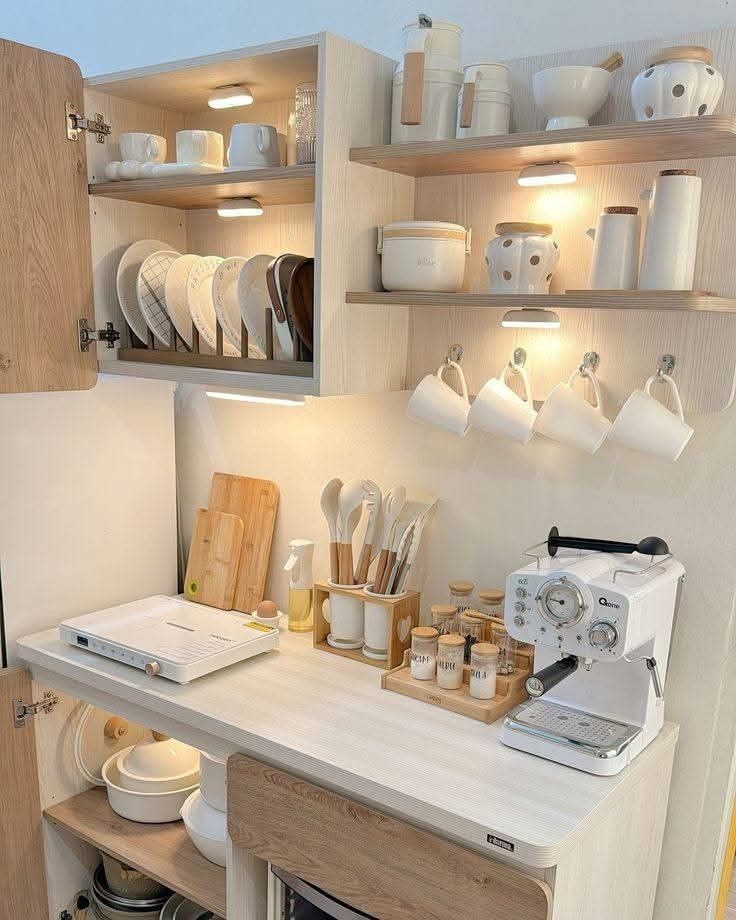
Open shelving is one of the most beloved elements of Scandinavian kitchen design — but it only works beautifully when it’s done with genuine restraint and intention. The key is not to treat open shelves as extra storage space for overflow, but as a curated display of the few beautiful, everyday objects that deserve to be seen.
Choose one or two walls for open shelving and keep the surrounding cabinetry closed. Style shelves with a simple, cohesive palette: white ceramics, clear glass, natural timber. Use odd numbers of objects. Leave meaningful empty space between groupings. The Nordic approach to open shelving is essentially the same as the Nordic approach to everything: less, considered, and deeply satisfying as a result.
6. Invest in Quality, Simple Textiles
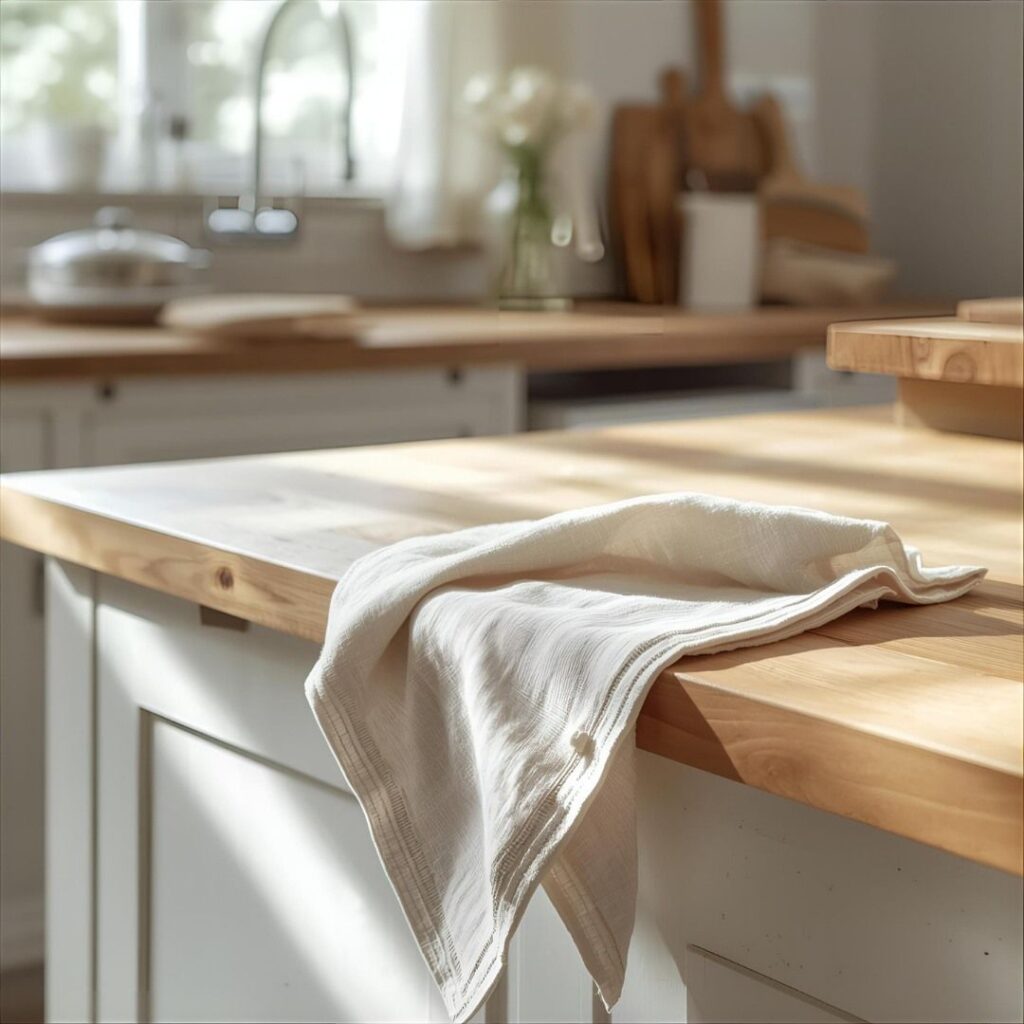
Textiles are one of the most affordable and most impactful ways to bring warmth and the distinctly Nordic concept of hygge — that feeling of cozy, contented togetherness — into a kitchen. In a space that’s primarily hard surfaces (stone, timber, ceramic tile), soft textiles provide a counterpoint that makes the room feel genuinely warm and lived-in.
A quality linen hand towel hung from the oven handle. A simple woven basket for bread or fruit on the bench. A linen or cotton roman blind at the window in a soft natural tone. A small textile runner on the island or dining table. These are small investments that make a large sensory difference — and in Scandinavian design, the sensory quality of a space is always considered as carefully as the visual one.
7. Keep the Benchtop Clear and Beautifully Considered
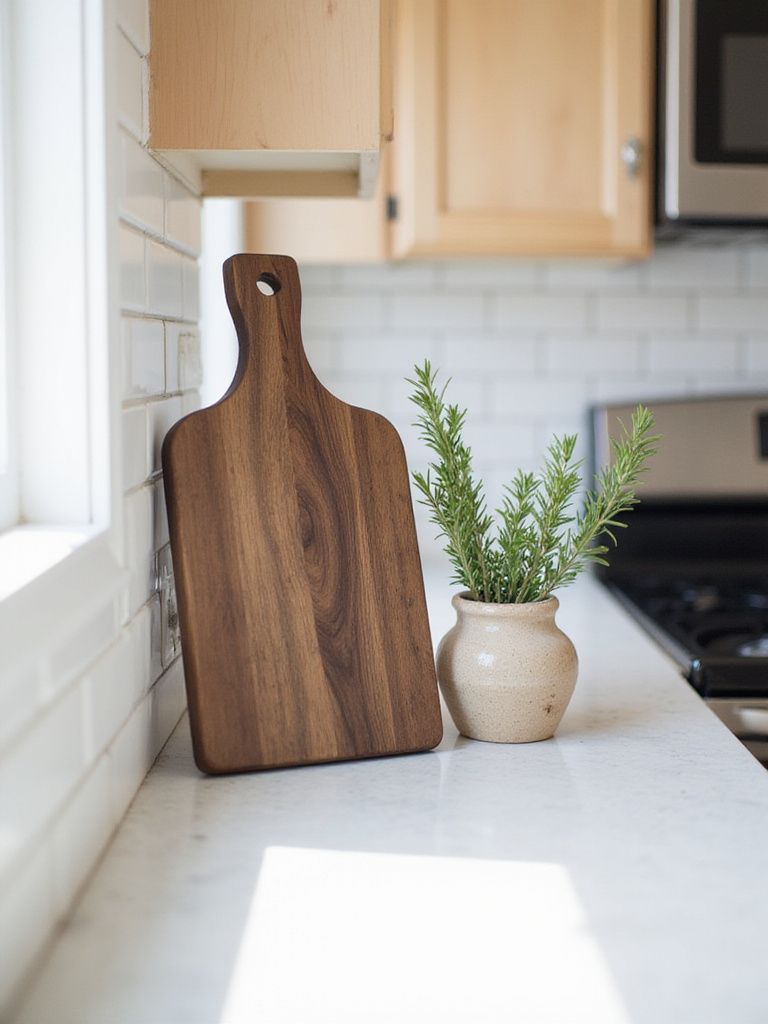
Nothing communicates Scandinavian kitchen design principles quite as clearly as a clear, considered benchtop. In Nordic design philosophy, the surfaces of a room are given room to breathe — not because emptiness is valued for its own sake, but because visual calm is understood as a genuine contribution to wellbeing.
The Scandi kitchen benchtop rule: display only what you use every day and what you genuinely find beautiful. A cutting board. A jar of wooden spoons beside the cooktop. A small plant or a bowl of seasonal fruit. Everything else lives inside a cabinet. When the benchtop is clear and considered, the kitchen feels effortlessly serene — and it stays that way even during the busiest family mornings.
8. Add a Simple, Graphic Splashback
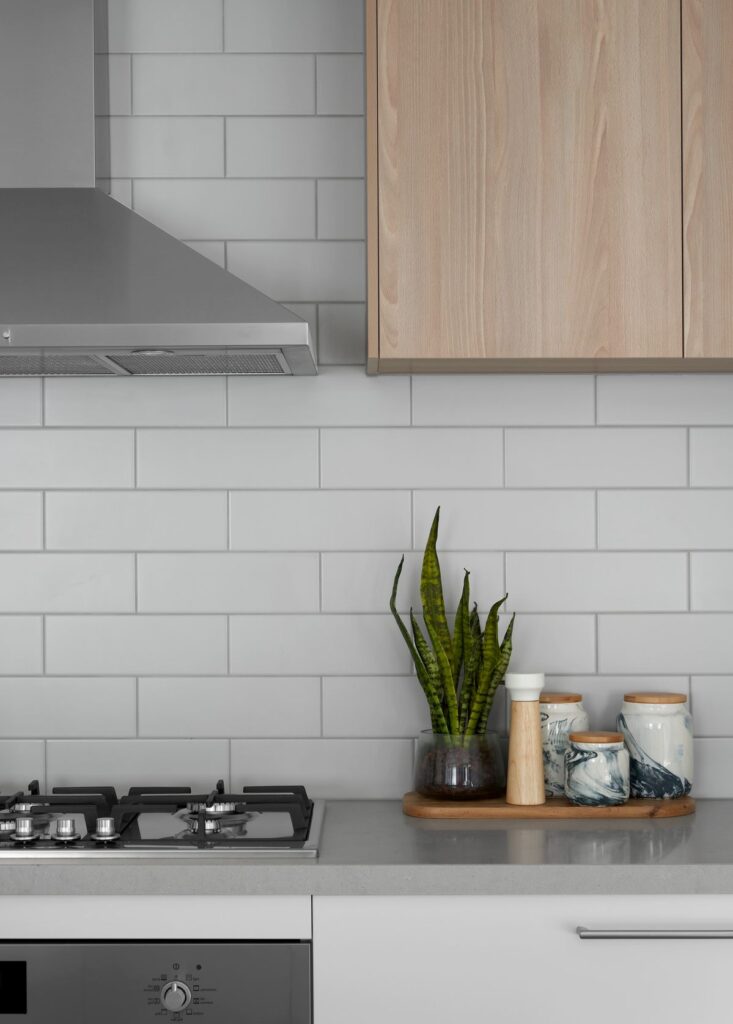
The Scandinavian approach to the kitchen splashback is characteristically clean and unfussy — but never boring. The goal is to choose something that has genuine visual interest through texture, pattern, or material quality, without competing with the overall calm of the space.
White subway tiles in a simple brick or stacked pattern are the most classically Scandi option — endlessly timeless, always beautiful, and incredibly easy to live with. Large-format white or pale grey ceramic tiles create a more seamless, contemporary look. Light handmade tiles in cream or soft sage add a beautiful organic texture. Poured concrete or stone-effect panels are another clean, low-visual-noise option. Whichever you choose, keep the grout color close to the tile color to minimize visual interruption.
9. Choose Pendant Lights That Are Both Functional and Sculptural
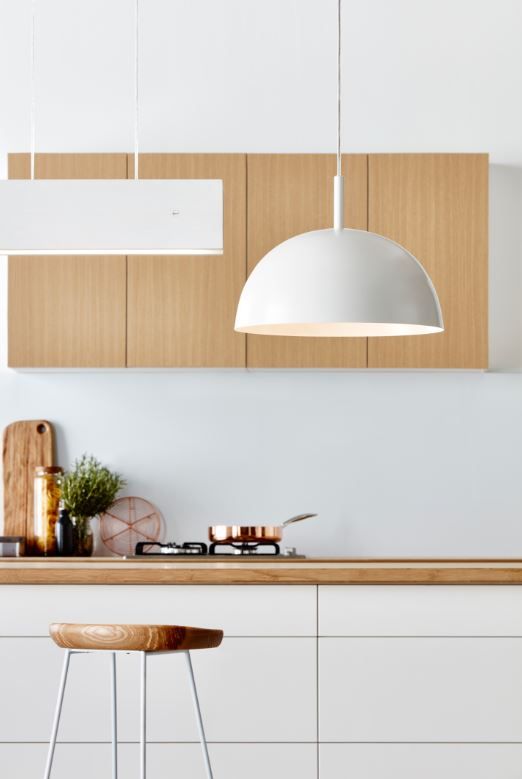
Lighting in a Scandinavian kitchen does two things simultaneously: it provides the warm, layered illumination that Nordic design demands (especially in winter months), and it contributes a sculptural, design-forward element to the space. The pendant light above the kitchen island or dining table is particularly important — it’s the one light fitting in the kitchen that functions as visible, intentional decor.
The most authentically Scandi pendant styles are clean and geometric — simple dome forms, cylindrical shades, or slightly organic shapes in matte white, natural timber, or woven rattan. Avoid anything too ornate or decorative; the beauty should come from proportion and material quality rather than embellishment. Hang pendants lower than you think — closer to the surface below — for a warm, intimate pool of light rather than a diffused general glow.
10. Incorporate Plants as a Design Essential
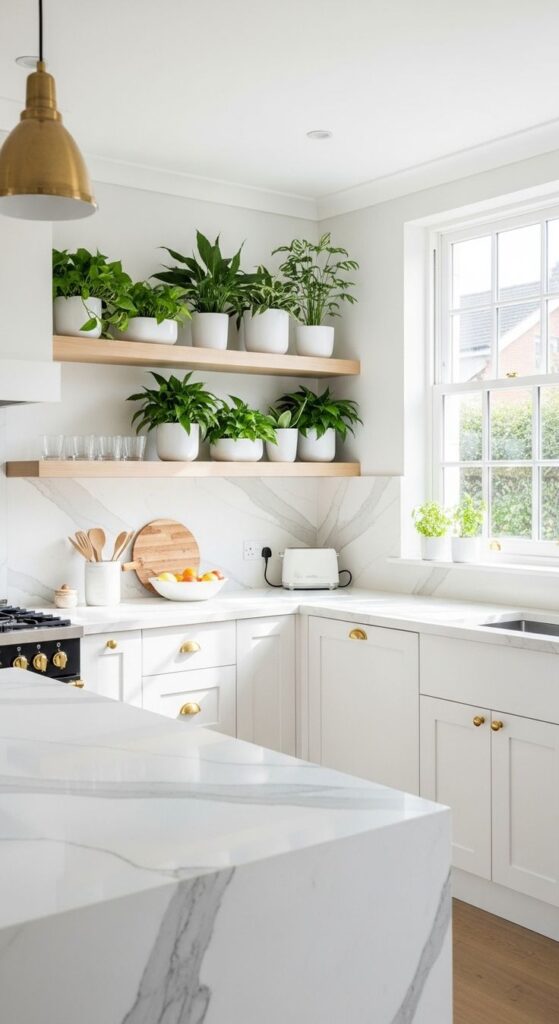
In Nordic countries, where harsh winters make the outside world difficult to access for months at a time, bringing nature indoors has always been a central part of home design. Plants in a Scandinavian kitchen aren’t just decorative — they’re a philosophical commitment to the importance of living things in a living space.
A single large plant — a monstera, a snake plant, a fiddle leaf fig — in a simple white or terracotta pot beside the island or in a well-lit corner brings an immediate quality of warmth and organic life. Trailing plants on open shelves soften hard edges and bring movement. Herb plants on the windowsill are both beautiful and practical — utterly in the spirit of Scandinavian resourcefulness and simplicity.
11. Design a Kitchen That Connects to the Dining Space
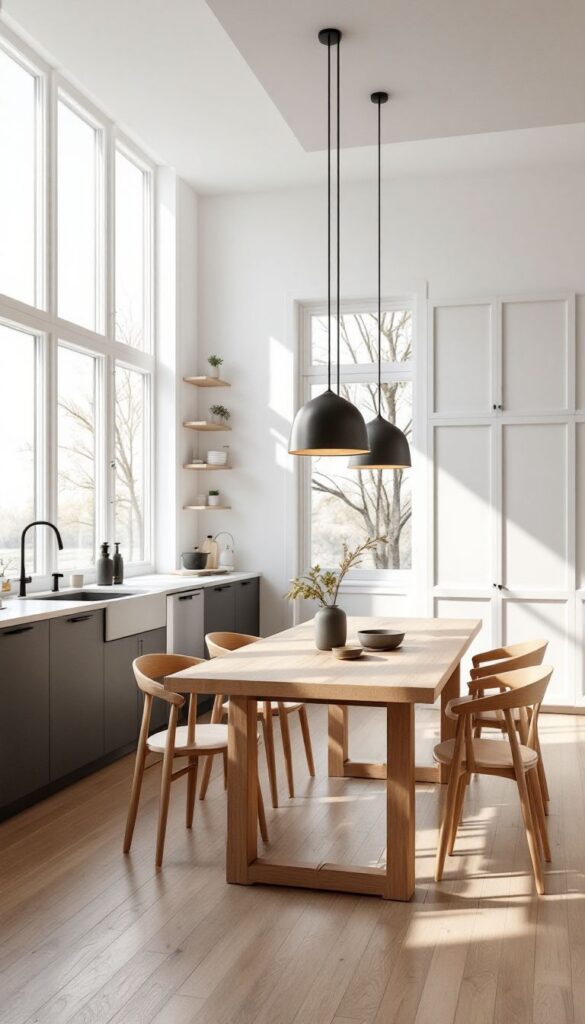
The Scandinavian home has always understood the kitchen as a social space — not a utilitarian back-of-house room hidden from guests, but the warm, welcoming center of family life. In Nordic design, the kitchen flows naturally and generously into the dining and living areas, creating a connected, social environment that reflects how people actually live.
Where possible, allow the kitchen to open toward a dining table positioned close enough to feel part of the kitchen zone. Use continuous flooring material across both areas to establish visual flow. Keep the design language consistent: the same palette, the same material family, the same level of calm and simplicity. When kitchen and dining feel like one connected space, the home begins to embody the Scandinavian concept of togetherness that sits at the heart of Nordic living.
12. Embrace Functional Beauty in Every Stored Object
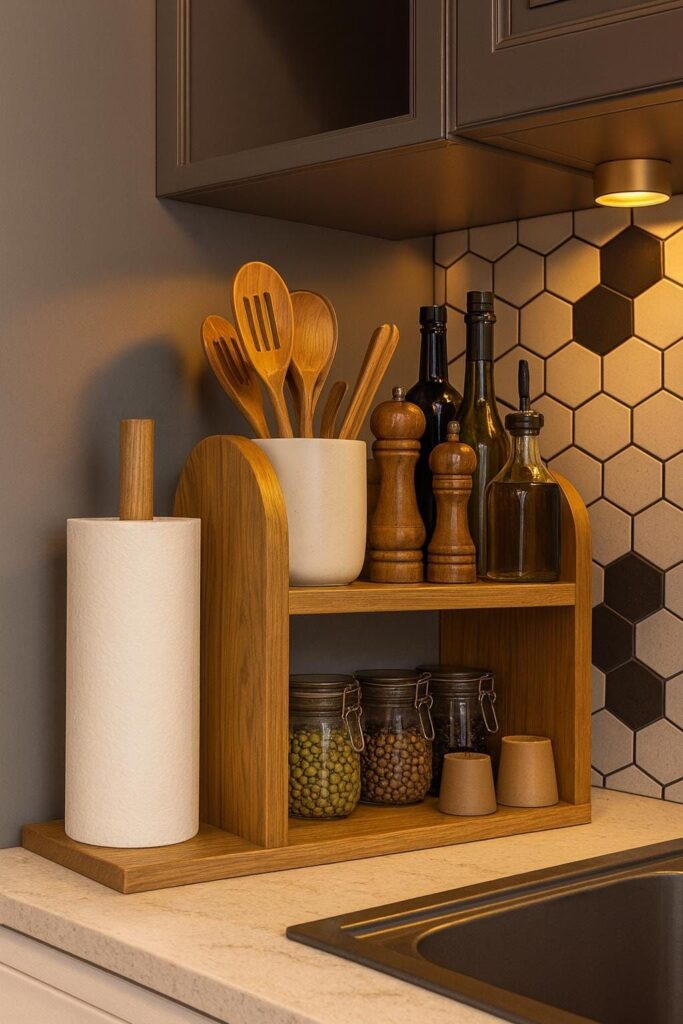
One of the most distinctive qualities of Scandinavian design is its rejection of the distinction between functional and decorative. In Nordic philosophy, the objects of everyday life — the salt shaker, the bread basket, the coffee canister — should be beautiful enough to leave out. When everyday functional objects are well-designed, the kitchen becomes inherently more beautiful simply by being used.
This philosophy transforms how you think about what lives on your bench and shelves. Invest in a set of matching ceramic canisters for dry goods. Choose a simple, beautiful kettle and coffee maker in a consistent finish. Decant oils and vinegars into glass bottles. Use a lovely wooden tray to corral your countertop essentials. When functional objects are beautiful, you stop needing decorative objects at all — and the kitchen becomes simpler, calmer, and more Scandinavian as a natural result.
13. Finish With the Details That Create Hygge
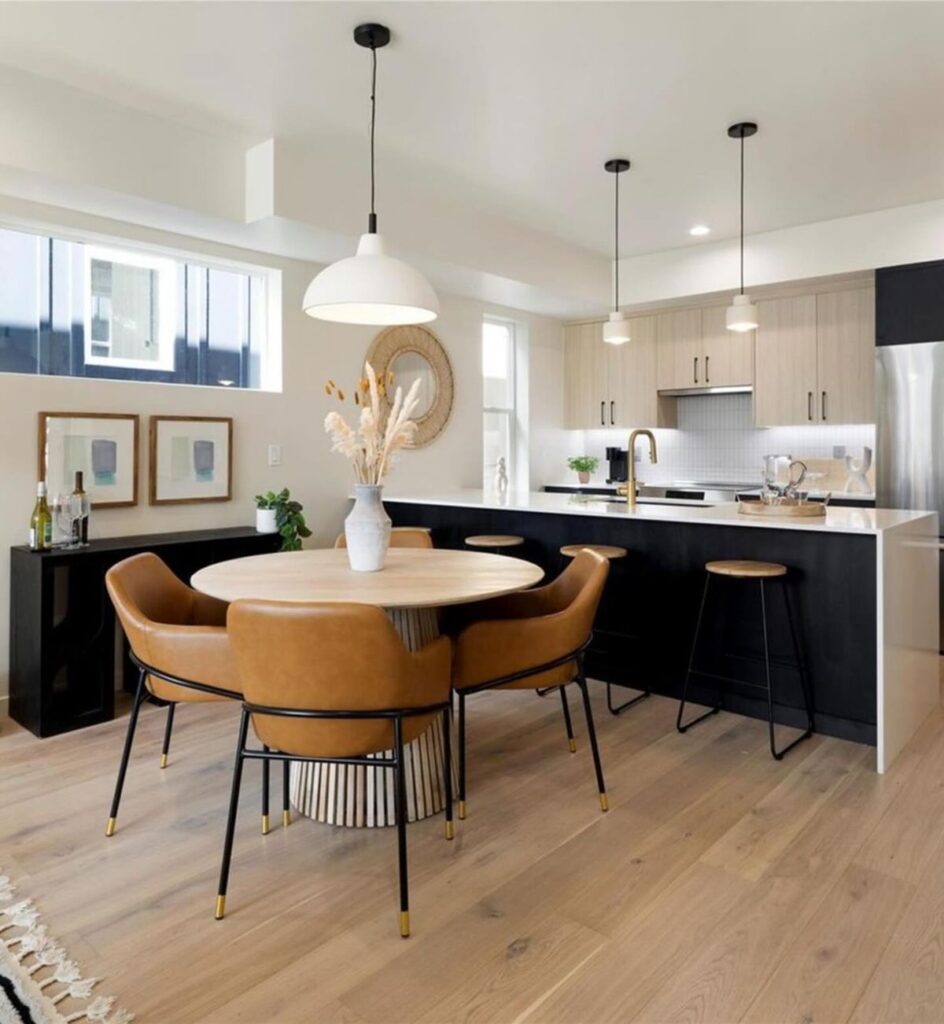
The final layer of any Scandinavian kitchen is the one that can’t be bought at a hardware store — the atmosphere of hygge. That distinctive Nordic quality of warm, contented togetherness that makes a space feel genuinely, deeply good to be in. And while you can’t design hygge directly, you can create the conditions for it.
Light a candle on the kitchen table in the evening — even a simple pillar candle on a small wooden board. Keep a soft throw nearby for cool mornings. Have good mugs for good coffee. Let the kitchen smell of something baking when possible. These are not design decisions in the traditional sense, but they are what transforms a beautifully designed Scandinavian kitchen into a home. And that, ultimately, is the whole point.
Scandinavian kitchen design is genuinely one of the most achievable, most enduring, and most life-enhancing aesthetics you can bring into your home — because it’s built not on trends or expensive finishes, but on principles: simplicity, function, natural materials, light, and warmth.
You don’t need to renovate the whole kitchen to start. Clear your benchtop. Add a timber shelf. Switch to linen hand towels. Buy one beautiful plant. These small, intentional steps are entirely in the spirit of Scandinavian design — and each one will make the kitchen feel noticeably calmer and more considered.
Build slowly, choose well, and let each decision be guided by the question at the heart of Nordic design: is this genuinely beautiful, and does it genuinely serve a purpose? When the answer to both is yes, you’re exactly on track.
We’d love to see your Scandinavian kitchen taking shape! Share your photos in the comments below or save this post to Pinterest and tag us — your space might be exactly the calm, beautiful inspiration someone else needs today.