
Bedroom furniture is not an impulse purchase — or at least, it shouldn’t be. The pieces you choose for your bedroom will be there every morning when you wake up, every evening when you go to bed, for years and possibly decades. They will shape the room’s atmosphere, define its style, determine its functionality, and represent a significant financial investment. They deserve to be chosen with care, with knowledge, and with a clear sense of what you’re actually trying to create.
The good news: once you understand the principles of bedroom furniture design — scale, proportion, material, style cohesion, and the specific functional needs of a bedroom — the choices become much clearer. You stop being pulled in every direction by showrooms full of beautiful individual pieces and start being able to identify which pieces are actually right for your specific room and your specific life.
These 12 bedroom furniture design ideas will give you exactly that clarity — and the inspiration to build a bedroom that feels completely, beautifully, and durably designed.
━━━━━━━━━━━━━━━━━━━━━━━━━━━━━━━━━━━━━━━━
1. Choose the Bed Frame as Your Style Anchor
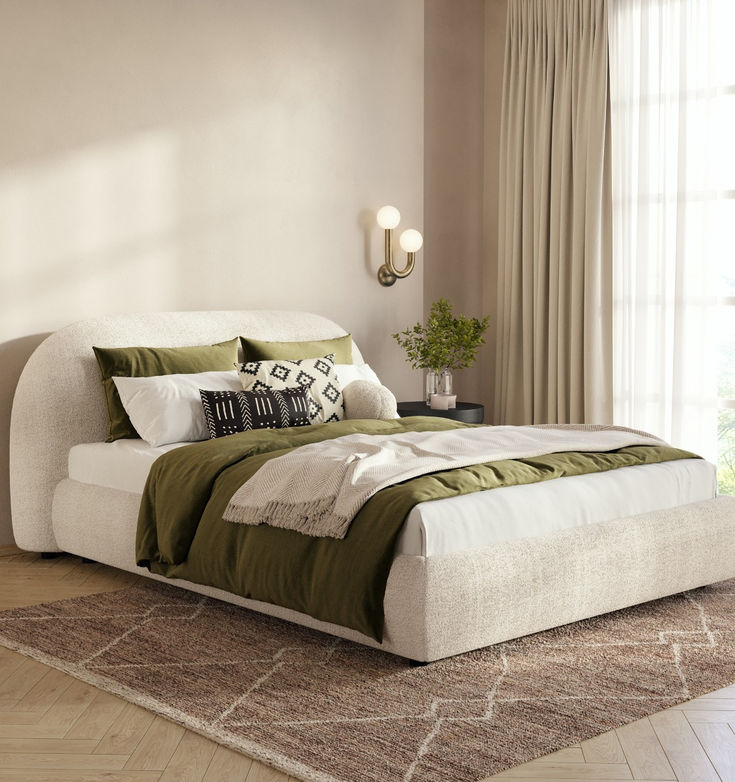
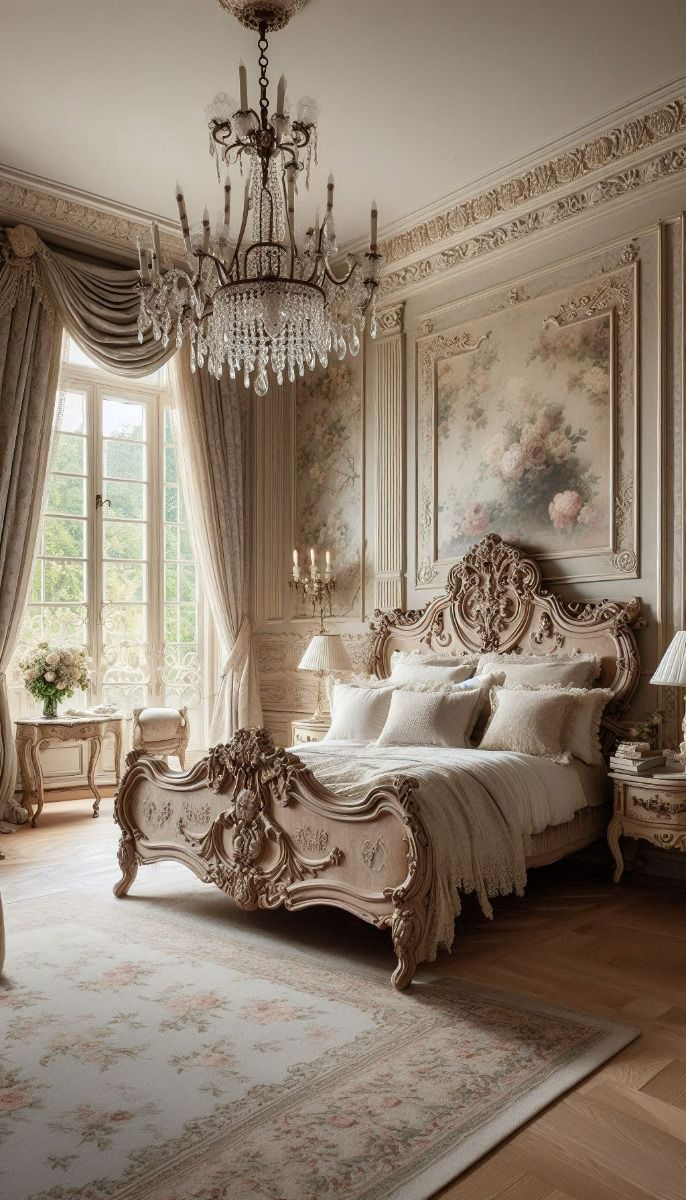
Every bedroom furniture decision flows from one central choice: the bed frame. The bed is the room’s largest piece of furniture, its most prominent visual element, and the piece that will most definitively set the stylistic tone for everything else in the room. Getting this choice right makes all subsequent decisions significantly easier; getting it wrong makes the rest of the room feel permanently off-key.
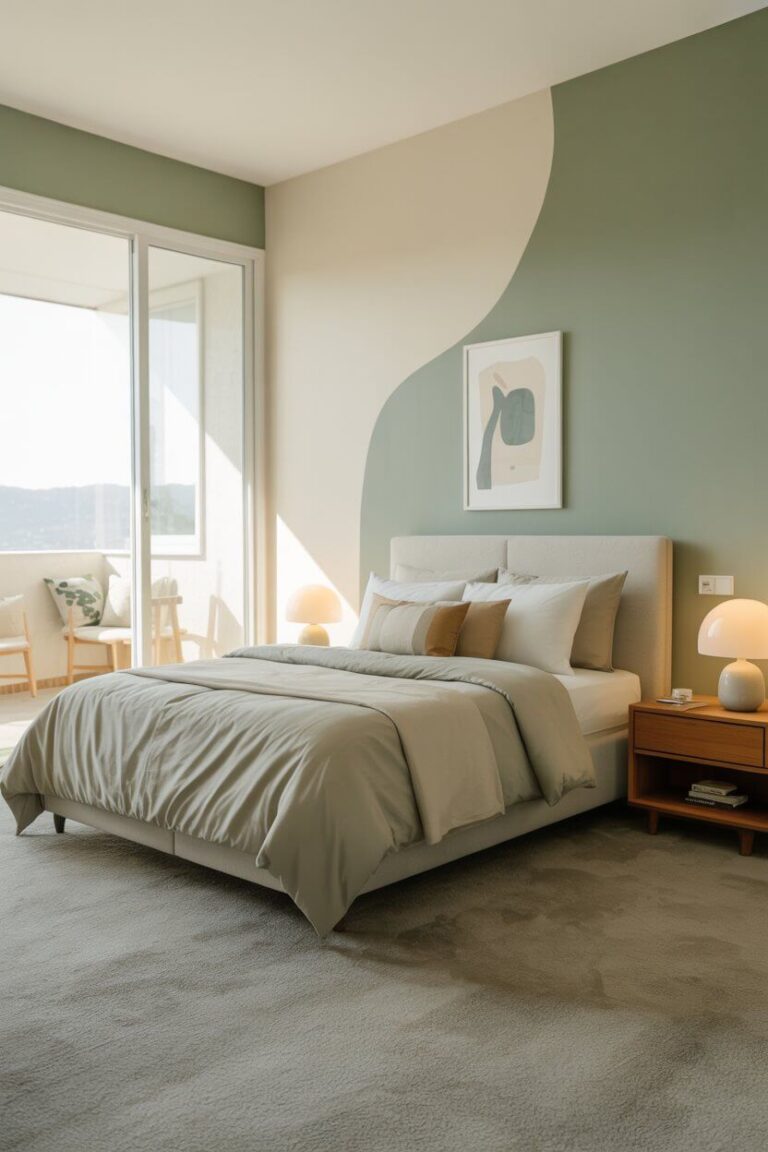
Choose your bed frame style first, before anything else is purchased, and choose it with long-term thinking: is this a frame whose style I’ll still love in ten years? An upholstered headboard in a neutral fabric (linen, velvet, bouclé in ivory, warm grey, or soft sage) is one of the most enduringly beautiful choices — it adds warmth, softness, and a sense of luxury that wooden headboards and metal frames rarely match. Natural wood frames in oak or walnut are equally enduring and bring organic warmth. Both are excellent long-term investments.
2. Invest in a Quality Mattress Above Everything Else
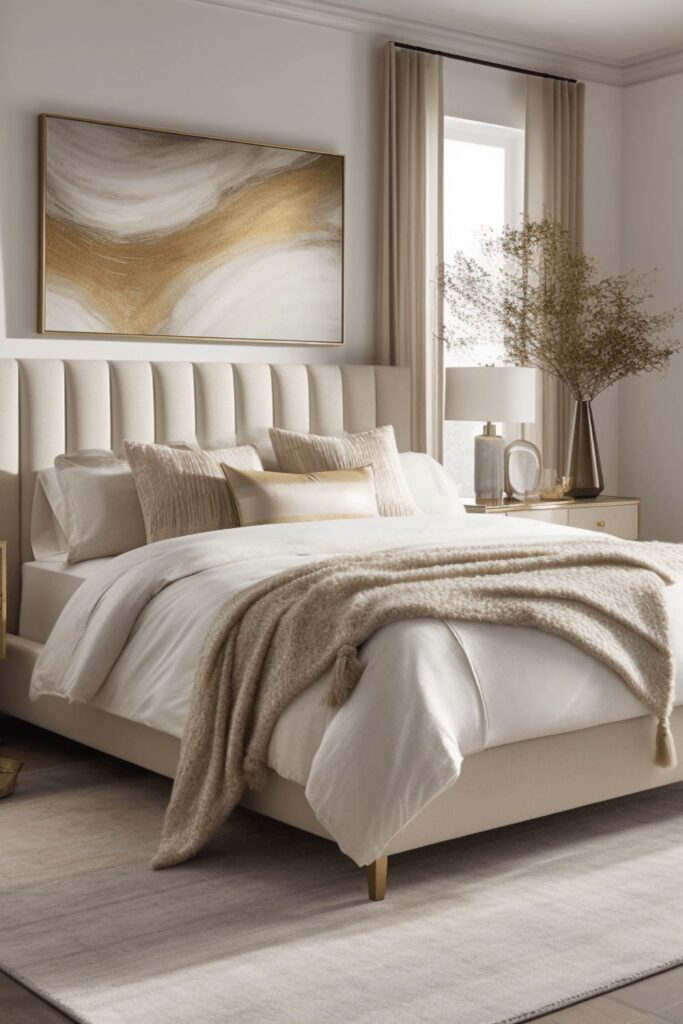
If the budget for bedroom furniture requires prioritisation — and it almost always does — there is one piece that deserves the largest allocation by a significant margin: the mattress. The mattress is the piece of furniture with the most direct, most daily, most measurable impact on your health and wellbeing. Poor sleep affects everything. A mattress that doesn’t support your body and your sleep costs you in ways that no beautiful headboard can compensate for.
Spend the most you can reasonably afford on a quality mattress from a reputable manufacturer. A good pocket-spring or hybrid mattress (pocket springs with a foam or latex comfort layer) in a medium-firm to medium tension is suitable for most people and most sleeping positions. Try before you buy where possible — lie on it for at least ten minutes in your natural sleeping position. A quality mattress lasts 8–10 years and improves your life every single night. This is the bedroom furniture investment that pays back in the most fundamental way.
3. Choose Bedside Tables That Balance Function and Beauty
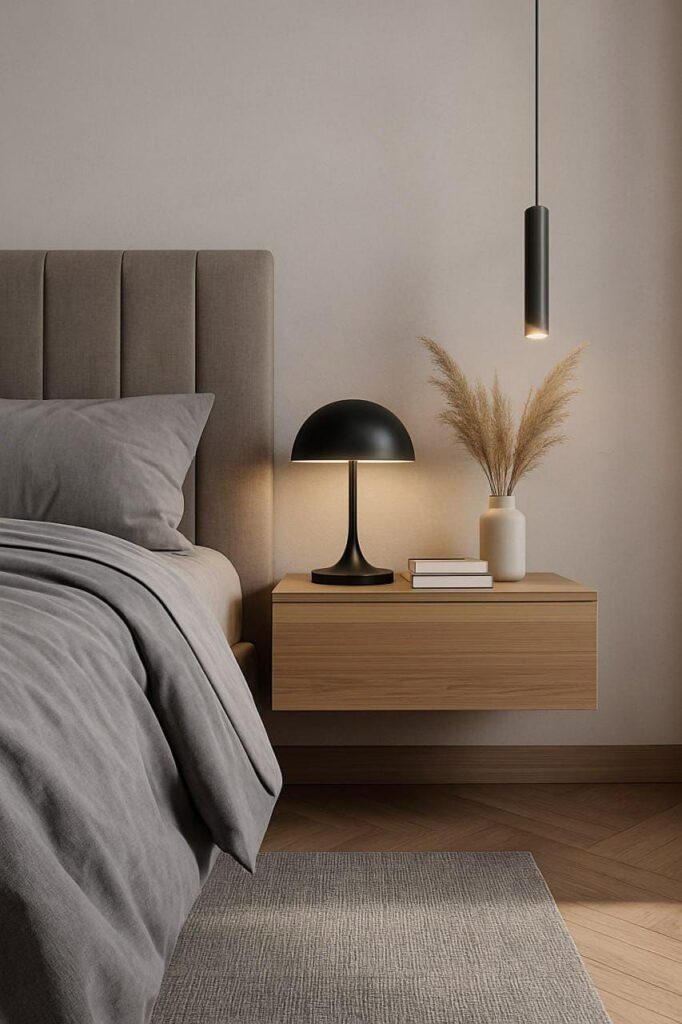
Bedside tables are the bedroom furniture pieces that live closest to you while you sleep — and they need to be both beautifully designed and genuinely functional. The bedside table holds the things you reach for last thing at night and first thing in the morning: your phone, your book, your water, your glasses, your lamp. A beautiful bedside table that doesn’t function well will become a source of daily minor irritation. A functional one you love looking at will quietly enhance every morning and evening.
Wall-mounted floating bedside shelves are the most space-efficient and architecturally clean option — they make the floor visible beneath, which opens up the room visually. Small drawer-fronted bedside tables offer discreet storage for the things you want accessible but not visible. Choose bedside tables that match or intentionally complement the bed frame material — the same wood tone, or a deliberate material contrast that’s been considered rather than accidental. Scale matters: the bedside surface should sit at roughly the same height as the top of the mattress.
4. Pick Wardrobes That Maximise Storage and Visual Calm
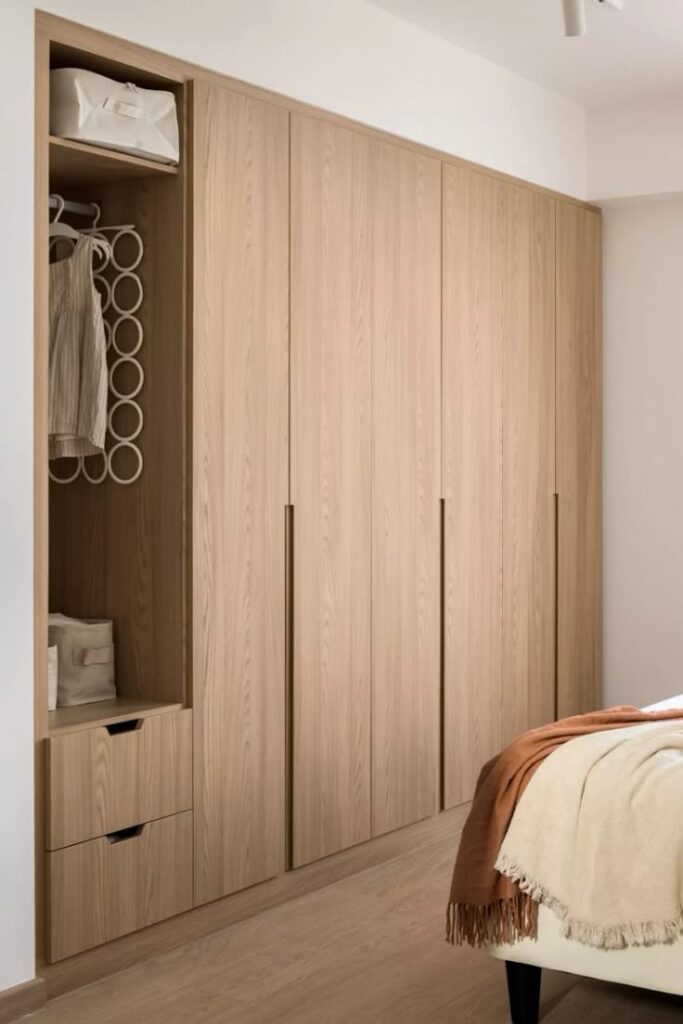
Wardrobe storage is arguably the most practically important piece of bedroom furniture — and the one where the gap between adequate and genuinely well-designed is largest. A wardrobe that looks beautiful but doesn’t hold your clothes effectively, or one that works well but sits awkwardly in the space, fails in equal but different ways. The goal is both: maximum storage capacity, beautifully resolved in the room.
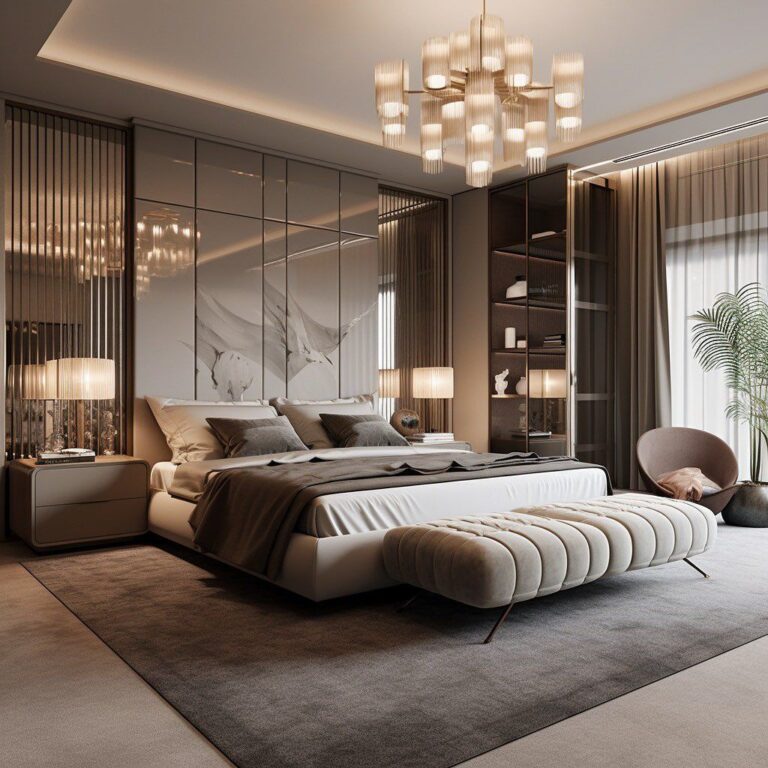
Floor-to-ceiling fitted wardrobes that span one full wall are the most effective and most visually resolved wardrobe solution: they maximise storage, eliminate the awkward gap above freestanding wardrobes, and create a wall surface that reads as architectural rather than furniture. If fitted wardrobes aren’t in budget, choose freestanding wardrobes in a finish that matches the wall colour as closely as possible — this creates a near-disappearing quality that keeps the room calm. Inside, prioritise organisation: pull-out drawers, two-height hanging sections, and dedicated storage for shoes all make the wardrobe genuinely usable rather than just capacious.
5. Consider a Chest of Drawers as Both Storage and Style
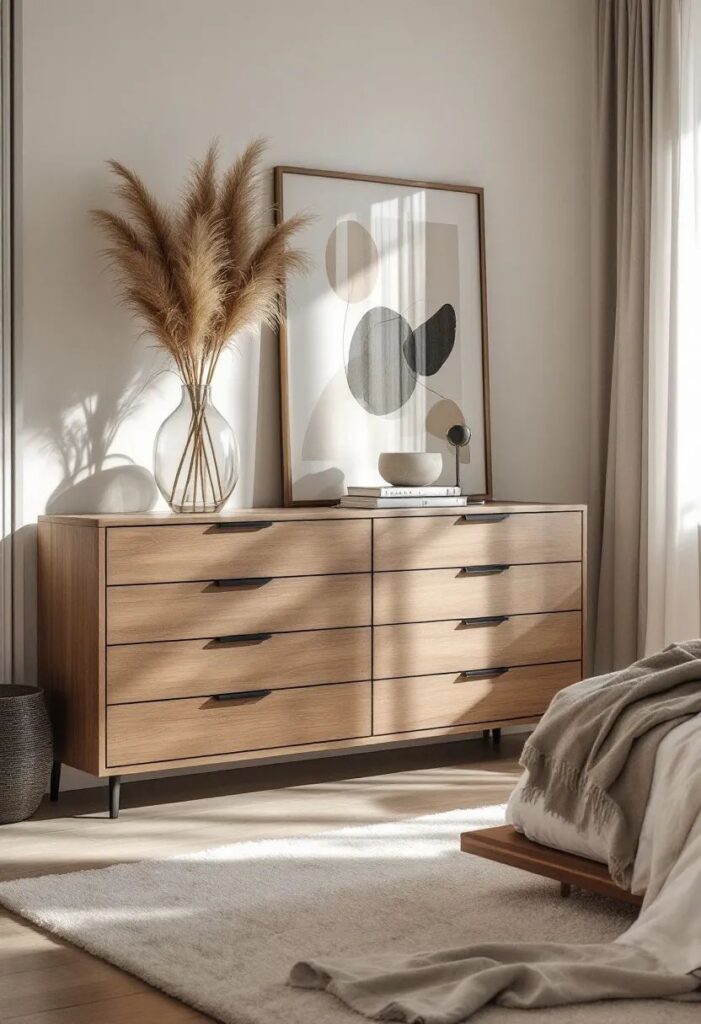
A well-chosen chest of drawers is one of the most versatile and most aesthetically rewarding pieces of bedroom furniture — it provides essential storage for clothing that doesn’t hang, and its top surface becomes one of the most beautiful and personal display spaces in the room. Unlike wardrobes, which are closed and concealed, the chest of drawers is permanently visible — and it deserves to be chosen with the same care as the bed frame.
Choose a chest of drawers in a quality material that complements the bed frame: solid oak or walnut for warmth and natural beauty, painted MDF in a considered colour for a more furniture-like quality, or a lacquered finish for something more contemporary. Quality drawer runners that open and close smoothly are a surprisingly significant daily quality-of-life detail — avoid cheap furniture where the drawers require wrestling. Style the top of the chest with restraint: a lamp, one framed image, one plant, and nothing else. The chest becomes a vignette and a focal point.
6. Add a Dressing Table for Personal Ritual
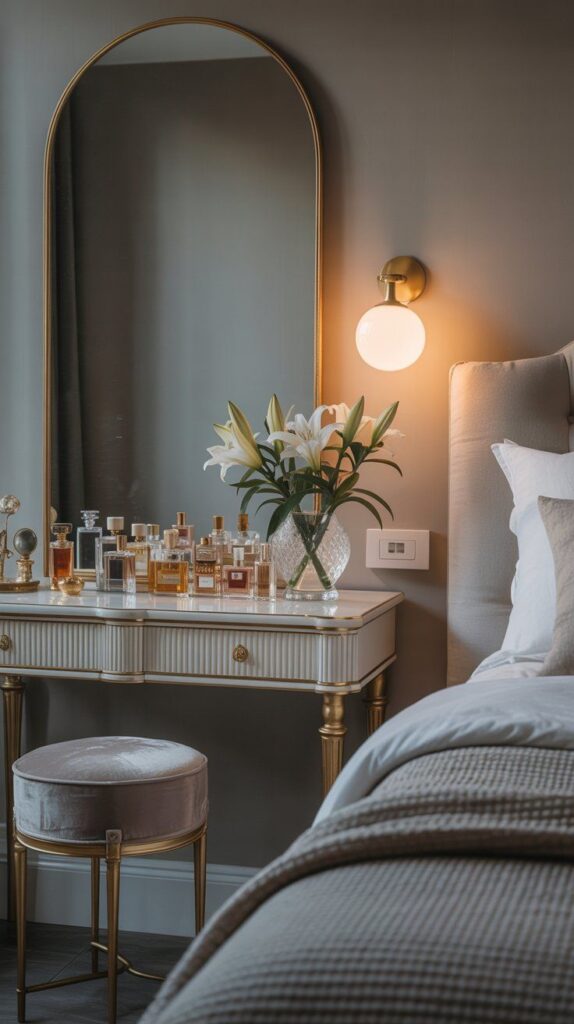
A dressing table transforms getting ready from a chore performed at the bathroom mirror into a genuine personal ritual — a moment at the start of each day that belongs entirely to you. In a bedroom, this kind of dedicated personal space has a significance beyond the purely practical: it says that your daily preparation, your grooming, your presentation to the world matters enough to have a space of its own.
A dressing table doesn’t need to be large to be effective — a 90cm-wide surface with a quality mirror above and an upholstered stool below is sufficient for most needs. Choose a table in a style that complements the rest of the bedroom furniture (not necessarily matching, but in conversation with the other pieces). A mirror with built-in lighting — a Hollywood-style lighted mirror — provides the most flattering and functional vanity lighting. Keep the surface edited: only the most beautiful and most-used products belong here, displayed with intention.
7. Think About Scale Before You Buy Anything
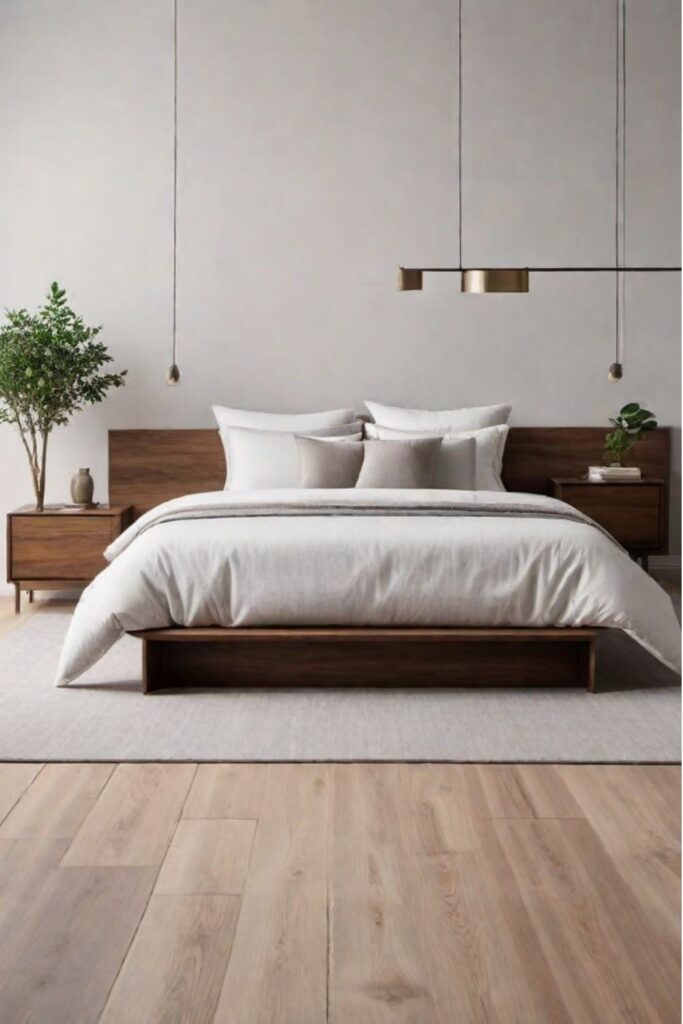
Scale is the furniture principle that is most frequently ignored and most consistently regretted. A bed that’s too small for the room looks lost. A wardrobe that’s too large for the wall looks oppressive. A chest of drawers that’s too narrow for the space beside the window looks inconsequential. Getting the scale of bedroom furniture right — choosing pieces that are proportional to the room’s dimensions and to each other — is what makes a bedroom feel designed rather than assembled.
Before purchasing any piece of furniture, measure your room carefully and mark out the footprint of the proposed furniture on the floor with masking tape. Stand in the doorway and visualise the piece in position. For a bedroom, the bed should feel generous but not wall-to-wall; there should be at least 60cm of clear path on each long side. Bedside tables should be visually balanced with the bed height. The wardrobe should be proportional to the wall it occupies. These decisions, made with measurements in hand rather than in the showroom, lead to a room that feels inherently right.
8. Mix Materials Intentionally for Depth
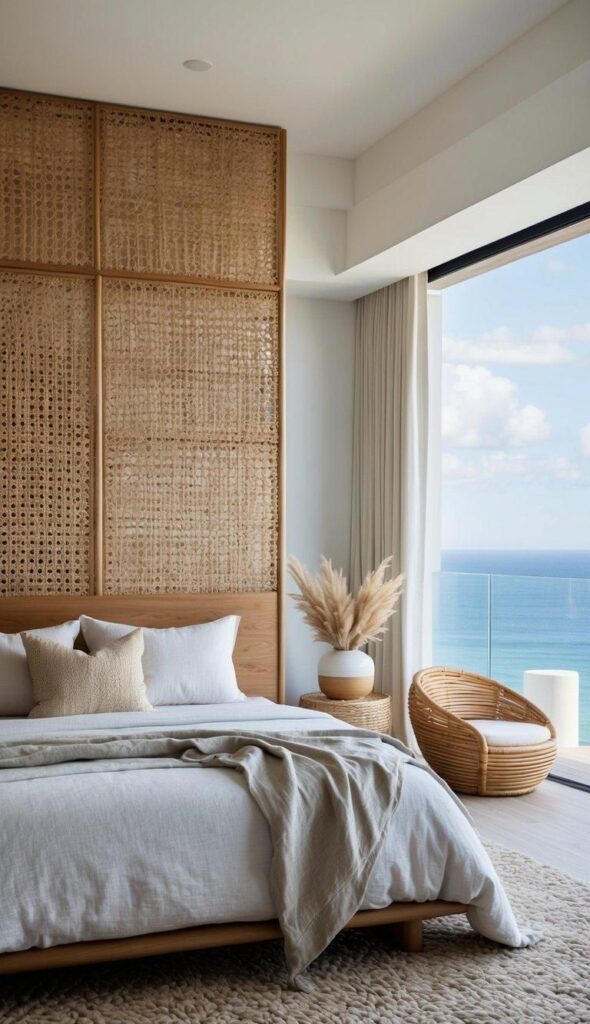
Matching bedroom furniture sets — where every piece is identical in finish, style, and material — create a room that feels coordinated but rarely interesting. The most beautifully designed bedrooms mix materials with intention: natural wood beside painted surfaces, soft upholstery beside hard materials, warm metals beside organic textures. The mix creates depth, visual interest, and the collected-over-time quality that distinguishes a designed room from a showroom display.
A reliable mixing framework: choose one dominant material (natural oak, walnut, or painted in a warm neutral) for the two or three largest pieces (bed frame, wardrobe, chest of drawers), then introduce a contrasting material in smaller accent pieces (a rattan bedroom chair, an upholstered headboard in a different material than the frame, bedside tables in a complementary but different finish). The contrasting material should share a tonal quality with the dominant one — warm with warm, cool with cool — even when the materials themselves are different. Intentional mixing always looks better than accidental matching.
9. Choose a Bedroom Chair or Chaise for Luxurious Function
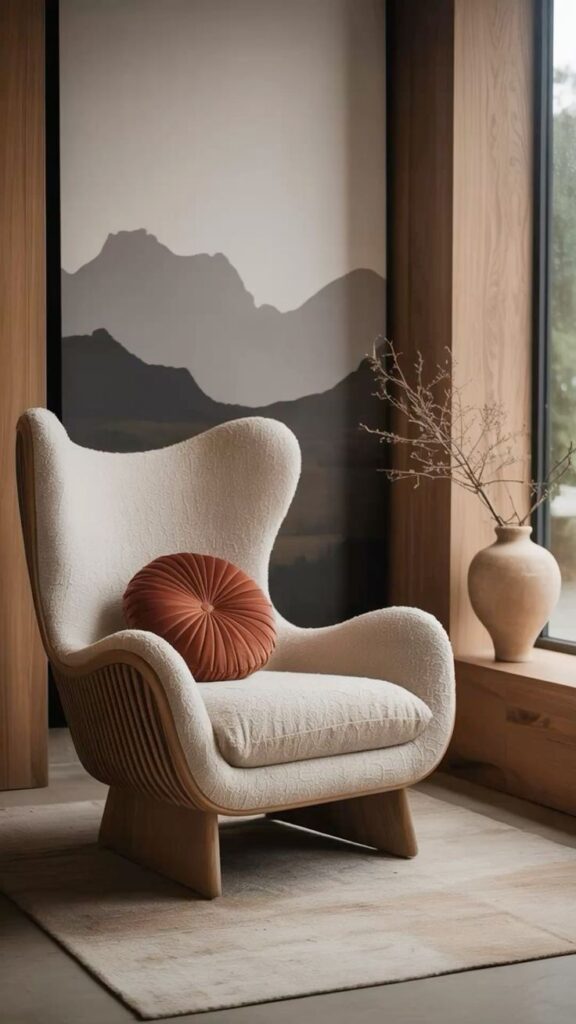
A bedroom chair — an armchair, a tub chair, a chaise longue, or a simple upholstered bench at the foot of the bed — is the piece of bedroom furniture that most consistently elevates a room from functional to genuinely luxurious. It’s a piece you don’t strictly need, which is precisely why it communicates something so positive about the room: someone thought about comfort and experience beyond the essential.
A comfortable armchair or tub chair in the corner of the bedroom creates an alternative sitting and reading position that is both practically useful (for getting dressed, for reading, for simply having a place to sit that isn’t the bed or the floor) and visually significant (it breaks the monotony of furniture pushed to walls and creates a sense of a room with zones). Choose upholstery in a colour or texture that adds visual interest to the room — a bouclé in warm terracotta, a velvet in deep green, a linen in warm grey — and pair with a floor lamp for perfect reading light.
10. Use a Bedroom Bench at the Foot of the Bed
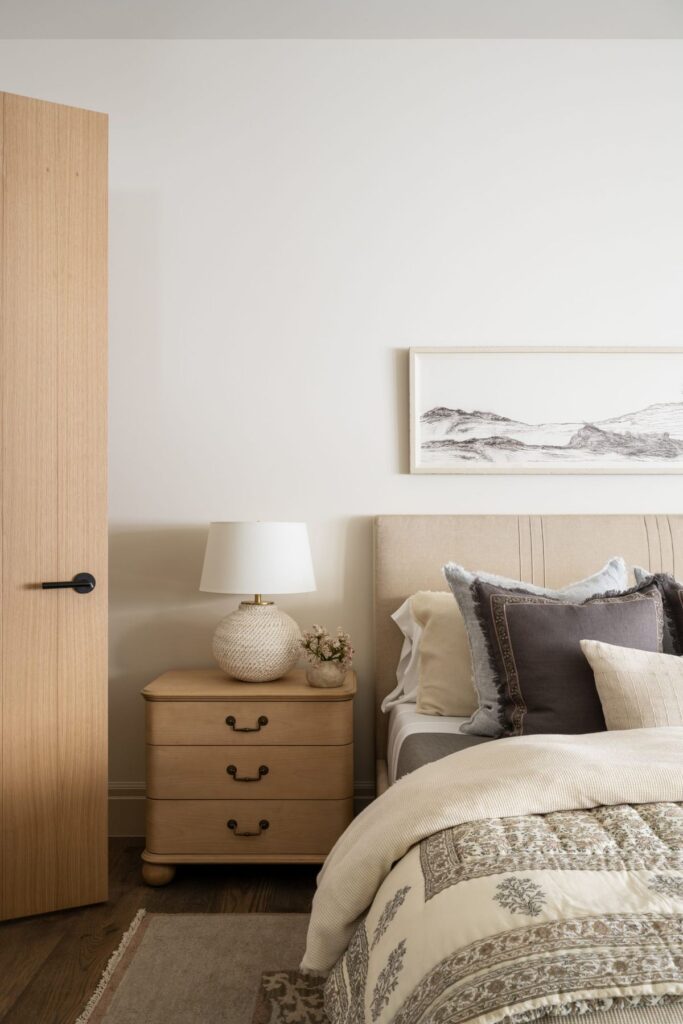
A bench at the foot of the bed is one of those pieces of bedroom furniture that reads immediately as considered and hotel-quality — and it’s a surprisingly functional addition to the bedroom that earns its place on practical grounds as well as aesthetic ones. It provides a surface for sitting while putting on shoes, a place to lay out tomorrow’s clothes, a spot to rest a folded throw at the end of the day, and a visual anchor that makes the bed feel more intentionally framed and resolved.
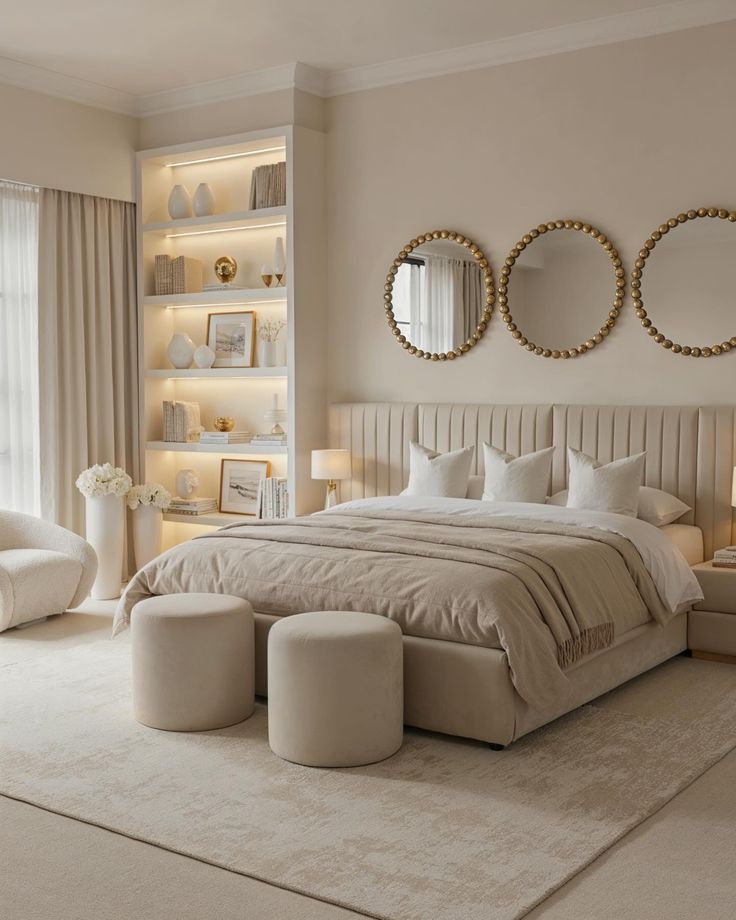
Choose a bench that is approximately the same width as the bed (or slightly narrower) and low enough not to compete visually with the bed frame. Upholstered benches in a fabric that complements the headboard material (same velvet, same linen, or a deliberate contrast) look most considered. A simple wooden bench in the same material as the bed frame is a cleaner, more minimal approach. Position it with equal space on either side relative to the bed, and it becomes the final piece that makes the bed composition feel genuinely complete.
11. Consider Under-Bed Storage as a Design Feature
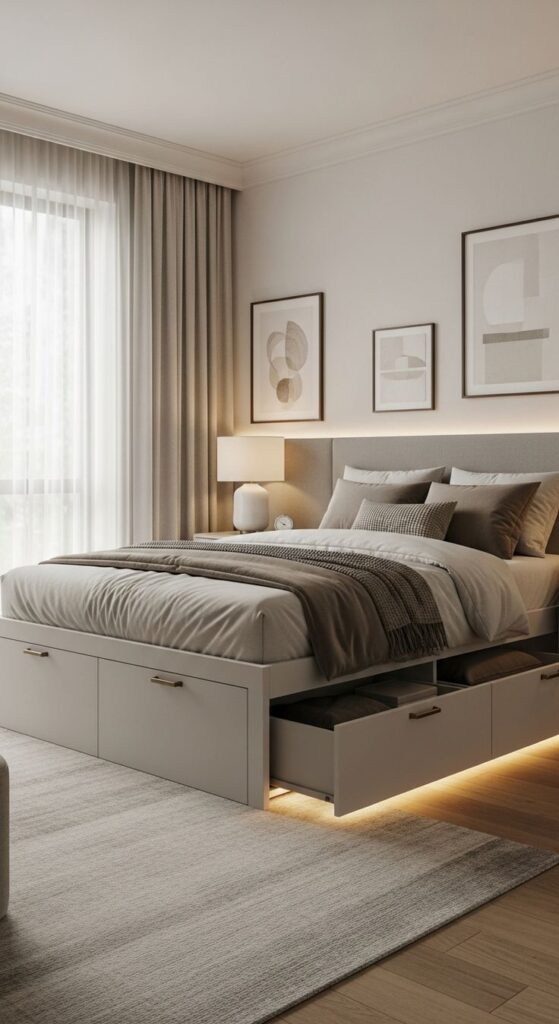
Under-bed storage is one of the most valuable and most underutilised opportunities in bedroom furniture design. The space beneath the bed — typically 25–40cm in height depending on the frame — represents significant volume that, harnessed correctly, can make a real difference to a bedroom’s overall storage capacity and therefore its level of visual calm.
Bed frames with integrated under-bed drawers are the most elegant solution: the drawers slide in and out from one or both sides, providing easily accessible storage for bedding, seasonal clothing, extra towels, or anything else that needs a home but not daily accessibility. Ottoman-style beds (with a hydraulic lift mechanism that raises the mattress to reveal a large under-bed storage compartment) provide even greater capacity and suit bedrooms with significant storage needs. Even a standard bed frame can have its under-bed space organised with flat-profile storage boxes. This storage, used well, allows other furniture to be eliminated — which makes the room feel more spacious and more calm.
12. Edit the Room — Not Every Space Needs Furniture
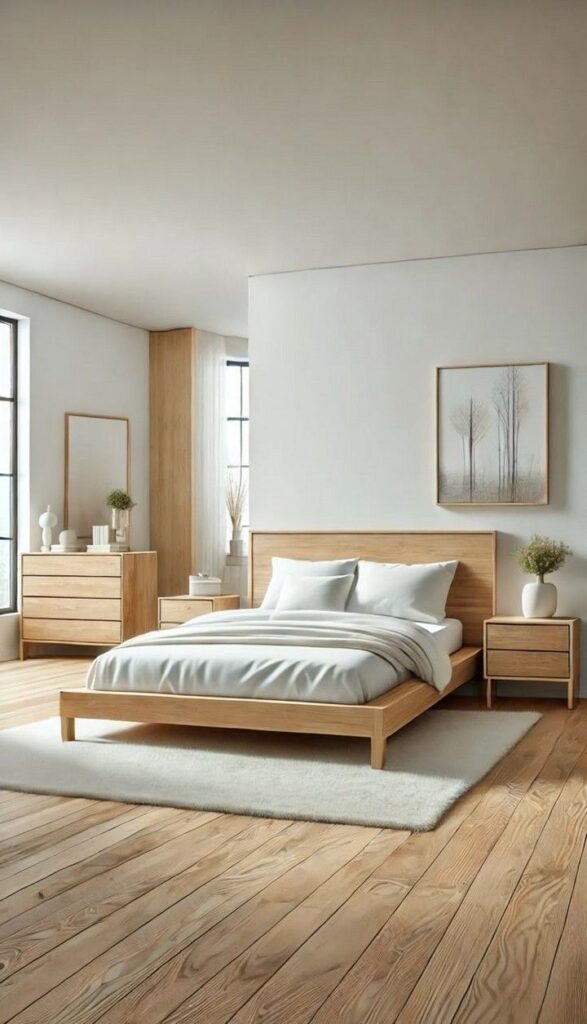
The final and most important bedroom furniture design principle is one that runs counter to every furniture showroom’s incentive: not every space needs to be filled. The instinct to fill empty corners, to cover every wall with furniture, and to ensure that no floor space goes unoccupied leads to bedrooms that feel crowded and restless rather than calm and restorative. The most luxurious rooms are the ones with room to breathe.
Once you have the essential pieces — bed, storage, bedside tables — resist the temptation to add more. Ask, of every additional piece you consider: does this serve a genuine function, or am I filling space? Does this add to the room’s beauty, or does it add to its visual noise? Is this something I’ll use regularly, or something that will gather dust and make the room feel cluttered? Editing is the most sophisticated design skill — and in the bedroom, where calm and rest are the primary goals, it is the most important one. Leave space. Let the room breathe. That empty space is not a design failure. It is the point.
━━━━━━━━━━━━━━━━━━━━━━━━━━━━━━━━━━━━━━━━
Bedroom furniture, chosen well, is one of the most enduring and most daily-rewarding investments you can make in your home. The right bed frame, the right storage, the right bedside table — these things are there every morning, silently doing their job beautifully, year after year. They are the architecture of your daily life.
Start with the bed. Make that decision slowly and well. Then let each subsequent furniture choice follow from it with the same care and the same long-term thinking. Consider scale before beauty. Consider function before style. And when the room has what it genuinely needs — edit ruthlessly and leave room for the space itself to be part of the design.
The bedroom furniture that lasts — the pieces you’ll still love in ten years — is always the furniture that was chosen with knowledge, patience, and genuine attention to how you actually live. Choose those pieces. Your bedroom will thank you every day. Which bedroom furniture idea has inspired you most? Share your bedroom design decisions or your before-and-after in the comments — I’d love to see the beautiful room you create!