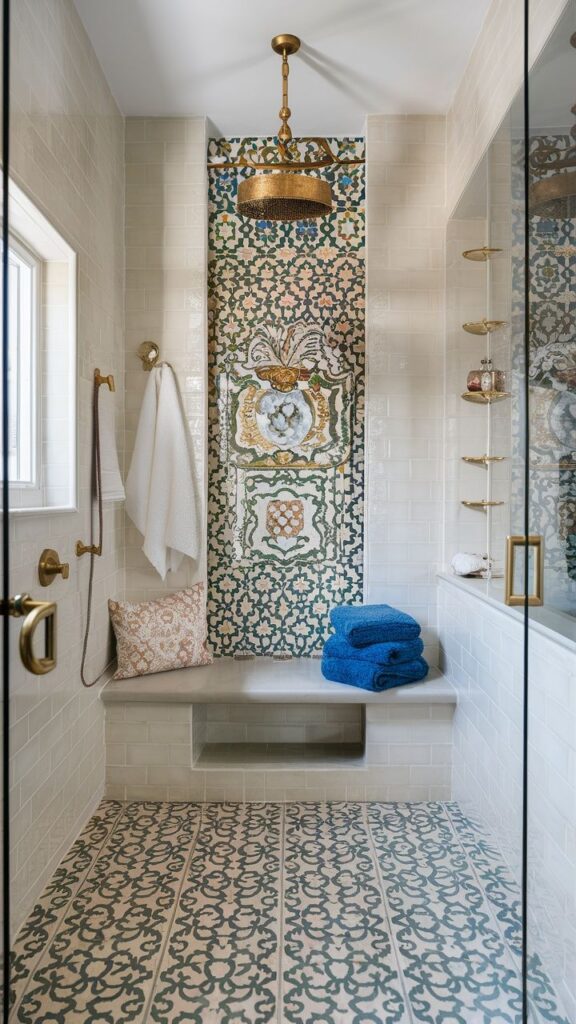

Choosing bathroom tiles is one of the most exciting — and most nerve-wracking — decisions in any home renovation. The range of options is extraordinary: thousands of colours, formats, finishes, patterns, and price points, all promising to be the foundation of the bathroom you’ve always wanted. And because tiles are permanent (or at least very expensive to change), the stakes feel high.
Here’s what every good tile designer knows: the decision becomes much simpler once you understand the principles behind it. What formats create what effects. Which patterns suit which spaces. How grout colour changes everything. Where to splurge and where to save. Once you have this knowledge, choosing tiles becomes less about trying not to make a mistake and more about choosing which beautiful thing you love most.
These 15 bathroom tile design ideas will give you that knowledge — and the inspiration to use it. Let’s find your perfect tile.
━━━━━━━━━━━━━━━━━━━━━━━━━━━━━━━━━━━━━━━━
1. Go Large-Format for an Instantly Luxurious Feel
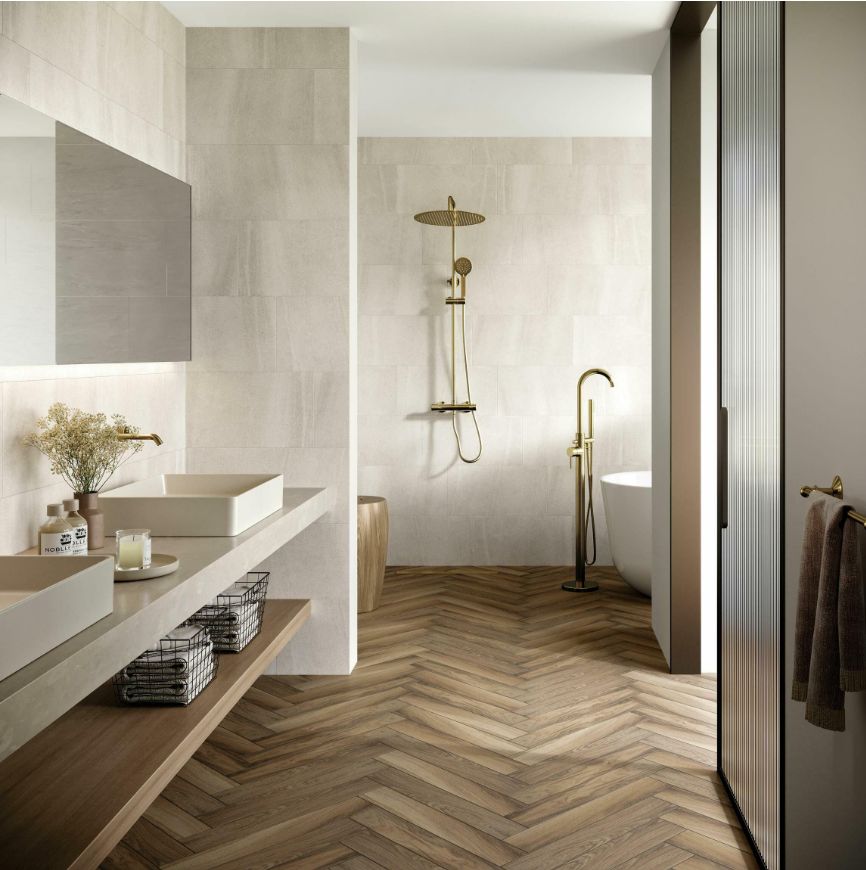
Large-format tiles — typically 60x60cm and above, with 120x60cm and 120x120cm now increasingly accessible — are the single most effective tile choice for creating a sense of luxury and space in any bathroom. Fewer grout lines means the eye travels uninterrupted across the surface, making the room feel significantly larger and the overall finish significantly more high-end.
The most popular current choice is large-format porcelain in warm stone tones: greige, ivory travertine, soft limestone, and warm concrete. These tones work with virtually any hardware finish and age beautifully. For best results, run the same large-format tile across both the floor and at least one wall — this seamless, wraparound approach is the signature of high-end hotel bathroom design and works powerfully in domestic spaces of any size.
2. Create Drama With a Full-Height Feature Wall
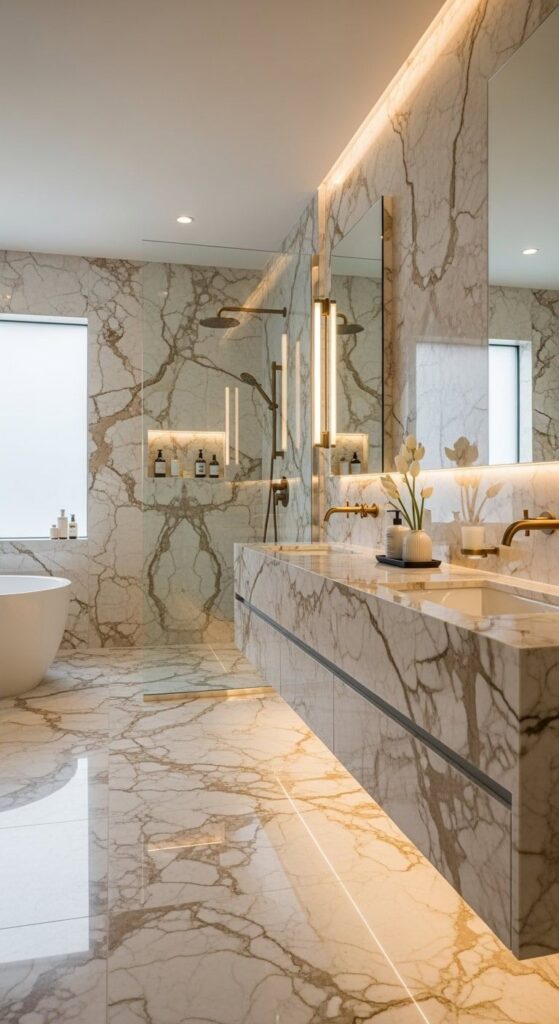
A full-height feature tile wall is one of the most impactful and consistently beautiful choices in bathroom design. Applied from floor to ceiling behind the bath, behind the vanity, or on the shower’s back wall, a feature tile in a bolder, richer, or more patterned design creates a focal point that elevates the entire room without requiring the whole bathroom to be tiled in something dramatic.
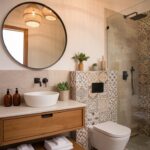
The key to a successful feature wall is contrast and restraint: the feature tile should be noticeably different from the surrounding tiles (in tone, pattern, or texture), and the surrounding tiles should be calm enough to let it shine without competing. Book-matched stone-effect panels, richly veined marble tiles, bold geometric patterns, and hand-crafted zellige are all extraordinary feature wall choices that reward the investment.
3. Choose Subway Tiles for Timeless Versatility
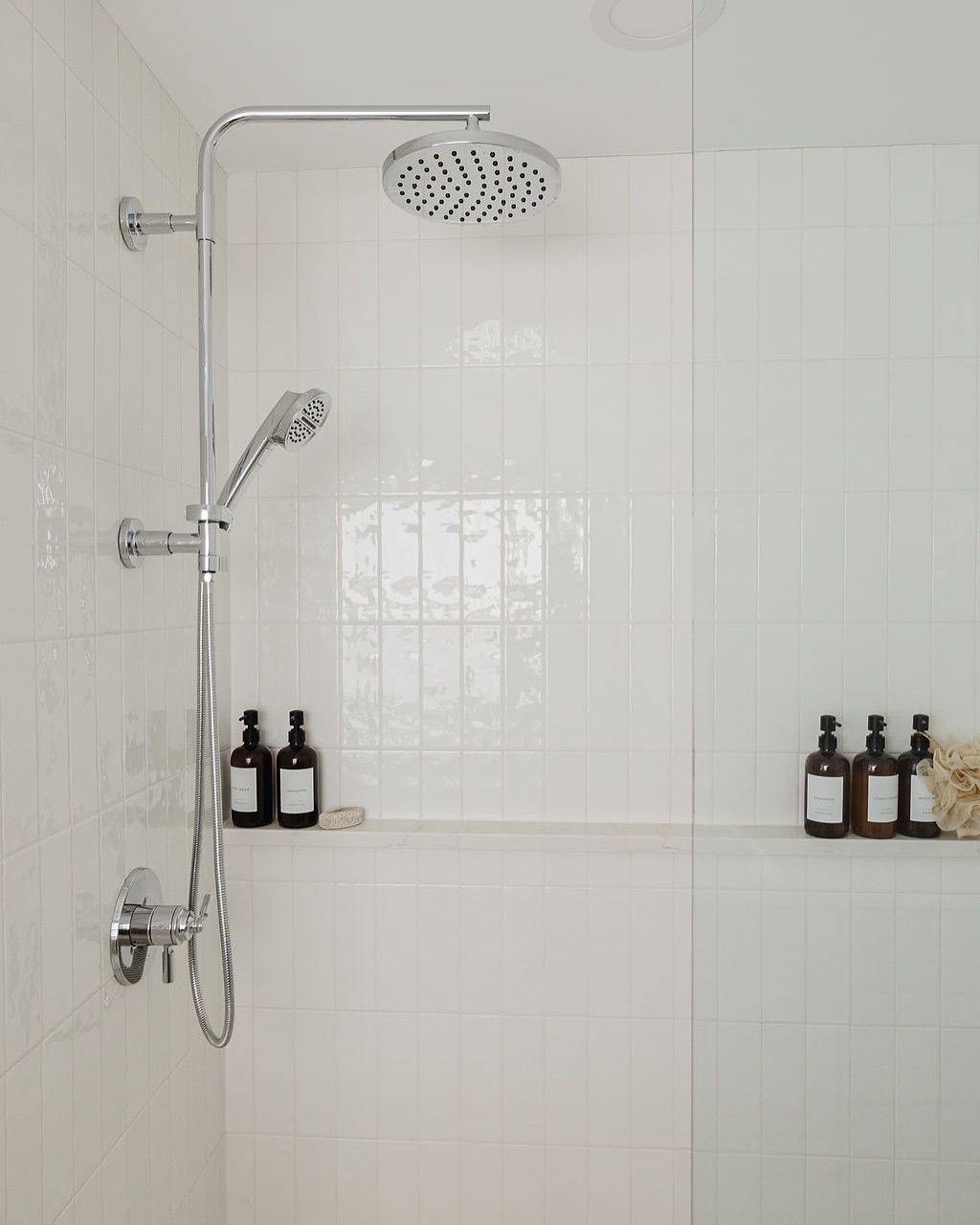
Subway tiles — the classic rectangular tile, typically in a 2:1 or 3:1 ratio — have been a bathroom staple for over a century, and they show absolutely no sign of dating. Their enduring appeal lies in their versatility: they work in contemporary, traditional, industrial, Scandi, and farmhouse bathrooms with equal ease, and the variation available within the subway tile family is enormous.
Standard white ceramic subway tiles with grey grout are the classic choice: clean, affordable, and timeless. But the format also comes in handmade zellige versions with gloriously irregular glazed surfaces, in deep jewel tones, in large bevelled profiles, and in slim brick proportions that feel more modern. The layout matters too: traditional horizontal brick bond, vertical stack bond for a contemporary feel, or herringbone for something more elevated. Subway tiles reward creative thinking.
4. Make a Bold Statement With Patterned Encaustic Tiles
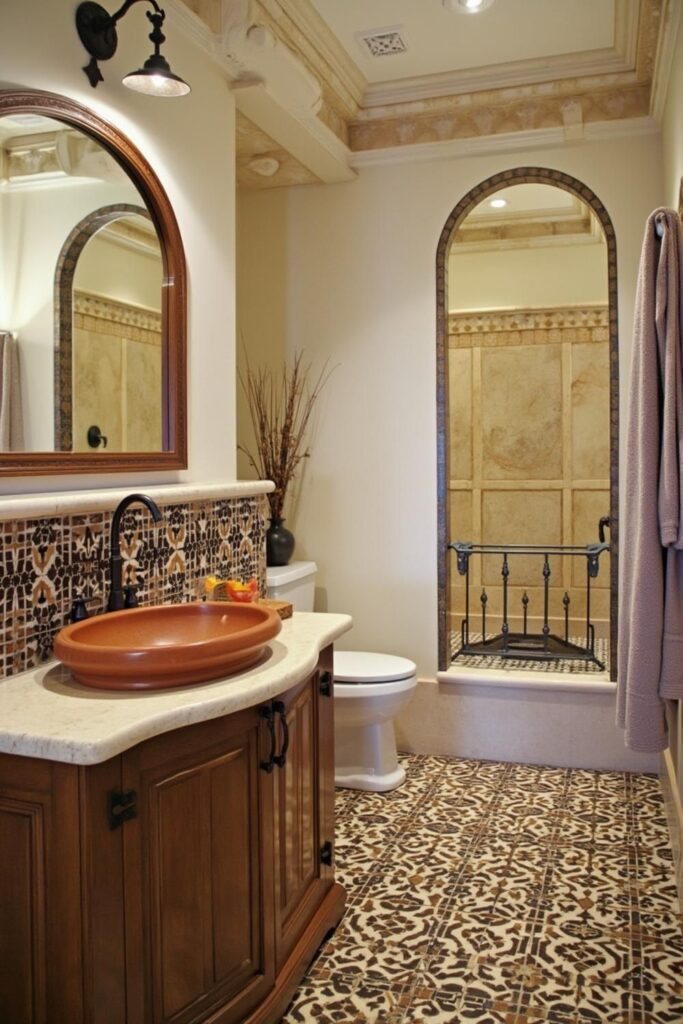
Patterned encaustic tiles — those beautifully pigmented, hand-crafted cement tiles with geometric or floral motifs — bring an irreplaceable sense of personality, history, and artisanal quality to a bathroom that no machine-made tile can match. Each one is subtly unique, the patterns are rich and complex, and the colours deepen and develop over time with use and care.
In bathrooms, patterned encaustic tiles work most beautifully as a floor treatment, with white or light-coloured walls kept deliberately simple to let the floor pattern do the talking. They’re particularly well-suited to bathrooms with traditional or Mediterranean character — Victorian terraced houses, period conversions, and bohemian or eclectic homes. They’re an investment, but the result is a bathroom floor that is genuinely, unmistakably one of a kind.
5. Try Terrazzo Tiles for a Playful, Designer Look
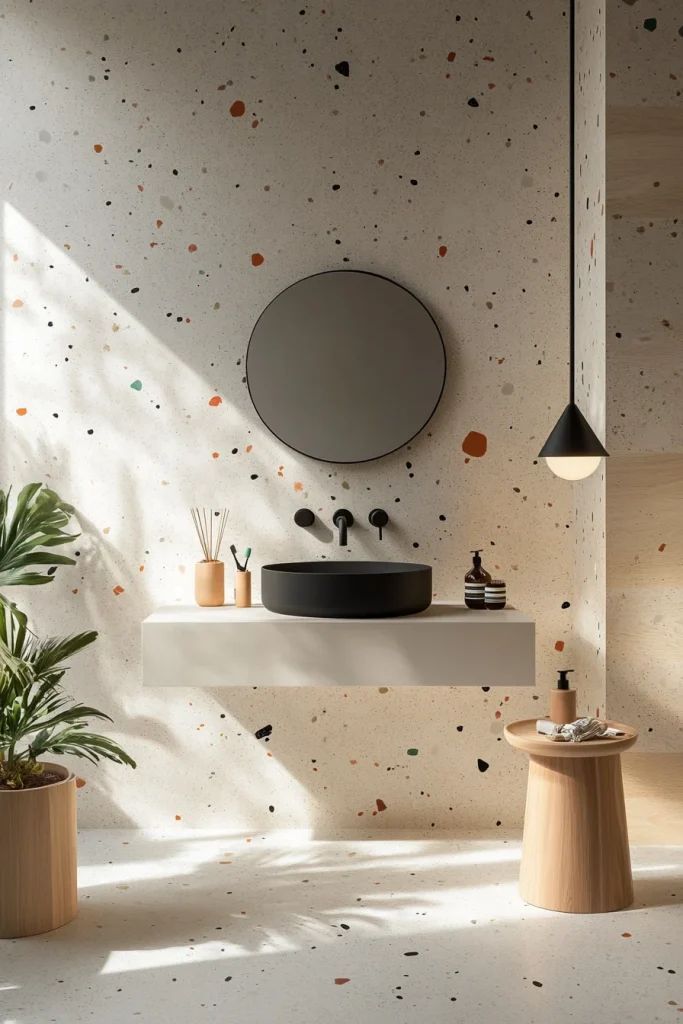
Terrazzo — the composite material made from chips of marble, granite, glass, or stone set in cement or resin — has made a spectacular comeback in contemporary interiors, and in bathrooms it is genuinely stunning. The material has been used in architecture since the 15th century, which gives it a timelessness that more trend-driven tile choices lack, while its contemporary revival comes with fresh, exciting colourways that feel thoroughly modern.
Large-format terrazzo tiles work beautifully as both bathroom floor and wall tiles. The colour combinations available are extraordinary: classic white with black and grey chips, warm blush with gold and terracotta, soft sage with cream and charcoal. Terrazzo pairs particularly well with mid-century modern furniture, brushed gold hardware, and warm, simple accessories. It’s a tile that makes any bathroom feel like it has genuine design confidence.
6. Use Zellige Tiles for Handmade, Reflective Texture
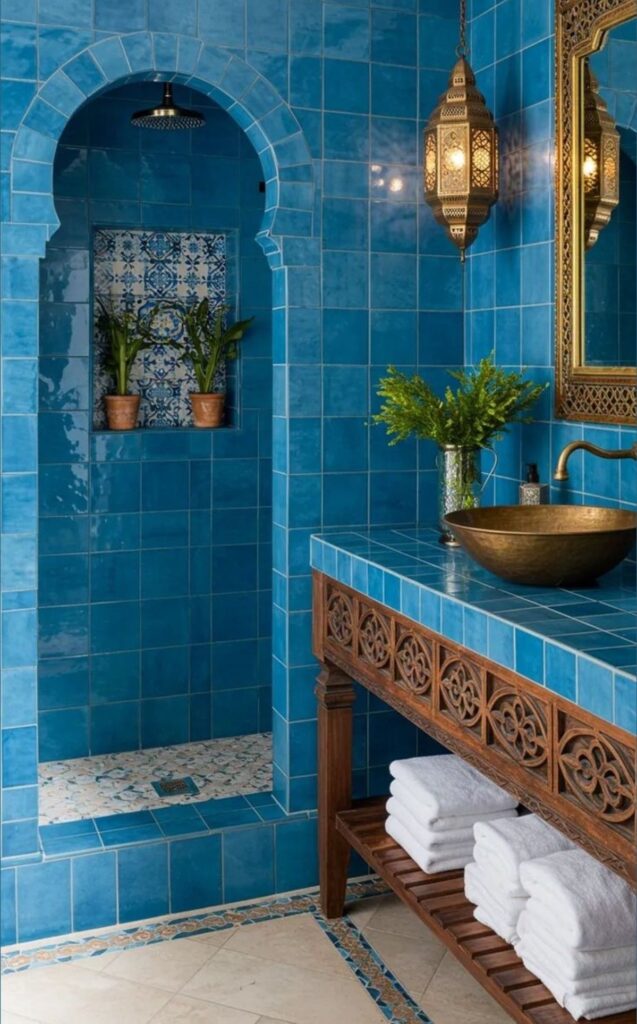
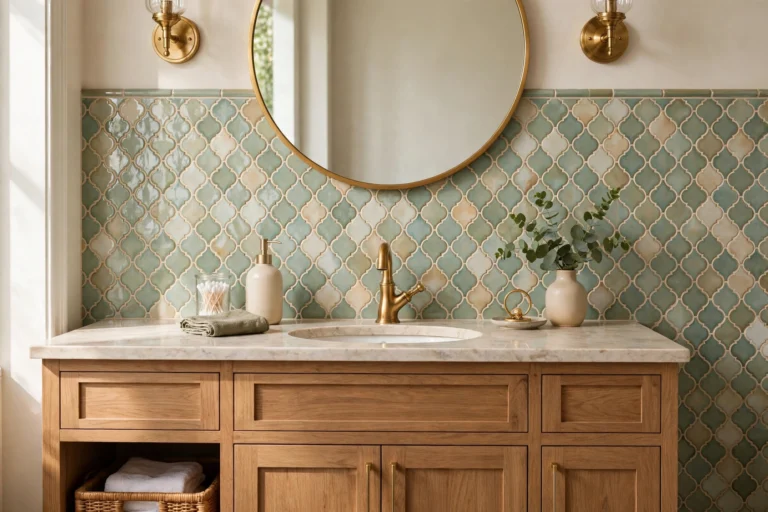
Zellige tiles — traditional hand-crafted Moroccan terracotta tiles with a rich, multi-faceted glaze — are one of the most beautiful tile choices available for bathrooms, and they are having a significant moment in contemporary interior design. The hand-glazing process means each tile is unique: the colour varies subtly, the surface is gently uneven, and the way the tile catches and reflects light changes at every angle and throughout the day.
In a bathroom, zellige tiles create a shimmering, living quality that no machine-made tile can replicate. They’re most commonly used in shower enclosures and as feature walls, where their reflective glaze plays beautifully against the movement of water. Deep ocean blue, warm terracotta, sage green, and ivory are all classic zellige colours for bathrooms. They are an investment — but the sensory experience of a zellige-tiled bathroom is genuinely extraordinary.
7. Lay Tiles in a Herringbone Pattern for Elegant Movement
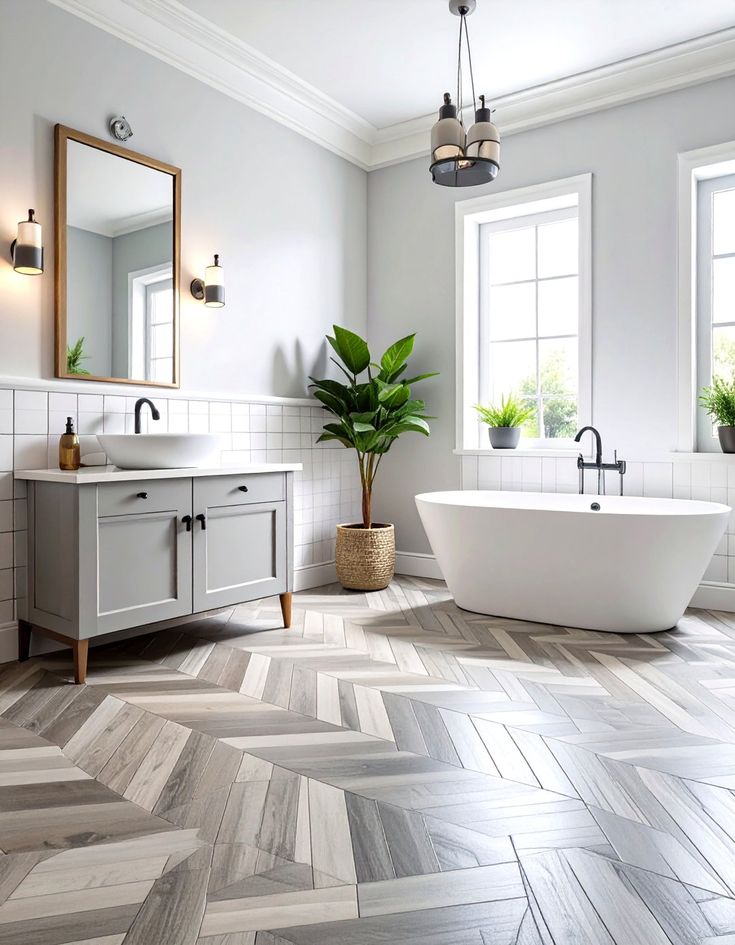
The herringbone pattern — rectangular tiles laid at 45-degree angles to create a V-shaped zigzag — is one of interior design’s most enduring and elegant layouts, and in a bathroom it adds a visual sophistication that a standard grid or brick bond simply can’t match. The directional quality of herringbone creates movement and energy without being busy or overwhelming.
Herringbone works across formats — from slim 5x25cm metro tiles for a delicate, intricate look to larger rectangular porcelain tiles for something more architectural and impactful. On the floor, it draws the eye through the space and makes rooms feel larger. On a shower wall, it creates a beautiful decorative moment without requiring a patterned tile. The layout does all the design work, which means the tile itself can be simple, affordable, and timeless.
8. Go Dark for a Moody, Dramatic Bathroom
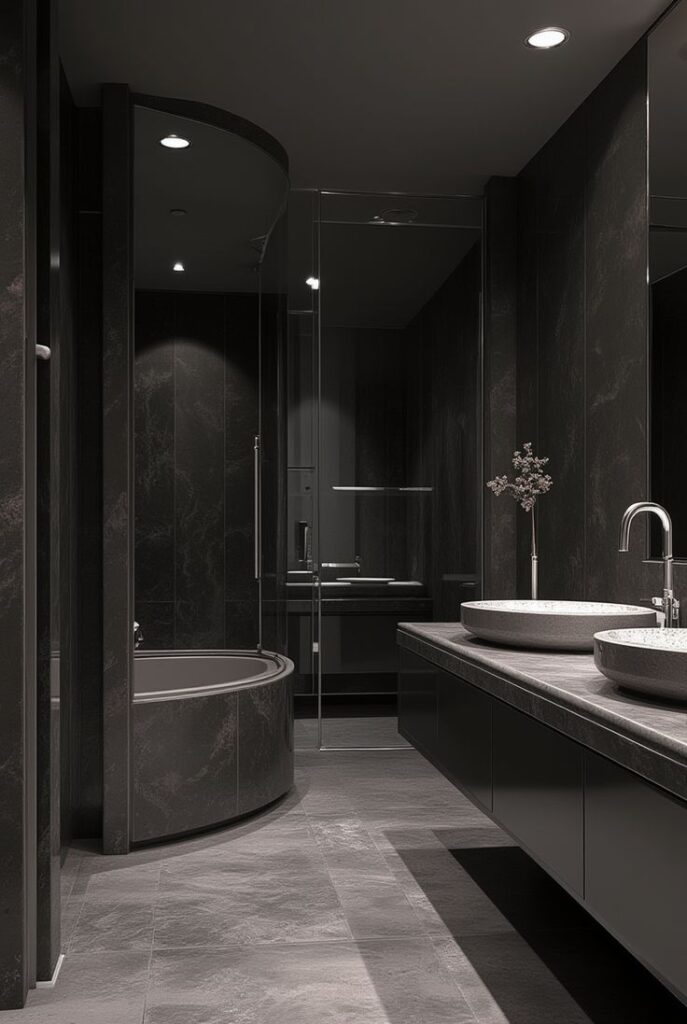
Dark tiles in a bathroom are one of the most daring and most rewarding design choices you can make — and the results, done well, are genuinely spectacular. Deep charcoal, rich slate grey, warm black, dark graphite, and forest green tiles create a cocoon-like atmosphere that transforms bathing from routine into ritual. The space feels wrapped and intimate in a way that light-tiled bathrooms never quite achieve.
The secret to making dark tiles work in a bathroom is light: warm, layered lighting (backlit mirrors, wall sconces, LED strips under vanity) prevents the room from feeling cave-like and makes the dark tiles glow rather than absorb. White or light-coloured fixtures (bath, basin, toilet) provide essential contrast. And warm-toned grout in a tone close to the tile itself keeps the surface reading as unified and intentional rather than heavy.
9. Mix Floor and Wall Tiles Thoughtfully
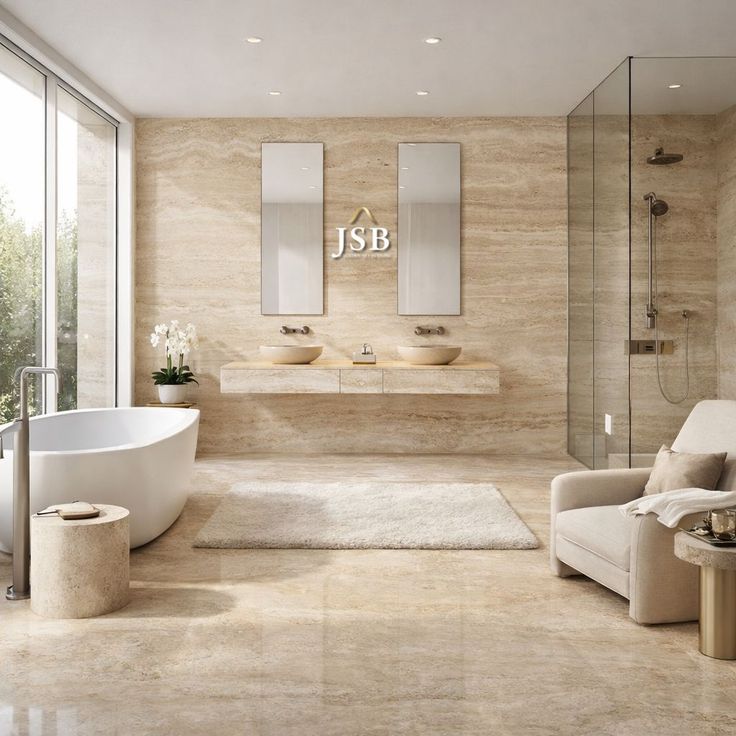
Mixing tiles in a bathroom — different tiles on the floor and walls — is standard practice, but getting it right requires a little strategic thinking. The key principle is to choose tiles that are related but different: the same colour family in different finishes, or the same finish in different formats, or complementary tones within the same palette. What you want to avoid is tiles that clash tonally or compete for attention.
A classic successful combination: warm greige large-format porcelain on the floor with a smaller-format textured tile in the same tonal family on the walls. Or white subway tiles on the walls with a patterned encaustic floor tile. Or dark stone-effect wall tiles with a lighter tone of the same stone on the floor for contrast and definition. A slim metal threshold trim between different tile areas adds a professional, considered finish.
10. Use Tiles to Create a Wet Room Effect
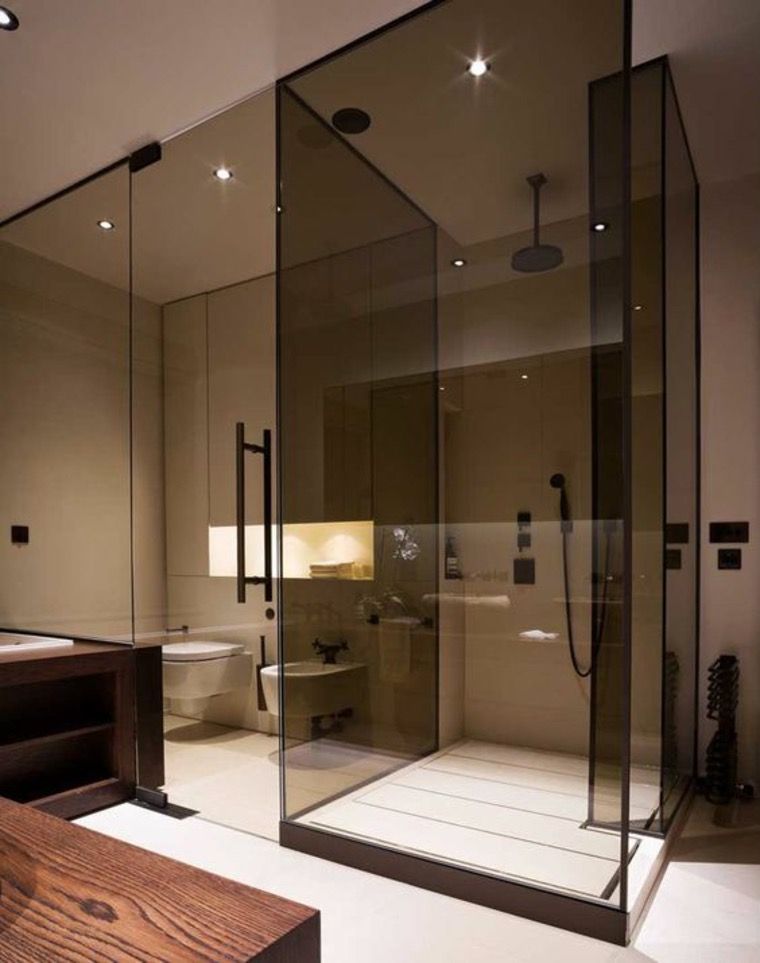
A wet room — where the shower area flows seamlessly from the rest of the bathroom with no enclosure other than a glass panel or wall, and a linear drain in the continuous tiled floor — is one of the most beautiful and architecturally sophisticated bathroom configurations available. And tile is the material that makes it possible.
For a wet room, tiles must be continuous, non-slip, and run unbroken across the floor and up the walls. Large-format tiles with minimal grout lines create the most seamless, luxurious result — the room reads as one unified tiled surface rather than separate zones. Choose a tile with a slight texture on the floor for slip resistance. The result is a bathroom that feels architecturally resolved, deeply serene, and genuinely unlike anything else in the home.
11. Add a Decorative Tile Border or Accent Strip
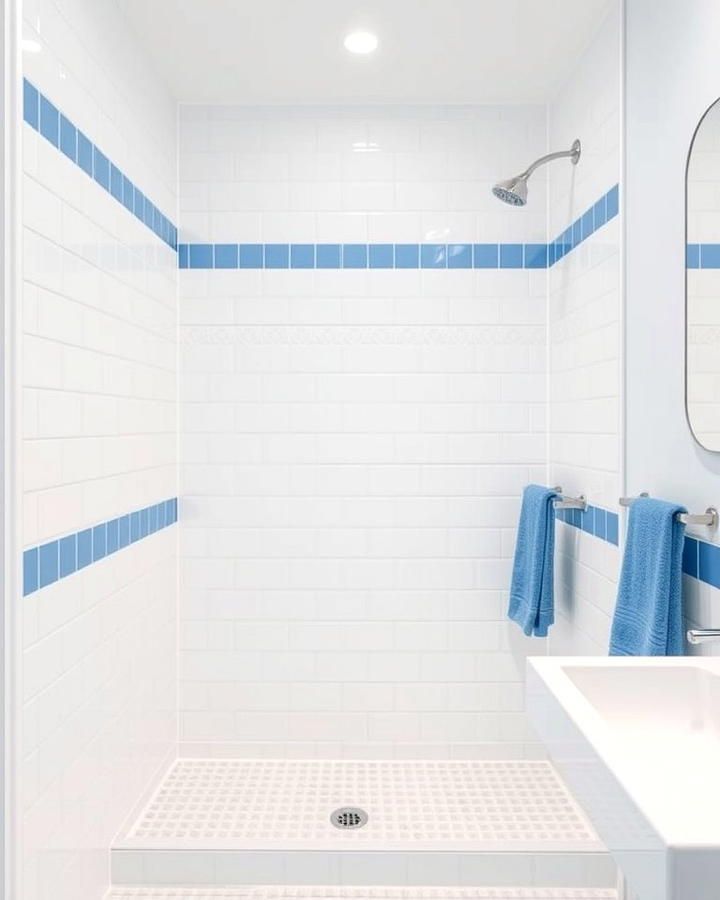
A decorative tile border or accent strip is one of the most budget-friendly ways to add personality and visual interest to a bathroom without committing to an entirely patterned or feature tile treatment. A single row of hand-painted decorative tiles at dado height, a strip of mosaic tiles as a shower niche lining, or a band of metallic or textured tiles running horizontally around the room adds character and craftsmanship to an otherwise simple scheme.
This approach works particularly well in period properties and traditional-style bathrooms, where decorative borders are historically appropriate and add authenticity. It also works beautifully in contemporary bathrooms as a deliberate contrast element: a row of handmade patterned tiles in an otherwise clean, modern scheme creates a visual pause that makes the whole room more interesting. Small detail, big impact.
12. Choose Stone-Effect Porcelain for Beauty Without Maintenance
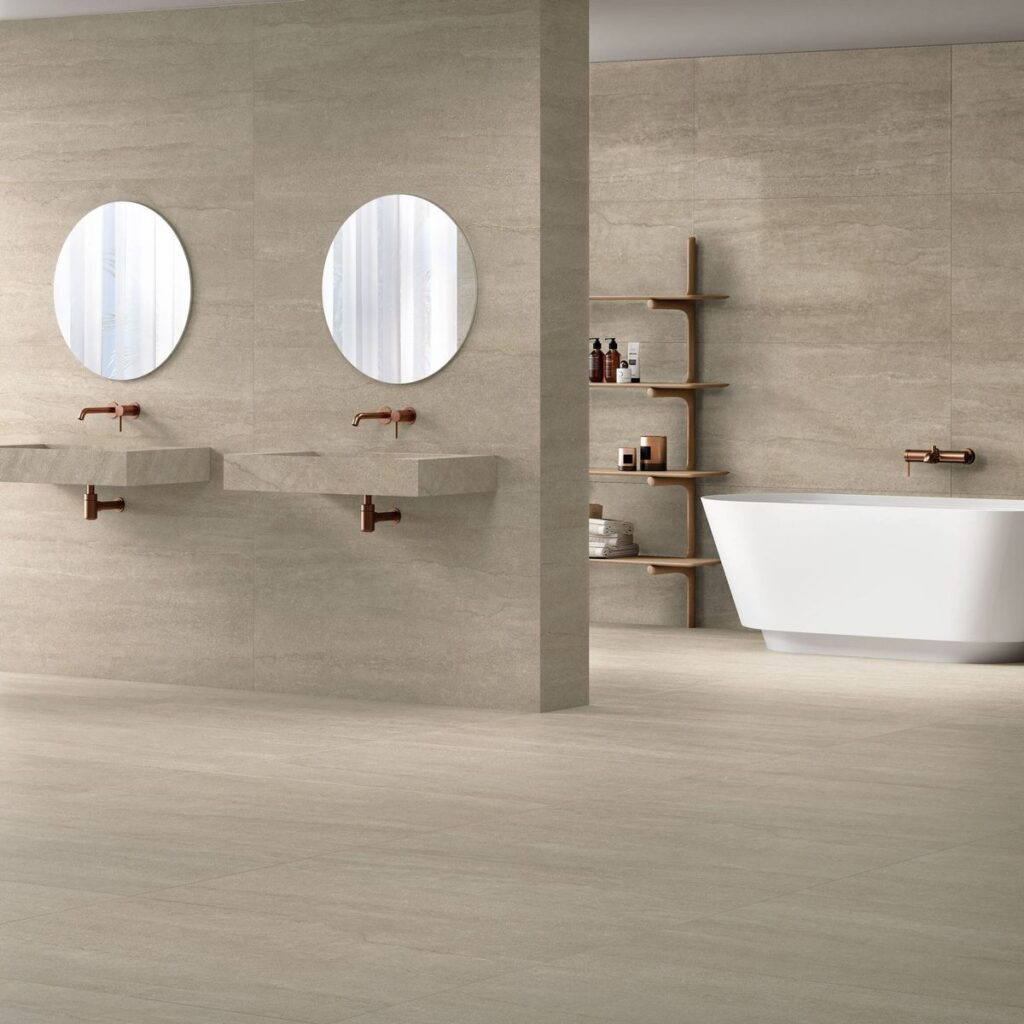
Natural stone — marble, travertine, limestone, slate — is undeniably beautiful in a bathroom. But it requires regular sealing, careful cleaning, sensitivity to acidic products, and can stain, scratch, or absorb water if not maintained correctly. For most bathrooms, in most households, high-quality stone-effect porcelain is the more practical, more durable, and arguably just as beautiful choice.
Today’s stone-effect porcelain tiles are extraordinary: the veining, the surface texture, the colour variation, and the warmth of natural stone are all reproduced with remarkable fidelity. They’re completely impervious to water, stain-resistant, scratch-resistant, and require no sealing or special maintenance. Choose a warm travertine-effect for Mediterranean warmth, cool marble-effect for contemporary elegance, or textured limestone-effect for organic earthiness. All the beauty — genuinely almost none of the maintenance.
13. Consider Mosaic Tiles for Shower Floors and Niches
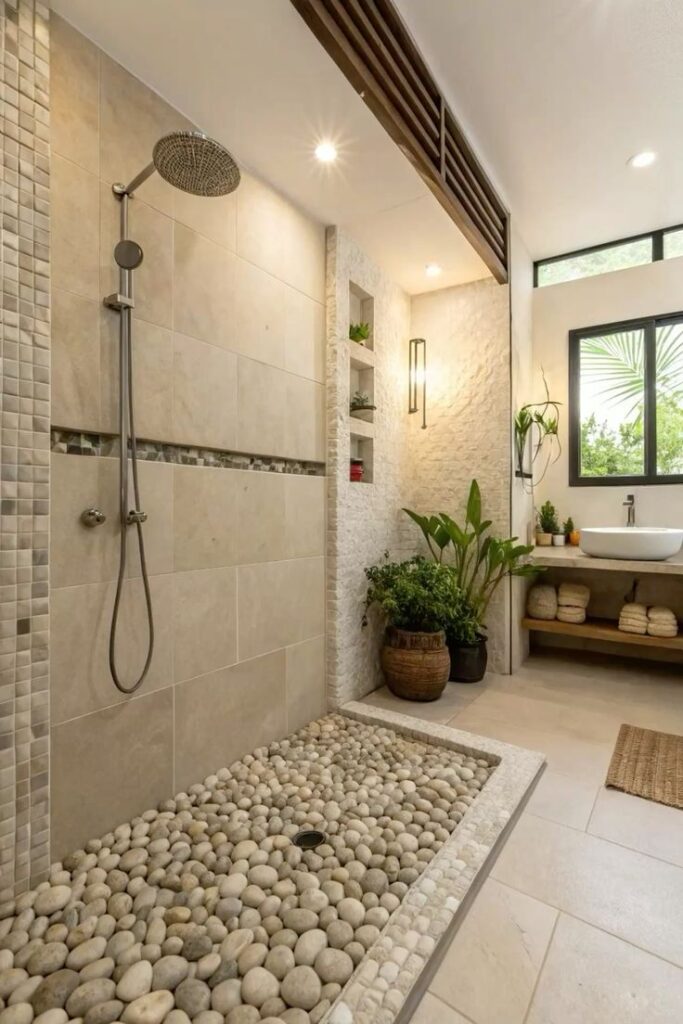
Mosaic tiles — small-format tiles (typically 5x5cm or smaller) mounted on mesh backing sheets — are the perfect choice for curved surfaces, shower floors, and recessed niches where large-format tiles can’t be cut and fitted effectively. They’re also one of the most tactile and visually rich tile options available, creating a fine-grained texture that reads as incredibly luxurious, particularly in natural stone, glass, or metallic finishes.
On a shower floor, natural stone pebble mosaics are both beautiful and practical: the micro-grout lines between individual pieces provide excellent non-slip grip, and the organic shapes and tones create a spa-like, nature-connected quality underfoot. As a niche lining, mosaics add a jewellery-box moment of texture and colour that makes a functional storage space into a decorative feature. They’re the detail that bathroom-savvy designers always notice.
14. Get Your Grout Colour Right — It Changes Everything
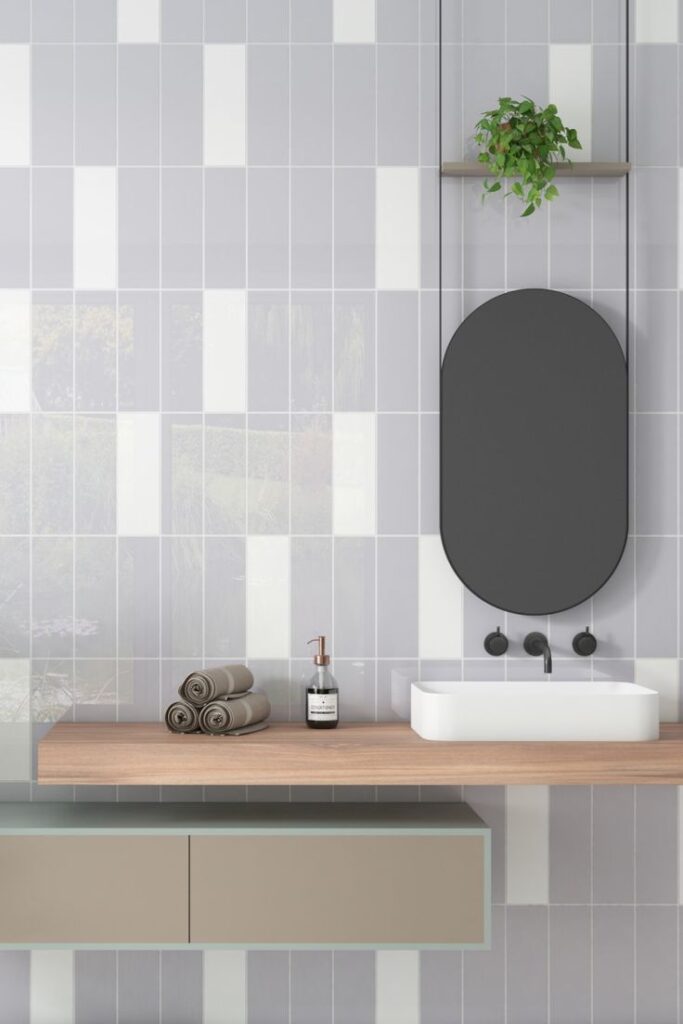
Grout colour is the most overlooked and most impactful secondary tile decision — and choosing the wrong grout colour can undermine even the most beautiful tile choice, while the right grout colour elevates the whole installation significantly. The principle is straightforward: matching grout (close to the tile colour) creates a seamless, expansive surface that maximises the sense of space. Contrasting grout (darker than the tile) emphasises the tile’s shape and adds graphic definition.
For large-format tiles in a small bathroom, tone-on-tone grout is almost always the better choice: the room feels larger, the surface reads as unified, and the result is quietly sophisticated. For subway tiles, metro tiles, or geometric layouts where the pattern itself is the design, a contrasting grout (classic grey with white tiles, or charcoal with dark tiles) makes the layout sing. And always: mid-tone grout is the most practical day-to-day, showing neither white staining nor dark discolouration with equal resilience.
15. Use the Same Tile on Floor and Walls for a Seamless Effect
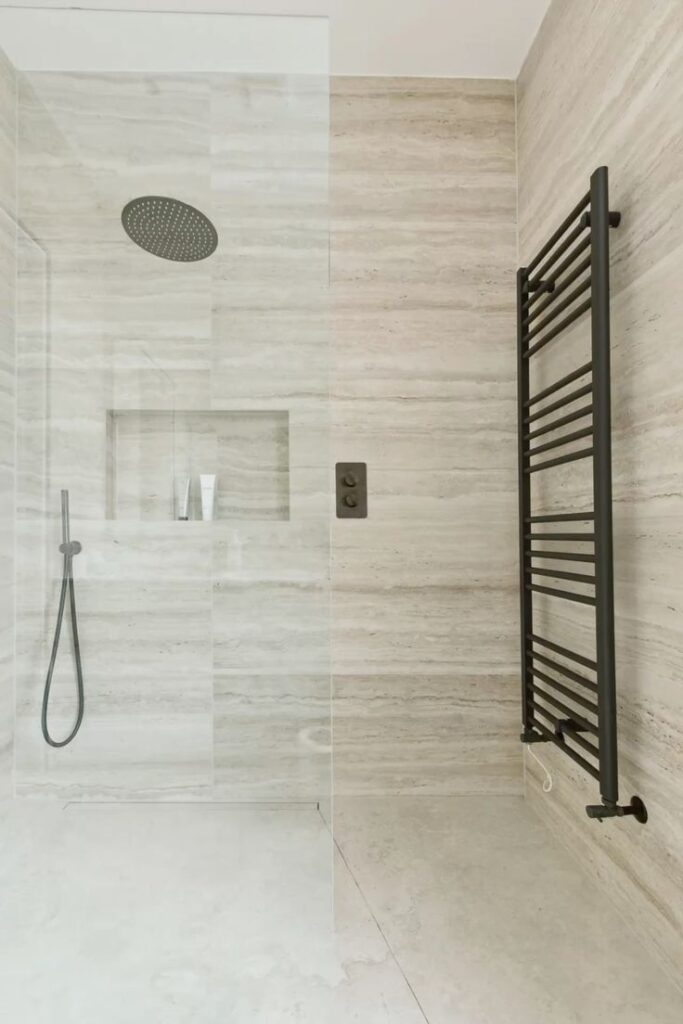
One of the most consistently beautiful and luxurious effects in contemporary bathroom design is using the same tile — same colour, same format, same finish — on both the floor and walls. This tone-on-tone, material-on-material approach creates a seamless, enveloping quality that makes the room feel like a mineral cocoon: calm, unified, and deeply serene. It’s the signature aesthetic of the very best contemporary hotel bathrooms.
The effect works best with large-format tiles in warm stone tones: travertine, limestone, concrete, or sandy greige porcelain. Run the tile in the same orientation on both surfaces (or deliberately perpendicular for a subtle variation) and use matching or near-matching grout throughout. White fixtures (bath, basin, toilet) provide essential contrast and prevent the room from feeling monolithic. The result is a bathroom that feels architecturally complete — designed from the ground up as a single, beautiful whole.
━━━━━━━━━━━━━━━━━━━━━━━━━━━━━━━━━━━━━━━━
Choosing bathroom tiles is one of the most permanent design decisions you’ll make in your home — and it’s also one of the most rewarding. The right tile transforms a purely functional room into a space with genuine character, beauty, and the kind of enduring quality that improves with every year you live with it.
Take your time. Order samples and live with them in the room — in natural light, in artificial light, in the morning, at night. The tile that wins in the real conditions of your actual bathroom is always the right choice, regardless of how it photographed online.
And remember: no tile choice is a mistake if it’s made with genuine understanding and genuine love for what you’ve chosen. You now have both. Go make something beautiful.
Which bathroom tile idea has you most inspired? Tell me your favourite in the comments — and if you’ve recently tiled a bathroom you love, I’d love to hear all about it!
Keep Exploring
Loved these bathroom tile design ideas? Keep the inspiration going with our master bathroom design ideas, explore practical small bathroom design ideas, or plan a full refresh with our bathroom remodel design ideas.


[…] Bathroom tile design ideas […]
[…] these bathroom remodel design ideas? Keep the inspiration going with our bathroom tile design ideas, explore practical small bathroom design ideas, or dream bigger with our master bathroom design […]
[…] budget-friendly options, and bold statements so you can dress up the vanity wall in any style. Bathroom tile design ideas cover floors, showers, and walls beyond the sink […]