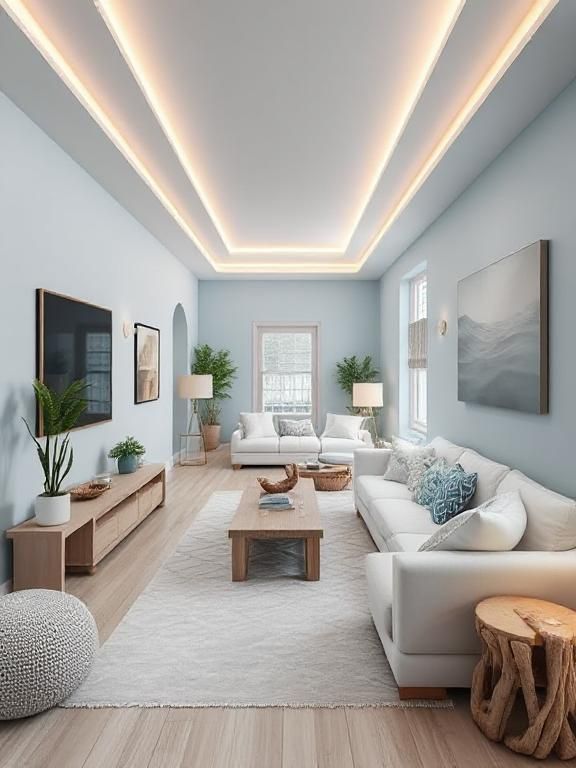

A narrow living room can feel like one of the most challenging spaces to design — and if yours currently feels more like a corridor than a cosy place to actually live, you are absolutely not alone. Long, narrow proportions are one of the most common layouts in terraced houses, apartments, and period conversions, and they come with a very specific set of design challenges.
The good news? Every single one of those challenges has a clever, beautiful solution. Narrow rooms are not design dead-ends — they’re design puzzles. And once you know the tricks that professional interior designers use to work with challenging proportions, you’ll look at your narrow living room with completely new eyes.
These 12 narrow living room design ideas will show you how to make your space feel wider, more balanced, properly proportioned, and genuinely beautiful — without moving a single wall. Let’s get started.
━━━━━━━━━━━━━━━━━━━━━━━━━━━━━━━━━━━━━━━━
1. Arrange Furniture Across the Width, Not the Length
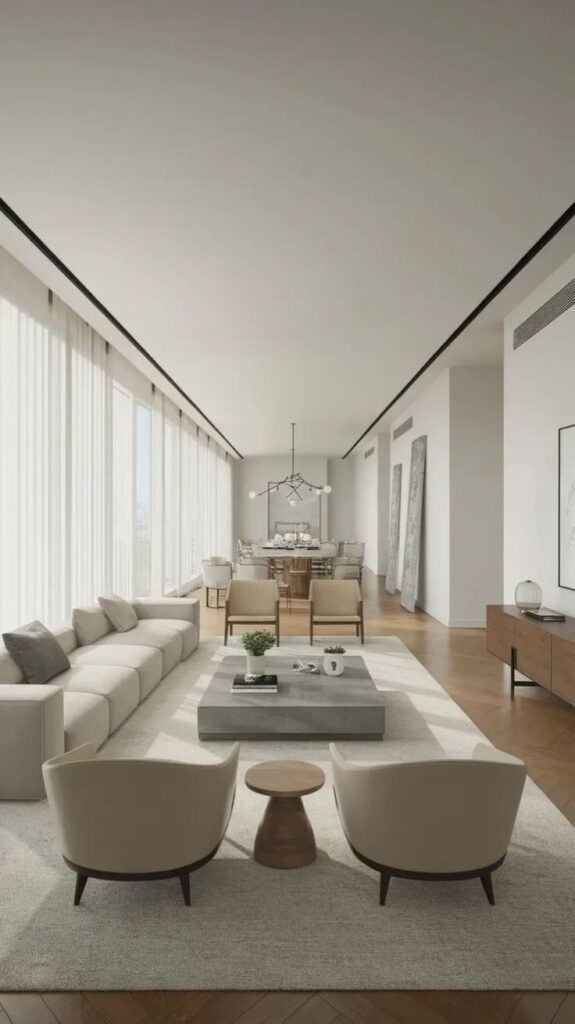
The most common mistake in a narrow living room is placing the sofa along the longest wall — which seems logical but actually emphasises the tunnel-like quality of the room. Instead, try positioning your main furniture pieces across the width of the room, creating a seating zone that interrupts the length and makes the room read as a series of spaces rather than one long corridor.
A sofa placed perpendicular to the long walls, with a coffee table in front and a pair of chairs or a smaller sofa facing it, creates a proper conversation zone that has depth and balance. This single furniture rearrangement — which costs nothing — is often the most transformative thing you can do for a narrow living room. Move things around before you buy anything new.
2. Paint the Short Walls a Deeper, Richer Colour
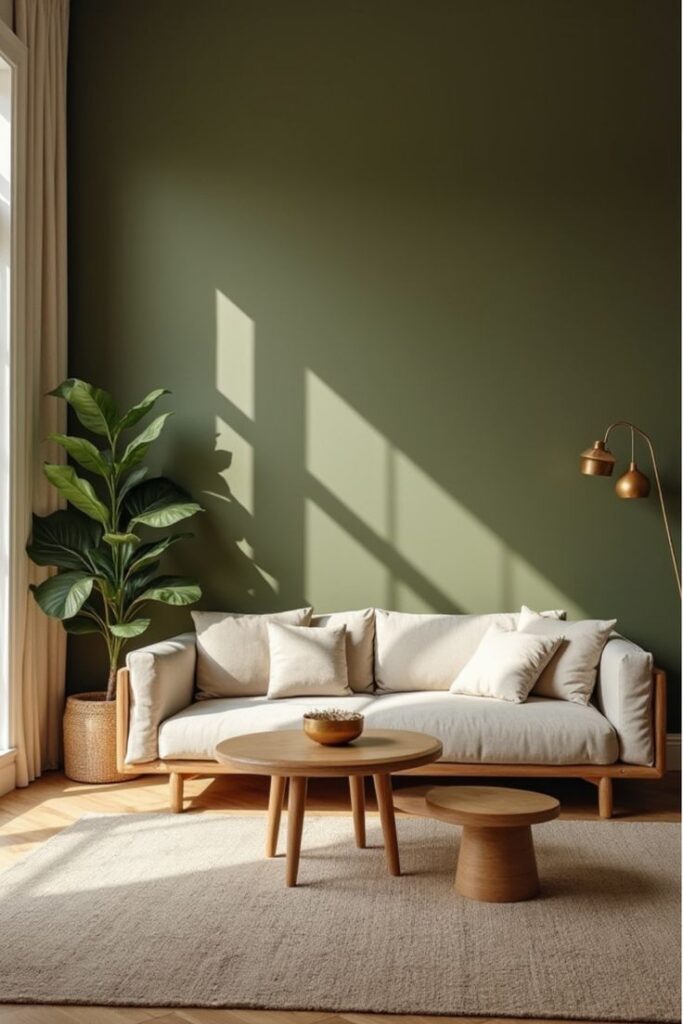
Here is one of the cleverest tricks in the narrow room designer’s toolkit: paint the short end walls a deeper, richer colour than the long side walls. This visual illusion works by drawing the eye toward the darker wall, which appears to come forward — making the room feel shorter and therefore proportionally wider.
Choose a colour that’s two to three shades deeper than your side wall tone, or go bold with a completely different accent colour: deep forest green, warm terracotta, dusty navy, or rich charcoal all work beautifully. Keep the long side walls pale and light-reflective to maximise the width illusion. The result is a room that feels more like a square and less like a shoebox — simply through the power of strategic paint.
3. Use a Large Mirror on a Long Side Wall
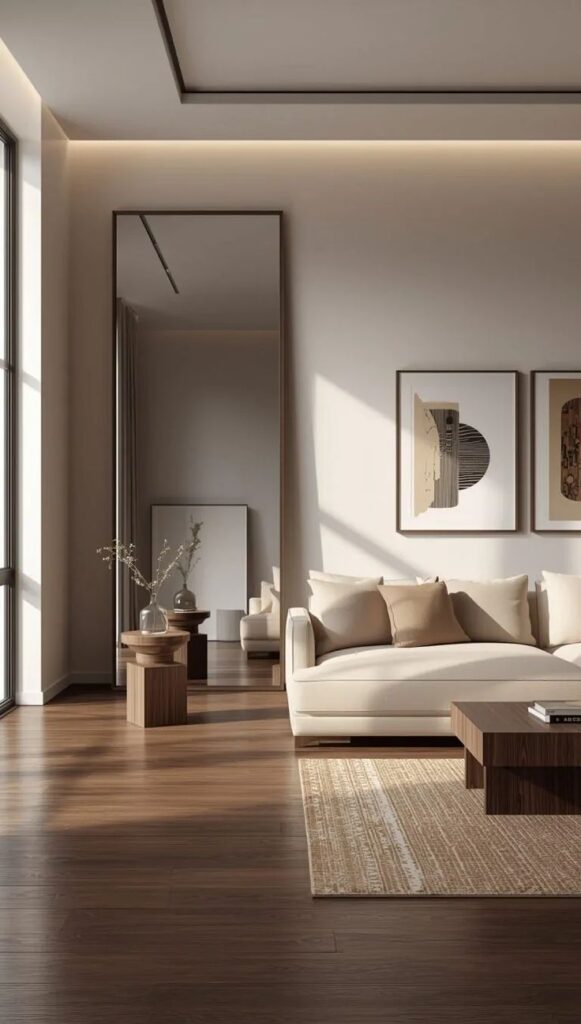
Mirrors are the narrow room’s best friend — and in a long, tight living room, a large mirror placed on one of the long side walls can be genuinely transformative. It reflects light, doubles the apparent depth of the room, and creates the illusion of a window or additional space where there is none.
For maximum effect, choose a mirror that’s as large as practically possible — ideally spanning most of the wall or at least reaching from furniture height to near the ceiling. A frameless mirror or one with a very slim frame will feel most seamless. Position it opposite or adjacent to your main light source so it bounces daylight back into the room. A full-length leaning mirror is also an elegant, renter-friendly option that achieves a similar widening effect.
4. Choose Low-Profile, Slim-Legged Furniture
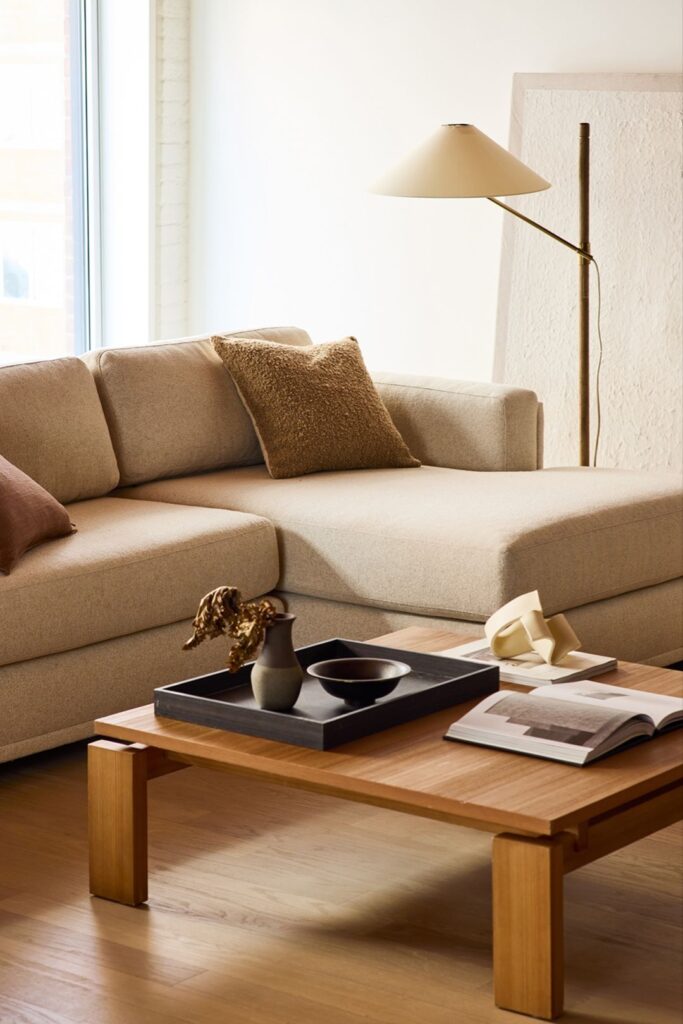
In a narrow living room, bulky, heavy furniture is the enemy. Large-scale, low-to-the-ground pieces with thick arms and solid bases make an already tight space feel even more compressed. The solution: furniture with slim profiles, visible legs, and a lightness of visual weight that allows the floor to breathe and the eye to travel freely through the space.
Look for sofas and chairs on tapered legs — the visible floor space beneath creates an airy, open quality that makes the room feel larger. Choose a coffee table with a slim frame and open structure (glass tops, metal frames, or open wood shelving) rather than solid, chunky designs. Every inch of visible floor contributes to the perception of width and space. Go slim, go light, go leggy.
5. Lay Flooring Horizontally Across the Width
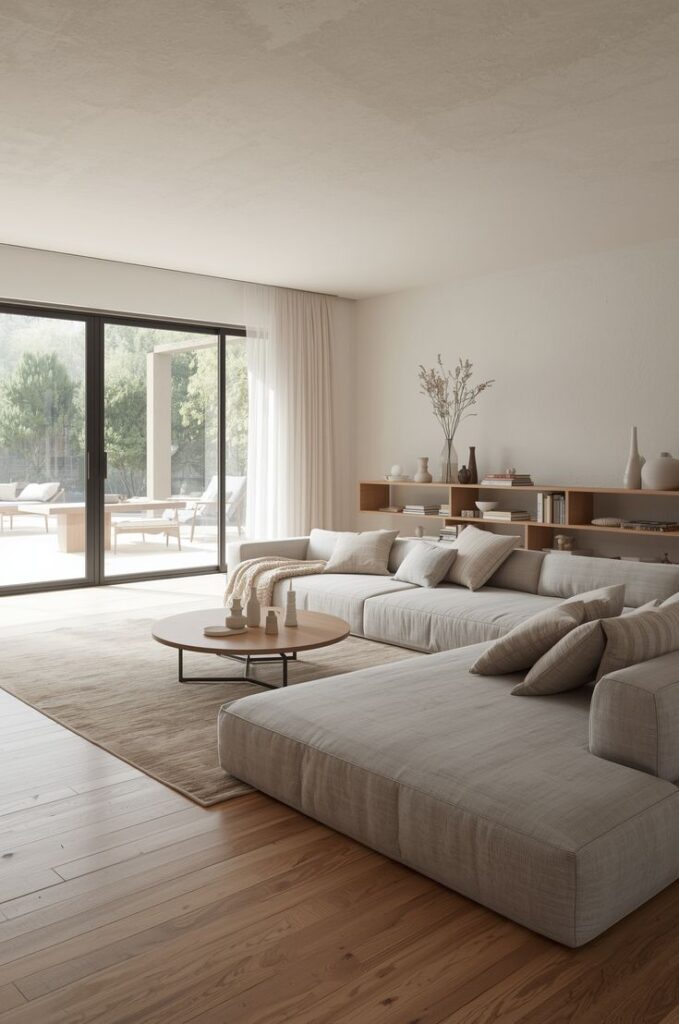
The direction your flooring runs has a powerful effect on how a narrow room feels — and most people instinctively lay planks running the length of the room, which actually emphasises how long and narrow it is. The counter-intuitive solution: run your floor planks across the width of the room instead.
Horizontal flooring lines draw the eye from side to side rather than front to back, making the room appear wider and shorter. This works beautifully with wood-effect tiles, engineered timber, LVT planks, or herringbone tile layouts. If you’re using a rug, the same logic applies: choose one with horizontal stripes or a design element that draws the eye across rather than along the room. Direction matters more than you might think.
6. Mount Shelving and Storage High on the Walls
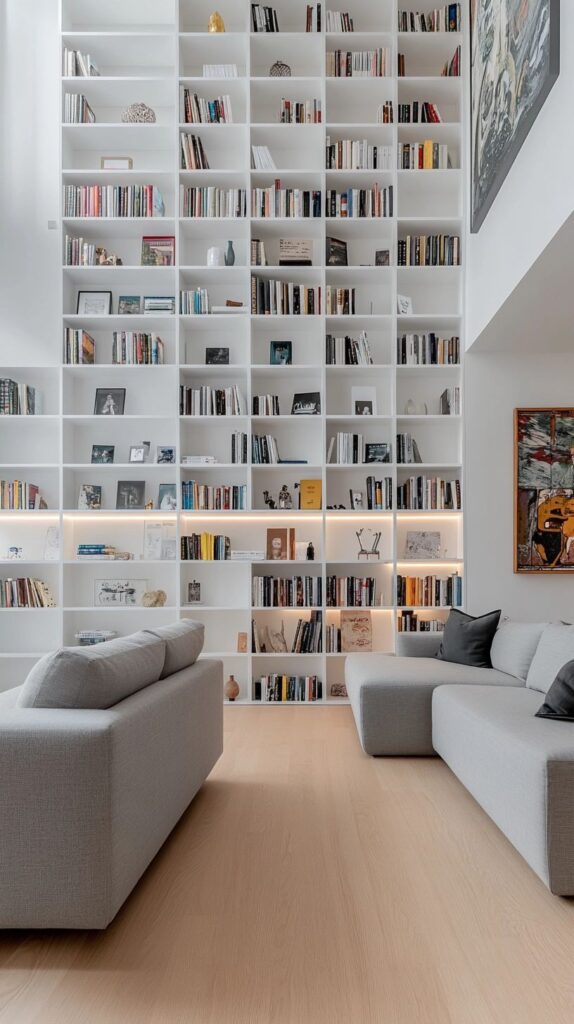
In a narrow living room, the walls are your greatest untapped resource — and using them from floor to ceiling for storage and shelving does two powerful things at once: it frees up precious floor space and draws the eye upward, making the room feel taller and more generously proportioned.
Floor-to-ceiling shelving along one long wall is a particularly effective solution — it creates a dramatic, library-like quality that turns a challenging proportion into a genuine design feature. Keep the opposite long wall clear to avoid the corridor feeling. Wall-mounted TV units, floating shelves, and high-mounted picture rails all contribute to the same effect: getting storage off the floor and onto the walls, where narrow rooms have space to spare.
7. Use Vertical Stripes to Add Height
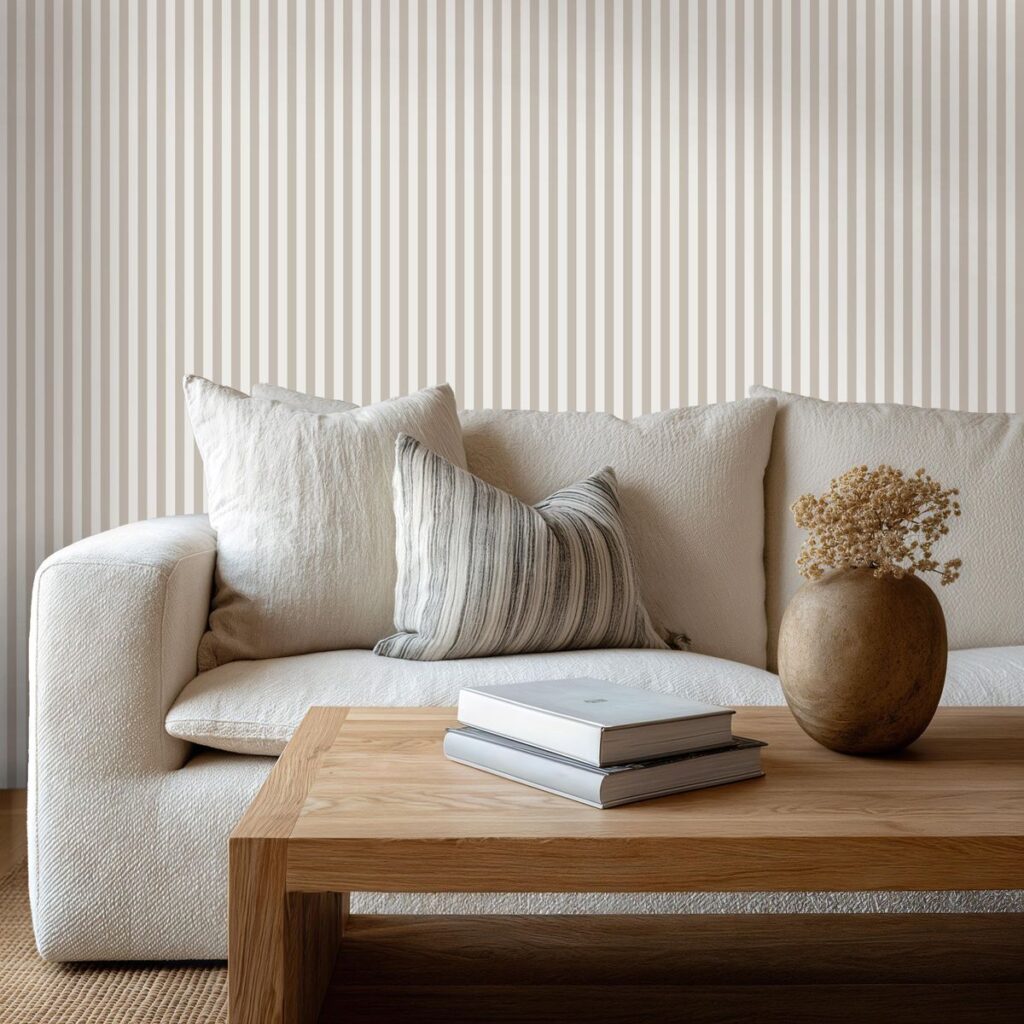
Vertical lines — whether through wallpaper, panelling, paint, or tall accessories — are one of the most effective visual tricks for adding perceived height to a room. And in a narrow living room, increased perceived height helps counterbalance the tight width, making the space feel more proportionally generous overall.
Try a vertical stripe wallpaper on one feature wall (the short end wall works especially well), or add vertical tongue-and-groove panelling painted in a tone-on-tone colour. Tall, slim floor lamps, vertical artwork in portrait orientation, and floor-length curtains all contribute to the upward pull. Even a gallery wall of tall, narrow portrait frames on the end wall draws the eye up and gives the room a sense of height it may not literally have.
8. Choose a Sofa That Fits the Width — Not the Wall
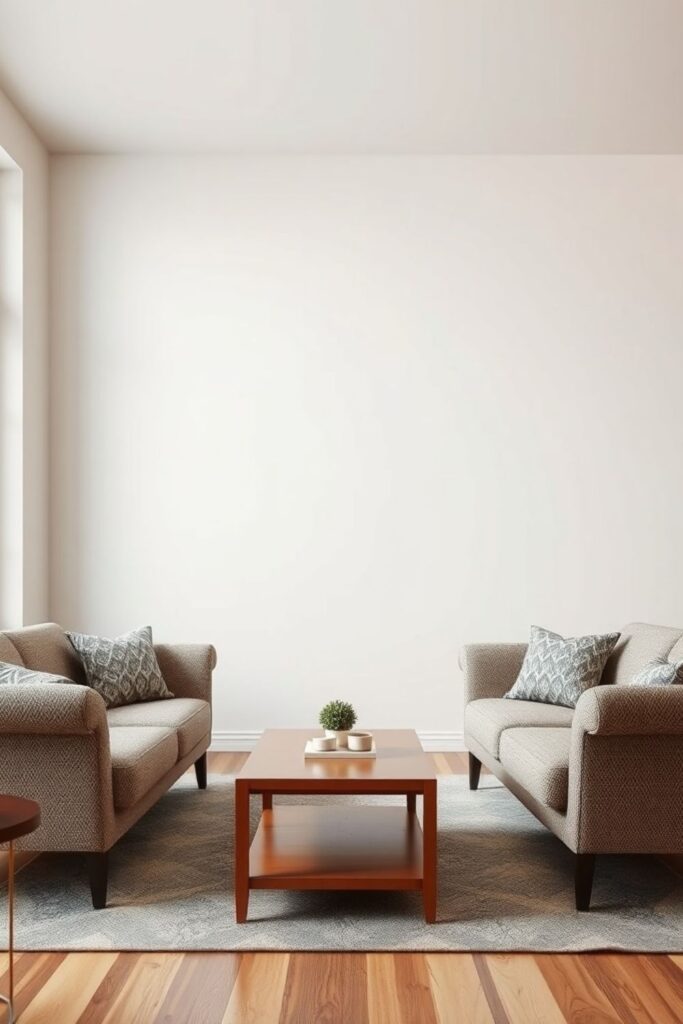
One of the most common narrow living room mistakes is choosing a sofa that’s too long — stretching it along the length of the room until it dominates the whole space. In a narrow room, sofa size is critical: you want a piece that’s proportional to the width of the room, not the length.
A two-seater or compact three-seater is almost always a better choice than a full-size three-seater or sectional in a narrow space. If you love the look of a sectional, consider an L-shaped design with a short return that tucks into one end of the room rather than extending along the length. Measure the width of your room before you shop and work out the maximum comfortable sofa length that still allows traffic flow on at least one side.
9. Keep the Centre of the Room Clear
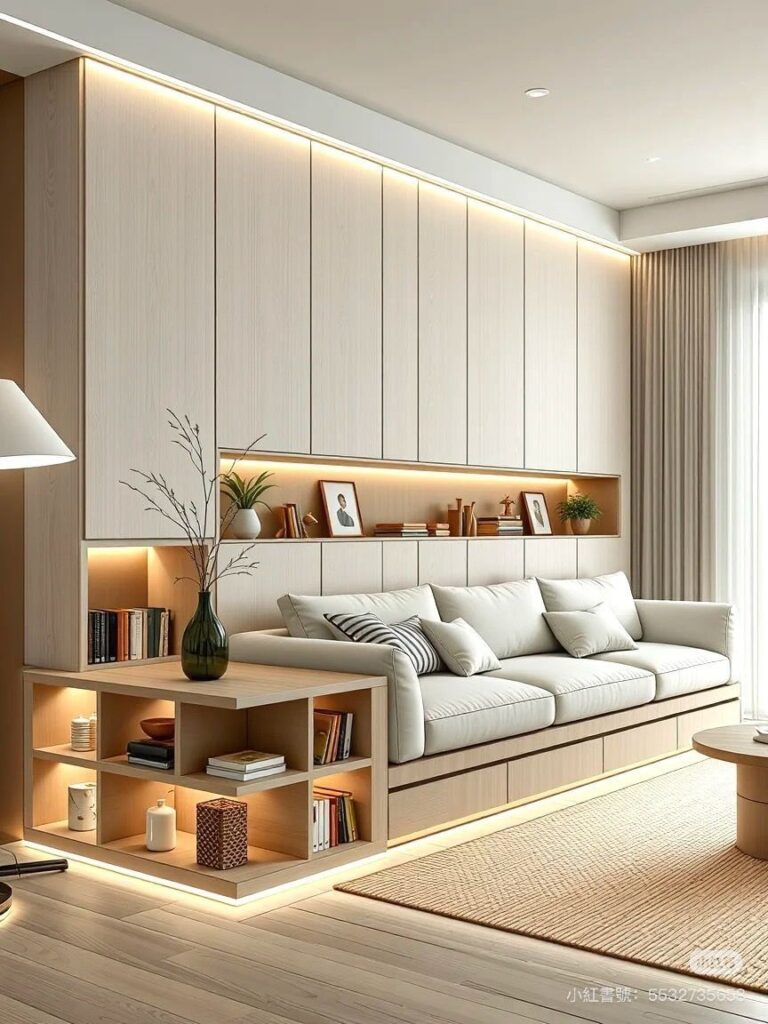
In a narrow room, every square foot of clear floor space is precious — and the most valuable area to keep clear is the central zone. Resist the urge to fill the middle of the room with a large coffee table, an ottoman, or extra furniture pieces. Instead, choose a slim, small, or transparent coffee table (glass and acrylic are excellent choices) that takes up minimal visual and physical space.
When the centre of a narrow room is open and unobstructed, the space instantly feels more breathable and generously proportioned. You can move freely, the eye travels unimpeded from end to end, and the room stops feeling like a maze of furniture to navigate. Less in the middle always means more everywhere else.
10. Light from Multiple Points to Eliminate Tunnel Effect
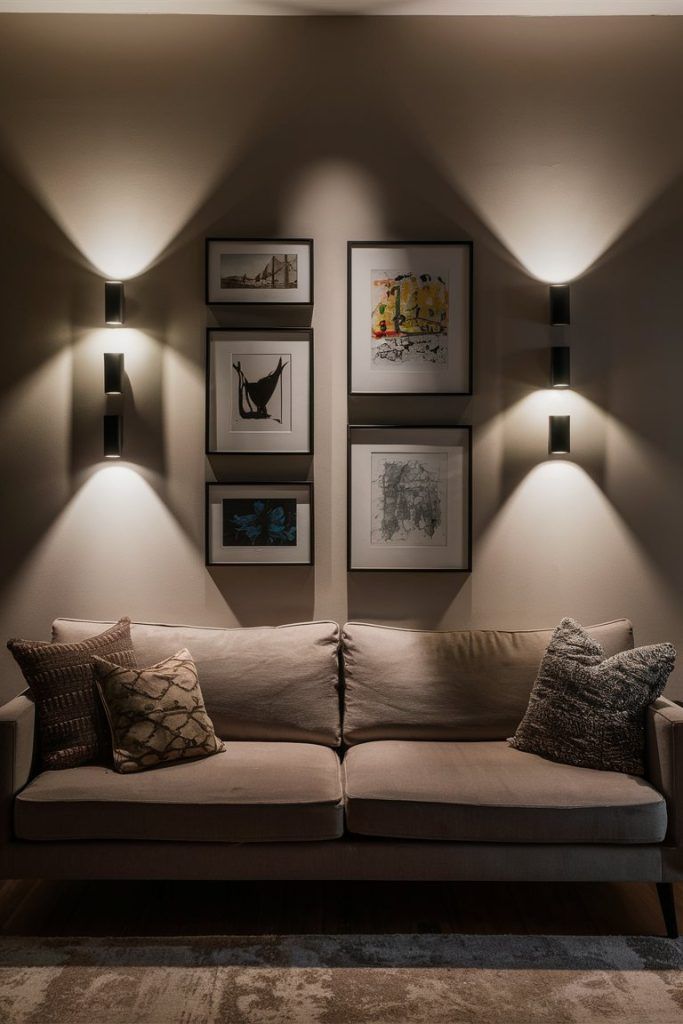
Single overhead lighting in a narrow room is a design disaster — it creates a spotlight effect that emphasises the length of the space and leaves the side walls in shadow, making the room feel even more constricted. The solution is layered, multi-point lighting distributed throughout the room, particularly along the side walls.
Wall sconces mounted on both long side walls draw the eye outward to the edges of the room, creating a sense of width that overhead light cannot achieve. A floor lamp in a corner, a table lamp on a sideboard at the far end, and under-shelf lighting on wall-mounted units all contribute to a distributed, warm glow that makes the room feel wider and more balanced. Think of your lighting as a width-creating tool, not just a brightness one.
11. Use Glass and Transparent Furniture Pieces
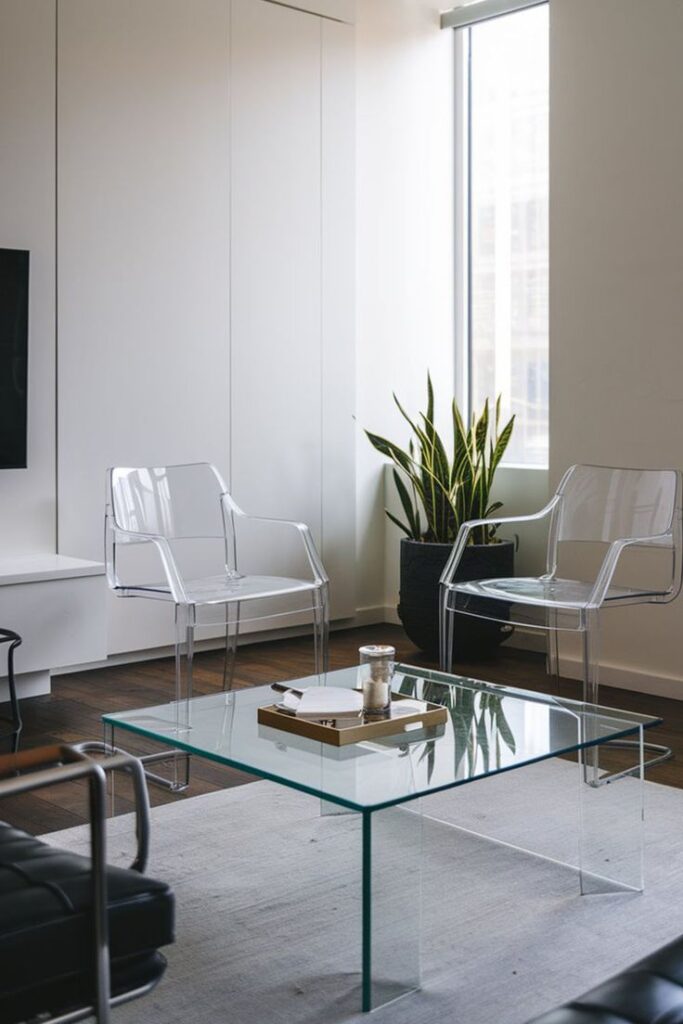
Glass and transparent furniture is the narrow room’s secret weapon. A glass coffee table, an acrylic side table, or a lucite console at the far end of the room allows the eye to pass straight through it — creating zero visual weight and contributing nothing to the sense of crowding that solid furniture can cause in a tight space.
You don’t need to furnish the entire room in transparent pieces — one or two strategically chosen glass or acrylic items among your solid furniture pieces makes a significant difference. A glass-top coffee table with a slim metal base is particularly effective: it provides all the function of a solid table while contributing almost nothing to the visual weight of the room. In narrow spaces, what you can see through matters as much as what you see.
12. Create Distinct Zones to Break Up the Length
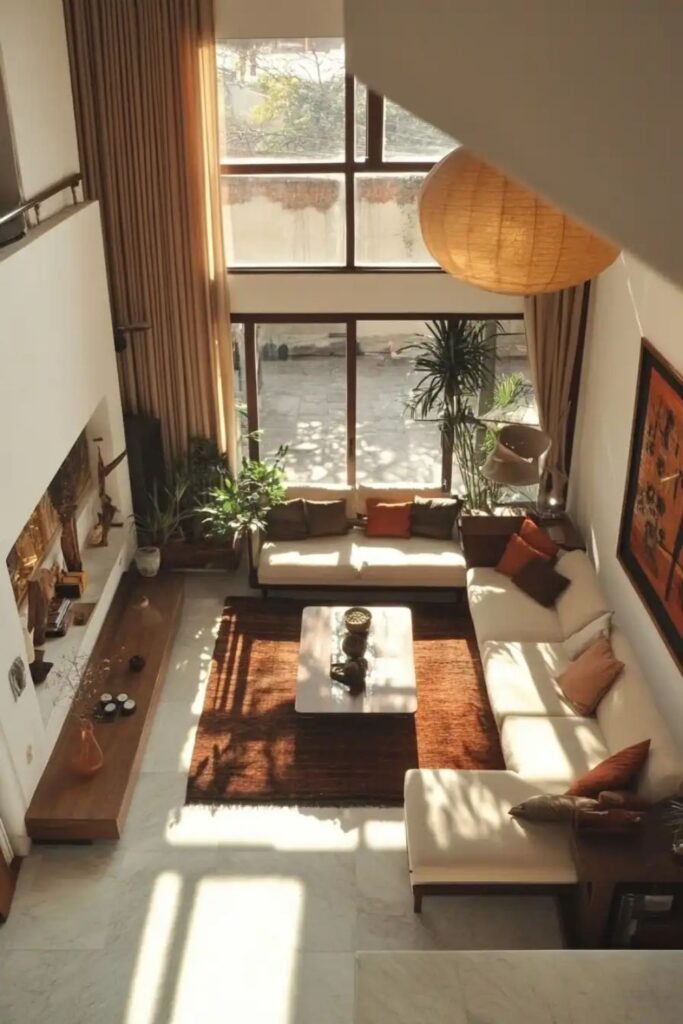
Rather than fighting the length of a narrow living room, one of the cleverest approaches is to lean into it — by deliberately dividing the space into two or even three distinct zones. A seating area at one end, a reading corner or compact workspace at the other, separated by a slim open bookshelf, a sofa back, or simply a change in rug and lighting.
When a narrow room has multiple defined zones, it stops reading as one long corridor and becomes a series of purposeful, characterful spaces. Each zone gets its own lighting, its own rug, its own identity — and the overall room feels intentional and layered rather than awkwardly stretched. Zoning a narrow room is a design move that turns a challenge into a genuine feature.
━━━━━━━━━━━━━━━━━━━━━━━━━━━━━━━━━━━━━━━━
Here’s the truth about narrow living rooms: they are not the design problem they appear to be. They’re an invitation to be clever, intentional, and creative with your space — and the rooms that result from that kind of thoughtful problem-solving are often more characterful and interesting than their perfectly proportioned counterparts. You don’t need to implement all 12 ideas at once. Start with the ones that are free — rearrange the furniture, try a different lighting setup, move the rug. Notice how the room changes. Then layer in the bigger ideas as your budget and energy allow. Your narrow living room has enormous potential. It just needs a designer’s eye — and now you have one.
Which of these narrow living room ideas are you trying first? Share your before and after photos in the comments — I’d love to see the transformation!
Keep Exploring
Love these narrow living room design ideas? Keep exploring with these stylish related reads:


[…] than a crowded set of furniture. Keep the palette light and the pieces scaled to the space — our 15 Clever Narrow Living Room Design Ideas applies the same small-space thinking to tight […]