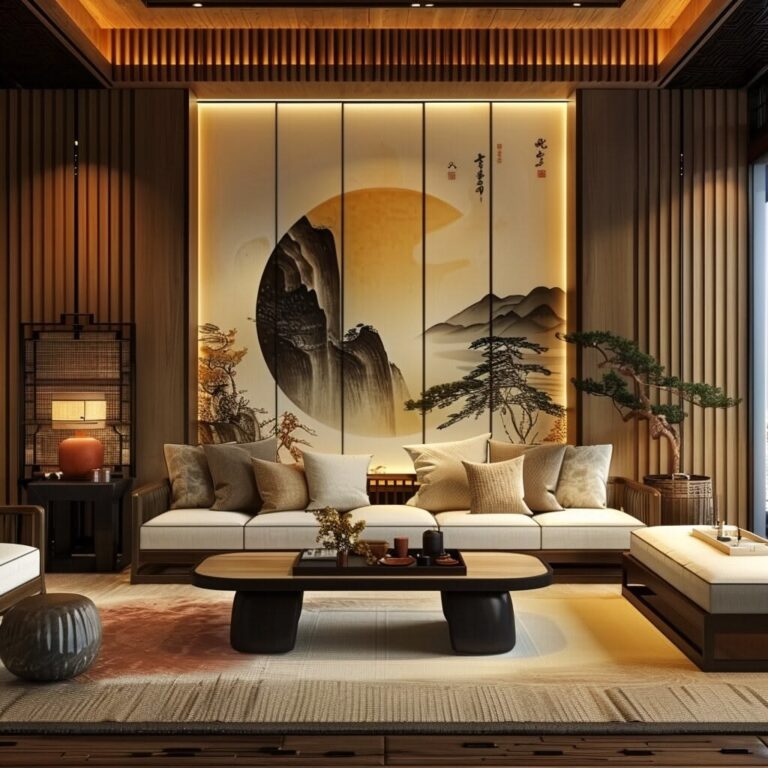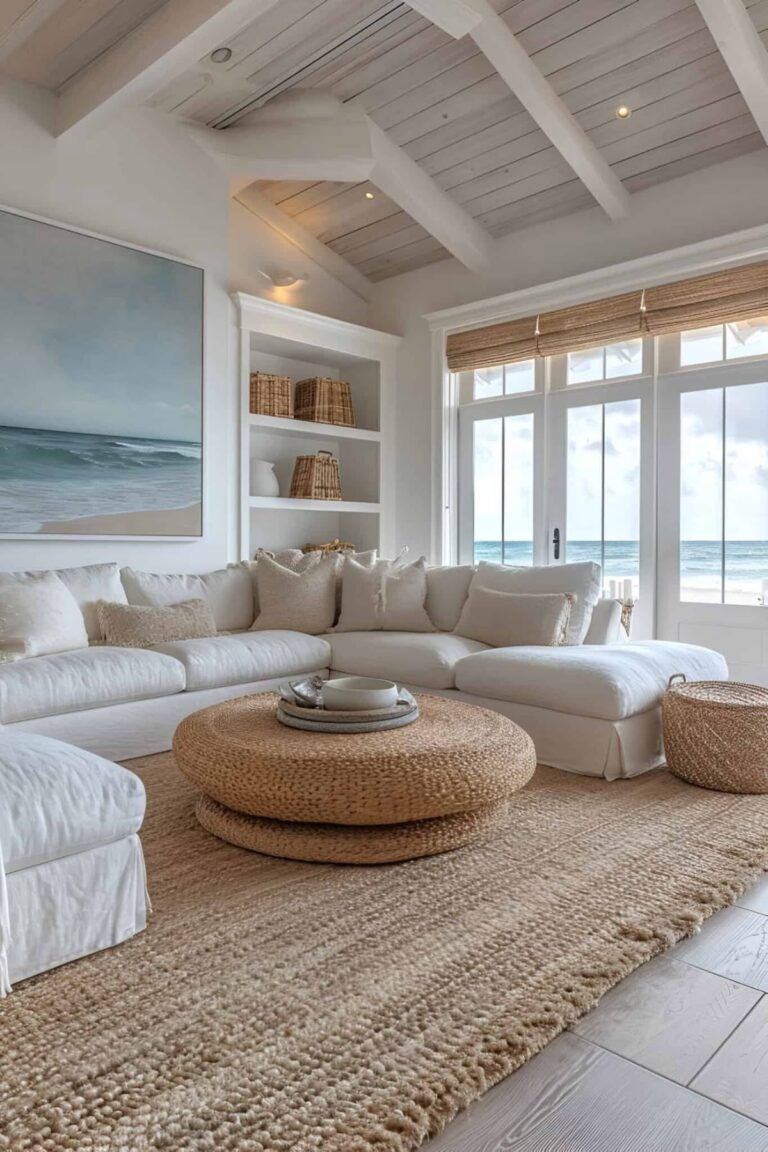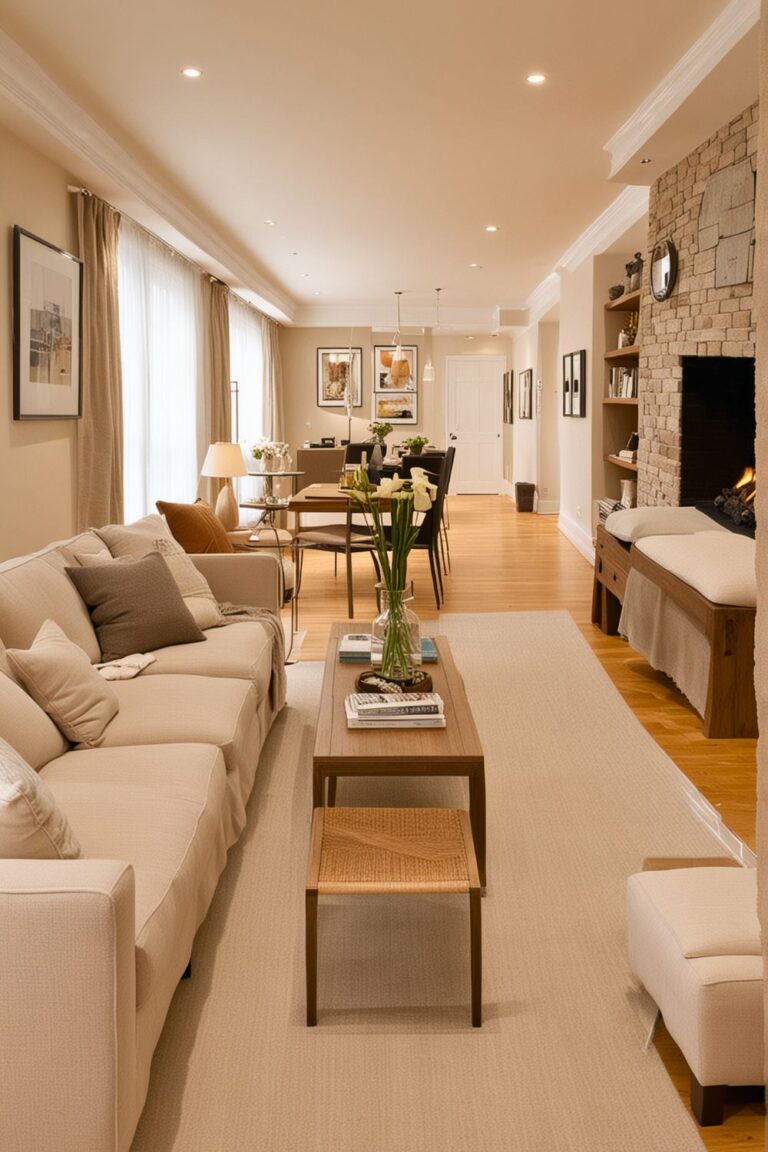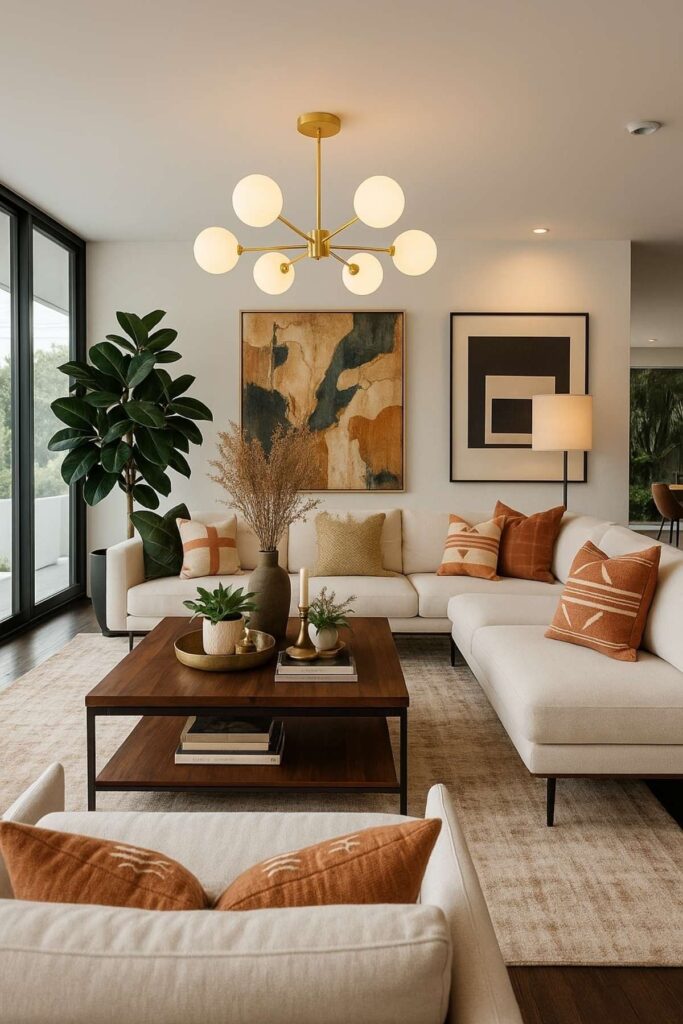

Of all the rooms in your home, the living room carries the greatest responsibility. It’s where your family gathers at the end of every day. It’s where friends feel welcomed and conversations happen. It’s where you relax, celebrate, decompress, and simply live. More than any other room in the house, your living room tells the story of who you are and how you choose to spend your time.
So when a living room doesn’t feel right — when it feels too cold, too cluttered, too generic, or simply like it doesn’t quite reflect the beautiful, welcoming space you’ve always imagined — the impact is felt every single day. The good news is that great living room interior design is less about budget and more about intention, knowledge, and the courage to make it truly yours.
In this post, we’re sharing 15 gorgeous living room interior design ideas — covering everything from furniture arrangement and color palettes to lighting, textiles, art, and personal styling — to help you create a living room you genuinely love being in. Let’s transform your space together.
1. Define Your Living Room’s Design Style and Vision
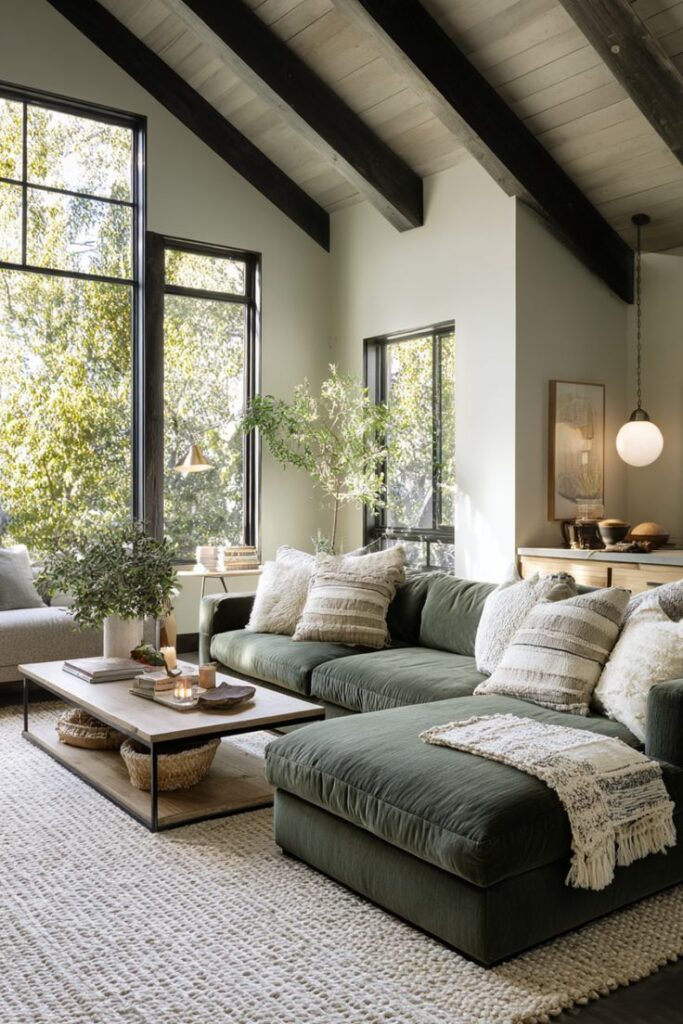
Before you move a single piece of furniture or buy a single cushion, the most important step in any living room interior design project is defining your style and vision. Are you drawn to the relaxed, layered warmth of a bohemian living room? The clean simplicity of Scandinavian minimalism? The rich sophistication of a contemporary glam aesthetic? The lived-in comfort of a modern farmhouse? Knowing your style direction before you begin saves you from costly, unfocused purchases and ensures every element you add to the room works together harmoniously. Create a digital mood board on Pinterest, identify the common threads in the images you love, and let that visual language guide every decision you make.
2. Get Your Living Room Furniture Arrangement Right
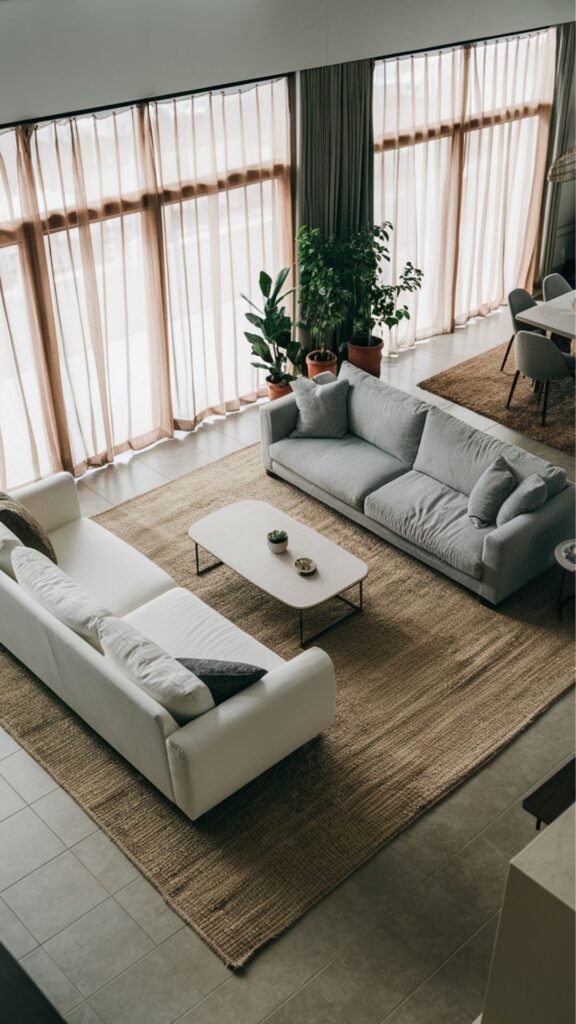
Furniture arrangement is the foundation of great living room interior design — and getting it wrong makes everything else you do feel off, no matter how beautiful the individual pieces are. The golden rules: always anchor your seating arrangement with a large area rug that sits beneath all the front legs of your furniture, face seating pieces toward each other to encourage conversation rather than lining them all against the walls, keep a clear traffic flow path of at least 90cm through the room, and position your main sofa facing the room’s focal point (fireplace, TV, or feature wall). When furniture is arranged with intention, the living room immediately feels designed and purposeful.
3. Choose a Living Room Color Palette That Sets the Perfect Mood
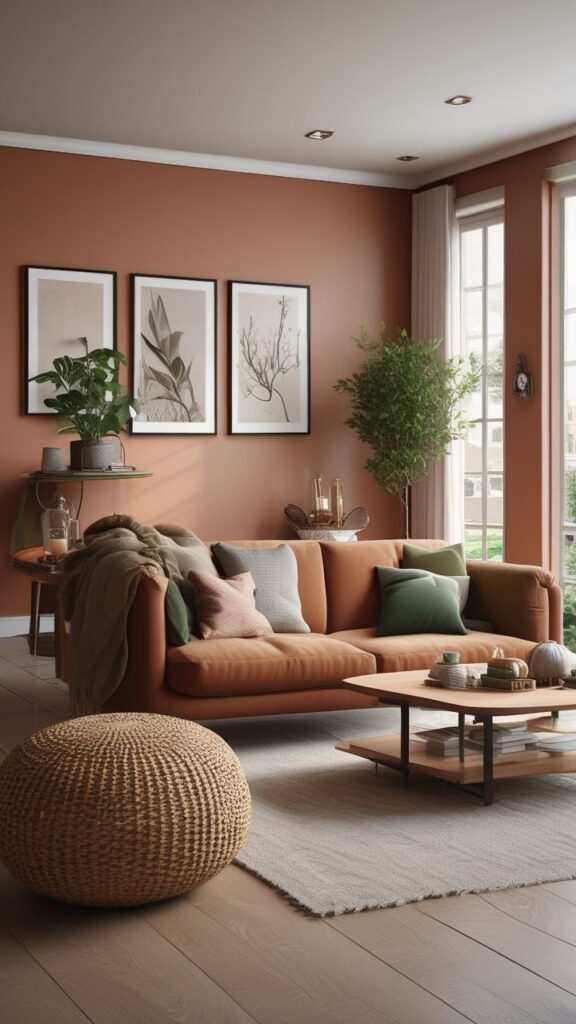
Color is one of the most emotionally powerful tools in living room interior design — and the palette you choose will set the entire mood and atmosphere of the space. For a calm, sophisticated living room, build your palette around warm neutrals and earthy tones: terracotta, warm white, ochre, dusty sage, and natural wood tones all work beautifully together. For a bolder, more dramatic living room, consider a deep feature wall in forest green, navy, or rich plum against lighter furniture and accessories. Whatever direction you choose, the most important thing is consistency — select two or three core tones and repeat them throughout the room in different proportions for a cohesive, beautifully resolved result.
4. Invest in a Sofa That Anchors the Entire Room
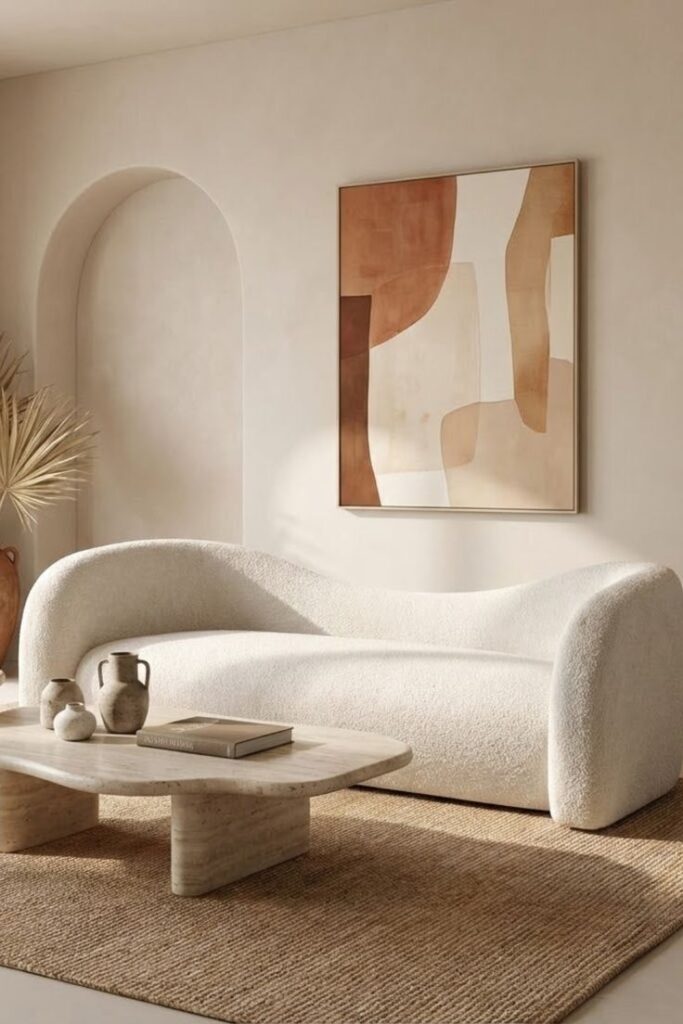
In living room interior design, the sofa is unquestionably the most important piece of furniture you will choose — it sets the scale, style, and comfort level of the entire room. Choose a sofa size that is genuinely proportional to your room: in a large living room, don’t be afraid of a large, generous three or four-seater; in a smaller space, a compact two-seater or a modular sectional that wraps the corner can feel both cozy and spacious. Material matters enormously — linen and cotton feel casual and relaxed, velvet adds richness and drama, boucle brings warmth and texture. Whatever you choose, prioritize quality construction and comfort — this is a piece you’ll live with for many years.
5. Layer Your Lighting for Atmosphere and Function
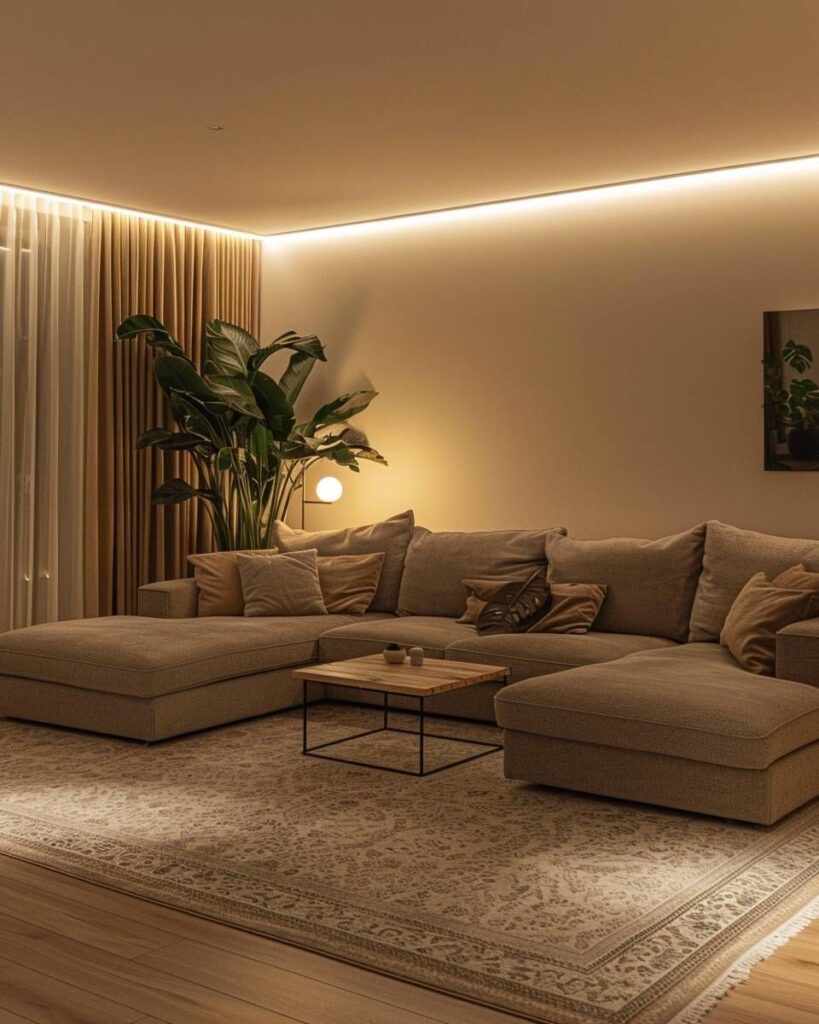
Living room lighting is one of the most transformative and most underestimated elements of interior design — and getting it right elevates everything else in the room. The key is always layered lighting: a central overhead light or statement pendant for ambient illumination (on a dimmer, always), floor lamps beside the sofa and in reading corners for warm task light, and accent lighting through table lamps, candles, and LED strips to add depth and atmosphere. A single overhead light used as the only source creates a flat, unflattering environment no matter how beautiful your furniture is. But when all layers work together on dimmers, your living room can shift from bright and energizing in the morning to deeply atmospheric and cozy by evening.
6. Add a Statement Focal Point That Commands the Room
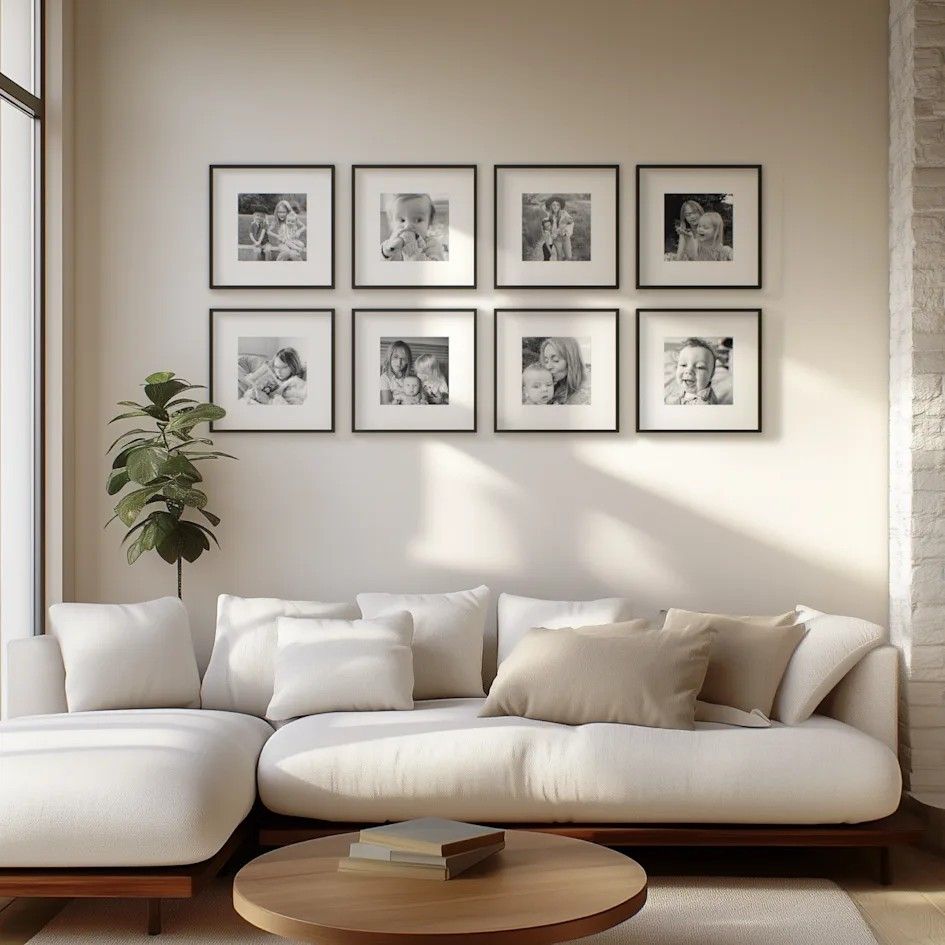
Every great living room interior design has one clear focal point — a single element that draws the eye immediately upon entering the room and gives the space a sense of visual purpose and drama. In rooms with a fireplace, the fireplace is naturally the focal point and should be styled to command the space. In rooms without one, you create your own: a dramatic gallery wall, an oversized piece of art, a statement piece of furniture, a beautifully styled shelving unit, or a bold architectural feature. Whatever you choose, style it with confidence and let everything else in the room support rather than compete with it. A clear focal point gives even the most modest living room an immediate sense of design intention.
7. Choose the Right Coffee Table for Style and Function
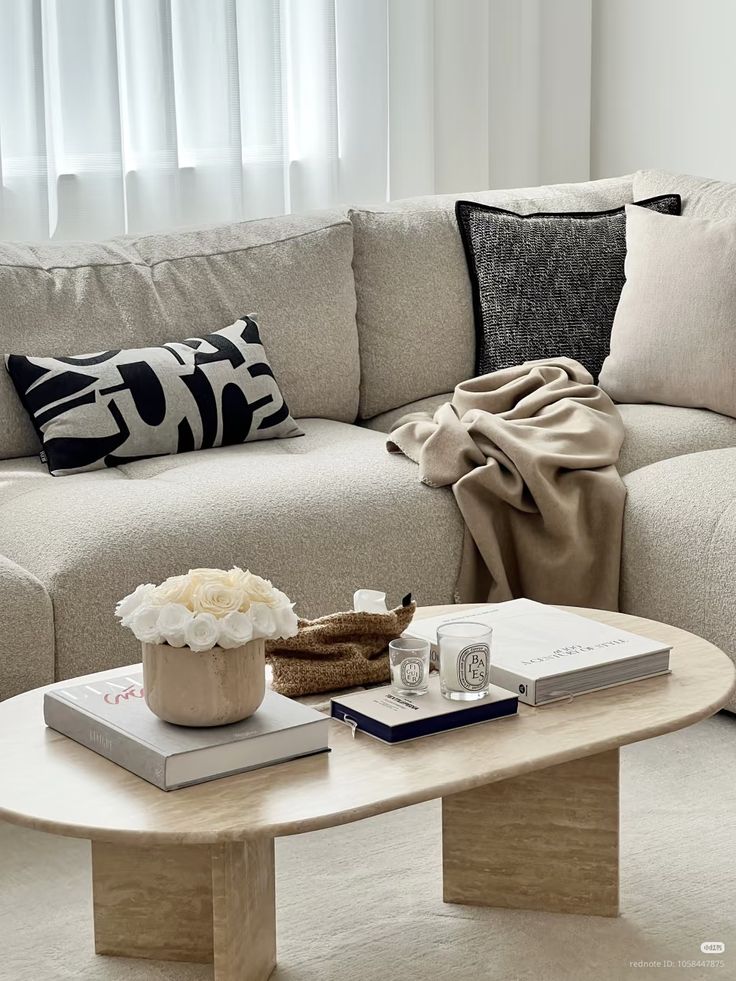
The coffee table sits at the literal center of your living room — and in great living room interior design, it does far more than hold your morning cup. The coffee table is a styling opportunity, a functional surface, and a design statement all at once. Choose a size that feels genuinely proportional to your sofa — it should be roughly two-thirds the length of the sofa and at a height level with or slightly lower than your seat cushions. For style, mix materials: a marble top on a brass frame, a solid wood table with tapered legs, or a glass table on a sculptural base all look beautiful and feel different. Style the surface with a tray, a few objects, a plant, and a candle — and edit until it feels perfectly balanced.
8. Use an Area Rug to Ground and Define the Space
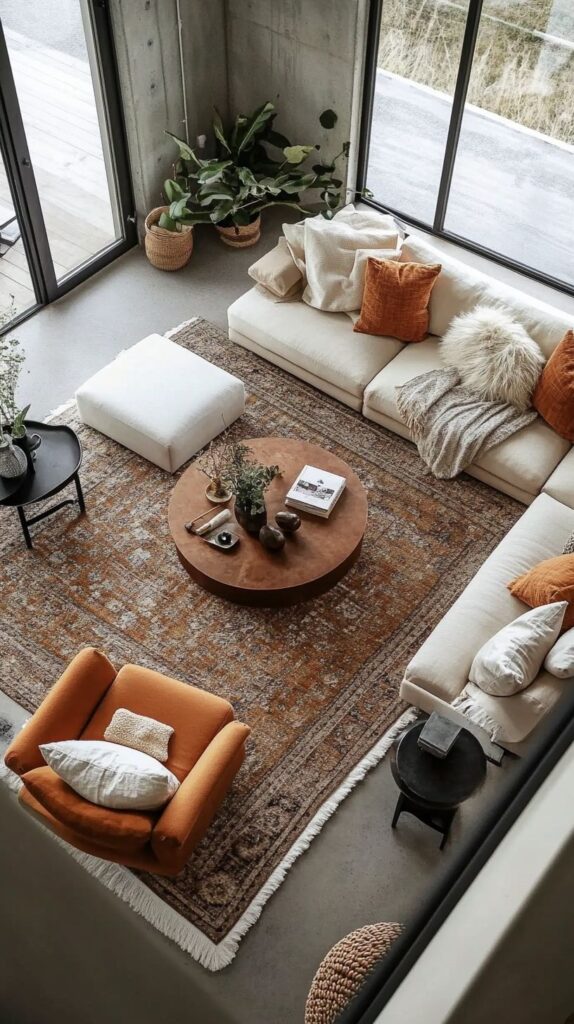
An area rug is one of the single most transformative additions you can make to a living room — and yet it’s one of the elements people most commonly get wrong, usually by choosing one that’s too small. The cardinal rule of living room rugs: go bigger than you think you need. In an ideal arrangement, the front legs of all your seating furniture sit on the rug, grounding the entire seating group as a unified zone. A rug that’s too small makes the furniture look like it’s floating, disconnected, and haphazard. The rug defines the living room’s ‘room within a room’ and adds warmth, color, texture, and acoustic softness simultaneously. It is, in many ways, the most impactful single purchase in a living room design project.
9. Create a Gallery Wall That Tells Your Story
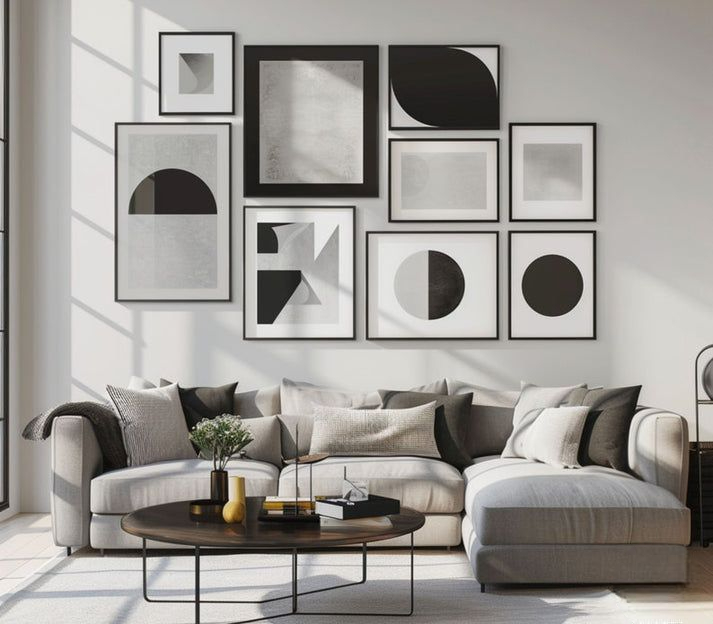
A gallery wall is one of the most personal and visually powerful living room interior design ideas — and when done well, it transforms a blank wall into a rich visual story that speaks volumes about who you are and what you love. The key to a gallery wall that looks curated rather than chaotic is finding the common thread: a consistent color palette, a consistent frame style or material, a consistent subject matter (all botanicals, all black and white photography, all abstract art), or a combination of two. Start by laying all your frames on the floor and experimenting with arrangements before committing any nails to the wall. The best gallery walls always look like they were gathered over time — not bought all at once from one place.
10. Style Your Shelves Like an Interior Designer
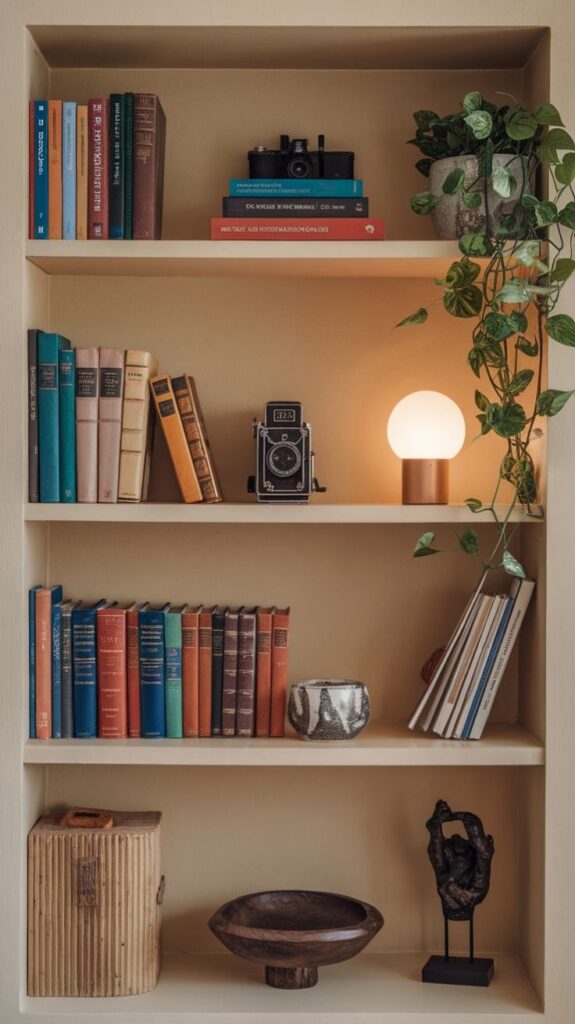
Styled shelves are one of the hallmarks of great living room interior design — and the difference between shelves that look beautiful and shelves that look cluttered almost always comes down to the art of editing and intentional arrangement. The designer formula: start with books (organized by color for maximum visual impact), add height variation with a tall vase or sculptural object, bring in an organic element like a trailing plant or dried botanicals, add a personal object or piece of art, and then remove one item. Leave breathing room between groupings — empty space on a shelf is not wasted space, it’s what allows the eye to rest and the beautiful things to be truly seen. Restraint is your best friend.
11. Bring in Texture Through Cushions, Throws, and Rugs
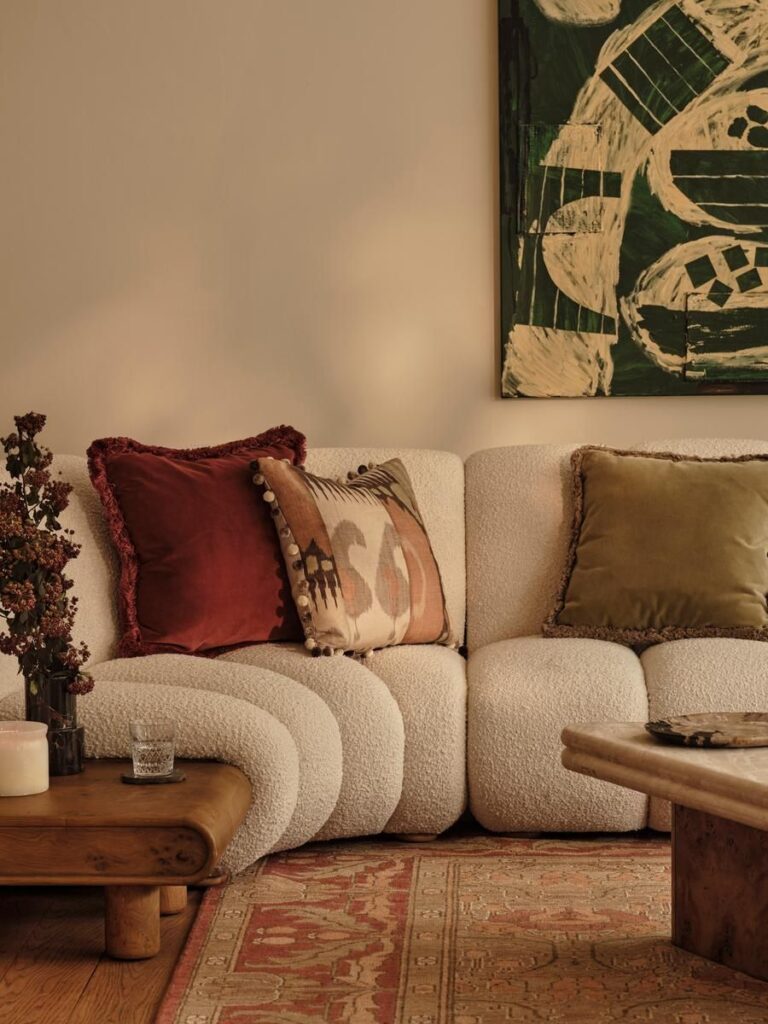
Texture is the invisible ingredient that separates a living room that looks good in a photograph from one that feels genuinely wonderful to be in. In living room interior design, layering different textures through your soft furnishings creates a sensory richness that makes the room feel warm, considered, and deeply inviting. The formula is simple: choose at least four different fabric textures — linen, velvet, boucle, wool, cotton, leather, or jute — and layer them across your cushions, throws, rug, and window treatments. The contrast between smooth and nubby, soft and structured, matte and sheen is what creates that beautifully layered quality that the best living rooms always have. Texture is warmth made visible.
12. Add Life and Freshness with Indoor Plants
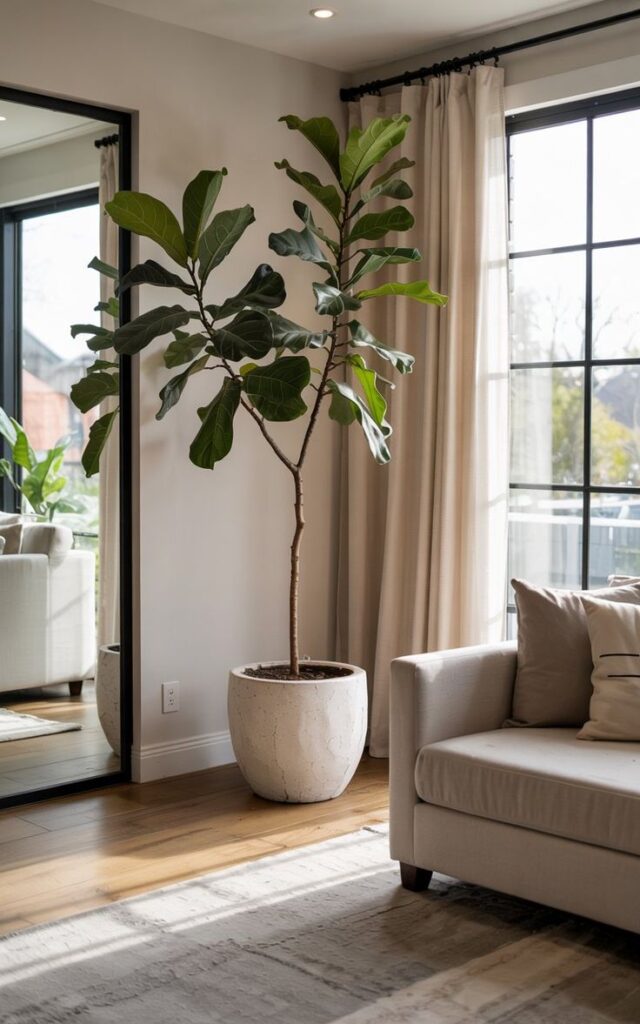
Plants are one of the most universally beloved living room interior design elements — and with very good reason. A well-placed plant adds height, organic shape, color, texture, and life to a living room in a way that no manufactured object can replicate. A large statement plant like a fiddle leaf fig, monstera, or bird of paradise commands a corner beautifully, adding drama and scale. Medium plants on side tables or bookshelves add a quieter, living accent. Trailing plants on high shelves cascade downward in the most beautifully organic way. And even a small succulent on the coffee table contributes a gentle, living energy. Start with one or two plants and watch how immediately the whole room feels more alive.
13. Choose Window Treatments That Frame Your Views
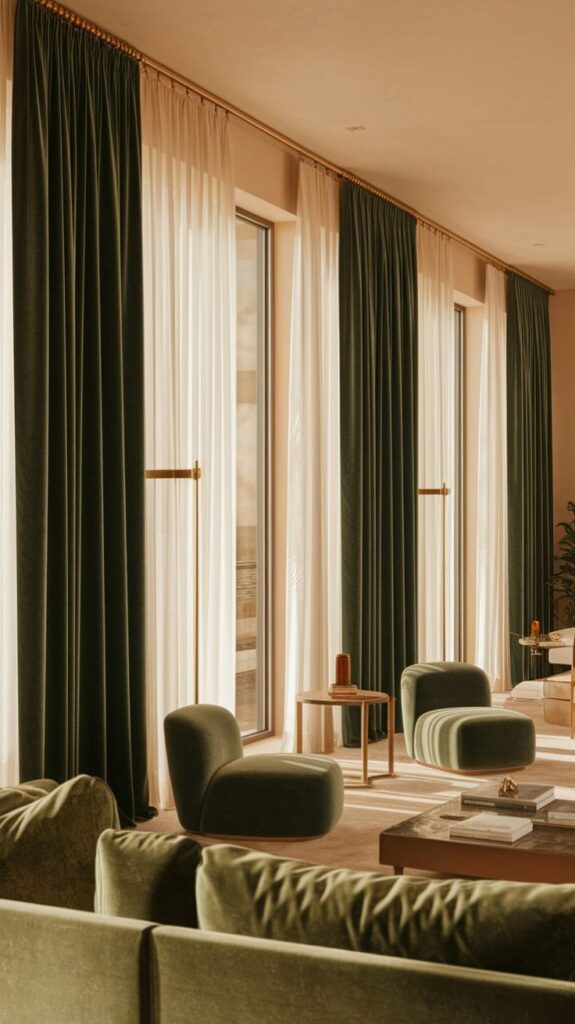
Window treatments are one of the most dramatically transformative elements in living room interior design — and one of the most commonly overlooked. The right curtains add softness, warmth, height, and color to a room in equal measure. For maximum impact, always hang curtain rods at ceiling height (not just above the window frame) and choose panels that extend generously beyond the window width on each side. This makes your windows look grander, your ceilings feel taller, and your living room feel significantly more spacious and polished. For style, velvet curtains in a rich tone add instant drama and luxury; linen panels in a neutral shade feel relaxed and timeless; geometric or botanical prints add personality and pattern without overwhelming the room.
14. Incorporate a Statement Piece of Furniture or Art
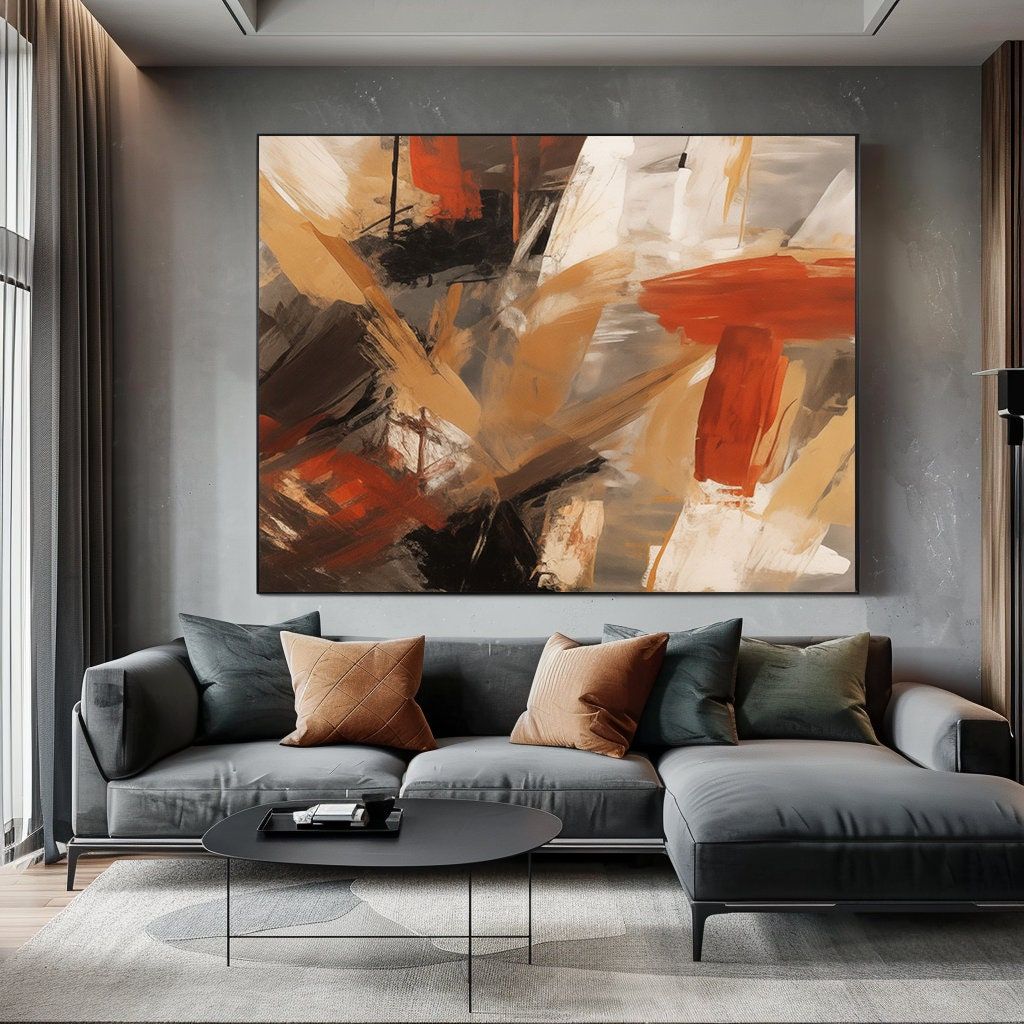
Every truly memorable living room interior design has at least one element that makes you catch your breath — a piece that is bold enough, beautiful enough, or unexpected enough to stop you in your tracks. It might be a large-scale abstract painting that fills the wall above the sofa, a sculptural vintage armchair in an unexpected color, an antique rug with extraordinary provenance, or a handcrafted ceramic lamp that is genuinely a piece of art. Whatever it is, this statement piece becomes the soul of the room — the element around which everything else is beautifully organized. Don’t be afraid of one bold, impactful piece. In a well-designed living room, one extraordinary thing is always more powerful than many ordinary things.
15. Personalize with Books, Objects, and Things You Love
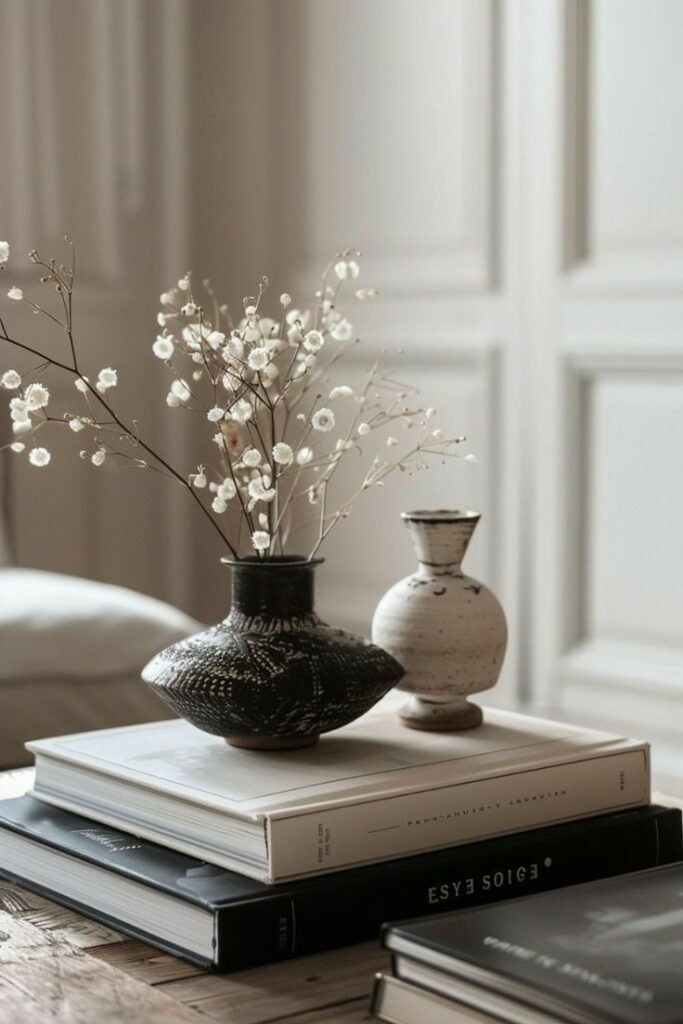
The final and most irreplaceable layer of any living room interior design is the deeply personal one — the books you’ve read and loved, the objects gathered from places you’ve been, the artwork made by someone you care about, the candle in the scent that immediately makes you feel at home. These are the things that no interior designer can source for you and no perfectly curated style guide can prescribe. They are the things that transform a beautiful living room into your beautiful living room. Display them with confidence. Style them with intention. And never apologize for the objects that make your living room feel genuinely, unmistakably, wonderfully yours.
Your Dream Living Room Is Ready to Happen
A living room that you genuinely love — that welcomes everyone who enters it, that reflects your personality and taste, that makes every evening feel like time well spent — is not a luxury reserved for people with large budgets or professional designers. It’s available to everyone who approaches the space with intention, creativity, and a willingness to make thoughtful decisions one step at a time.
Choose just one idea from this list that excites you most and start there today. Maybe it’s finally getting the furniture arrangement right, adding a large statement plant, hanging your curtains at ceiling height, or styling your coffee table as the beautiful vignette it deserves to be. Each step you take builds momentum and brings your vision closer to reality. We’d love to see your living room transformation! Share your before-and-after photos in the comments below, save this post to your Pinterest board for future inspiration, and send it to a friend whose living room could use a little love. Because everyone deserves a living room they never want to leave.